The Nymphs of Lake Stymphalia Myth Meaning & Symbolism
Heracles confronts the monstrous birds and wrathful nymphs of a poisoned Arcadian lake, a myth of cleansing a corrupted sanctuary.
The Tale of The Nymphs of Lake Stymphalia
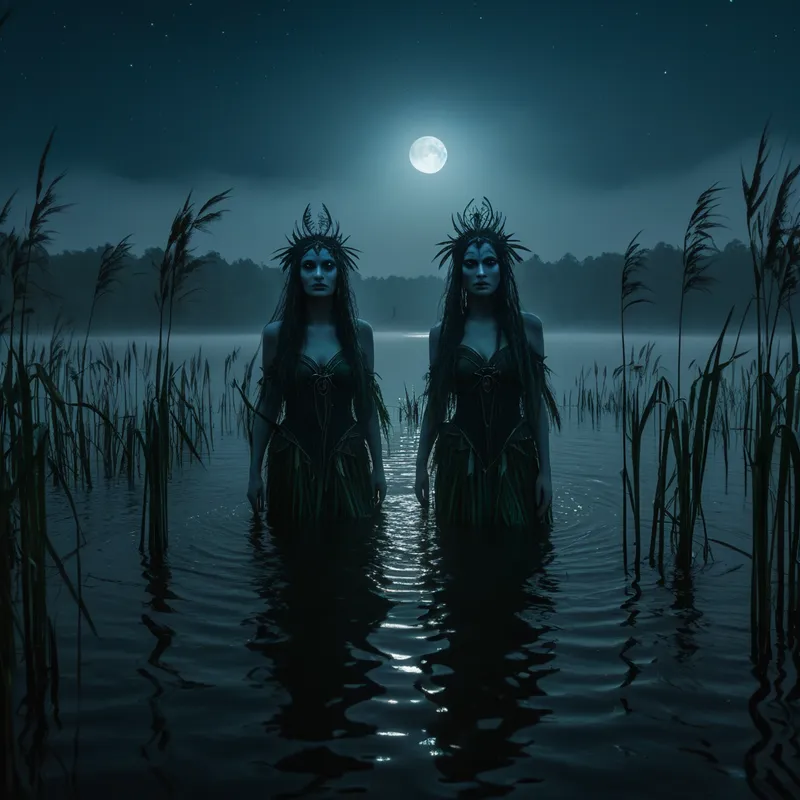
Listen, and hear of the waters that turned from blessing to blight, in the high, lonely valley of Arcadia. There lay Lake Stymphalia, a silver mirror cupped by mountains, a sacred place. Its guardians were the Nymphs of the lake, spirits of its clear depths and whispering reeds. They were the soul of the place, dancing in the spray of its springs, singing with the wind through the rushes. For ages, they gave cool drink to the shepherd and shade to the traveler, and the lake was a sanctuary.
But a shadow fell upon the land. Some say it was the wrath of Artemis, offended. Others whisper of a creeping rot from a forgotten offense. The springs that fed the lake grew slow and bitter. The clear waters thickened into a vast, stagnant mire, choked with reeds that grasped like skeletal fingers. The air, once sweet with pine and water-mint, grew heavy with a foul, metallic breath. The Nymphs, bound to their dying home, were transformed. Their songs became wails of grief and fury. Their benevolent forms grew gaunt and terrible, their eyes reflecting the lake’s poisoned gleam. They became vengeful, luring the unwary into the sucking mud, their touch bringing fever.
And from the corrupted reeds and noxious vapors, a new horror was born: the Stymphalian Birds. They were monsters clad in feathers sharp as bronze, with beaks and claws of hardened iron. Their dung poisoned the earth, and their wings beat with a sound like clashing swords. They multiplied in the dense thickets, turning the sacred lake into a fortress of death. The land for miles around was laid waste, its people hiding in terror.
Into this blighted realm came the son of Zeus, Heracles. His sixth labor, laid upon him by King Eurystheus, was to drive off this plague. He stood at the lake’s edge, seeing not water but a seething, green-black bog. The very ground trembled, and the mournful cries of the Nymphs echoed from the deep. He could not wade in; the mud would swallow him whole. He could not fight the birds in their tangled fortress.
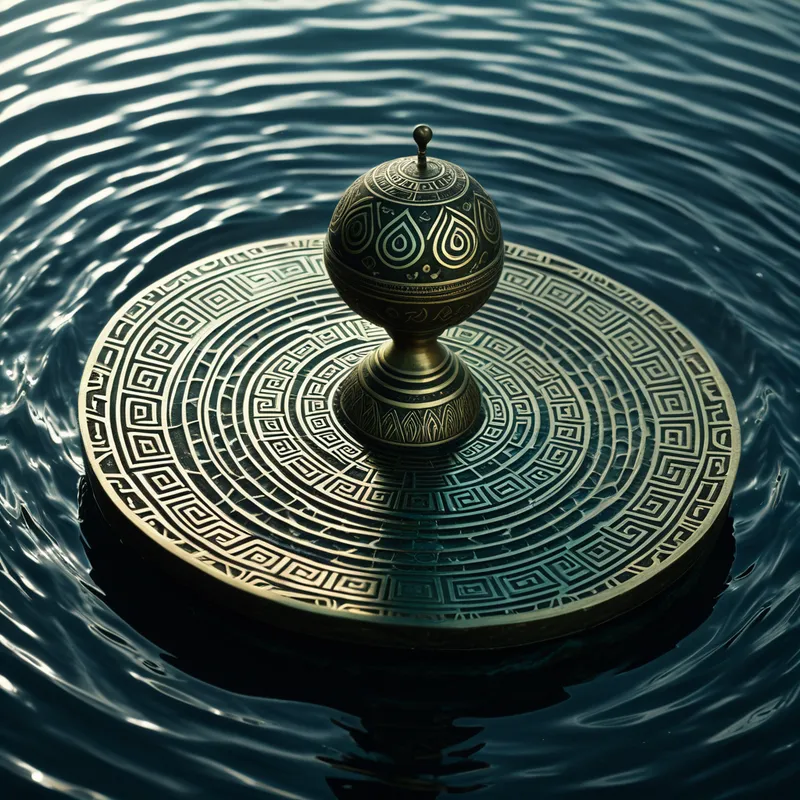
As he despaired, his patroness, Athena, appeared to him. She did not give him a sword, but a gift of cunning: a gigantic bronze rattle, forged by Hephaestus himself. Heracles took the instrument and climbed to a high rock overlooking the poisoned mere. With a mighty heave, he shook the rattle. A sound erupted that was not music, but pure, deafening terror—a cacophony that split the stagnant air, a shockwave of noise that shook the mountainsides.
From the reeds, the iron birds erupted in a shrieking, metallic cloud, driven mad by the sound. Heracles, seizing his moment, raised his famous bow. One by one, he shot them down as they wheeled in the sky, their bronze feathers glinting in the sun before they fell. Those that escaped flew far away, never to return to Arcadia.
As the last bird fell and the terrible noise faded, a strange silence settled. Then, a gentle sigh seemed to rise from the lake itself. The oppressive mist began to thin. The Nymphs, their vengeance spent and their tormentors gone, appeared once more at the water’s edge. Their forms were no longer gaunt and furious, but weary and sad, like willows after a storm. They looked upon Heracles not with hate, but with a solemn, ancient recognition. The hero had not slain them; he had broken the curse that bound them. He cleansed not with water, but with resonant will. Slowly, over time it is said, the springs remembered their flow, and the lake began, breath by breath, to heal.

Cultural Origins & Context
This myth is preserved primarily in the accounts of later mythographers like Pausanias, who traveled through Arcadia and recorded local lore. Lake Stymphalia is a real, often marshy lake in the northeastern Arcadian mountains. The story likely originated as an aetiological myth>, explaining the lake’s perilous, shifting nature and its reputation as an uncanny place. In the Greek worldview, every spring, grove, and lake had its nymphs. Their well-being was directly tied to the health of their domain; a polluted or disrespected place meant wrathful, diseased spirits.
The tale was integrated into the Panhellenic cycle of the Twelve Labors of Heracles, serving a specific narrative function. It sits between labor five (cleaning the Augean stables) and labor seven (capturing the Cretan Bull), forming a thematic trio of cleansing tasks. Unlike the physical filth of the stables, the pollution of Stymphalia is spiritual and ecological, requiring a different kind of strength. The myth reinforced Greek ideas about the sacredness of nature, the consequences of its desecration, and the hero’s role as a restorer of cosmic order, using both might and divine-given ingenuity (metis).
Symbolic Architecture
At its core, the myth depicts a profound psychic and environmental catastrophe. The lake symbolizes the unconscious, a deep, reflective pool of potential. The Nymphs represent the animating, soulful quality of that inner space—our emotions, intuitions, and connection to instinct. When this inner world is neglected, poisoned by unresolved trauma, guilt, or stagnation (“a forgotten offense”), it turns toxic.
The sacred pool of the soul, when left stagnant, breeds monsters. The guardians of the deep become furies.
The Stymphalian Birds are the symptomatic manifestations of this inner corruption. They are not foreign invaders but born from the poisoned environment. Their bronze feathers and iron beaks symbolize how psychic pain hardens into defensive, cutting attitudes—sharp criticisms, metallic cynicism, behaviors that poison our “land” (our relationships and endeavors). They are “thoughts” that swarm from the murky depths, armed and destructive.
Heracles represents the conscious ego tasked with confronting this mess. He cannot simply dive in (pure unconscious immersion would mean psychosis), nor can he ignore it. The bronze rattle, a gift from Athena (wisdom), symbolizes the disruptive, resonant power of conscious attention. It is not a subtle tool but a shocking one—therapeutic intervention, a bold act of truth-telling, or the jarring decision to face what has been festering. The noise drives the chaotic, symptomatic “birds” into the open air of consciousness, where they can be seen and dealt with.
The Dreamer’s Resonance
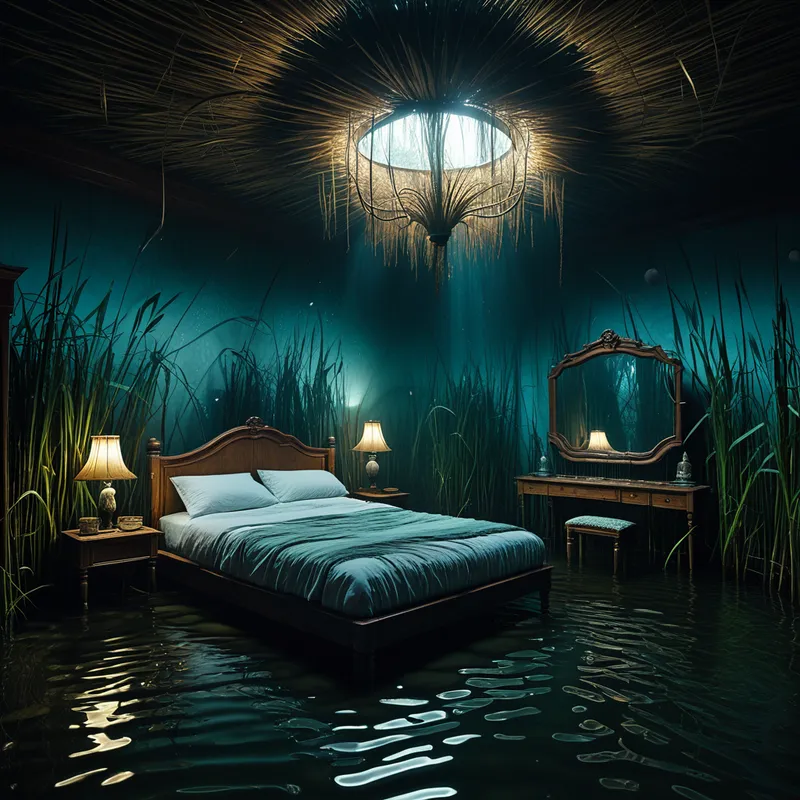
When this myth pattern stirs in the modern dreamer, it often signals a confrontation with a long-standing, swampy area of the psyche. Dreams of murky water, tangled vegetation that impedes movement, or feeling stuck in mud directly mirror the Stymphalian landscape. The dreamer may encounter hostile or mournful feminine figures near water, representing their own neglected emotional or intuitive life turned resentful.
Somatically, this can feel like a heavy lethargy, a stagnation in the body mirroring the stagnant lake. There may be a sense of being “poisoned” by a situation or relationship that has overstayed its welcome. The rising action in the psyche is the gathering of the heroic resolve—the “Heraclean” energy—to make a noise, to disrupt the stagnant pattern, even if it causes temporary chaos. The dream is the inner Athena presenting the tool: perhaps a sudden insight, a remembered skill, or the support of a therapist (the divine aid), giving the ego the means to begin the cleanse.
Alchemical Translation
The alchemical process modeled here is the solutio—not a gentle dissolving, but a violent stirring of the prima materia, the chaotic, base matter of the soul. The stagnant lake is the nigredo, the blackening, the state of putrefaction and despair that precedes transformation. Heracles’ labor is the arduous work of the alchemist applying heat and motion (the shocking sound) to this mass.
The hero does not fight the swamp; he changes its frequency. Transmutation begins with a resonant disruption of stagnant truth.
The triumph is not the death of the nymphs (the soul’s essence), but their transformation back towards their true nature. It is the redemption of the anima from a state of vengeful possession to one of weary potential. The birds, the hardened, metallic symptoms, are not integrated but expelled—the necessary purging of pathological defenses so that deeper healing can begin. For the modern individual, the “alchemical rattle” is any practice or decision that fundamentally disrupts a stagnant life-pattern: a courageous conversation, leaving a toxic job, or beginning a creative act that “makes a racket” against inner silence. The goal is not to return to a naive, pristine state, but to re-initiate the flow, allowing the springs of the psyche to find a new, healthier course. The labor ends with the hero moving on, but the lake—the self—is left to the long, slow, and quiet work of healing its own waters.
Associated Symbols
Explore related symbols from the CaleaDream lexicon: