The Norns' Loom Myth Meaning & Symbolism
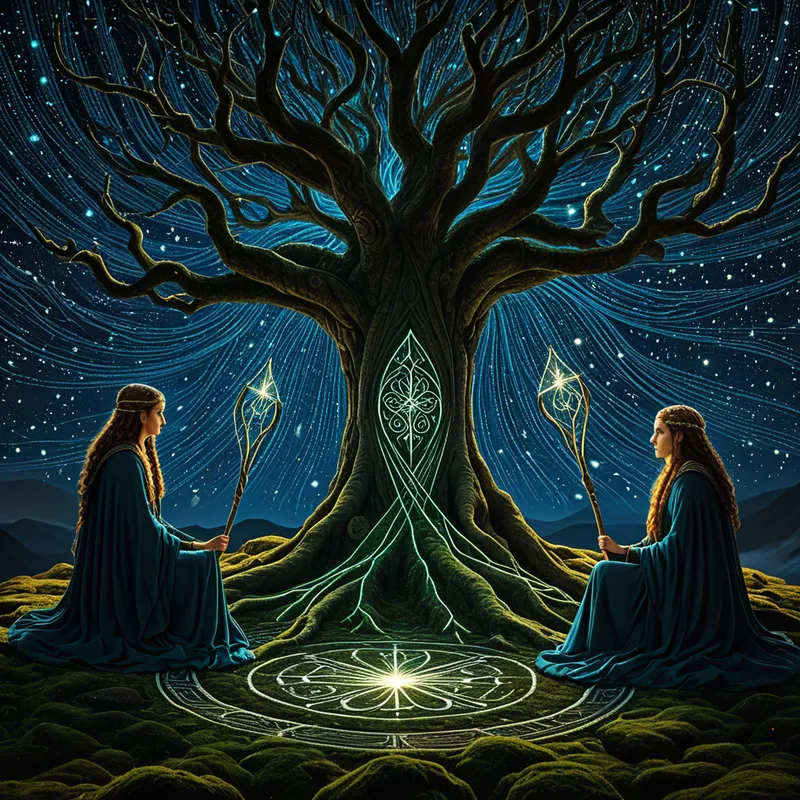
Three sisters weave destiny at the World Tree's root, their threads dictating the fates of gods and mortals alike in a tapestry of cosmic law.
The Tale of The Norns’ Loom
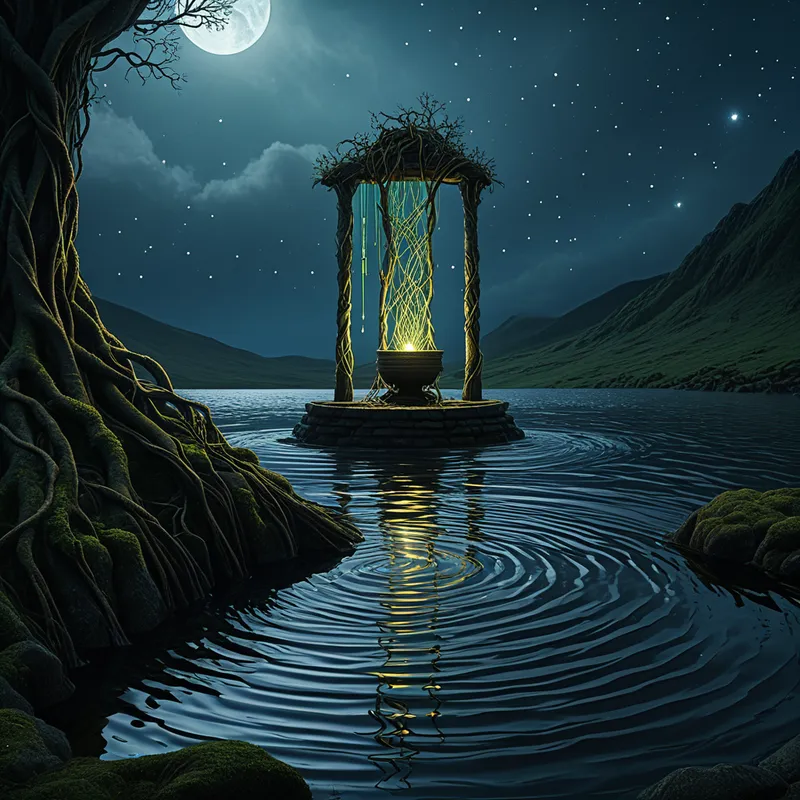
Listen, and hear the whisper from the roots of [the world](/myths/the-world “Myth from Tarot culture.”/). Not in the golden halls of the gods, nor in the clamor of mortal kingdoms, is the true song of existence composed. It is sung in a place of deep, damp silence, where the air is thick with the scent of wet earth and ancient bark. Here, at the third and deepest root of the [Yggdrasil](/myths/yggdrasil “Myth from Global/Universal culture.”/), lies [Urðarbrunnr](/myths/urarbrunnr “Myth from Norse culture.”/). Its waters are black, still, and hold the memory of everything that was and [the shadow](/myths/the-shadow “Myth from Jungian culture.”/) of all that may be.
And here they sit, the three who know. They are not goddesses to be petitioned, nor demons to be feared. They are [the law](/myths/the-law “Myth from Biblical culture.”/) itself, embodied. The first is Urðr, her face a landscape of deep-carved lines, eyes holding the weight of countless yesterdays. From a distaff of frost and starlight, she draws forth the raw stuff of being—gossamer, shimmering, alive. This is the thread, spun from [the mist](/myths/the-mist “Myth from Celtic culture.”/) over the well, from the breath of the sleeping serpent, from the silent fall of a leaf in a forgotten age.
The thread passes to the second sister, Verðandi. Her gaze is unwavering, fixed on the now. Her fingers, deft and sure, guide the thread onto the loom. This loom is no [thing](/myths/thing “Myth from Norse culture.”/) of wood and hemp, but a living part of the Tree, its frame the great roots, its warp the very fibers of reality. As Verðandi weaves, the thread crosses others—a crimson strand for a king’s courage, a silver one for a poet’s inspiration, a dark, fraying one for a coming plague. Each intersection is a moment of choice, of action, of consequence. The tapestry grows, a breathtaking, terrifying mosaic of all that is happening under the sun and moon.
And then, to the third. [Skuld](/myths/skuld “Myth from Norse culture.”/), whose name means “debt” and “what is owed.” She is often veiled, for the future is a formless cloud. In her hand, she holds not a shuttle, but a pair of shears, ancient and sharp enough to sever a soul from its body, an age from time itself. She does not cut with malice, nor with mercy. She cuts because the pattern demands it. A thread, having reached its ordained length, must end. The shears close with a sound like the final heartbeat of a star. The cut thread falls, sometimes gently into the well to be dissolved back into potential, sometimes with a snap that echoes through the branches of Yggdrasil, causing even Oðinn on his high seat to shudder.
They work in a silence broken only by the hum of the thread, the soft thump of the loom, and the decisive snip of the shears. Gods have come to this place—Odin to gain wisdom, Thor in futile rage—but the sisters do not look up. They tend the loom. They weave the ørlög of the Aesir, the destiny of the giants, the brief, bright flicker of humankind, and the slow, grinding turn of the worlds. This is the tale not of a battle won, but of the fabric upon which all battles are etched. It is the story behind every story, the pattern within the chaos, the solemn, endless work at the heart of everything.
Cultural Origins & Context
The myth of [the Norns](/myths/the-norns “Myth from Norse culture.”/) and their loom is not a single, codified story with a beginning and end, but a pervasive cosmological principle woven through the Poetic Edda and Prose Edda. It was likely not a tale told around the fire for mere entertainment, but a foundational concept explained by skalds and wise women to articulate the Norse understanding of reality. In a culture that valued personal courage (drengskapr) and decisive action, the simultaneous belief in a strict, woven fate seems paradoxical. Yet, this is the core tension of the Norse worldview.
The [Norns](/myths/norns “Myth from Nordic culture.”/) represent the impersonal, inescapable structure of the cosmos—ørlög. This was not a predestination that rendered action meaningless, but the fixed framework within which will and deed (wyrd, closely related, meaning the unfolding of events from past actions) operated. The myth served a critical societal function: it provided a model of cosmic order in a seemingly chaotic and hostile universe. It explained fortune and misfortune not as arbitrary whims of distant gods, but as part of a vast, incomprehensible tapestry. The image of the loom gave a tangible, almost domestic, shape to this abstract law, making it relatable yet awe-inspiring. It was a narrative tool to teach respect for the limits of existence, the debt (skuld) all life owes to the past, and the solemn beauty of the present moment being woven.
Symbolic Architecture
The Norns’ Loom is perhaps the most potent [symbol](/symbols/symbol “Symbol: A symbol can represent an idea, concept, or belief, serving as a powerful tool for communication and understanding.”/) in Norse thought for the [architecture](/symbols/architecture “Symbol: Architecture in dreams often signifies structure, stability, and the framing of personal identity or life’s journey.”/) of [destiny](/symbols/destiny “Symbol: A predetermined course of events or ultimate purpose, often linked to spiritual forces or cosmic order, representing life’s inherent direction.”/) and the [nature](/symbols/nature “Symbol: Nature symbolizes growth, connectivity, and the primal forces of existence.”/) of time. It is not [linear](/symbols/linear “Symbol: Represents order, predictability, and a direct, step-by-step progression. It symbolizes a clear path from cause to effect.”/), but a complex interweaving.
- [The Three Sisters](/myths/the-three-sisters “Myth from Native American culture.”/) as Time: They are not merely personifications but the very modalities of time—Past (Urðr, the [source](/symbols/source “Symbol: The origin point of something, often representing beginnings, nourishment, or the fundamental cause behind phenomena.”/) [material](/symbols/material “Symbol: Material signifies the tangible aspects of life, often representing physical resources, desires, and the physical world’s influence on our existence.”/)), Present (Verðandi, the act of creation), and Future (Skuld, the necessary [conclusion](/symbols/conclusion “Symbol: A conclusion can symbolize resolution, closure, and the finality of experiences or decisions.”/)). They show time not as a line but as a living process of continuous creation and [dissolution](/symbols/dissolution “Symbol: The process of breaking down, dispersing, or losing form, often representing transformation, release, or the end of a state of being.”/).
- The Loom as Cosmic [Structure](/symbols/structure “Symbol: Structure in dreams often symbolizes stability, organization, and the framework of one’s life, reflecting how one perceives their environment and personal life.”/): The loom, built from Yggdrasil, signifies that [fate](/symbols/fate “Symbol: Fate represents the belief in predetermined outcomes, suggesting that some aspects of life are beyond human control.”/) is not an external force but is intrinsic to the structure of [reality](/symbols/reality “Symbol: Reality signifies the state of existence and perception, often reflecting one’s understanding of truth and life experiences.”/) itself. The World [Tree](/symbols/tree “Symbol: In dreams, the tree often symbolizes growth, stability, and the interconnectedness of life.”/) is existence; the loom is the process of existence unfolding.
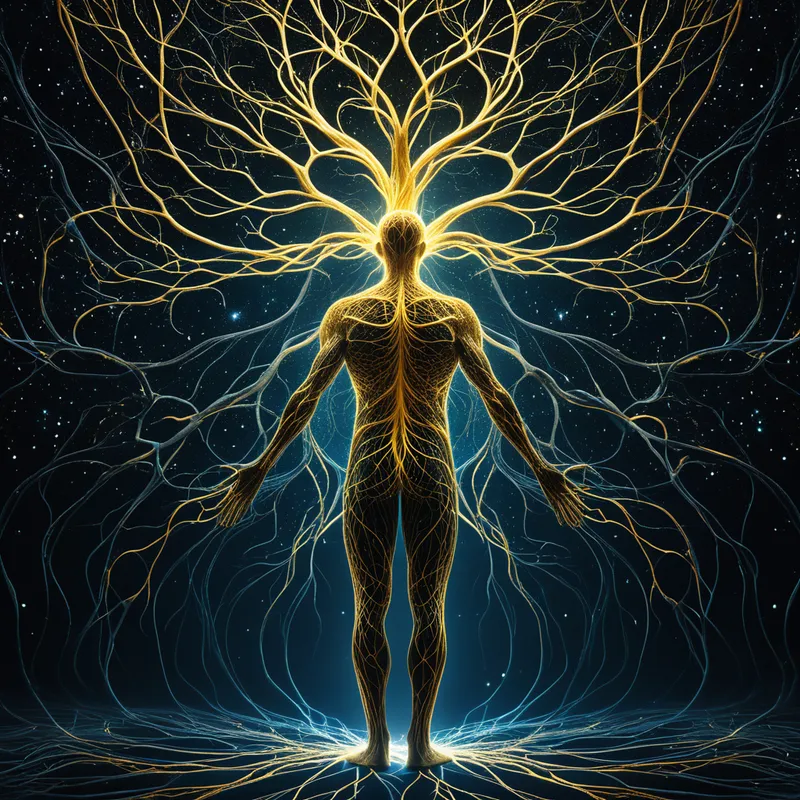
- The Thread as Individual [Life](/symbols/life “Symbol: The symbol of ‘Life’ represents a journey of growth, interconnectedness, and existential meaning, encompassing both the joys and challenges that define human experience.”/)-Force: Each thread is an [fylgja](/myths/fylgja “Myth from Norse culture.”/), a [life](/symbols/life “Symbol: The symbol of ‘Life’ represents a journey of growth, interconnectedness, and existential meaning, encompassing both the joys and challenges that define human experience.”/)-force, a [soul](/symbols/soul “Symbol: The soul represents the essence of a person, encompassing their spirit, identity, and connection to the universe.”/)-[path](/symbols/path “Symbol: The ‘path’ symbolizes a journey, choices, and the direction one’s life is taking, often representing individual growth and exploration.”/). Its color, [texture](/symbols/texture “Symbol: Texture in dreams represents sensory engagement, material interaction, and the tangible quality of experiences, often reflecting how one processes reality through touch and feel.”/), and [length](/symbols/length “Symbol: Length in dreams often represents the measure of time, distance, and the emotional investment in pursuit of goals.”/) are its inherent nature, spun from the raw potential of the past (the well).
- The Weave as Interconnectedness: No thread exists alone. The [tapestry](/symbols/tapestry “Symbol: The tapestry represents interconnected stories, creativity, and the weaving of personal and collective experiences into a cohesive narrative.”/) is [the web of life](/myths/the-web-of-life “Myth from Various culture.”/), where every strand crosses and influences countless others. A [king](/symbols/king “Symbol: A symbol of ultimate authority, leadership, and societal order, often representing the dreamer’s inner power or external control figures.”/)’s thread is bound to the threads of his people, his enemies, and the land itself.
The Norns do not decide fate; they are the hands of fate. Their work is the eternal present, weaving the unchangeable past into the inevitable future at the point of the now.
Psychologically, this represents the [human](/symbols/human “Symbol: The symbol of a human represents individuality, complexity of emotions, and social relationships.”/) confrontation with the limits of [the ego](/myths/the-ego “Myth from Jungian culture.”/). The ego desires control, a linear narrative it authors. The Loom presents [the Self](/myths/the-self “Myth from Jungian culture.”/)—the total, transpersonal [psyche](/myths/psyche “Myth from Greek culture.”/)—which operates on a scale and [pattern](/symbols/pattern “Symbol: A ‘Pattern’ in dreams often signifies the underlying structure of experiences and thoughts, representing both order and the repetitiveness of life’s situations.”/) the conscious mind can scarcely perceive, weaving together inherited patterns (Urðr), current choices (Verðandi), and inevitable endings (Skuld) into the fabric of an individual’s life.
The Dreamer’s Resonance
When the imagery of the Norns’ Loom surfaces in modern dreams, it signals a profound encounter with the psyche’s own structuring principles. The dreamer is not witnessing an external myth, but the internal machinery of their own destiny.
One might dream of finding a room in their house they never knew existed, containing a vast, humming loom where shadowy figures work. Or they may see their own hands weaving, but the threads are their memories, relationships, and anxieties. The somatic experience is often one of awe mixed with dread—a feeling of being part of something vast and inexorable. This is the psyche making tangible the process of individuation at a deep, archetypal level. The dreamer is witnessing the “weaving” of their own character, the intersection of their complexes (the crossing threads), and the necessity of letting go of outworn life phases (the cutting of the thread).
Such dreams often occur at life thresholds: the end of a career, the death of a loved one, a major illness, or a spiritual awakening. The psyche is presenting the underlying pattern of the transition, reassuring (or confronting) the ego that even in chaos, a form is being maintained. To dream of trying to cut a thread yourself signifies a rebellious ego attempting to force an ending or avoid a necessary fate. To dream of a tangled, knotted loom reflects a perceived loss of life’s direction or a conflict of duties.
Alchemical Translation
The alchemical process mirrored in the myth is not of turning lead to gold, but of transforming the raw, chaotic stuff of a life into a coherent, meaningful whole—the creation of the [lapis philosophorum](/myths/lapis-philosophorum “Myth from Alchemical culture.”/), or the integrated Self. The Norns’ workshop is the vas or vessel where this great work occurs.
- [Nigredo](/myths/nigredo “Myth from Alchemical culture.”/) (Blackening) – The Well of Urðr: The process begins in the black waters of the past—the unconscious, the inherited trauma, the forgotten memories. This is the [prima materia](/myths/prima-materia “Myth from Alchemical culture.”/), the dark, fertile mud from which the thread of consciousness is spun. Confronting this is the first, dark work.
- Albedo (Whitening) – Spinning the Thread: Urðr’s spinning is the extraction of a distinct, individual strand from the murky whole. In psychological terms, this is the difficult work of differentiation—understanding what is truly “you” versus what is familial, cultural, or collective patterning.
- Citrinitas (Yellowing) – Weaving the Tapestry: Verðandi’s work is the stage of conscious living and relating. Each choice, each relationship, each act is the shuttle crossing the warp, creating the unique pattern of a life. This is the ego’s active participation in its own creation, the “yellowing” of enlightenment through experience.
- [Rubedo](/myths/rubedo “Myth from Alchemical culture.”/) (Reddening) – The Cut of Skuld: The final stage is acceptance of limitation and completion. The shears represent the necessary deaths within a life: the end of youth, of certain potentials, of the ego’s total dominion. This “reddening” is not a bloody defeat, but the achievement of a passionate, authentic acceptance of one’s finite, woven nature. The cut allows the pattern to be complete and beautiful.
Individuation is not the act of seizing the shears from Skuld, but of having the courage to sit beside her, to see your thread within the greater tapestry, and to understand that its ending is what gives its weaving meaning.
For the modern individual, the myth teaches a radical surrender to process. Our culture worships the ego-spinner, the self-made thread. The Norns remind us that we are also the loom, the tapestry, and the weavers of a design that ultimately serves a whole greater than ourselves. The goal is not to escape the loom, but to become conscious within the weave, to see the beauty of the pattern forming from the interplay of fate (ørlög) and our willful, present action (wyrd). In that conscious participation lies our deepest freedom.
Associated Symbols
Explore related symbols from the CaleaDream lexicon: