The Night Marchers Myth Meaning & Symbolism
A sacred, terrifying procession of ancestral spirits who walk ancient paths, demanding reverence and offering a profound encounter with the past.
The Tale of The Night Marchers
Listen, and let the trade winds carry the sound. When the moon is a sliver, a hook in the velvet sky, or when it swells full and heavy with drowned light, the land holds its breath. The jungle falls silent. The restless surf seems to hush. This is the hour when the paths remember their true walkers.
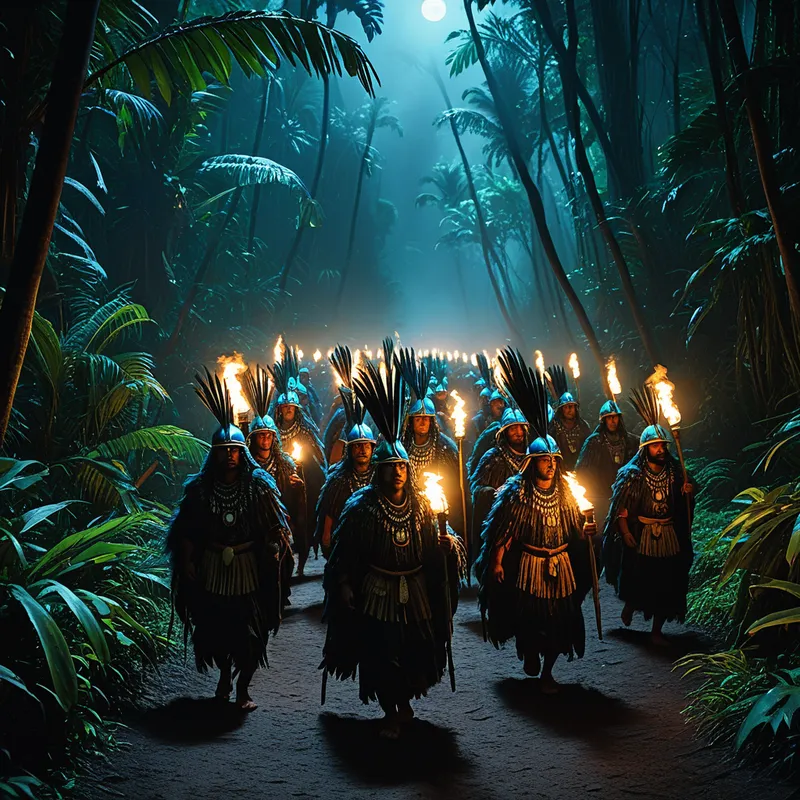
They come from the sea mist, from the deep valleys, from the crumbling heiau stones. You hear them first as a low drumming, the heartbeat of the island itself, a rhythm older than memory. Then, the conch shells wail—a long, mournful cry that splits the night. Torches appear, not flames of orange and red, but a cold, spectral light that casts no warmth, only long, grasping shadows.
This is the Huaka‘i Pō, the Night Marchers. They are the ‘aumākua of the ali‘i, the mighty chiefs and fierce warriors of a time when gods walked alongside men. Clad in feathered cloaks of crimson and gold, helmets crested with dog’s teeth, they march in perfect, silent formation. Their faces are set, gazing forward into a time that is not ours. They follow the ala, the sacred roads of their conquests and pilgrimages, paths now buried under modern asphalt or forgotten in the jungle’s embrace.
To see them is to stand at the precipice of worlds. The air grows thick and cold. The scent of salt and ‘ōlena and damp earth fills your nostrils. If you are there, on their path, in their hour, the protocol is absolute. You must fall to the ground, face in the dirt, and offer no gaze, no sound, no breath of disrespect. You are nothing before this procession. You are a leaf in the path of a river of stone.
To look upon them is to invite their gaze in return—and their gaze carries the weight of kapu so absolute it can stop a heart. To hear their names spoken aloud is a summons. But there are tales… tales of those who, through bloodline or pure, unflinching respect, were spared. Of a marcher who recognized a descendant and laid a lei of maile before them. Of the chilling warning that comes as a whisper on the wind just before the drums begin: “Kū i ka moku!” — “Stand aside for the island!”
They pass. The drumming fades, swallowed by the roar of the returning surf. The torchlight dissolves into the rising mist of dawn. And the land exhales, leaving only the memory of a pressure in the air, a resonance in the bones, and the undeniable knowledge that the past is not dead. It walks. It remembers its roads.
Cultural Origins & Context
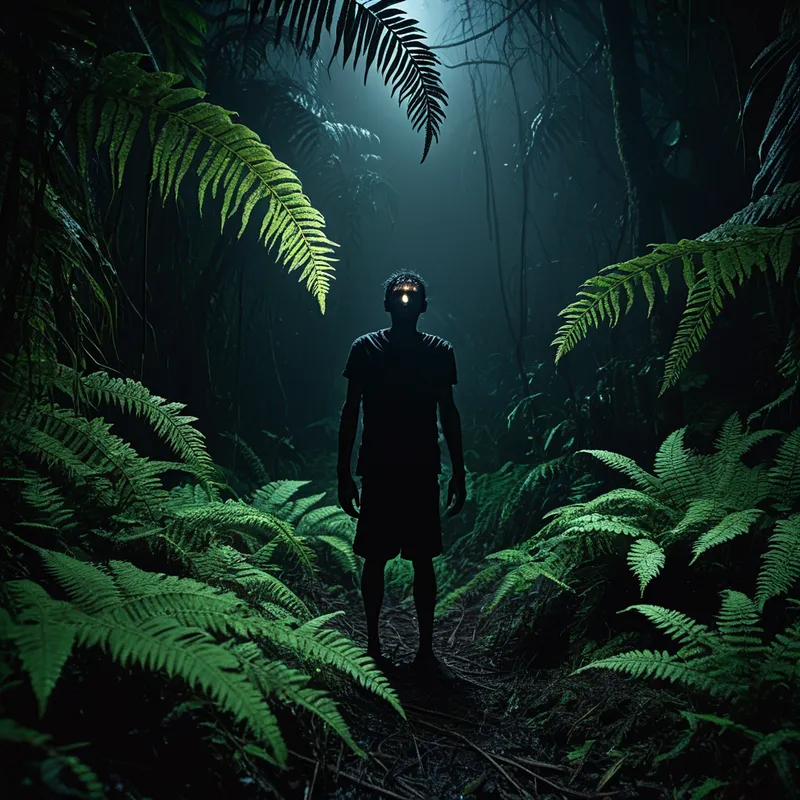
The myth of the Night Marchers is not merely a ghost story; it is a living narrative of history, pono (righteousness), and cultural memory. Rooted in the pre-contact Hawaiian worldview, it served multiple vital functions. Primarily, it was a teaching tool, a dramatic reinforcement of the kapu system. The Huaka‘i Pō embodied the ultimate consequence of violating sacred law—the wrath of deified ancestors themselves. Their prescribed paths often traced the routes of historical battles, royal processions, or burials, literally mapping the island’s political and spiritual geography onto the landscape.
These stories were passed down mo‘olelo, often by kāhuna and elders, to instill respect for the kūpuna, for the land (‘āina), and for the unseen forces that govern life. To speak of them was to acknowledge the continuous presence of the past. In a culture where genealogy (mo‘okū‘auhau) was identity, the Night Marchers were a potent reminder that one’s actions were always witnessed by the long chain of ancestors that came before.
Symbolic Architecture
At its core, the myth is a profound encounter with the psychic [weight](/symbols/weight “Symbol: Weight symbolizes burdens, responsibilities, and emotional loads one carries in life.”/) of [history](/symbols/history “Symbol: History in dreams often represents the dreamer’s past experiences, lessons learned, or unresolved issues that continue to influence their present.”/) and [lineage](/symbols/lineage “Symbol: Represents ancestral heritage, family connections, and the transmission of traits, values, and responsibilities across generations.”/). The [Night](/symbols/night “Symbol: Night often symbolizes the unconscious, mystery, and the unknown, representing the realm of dreams and intuition.”/) Marchers symbolize the collective, unconscious [authority](/symbols/authority “Symbol: A symbol representing power structures, rules, and control, often reflecting one’s relationship with societal or personal governance.”/) of the past—the traditions, traumas, triumphs, and unfulfilled destinies of our forebears that march inexorably through the psyche.
The past is not a silent museum; it is a procession with its own laws, its own paths, and its own relentless momentum. To stand upright before it is to be annihilated by its gaze.
The cold, spectral [torchlight](/symbols/torchlight “Symbol: Torchlight symbolizes guidance, clarity, and enlightenment. It illuminates dark paths, representing knowledge, hope, and the journey toward understanding.”/) represents [knowledge](/symbols/knowledge “Symbol: Knowledge symbolizes learning, understanding, and wisdom, embodying the acquisition of information and enlightenment.”/) that illuminates but does not warm—the hard, factual truths of history, the cold light of [legacy](/symbols/legacy “Symbol: What one leaves behind for future generations, encompassing values, achievements, possessions, and memory.”/). The requirement to prostrate oneself is not merely an act of submission, but one of profound recognition. It is the ego’s necessary surrender to a force greater than individual will, the conscious mind acknowledging the sovereignty of the ancestral and [collective unconscious](/symbols/collective-unconscious “Symbol: The Collective Unconscious refers to the part of the unconscious mind shared among beings of the same species, embodying universal experiences and archetypes.”/). The [path](/symbols/path “Symbol: The ‘path’ symbolizes a journey, choices, and the direction one’s life is taking, often representing individual growth and exploration.”/) (ala) they walk is the predetermined [pattern](/symbols/pattern “Symbol: A ‘Pattern’ in dreams often signifies the underlying structure of experiences and thoughts, representing both order and the repetitiveness of life’s situations.”/), the karma or [fate](/symbols/fate “Symbol: Fate represents the belief in predetermined outcomes, suggesting that some aspects of life are beyond human control.”/) laid down by previous generations, which the living must learn to navigate, not obstruct.
The Dreamer’s Resonance
When this myth pattern erupts in modern dreams, it often signals a confrontation with one’s internalized “ancestors.” These are not necessarily familial ghosts, but the accumulated authority figures, cultural mandates, and inherited beliefs that form the silent, marching column of our psychic conditioning.
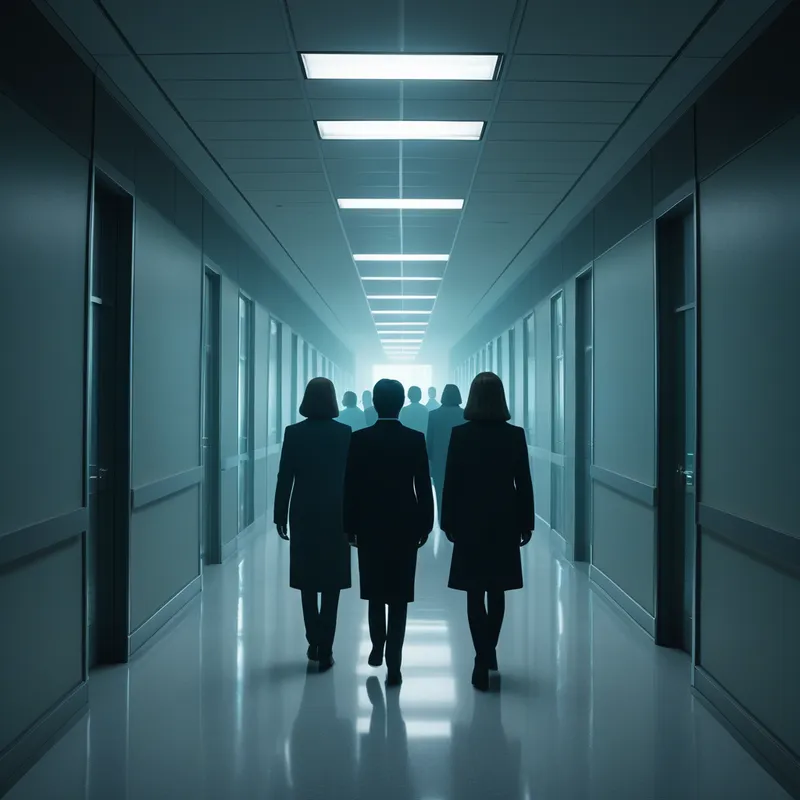
The dreamer may find themselves in a familiar place—a childhood home, a workplace—suddenly transformed by the approach of a silent, imposing procession. The somatic feeling is one of freezing dread, a pressure in the chest, an instinct to hide or become invisible. This is the psyche’s alarm at the activation of deep, often punishing, super-ego structures. The dream presents a critical threshold: will the dreamer look, challenging the inherited mandate (risking psychic dissolution), or will they obey the old protocol and submit (feeling the shame of self-erasure)? This dream is a rite of passage at the border of individuation, where the individual spirit meets the collective ghost.
Alchemical Translation
The alchemical work modeled by the Night Marchers myth is the transmutation of blind obedience into conscious reverence. The initial, literal prostration is the necessary first stage—nigredo, the blackening. It is the humbling of the ego, the recognition of the power of the patterns we inherited.
The goal is not to stop the procession, but to learn its routes, to pay its respects, and finally, to find a way to walk beside it without being trampled by it.
The individuation process involves slowly, respectfully, raising one’s gaze. Not to challenge the marchers directly, but to study them. To learn their names (understanding one’s history), to map their paths (seeing the patterns in one’s life), and to discern if one carries their blood (identifying with or differentiating from their legacy). The ultimate triumph is not conquest, but a sacred diplomacy with the past. It is the moment when the dreamer, having shown utter respect, is “recognized” by the procession—perhaps receiving a symbol (the maile lei). This signifies the integration of ancestral strength without ancestral tyranny, allowing the individual to honor the past while walking their own, newly conscious path into the future.
Associated Symbols
Explore related symbols from the CaleaDream lexicon:
- Night — The essential domain of the Night Marchers, representing the unconscious, the unknown, and the time when the veil between worlds is thinnest.
- Path — The sacred ala they follow, symbolizing destiny, ancestral patterns, and the predetermined routes laid down by history that we must learn to navigate.
- Ritual — The strict protocol of prostration and silence is a ritual of encounter, teaching that engagement with deep forces requires prescribed forms of respect and containment.
- Ancestor — The Marchers are the ultimate ancestors, embodying the full, imposing weight and authority of the lineage that precedes and shapes the individual.
- Fear — The primary somatic response to the procession, representing the healthy terror of the numinous and the ego’s fear of being subsumed by a greater power.
- Threshold — The moment of encounter is a psychic threshold, a point of no return where one must choose how to relate to the overwhelming forces of the past.
- Respect — The core lesson of the myth; not passive fear, but active, embodied reverence as the only viable currency for interacting with sacred, ancestral power.
- Shadow — The Marchers can represent the collective shadow of a lineage—the unacknowledged wars, shames, and triumphs that march on in the unconscious.
- Order — Their silent, perfect formation represents the rigid, implacable order of tradition and law, against which the individual consciousness must define itself.
- Destiny — Their unwavering march along ancient paths mirrors the concept of a fate or destiny woven by ancestral actions, which the living inherit and must confront.