The Lament for Nippur Myth Meaning & Symbolism
A Sumerian lamentation myth detailing the wrath of the god Enlil, the destruction of the sacred city Nippur, and its eventual restoration through penitence and divine grace.
The Tale of The Lament for Nippur
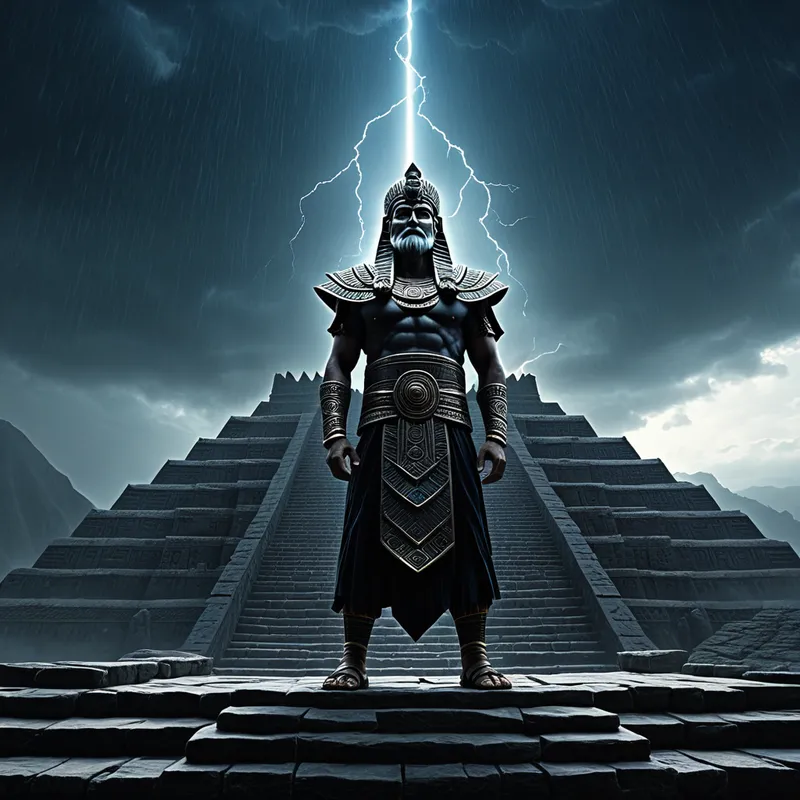
Hear now the tale of the first city, the bond between heaven and earth that was broken. In the land between the rivers, where the silt was dark and life was rich, stood Nippur. Its heart was the Ekur, the “Mountain House,” a ziggurat that pierced the low-hanging sky. Here, the air hummed with the presence of Enlil. His breath was the wind that filled the sails on the Euphrates; his word was the law that ordered the cosmos.
But a shadow fell upon the sacred precincts. The precise nature of the offense is lost to the whispering sands—perhaps a ritual neglected, a taboo transgressed, a pride grown too great in the hearts of its people. The divine order, the Me, was fractured. And Enlil, the great king, the father whose word could not be unsaid, turned his face away.
His turning was not silent. It was a storm. The Sebitti, his fearsome weapons, were unleashed. A wind that was not for winnowing grain but for scouring stone swept down from the Ukkin. It was a wind that carried silence—the silence of abandoned marketplaces, of stilled looms, of prayers that died on trembling lips. The great gates of the Ekur groaned and shattered. The sacred vessels, the Gis-ghag, were cast down. The city’s life-force, its Ni, drained into the dust.
Nippur became a ghost. Its canals, once vibrant arteries, filled with silt and reeds. Wild dogs howled in the halls where hymns once echoed. The goddess Ninlil, Enlil’s consort, wept tears that became salt flats. The people who remained did not fight; they lamented. They tore their garments, poured ashes on their heads, and raised a great, collective cry to the unhearing heavens. They did not demand; they confessed. They recounted the city’s former glory—the sweet smoke of offerings, the processions of priests, the justice that flowed from its courts—and laid bare its present, utter desolation. This lamentation was their only weapon, their only offering.
And in the divine assembly, the lamentation rose. It pierced the council of the gods. The other Anunnaki heard the sound of true grief, the acknowledgment of the broken bond. Their hearts were stirred. Moved by this profound display of penitence and loss, they interceded. They spoke before Enlil’s majestic, wounded presence. They reminded him of his own essence as the source of order, not just its destroyer.
The storm in Enlil’s heart began to still. His decree of abandonment was not revoked, for a god’s word is eternal, but it was transformed. A new word was spoken: a word of return. He commanded the winds of destruction to become winds of cleansing. He decreed the rebuilding. The sacred Tupsimati was taken up once more. Craftsmen and priests returned, not to a city of arrogance, but to a city of memory and humility. The Ekur was restored, stone by stone, its purpose renewed. The bond was remade, not as it was, but forged anew in the crucible of loss and acknowledged fault. The lament itself became the first hymn of the new age.
Cultural Origins & Context
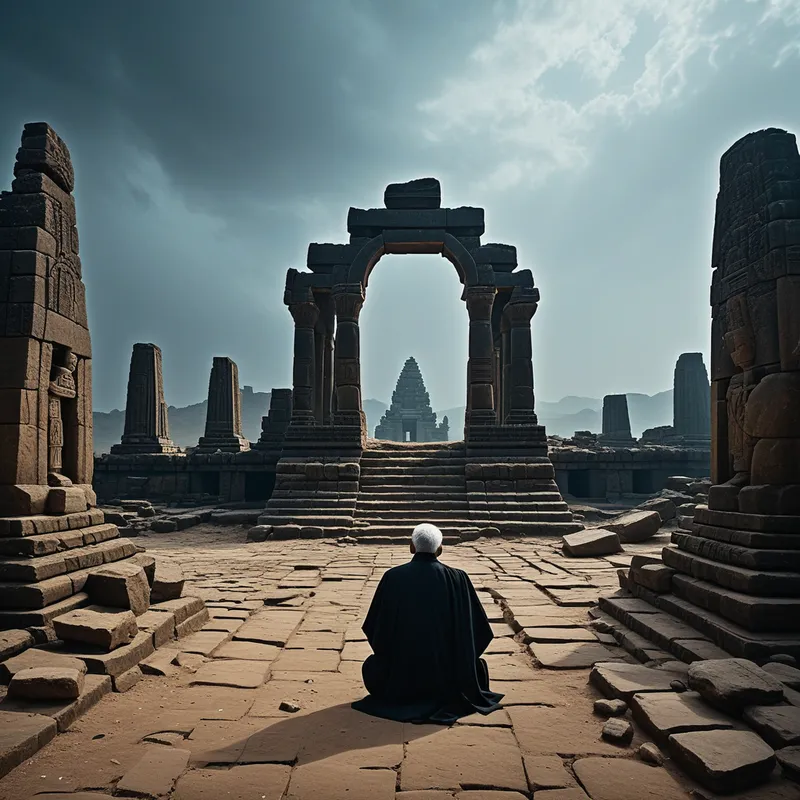
“The Lament for Nippur” is not a myth of distant, heroic antiquity for the Sumerians; it was a living, liturgical reality. These compositions, known as city laments, were a profound literary and religious genre. They were likely recited, chanted, or sung during periods of national crisis—after the very real destruction of a city by invasion, natural disaster, or perceived divine displeasure. The lament for Nippur, as the foremost cult center of Enlil, held particular weight.
The function was multifaceted. On a ritual level, it was a performative act of atonement, meant to soothe the anger of the gods and restore Me. On a psychological level, it provided a narrative container for collective trauma, transforming chaotic suffering into a structured, sacred story with a known resolution: restoration. On a political level, it legitimized the ruling king, who was always the intermediary between god and people, by framing the rebuilding of the temple as the central act of restoring cosmic order. The scribes who wrote these laments were not mere recorders; they were therapists of the polis, weaving grief into a tapestry that promised meaning and return.
Symbolic Architecture
At its core, the myth is a profound exploration of the dynamics of a sacred [relationship](/symbols/relationship “Symbol: A representation of connections we have with others in our lives, often reflecting our emotional state.”/). Nippur and its Ekur [temple](/symbols/temple “Symbol: A temple often symbolizes spirituality, sanctuary, and a deep connection to the sacred aspects of life.”/) represent the [axis](/symbols/axis “Symbol: A central line or principle around which things revolve, representing stability, orientation, and the fundamental structure of reality or consciousness.”/) mundi, the point where [human](/symbols/human “Symbol: The symbol of a human represents individuality, complexity of emotions, and social relationships.”/) order (Ki-en-gi) consciously connects with divine order (Me). Enlil’s [wrath](/symbols/wrath “Symbol: Intense, often destructive anger representing repressed emotions, moral outrage, or survival instincts.”/) symbolizes the terrifying but necessary [aspect](/symbols/aspect “Symbol: A distinct feature, quality, or perspective of something, often representing a partial view of a larger whole.”/) of the [Father](/symbols/father “Symbol: The father figure in dreams often symbolizes authority, protection, guidance, and the quest for approval or validation.”/)/[King](/symbols/king “Symbol: A symbol of ultimate authority, leadership, and societal order, often representing the dreamer’s inner power or external control figures.”/) [archetype](/symbols/archetype “Symbol: A universal, primordial pattern or prototype in the collective unconscious that shapes human experience, behavior, and creative expression.”/): [the principle](/symbols/the-principle “Symbol: A fundamental truth, law, or doctrine that serves as a foundation for a system of belief, behavior, or reasoning, often representing moral or ethical standards.”/) that withdraws its sustaining power when its laws are violated. The destruction is not mere [punishment](/symbols/punishment “Symbol: A dream symbol representing consequences for actions, often tied to guilt, societal rules, or internal moral conflicts.”/); it is the inevitable consequence of a broken [covenant](/symbols/covenant “Symbol: A binding agreement or sacred promise between parties, often carrying deep moral, spiritual, or social obligations and consequences.”/).
The most profound temple is first built in the heart through humility; its stones are the acknowledgment of fault.
The key alchemical agent is the Lament itself. It is not a protest, but a [confession](/symbols/confession “Symbol: The act of revealing hidden truths, secrets, or wrongdoings, often to relieve guilt, seek forgiveness, or achieve psychological liberation.”/). It is the emotional and verbal recognition of the [rupture](/symbols/rupture “Symbol: A sudden break or tear in continuity, often representing abrupt change, separation, or the shattering of established patterns.”/). This act of collective grieving—the detailed remembrance of what was lost, paired with the [acceptance](/symbols/acceptance “Symbol: The experience of being welcomed, approved, or integrated into a group or situation, often involving validation of one’s identity or actions.”/) of [responsibility](/symbols/responsibility “Symbol: Responsibility in dreams often signifies the weight of duties and the expectations placed upon the dreamer.”/)—performs the essential psychic function. It moves [energy](/symbols/energy “Symbol: Energy symbolizes vitality, motivation, and the drive that fuels actions and ambitions.”/) from blame and victimhood to accountability and plea. It makes the invisible [rupture](/symbols/rupture “Symbol: A sudden break or tear in continuity, often representing abrupt change, separation, or the shattering of established patterns.”/) visible and audible to the divine [assembly](/symbols/assembly “Symbol: Assembly symbolizes collaboration, unity, and the coming together of individuals or ideas in pursuit of a common goal.”/), the symbolic representation of a higher [consciousness](/symbols/consciousness “Symbol: Consciousness represents the state of awareness and perception, encompassing thoughts, feelings, and experiences.”/). Restoration becomes possible only after the lament has fully echoed in the hollowed-out [space](/symbols/space “Symbol: Dreaming of ‘Space’ often symbolizes the vastness of potential, personal freedom, or feelings of isolation and exploration in one’s life.”/).
The Dreamer’s Resonance
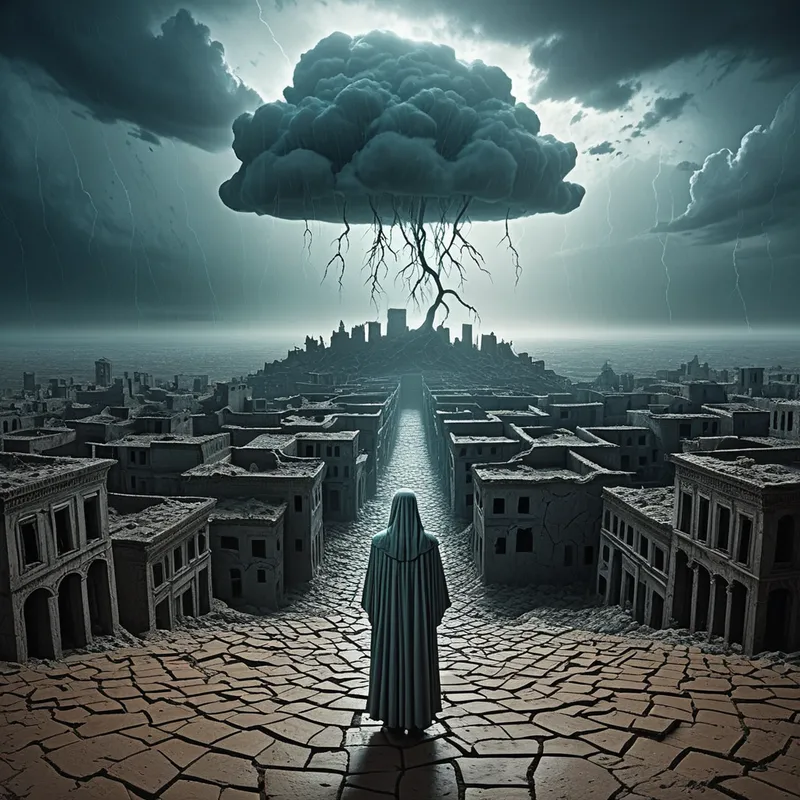
When this myth pattern stirs in the modern dreamer, it often manifests as dreams of profound, inexplicable desolation. You may dream of your childhood home in ruins, your workplace abandoned and overgrown, or a familiar cityscape rendered silent and empty. There is a palpable sense of a “presence” having withdrawn, leaving a chilling vacuum. These are not dreams of attack, but of abandonment.
Somatically, this can feel like a hollowing out in the chest, a loss of vital energy or motivation—a psychological “Nippur.” The dream is indicating that a central psychic structure, perhaps related to one’s sense of purpose, faith, or inner authority (the personal Ekur), has been neglected or violated. The “divine wrath” is the natural consequence of this inner betrayal, experienced as depression, ennui, or a collapse of meaning. The dream calls not for fighting the emptiness, but for the courageous, grieving work of the lament: to sit in the ruins, to name what has been lost, and to acknowledge one’s own part in the collapse without falling into total self-annihilation.
Alchemical Translation
The individuation process modeled here is the transformation of a psyche ruled by a brittle, externalized authority (the distant, potentially wrathful God/King) into one grounded in a renewed, internalized sacred center. The first stage is The Withdrawal of the Center. Our old, unconscious identifications (with a job, a role, a belief system) crumble. This feels like divine punishment, but it is the necessary de-structuring of an outdated ego-temple.
The crucial, active stage is The Performance of the Lament. This is the shadow work. It is the conscious, feeling acknowledgment of the loss, the writing or speaking of one’s own “city lament.” This is not wallowing; it is the alchemical solutio—dissolving the hardened structures of pride and blame in the tears of honest grief and self-assessment.
The god returns only when the echo of the lament has filled the space his absence created.
Finally, we reach The Decree of Return. This is not a return to the old city. It is the emergence of a new, more conscious ordering principle from within. The “command to rebuild” is the arising of genuine, humble intention from the cleared ground of the self. The new temple is built with the wisdom of the ruin inscribed in every brick. The restored connection is no longer one of childish dependency, but of mature covenant, where the individual becomes a conscious steward of their own inner Me.
Associated Symbols
Explore related symbols from the CaleaDream lexicon:
- Temple — The Ekur represents the sacred center of the self, the psychic structure that connects the individual consciousness to the transpersonal, divine order.
- Grief — The collective lament is the essential, transformative emotion that bridges the chasm between divine wrath and restoration, making loss conscious and meaningful.
- Order — The myth revolves around the shattering and meticulous restoration of Me, the fundamental laws of cosmos and psyche.
- Stone — The shattered stones of the temple signify the collapse of rigid, external structures, while their rebuilding represents the patient reconstruction of a resilient inner foundation.
- Wind — Enlil’s destructive storm-wind embodies the terrifying, cleansing power of the spirit that sweeps away what is stagnant and falsely constructed.
- God — Enlil represents the archetype of the Father/King, the principle of authority, law, and the spirit that both judges and ultimately renews.
- Ritual — The performance of the lament itself is the central ritual act, a prescribed container for chaotic emotion that aims to restore harmony.
- Shadow — The unnamed transgression of Nippur symbolizes the repressed or ignored fault, the shadow element whose denial invites catastrophic psychic collapse.
- Healing — The entire narrative arc, from destruction through lament to rebuilding, is a profound map of psychic healing at a collective and individual level.
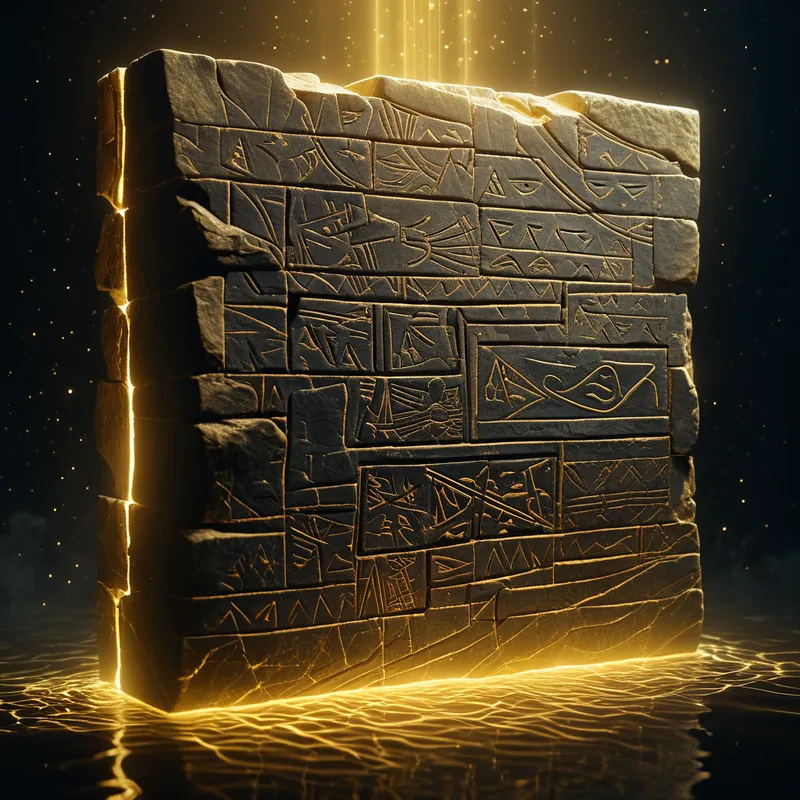
- Sumerian Tablet — The physical medium of the myth, representing the act of inscribing trauma into a permanent, structured form, thereby granting it meaning and a path to resolution.
- Filament — The invisible, golden threads of connection—of memory, prayer, and lament—that ultimately persuade the gods and begin the process of re-weaving the shattered whole.
- Rain — The withheld rains of Enlil’s displeasure and the eventual return of life-giving water symbolize the withdrawal and return of psychic energy and fertility.