The Somatic Echo of Atonement
It begins not as a thought, but as a weight. A specific density in the chest, a low-grade hum in the solar plexus—the somatic echo of an unpaid debt. This is not the sharp sting of fresh guilt, but the deep, tectonic ache of an old fracture in the self. It feels like carrying a stone you forgot you picked up, its edges worn smooth by time, yet its mass unchanged. The body remembers what the conscious mind has filed away: a word that severed a connection, a silence that became a wall, a choice that diverted a life’s river. In dreams, this weight seeks its resolution. It is the psyche’s gravity, pulling you toward the center of a story you have not yet finished telling yourself.
The Dreamer's Log
He finds himself in a vast, empty warehouse—a loading dock from a job he left years ago. It is night, raining. His task is clear: he must find a specific metal locker, one among thousands. When he finally pries it open, there is no monster, only a small, neatly folded blanket, slightly moth-eaten, and a child’s toy he’d forgotten he’d broken. A profound, quiet sorrow washes over him, not of fear, but of recognition. He knows he must take them.
Alchemical Interpretation: The dream presents not a crime to be punished, but a neglected innocence to be reclaimed and mourned.

The False Lead
Atonement is not self-flagellation. It is not the shadow play of the martyr, endlessly replaying the tape of transgression to prove one’s own wretchedness. That is guilt’s masquerade, a performance that keeps the real work at bay. Nor is it the bargaining of the ego, seeking a quick transactional fix—an apology, a donation, a ritual gesture—to silence the inner echo. These are false leads. True atonement is structural. It is the slow, deliberate recalibration of your internal family system, where the exiled part—the one who acted, failed, or harmed—is not banished further, but invited back to the table. The dream of atonement distinguishes between the wound and the scar; it seeks not to reopen the former, but to honor the formation of the latter.
Psychological Architecture
The architecture of atonement is built in the shadowlands. It is the work of confronting not just what you did, but who you were in that moment—the frightened child, the desperate rebel, the blinded hero. This is Shadow work of the most intimate kind: you must meet your own internal outlaw, not to execute them, but to understand their jurisdiction. Why did that part of you take the helm? What protection did its action, however clumsy or cruel, attempt to provide? The process of individuation here is the reintegration of this disowned self. It is the realization that wholeness is impossible while you are still at war with a faction of your own soul. The dream presents the symbolic debris of that civil war—the broken toy, the abandoned post, the locked room—and asks you to hold it, not as evidence for the prosecution, but as artifacts of a shared history.
Mythic Resonance
Consider the myth of the Fisher King, guardian of the Grail, wounded in the thigh by his own ignorance or desire. His kingdom withers into a wasteland, mirroring his inner stagnation. The healing question—Whom does the Grail serve?—does not come from without, but is ultimately the king’s own confrontation with his sovereignty and service. His atonement is not for a single sin, but for the neglect of his own sacred function; the healing of the land follows the healing of the king’s fractured self. This is the universal firmware: the personal wound becomes cosmic disarray, and restoration is an inside-out process.
Symbolic Nodes
- Unfinished Rooms or Structures: Attics, basements, abandoned houses, construction sites—spaces in psychic limbo.
- Broken or Lost Objects: Especially those with sentimental or childhood resonance, awaiting repair.
- Heavy, Dense Materials: Lead weights, stones, ingots, symbolizing the burden seeking transmutation.
- Searching for a Specific Key or Combination: The quest for the precise mechanism of reconciliation.
- Facing a Forgotten Animal or Child: Encountering a neglected instinct or innocence.
- Paying a Debt in an Unusual Currency: The psyche understanding that repayment must be in kind, but of a transformed kind.
Archetypal Resonance
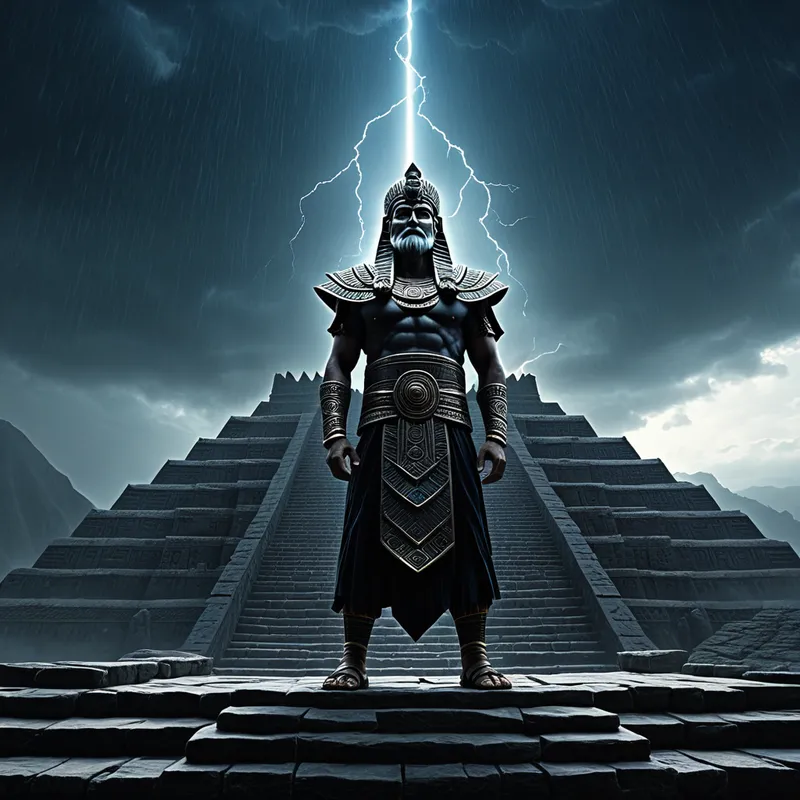
The Shadow Ruler is the archetypal engine of the atonement dream. This is the aspect that failed in its sovereign duty—to the self, to others, to its own code. It is the tyrant who issued the cruel decree, or the abdicated leader who abandoned the throne, leaving inner chaos. Its somatic echo is the weight of the crown left tarnished, the ache of a kingdom in disarray. Its alchemical potential, however, is immense: by facing this shadow, by auditing its failed reign with ruthless compassion, the psyche undergoes the ultimate sovereign act—taking full responsibility. This is how the Shadow Ruler is redeemed, not by seeking power again, but by integrating the profound lesson of its misuse, thus forging a true, internal sovereignty built on integrity rather than control.
The Alchemical Process
The alchemy of atonement requires the heat of unflinching witness and the pressure of suspended judgment. The base metal is the narrative of the event, alloyed with shame. The process begins in the nigredo, the blackening: you must consciously re-enter the memory-space, not to relive the pain, but to observe it with a new, compassionate awareness. This is the heat. The pressure is to hold the contradiction: “I am the one who did that, and I am more than that single act.” In this vessel, the elements separate. The fixed story softens. The albedo, the whitening, arrives as a moment of clarity—seeing the chain of cause, wound, and reaction not as a damnation, but as a tragic, human equation. Finally, the rubedo, the reddening, is the integration. The weight in the chest does not vanish; it transmutes. It becomes a cornerstone in your foundation, a density of experience that grants stability and compassion. The grief is not expelled, but distilled into a tincture of wisdom.

The Integration Protocol
Question 1: If the burden in the dream were not a punishment, but a responsibility trying to return to you, what is it responsible for? (Not what it did, but what it now guards).
Question 2: Which exiled part of your internal family system—the frightened child, the furious rebel, the people-pleaser—was in command during the original fracture? What was it desperately trying to secure or avoid?
Question 3: What small, beautiful thing withered in your inner or outer world because of this unresolved rift? (This points to the true cost, beyond guilt).
Action 1 (Somatic Amnesty): Sit quietly and locate the physical sensation of the “weight” or “debt.” Instead of trying to dissolve it, breathe into that space. Imagine your breath as a neutral, accepting presence, simply keeping company with the sensation. Do this for five minutes. You are not fixing, you are acknowledging.
Action 2 (Unsent Letter of Understanding): Write a letter from the part of you that committed the act (the Shadow Ruler, the frightened child, etc.) to your present-day self. Let it explain its logic, its fear, its limited perspective at the time. Do not send it; this is an internal diplomatic communiqué.
Action 3 (Ritual of Symbolic Exchange): Find a small stone or object that represents the “weight.” Hold it, and consciously transfer into it your old story of guilt and shame. Then, go to a body of water—a river, the sea, even a steady rain. Offer the object to the water, not to be rid of it, but to symbolize its return to the flow of time and its transformation. The action is in the offering, not the disposal.
Final Validation
The path of atonement is the most demanding terrain the soul can navigate, for it asks you to walk back into the fire with only the hope of forging a tool, not the promise of escape. The difficulty is the measure of its importance. This weight you carry is not proof of your brokenness, but evidence of your architecture’s integrity—a system that refuses to let a foundational fracture remain ignored. To heed this call is not to confess to a crime, but to claim a legacy. It is the ultimate act of self-reclamation, where you gather the scattered pieces of your history and, in holding them all at once, finally become sovereign over the entire, complicated, and beautiful kingdom of your self.