The Kecak Dance Origin Myth Meaning & Symbolism
A myth where the human voice becomes a sacred vessel, channeling the cosmic battle of the Ramayana to restore balance between the seen and unseen worlds.
The Tale of The Kecak Dance Origin
Listen. Before there was the dance, there was the silence. Not a peaceful quiet, but the heavy, waiting silence of a world out of balance. The gods had turned their faces away. The temples stood empty of their presence. The people of Bali prayed, but their words fell like stones into a dry well. The unseen world, the realm of spirits and ancestors, had grown thick and restless, pressing against the thin veil of reality, threatening to spill over.
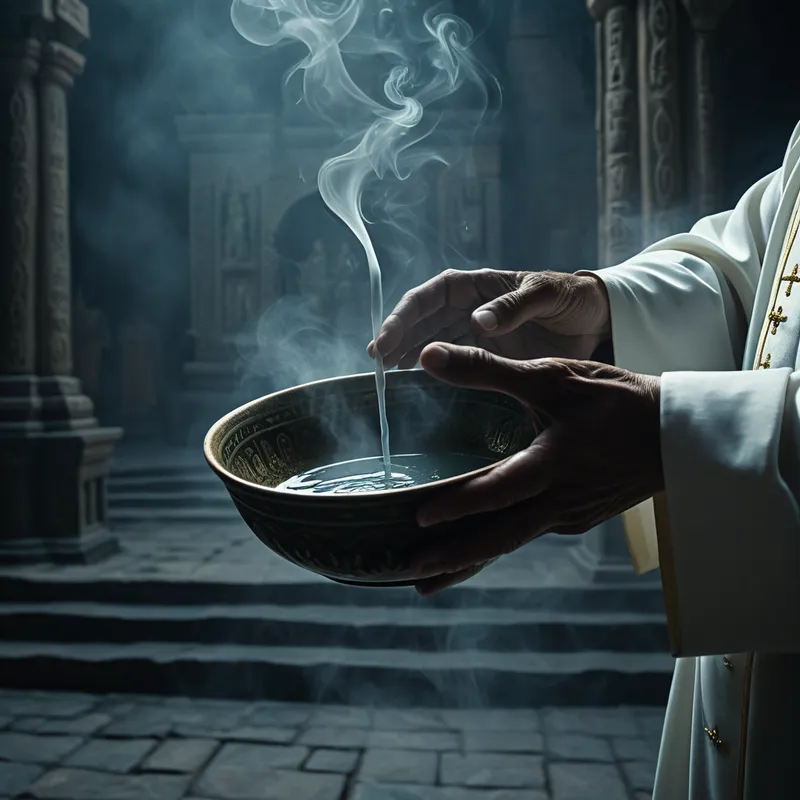
In a village gripped by this dread, a priest, a Pemangku, sat in desperate meditation. His offerings lay untouched. His mantras brought no light. In his despair, a vision came—not from the gods above, but from the ancient story held in the bones of the land itself: the Ramayana. He saw the monkey army, the Vanara, not as legend, but as a living, pulsing force of chaotic loyalty. He heard their chattering, their cries, the percussive rhythm of their movement. It was not music; it was a sonic weapon, a wall of pure sound.
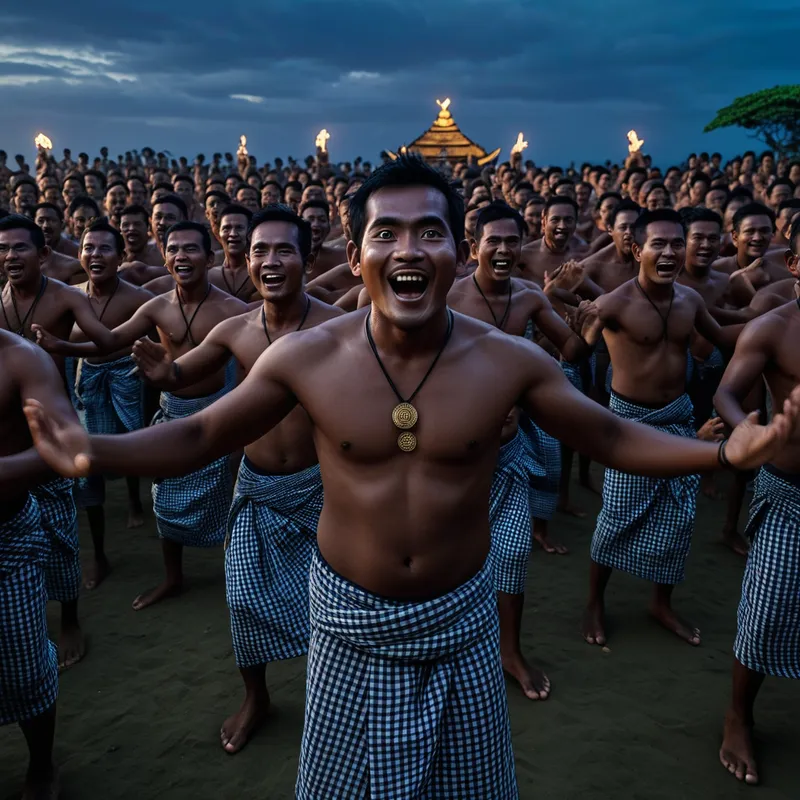
The priest rose, his body trembling not with fear, but with a terrible knowing. He gathered the men of the village, not as performers, but as vessels. He arranged them in concentric circles, a living mandala under the open sky. There were no gamelan, no flutes, no drums. Only their bodies and their voices. “You will not sing a song,” he instructed, his voice a low thunder. “You will become the army. You will become the forest. You will become the bridge between worlds. The sound you make will be the cage and the key.”
And so they began. Not a melody, but a pulse. “Cak!” A sharp, guttural exhalation. Then another. “Cak! Cak!” One voice, then five, then fifty, then a hundred. The sound built, layer upon layer, interlocking like the roots of a banyan tree. It was the chatter of a thousand monkeys, the rustle of leaves, the beat of war. The circle became a living engine of sound, a rhythmic vortex that pulled at the very air.
The priest stepped into the center, the eye of the storm. As the chant—the “Kecak”—swelled to a deafening roar, he began to move. But it was no longer him moving. His limbs grew stiff, his eyes saw a distant battlefield. He was possessed. The story poured into him. He was Rahwana, the arrogant abductor. Then, in a shuddering transformation, he was Hanuman, the loyal warrior, leaping and straining against invisible chains. The story of Rama, Sita, and the great battle of Lanka was not acted out; it was channeled through him, given flesh by the relentless, hypnotic wall of sound from the circle of men.
The villagers watching did not see a play. They felt the cosmic battle raging in their midst. The “cak-cak-cak” was the army of Hanuman building a bridge over the ocean. It was the fire of Lanka roaring. It was the very rhythm of creation and destruction. As the chant reached its crescendo, a final, unified “Cak!” shattered the night. The priest collapsed, spent. A profound, clean silence returned—but this was a different silence. It was the silence of a storm passed, of balance restored. The gods had been called back, not with prayer, but with a sound so primal it shook the foundations of the unseen. The dance was born not as entertainment, but as exorcism. A sacred technology of the human voice.
Cultural Origins & Context
The Kecak, often called the “Monkey Chant,” is a singular phenomenon in the rich tapestry of Balinese performing arts. Its origins are not lost in the mists of antiquity but are traceable to the 1930s in the villages of Bona and Bedulu. It emerged from a fusion of older, trance-based ritual practices known as Sanghyang—exorcistic dances designed to combat epidemics and spiritual malaise—and the pervasive narrative of the Ramayana epic.
This was not a top-down creation by court artists, but a grassroots, communal innovation. The genius of its creators was in its radical minimalism. By stripping away the expensive and complex gamelan orchestra, they created a performance art accessible to any village. The instrument became the human collective itself. The myth of its origin, while not “ancient” in a literal sense, functions as a powerful charter myth. It explains and sanctifies the dance’s unique form, grounding its hypnotic power in a moment of divine necessity. It answers the question: why does this sound, this particular arrangement of bodies and voices, hold such power? The myth declares it was revealed as the only tool potent enough to recalibrate a world slipping into chaos, establishing the Kecak as a legitimate and potent form of sacred communication, not mere folk art.
Symbolic Architecture
At its core, the Kecak [origin](/symbols/origin “Symbol: The starting point of a journey, often representing one’s roots, source, or initial state before transformation.”/) myth is about the [human](/symbols/human “Symbol: The symbol of a human represents individuality, complexity of emotions, and social relationships.”/) [capacity](/symbols/capacity “Symbol: A measure of one’s potential, limits, or ability to contain, process, or achieve something, often reflecting self-assessment or external demands.”/) to become a [conduit](/symbols/conduit “Symbol: A passage or channel that transfers energy, information, or substance from one place to another, often hidden or structural.”/) for forces larger than the individual. The circle of chanting men represents the unified [community](/symbols/community “Symbol: Community in dreams symbolizes connection, support, and the need for belonging.”/), the collective psyche, acting as a [battery](/symbols/battery “Symbol: A battery represents energy, potential, and the resources necessary to engage actively in life.”/) or a container. The [priest](/symbols/priest “Symbol: A priest symbolizes spirituality, guidance, and the quest for understanding the deeper meanings of life.”/)-dancer in the center is the individuated [consciousness](/symbols/consciousness “Symbol: Consciousness represents the state of awareness and perception, encompassing thoughts, feelings, and experiences.”/), the focal point through which archetypal energies—the [Hero](/symbols/hero “Symbol: A hero embodies strength, courage, and the ability to overcome significant challenges.”/) (Hanuman), the [Shadow](/symbols/shadow “Symbol: The ‘shadow’ embodies the unconscious, repressed aspects of the self and often represents fears or hidden emotions.”/) (Rahwana)—are made visible and integrated.
The voice, in this myth, is not for speaking to the divine, but for becoming the divine instrument. The chant is the ritual construction of a sonic mandala, a sacred geometry of sound that orders chaos.
The [absence](/symbols/absence “Symbol: The state of something missing, void, or not present. Often signifies loss, potential, or existential questioning.”/) of instrumental [music](/symbols/music “Symbol: Music in dreams often symbolizes the harmony between the conscious and unconscious mind, illustrating emotional expression and communication.”/) is profoundly symbolic. It signifies a return to the primordial, pre-cultural tool: the [breath](/symbols/breath “Symbol: Breath symbolizes life, vitality, and the connection between the physical and spiritual realms.”/) and the [body](/symbols/body “Symbol: The body in dreams often symbolizes the dreamer’s self-identity, personal health, and the relationship they have with their physical existence.”/). The “cak” is a fundamental [phoneme](/symbols/phoneme “Symbol: The smallest unit of sound in language, representing the building blocks of communication and expression.”/), a building block of [language](/symbols/language “Symbol: Language symbolizes communication, understanding, and the complexities of expressing thoughts and emotions.”/) stripped of semantic meaning to reveal its raw, vibrational power. The myth presents possession not as a [loss](/symbols/loss “Symbol: Loss often symbolizes change, grief, and transformation in dreams, representing the emotional or psychological detachment from something or someone significant.”/) of self, but as a sacred exchange: individual [identity](/symbols/identity “Symbol: Identity represents the sense of self, encompassing personal beliefs, cultural background, and social roles.”/) is temporarily surrendered so that the eternal patterns of the cosmic [story](/symbols/story “Symbol: The symbol of ‘Story’ represents the narrative woven through our lives, embodying experiences, lessons, and emotions that shape our identities.”/) (the Ramayana) can be embodied and re-enacted, thereby healing the [rupture](/symbols/rupture “Symbol: A sudden break or tear in continuity, often representing abrupt change, separation, or the shattering of established patterns.”/) in the cosmic and [social order](/symbols/social-order “Symbol: Dreams of social order reflect subconscious processing of hierarchy, belonging, and one’s place within collective structures.”/).
The Dreamer’s Resonance
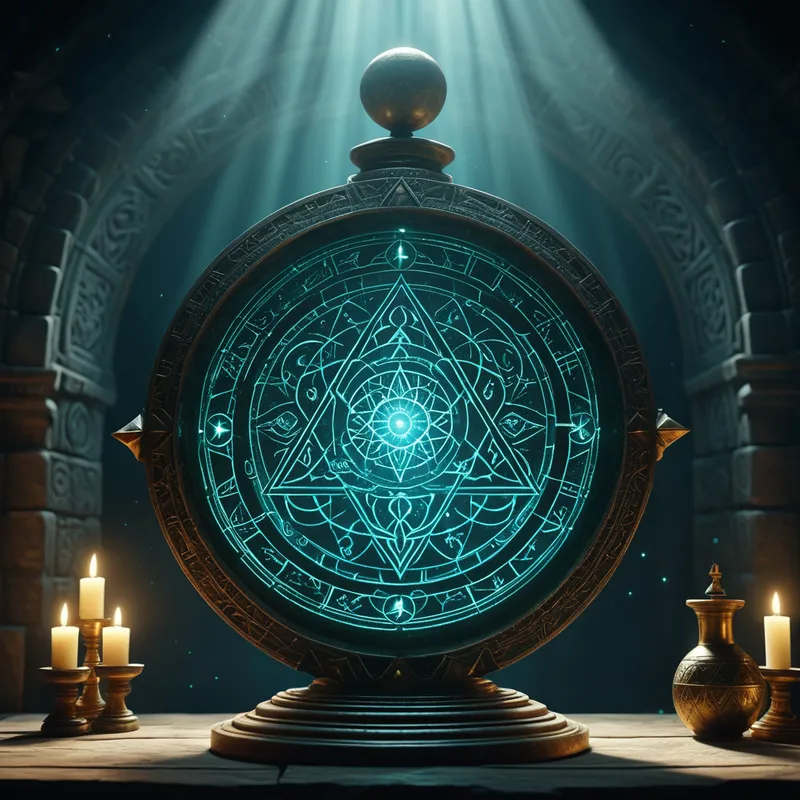
To dream in the pattern of the Kecak myth is to dream of being overtaken by a power beyond your control, yet for a purpose that feels ultimately correct. You may dream of your voice changing, becoming part of a overwhelming chorus, or of being surrounded by a pulsating circle of figures whose faces are obscured. This is the psyche’s somatic representation of a profound psychological process: the ego’s necessary surrender to the autonomous, archetypal forces of the unconscious.
The anxiety in the dream—the feeling of being possessed—mirrors the initial fear of engaging with the shadow or the complex. The rhythmic, relentless quality of the dream imagery points to a process already in motion, an internal “chant” that has begun its work of breaking down old structures. The dreamer is in the midst of what the alchemists called the nigredo, the blackening, where the conscious personality is dissolved in the service of a larger, more complete Self. The dream is the psyche’s own ritual, using the “sound” of unconscious content to reorganize itself from a state of dis-ease (the silent gods) toward a new, more resilient equilibrium.
Alchemical Translation
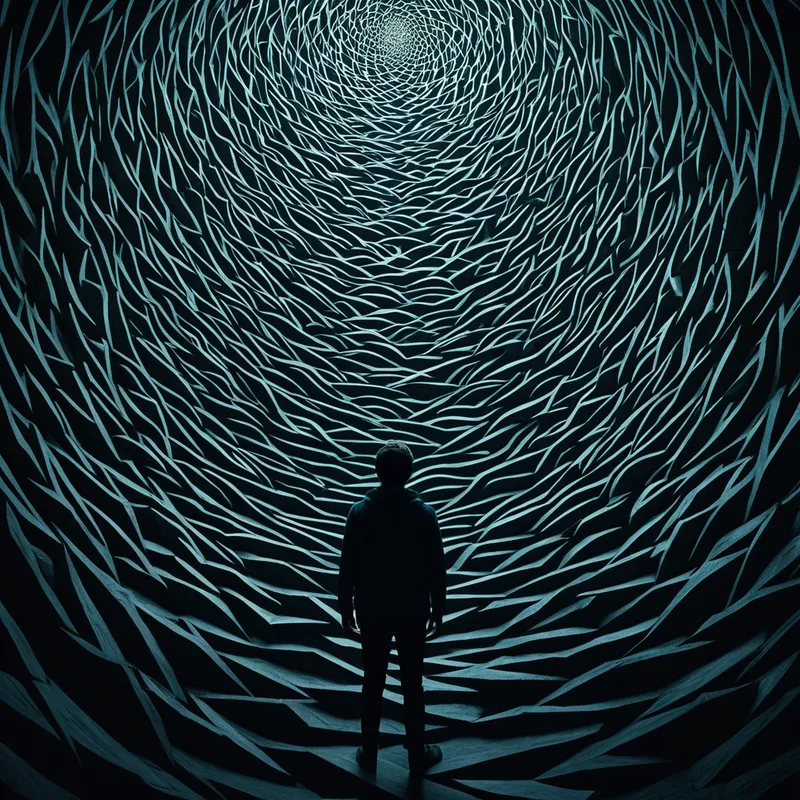
The Kecak origin myth is a precise blueprint for the alchemical process of individuation. The initial state—the silent gods, the ineffective prayers—represents the neurosis of the modern individual: a feeling of disconnection, of life being meaningless or out of sync, where one’s conscious efforts (prayers) yield no results.
The first, crucial step is the priest’s vision: the recognition that the healing power does not come from “above” (an external savior) but from within the deep, inherited structure of the psyche itself (the internalized Ramayana).
The gathering of the men is the act of consciously assembling all parts of the psyche—the different subpersonalities, drives, and energies—into a working, focused container (the circle). The relentless, repetitive chant is the disciplined, often monotonous work of analysis, mindfulness, or active imagination: the consistent application of consciousness to unconscious material. This “sound” agitates, contains, and finally transforms.
The central figure’s possession is the climax of the opus: the ego’s temporary dissolution and the direct encounter with the archetypes. One must “become” one’s inner Rahwana (the shadow, the tyrant) and one’s inner Hanuman (the loyal servant, the trickster-hero) to integrate them. The final collapse and restored silence signify the coniunctio oppositorum—the union of opposites. The chaos has been given form through the ritual; the disparate parts of the self have been orchestrated into a harmonious whole. The individual is not possessed by the story but has integrated it, achieving a new level of psychic order and vitality. The dance, therefore, is not something one watches, but a process one undergoes: the alchemical transformation of fragmented being into an instrument of wholeness.
Associated Symbols
Explore related symbols from the CaleaDream lexicon:
- Dance — The central act of the myth, representing the ritualized, embodied process of channeling archetypal forces and transforming psychic chaos into cosmic order.
- Ritual — The formal, precise structure of the Kecak ceremony, which provides the sacred container necessary for the dangerous process of divine possession and communal catharsis.
- Circle — The geometric formation of the chanters, symbolizing the sacred container, the mandala of protection, and the wholeness of the community acting as one psyche.
- Voice — The primary instrument and sacred tool, representing raw, pre-cultural power, the breath of life itself shaped into a bridge between the human and divine realms.
- Chant — The repetitive, hypnotic vocalization that induces trance, dissolves ego boundaries, and constructs a sonic reality capable of holding immense archetypal energy.
- Possession — The climactic moment of the ritual, symbolizing the ego’s surrender to and temporary union with a transpersonal archetypal force for the purpose of healing.
- Order — The ultimate goal of the ritual, the restoration of balance (dharma) between the seen and unseen worlds, mirrored in the psyche as the integration of conscious and unconscious.
- Forest — Represented by the chattering chorus, it symbolizes the untamed, primal realm of instinct and the chaotic yet loyal collective (the monkey army).
- Bridge — The function of the chant itself, which builds a sonic span over the ocean of the unconscious, allowing the hero (consciousness) to rescue the anima (Sita) from the shadow.
- Fire — The transformative element channeled by Hanuman in the story, here evoked through the fervor of the chant and the psychic heat of the ritual trance state.
- Shadow — Embodied by the demon king Rahwana, it represents the repressed, powerful, and often tyrannical aspects of the psyche that must be confronted and integrated.
- Hero — Represented by Hanuman and Rama, it is the archetypal force of devoted service, cunning strength, and righteous action that is invoked to defeat inner chaos.