The Journey to the West Myth Meaning & Symbolism
A monk, a trickster, and two demons travel west to retrieve sacred texts, facing trials that forge spirit from chaos, in the ultimate allegory of self-cultivation.
The Tale of The Journey to the West
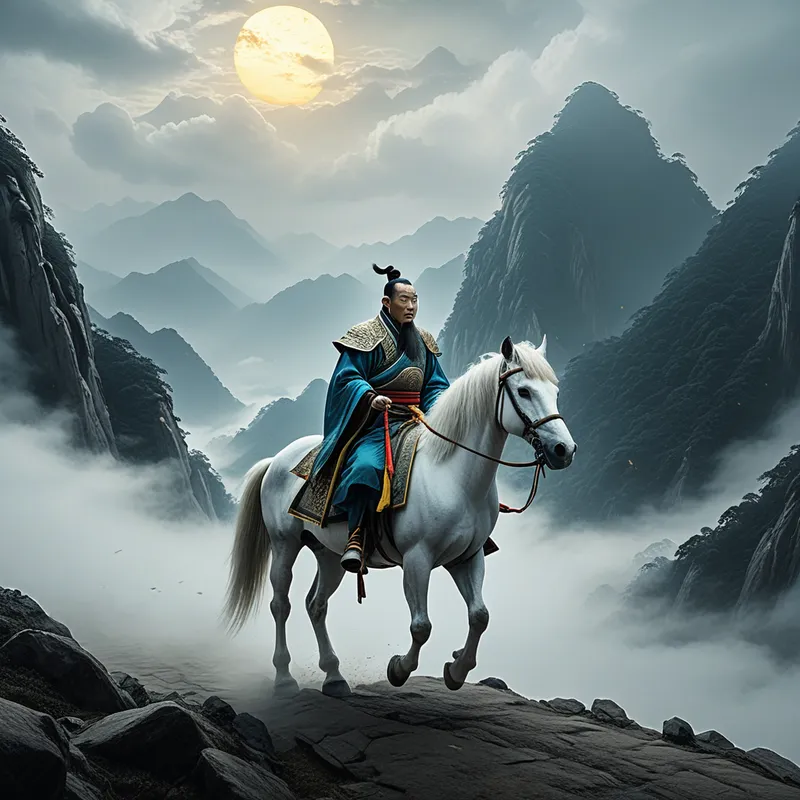
Hear now the tale of a journey not of miles, but of the spirit. In the golden age of the Tang, when the empire was a garden of peace, a whisper arose from the Western Heaven. The sacred Dharma was incomplete in the Middle Kingdom. A call echoed in the heart of a pious monk, Xuanzang. He would go west, across ten thousand leagues of demon-haunted wilds, to retrieve the true scriptures.
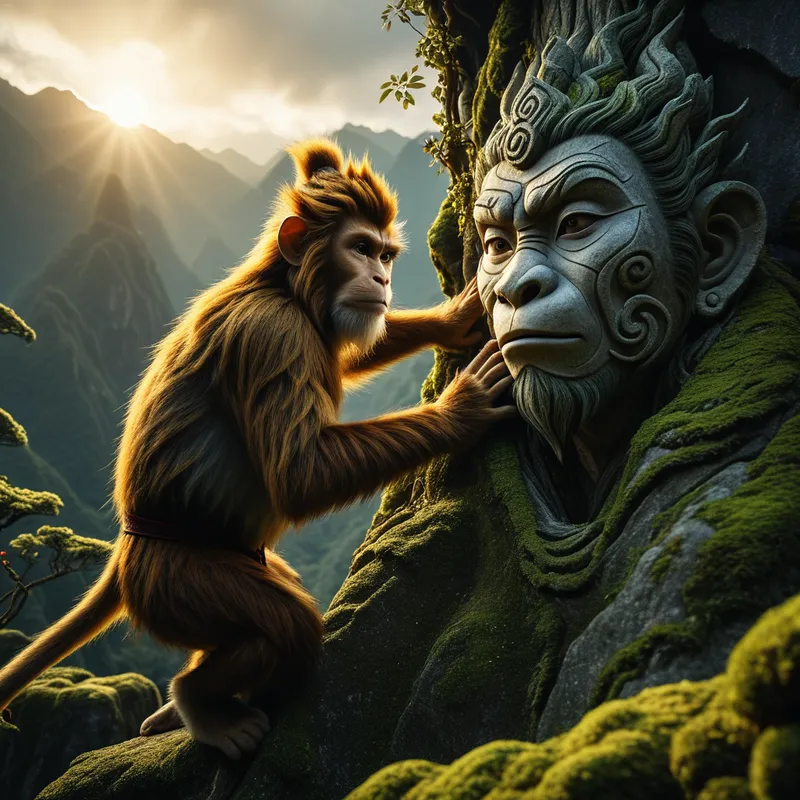
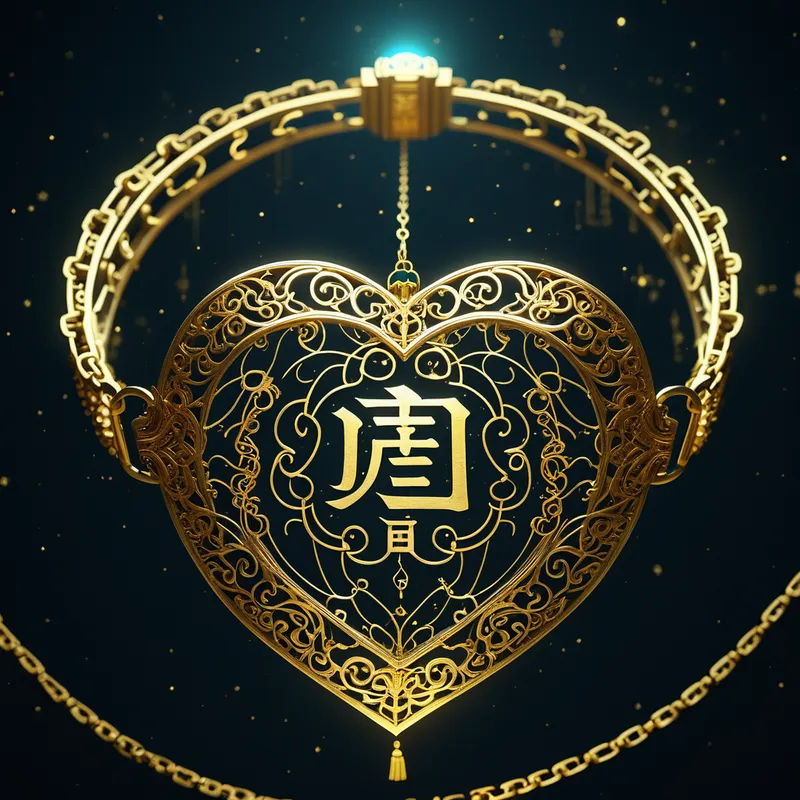
But no mortal, however pure, could walk this path alone. From a mountain of stone, where he was imprisoned for defying the celestial order, came his first and most formidable protector: Sun Wukong. With a somersault that crossed a hundred thousand miles and a staff that could part oceans, he was power incarnate, yet bound by a golden filigree band that tightened with a whispered spell—a constant reminder that even heaven-shaking might must serve a higher purpose.
They were joined by figures of fallen divinity. Zhu Bajie, with his ravenous hunger and grumbling loyalty, and Sha Wujing, the quiet bearer of burdens. Together, this unlikely fellowship—consciousness, mind, body, and steadfastness—set forth upon the white horse that carried the monk’s mortal frame.
Their road was a tapestry of terror and wonder. They did not cross empty lands, but a landscape of the soul made manifest. Forests whispered with fox-spirits who hungered for the monk’s pure essence. Rivers boiled with dragon-kings. Mountains were the lairs of ogres who disguised themselves as beautiful maidens or kindly hermits, all seeking to devour the Tang Monk’s flesh to steal his immortality. Each trial was a furnace. Wukong’s cunning and fury would clash with deception, only to be chastised by Xuanzang’s pacifism. Bajie’s lust would lead them into traps, from which only shared sacrifice could free them.
Through eighty-one tribulations—a number of completion and utmost trial—they were forged. Not by avoiding conflict, but by moving through it. The mind (Wukong) learned to temper its brilliance with obedience to the spirit’s purpose (Xuanzang). The body (Bajie) learned to channel its raw desires into protective strength. At long last, they stood before the Tathagata in the Thunderclap Monastery. They received the scriptures, bundles of blank pages and true wisdom, and returned east not as seekers, but as awakened ones. The journey ended where it began, but the travelers were utterly remade.
Cultural Origins & Context
The epic of The Journey to the West is a grand cultural edifice built upon a historical cornerstone. Its core is the true seventh-century pilgrimage of the Buddhist monk Xuanzang, who traveled to India to study and bring back sacred texts. Over centuries, this historical act was mythologized through oral storytelling, becoming a staple of marketplace entertainers and folk dramatists. By the Ming dynasty, these tales coalesced into the novel attributed to Wu Cheng’en.
While the narrative framework is Buddhist, its symbolic lifeblood is profoundly infused with Taoist cosmology and alchemy. The story functioned on multiple levels: as a thrilling adventure, a vehicle for religious syncretism, and a sophisticated allegory for Neidan, or internal alchemy. For the common people, it was a tale of perseverance and divine justice. For the initiated, it was a coded manual for transforming the base elements of human nature—the chaotic mind, the desirous body—into the golden elixir of spiritual immortality.
Symbolic Architecture
The [pilgrimage](/symbols/pilgrimage “Symbol: A spiritual or transformative journey toward a sacred destination, representing personal growth, devotion, and the search for meaning.”/) is not a geographical trek, but a map of the [interior](/symbols/interior “Symbol: The interior symbolizes one’s inner self, thoughts, and emotions, often reflecting personal growth, vulnerabilities, and secrets.”/). Each main [character](/symbols/character “Symbol: Characters in dreams often signify different aspects of the dreamer’s personality or influences in their life.”/) is not a person, but a planetary force within the [human](/symbols/human “Symbol: The symbol of a human represents individuality, complexity of emotions, and social relationships.”/) [microcosm](/symbols/microcosm “Symbol: A small, self-contained system that mirrors or represents a larger, more complex whole, often reflecting the universe within an individual.”/).
Xuanzang represents the Shen—the immortal [spirit](/symbols/spirit “Symbol: Spirit symbolizes the essence of life, vitality, and the spiritual journey of the individual.”/), the conscious self that must remain uncorrupted and intent upon its sacred [destination](/symbols/destination “Symbol: Signifies goals, aspirations, and the journey one is on in life.”/). He is often helpless, for pure [spirit](/symbols/spirit “Symbol: Spirit symbolizes the essence of life, vitality, and the spiritual journey of the individual.”/) without the other elements is incomplete.
Sun Wukong is the Yang principle incarnate: the restless, brilliant, rebellious mind. His imprisonment under the [mountain](/symbols/mountain “Symbol: Mountains often symbolize challenges, aspirations, and the journey toward self-discovery and enlightenment.”/) signifies the necessary taming of the discursive intellect. His golden filigree band is the discipline of [meditation](/symbols/meditation “Symbol: Meditation represents introspection, mental clarity, and the pursuit of inner peace, often providing a pathway for deeper self-awareness and spiritual growth.”/) and [virtue](/symbols/virtue “Symbol: A moral excellence or quality considered good, often representing inner character, ethical principles, or spiritual ideals in dreams.”/) that harnesses mental [energy](/symbols/energy “Symbol: Energy symbolizes vitality, motivation, and the drive that fuels actions and ambitions.”/) toward a single, pointed goal.
Zhu Bajie embodies the Yin principle: the physical [body](/symbols/body “Symbol: The body in dreams often symbolizes the dreamer’s self-identity, personal health, and the relationship they have with their physical existence.”/) with its appetites, laziness, and earthly attachments. His transformation from a celestial marshal to a pig demonstrates the fall of spirit into coarse materialism. His [journey](/symbols/journey “Symbol: A journey in dreams typically signifies adventure, growth, or a significant life transition.”/) is the [sublimation](/symbols/sublimation “Symbol: Transforming base impulses into creative or socially acceptable outlets, often seen in artistic expression.”/) of raw desire into usable energy.
Sha Wujing symbolizes the Qi—the vital [breath](/symbols/breath “Symbol: Breath symbolizes life, vitality, and the connection between the physical and spiritual realms.”/) or earnest [effort](/symbols/effort “Symbol: Effort signifies the physical, mental, and emotional energy invested toward achieving goals and personal growth.”/) that bears the burdens and integrates the [system](/symbols/system “Symbol: A system represents structure, organization, and interrelated components functioning together, often reflecting personal or social order.”/). He is the steady, penitent will that carries the process forward through mundane labor.
The eighty-one trials are the fires of the alchemical furnace. The demon is not an external enemy, but a coagulation of unresolved inner material—pride, fear, lust, doubt—that must be faced and integrated, not merely slain.
The white horse, often overlooked, is the [vehicle](/symbols/vehicle “Symbol: Vehicles in dreams often symbolize the direction in life and the control one has over their journey, reflecting personal agency and decision-making.”/) of the physical form, the humble yet essential [vessel](/symbols/vessel “Symbol: A container or structure that holds, transports, or protects something essential, representing the self, emotions, or life journey.”/) that carries the spirit on its earthly journey. The retrieved scriptures, initially blank, signify that the true wisdom is not in the words themselves, but in the transformed being of the pilgrim who earned them.
The Dreamer’s Resonance
When this myth stirs in the modern unconscious, it often manifests in dreams of arduous travel with a motley crew. You may dream of a crucial, distant destination (a university, a home, a ceremony) and a journey beset by absurd delays, chaotic companions, and deceptive guides. The somatic feeling is one of profound frustration mixed with a deep, inexplicable sense of purpose.
Psychologically, this signals that the dreamer’s psyche has initiated a major integrative process. The “demons” that block the path—the seductive stranger, the collapsing bridge, the monstrous figure in the woods—are personifications of psychological complexes or shadow elements that must be consciously engaged. The dream is presenting the structure of the individuation journey. The feeling of being saddled with incompetent or troublesome “companions” (the lazy friend, the reckless sibling in the dream) reflects the dreamer’s struggle to accept and integrate the unruly parts of their own personality—the brilliant but arrogant mind, the needy body, the silent, resentful laborer within—as necessary components of the whole self.

Alchemical Translation
For the modern individual, the myth models the Taoist alchemical process of turning lead (the base personality) into gold (the integrated Self). The “West” is not a place, but a state of being: wholeness, wisdom, and inner peace.
The first step is the Call of the Tang Monk: a moment of spiritual discontent or a yearning for deeper meaning that disrupts the comfortable “Eastern” life. This is the awakening of the Shen.
The Binding of the Monkey King is the crucial and often painful stage of disciplining the mind. It is the practice of mindfulness, where the chaotic, associative, and arrogant intellect (which can “travel to heaven and hell” in a moment) is focused on a single, sacred intention. The golden filigree band is the conscious commitment to a practice—therapy, meditation, art—that gently restrains the mind’s wanderings.
The Recruitment of the Companions is the acceptance of one’s full humanity. It is ceasing to war against one’s appetites, laziness, or stubbornness (Bajie), or one’s silent resentments and feelings of inadequacy (Wujing). Instead, one enlists them. The body’s energy is directed toward health. The emotional burdens are shouldered with patience.
The pilgrimage proceeds not when the demons are destroyed, but when their essence is understood and transmuted. The ogre’s fury becomes protective strength; the siren’s allure becomes appreciation for beauty without possession.
Each Trial of the Eighty-One Tribulations is a life challenge—a failure, a betrayal, a loss, a temptation—recognized not as meaningless suffering, but as the necessary heat and pressure to fuse the disparate elements of the self. The journey’s end, receiving the “blank scriptures,” is the realization that the wisdom was always within the process of transformation itself. You return to your ordinary life, but you are no longer ordinary. The chaotic mind has become insightful wisdom. The grasping body has become grounded vitality. The seeking spirit rests in itself, having made the ultimate journey to the west within.
Associated Symbols
Explore related symbols from the CaleaDream lexicon:
- Journey — The central archetype of the myth, representing the soul’s mandatory pilgrimage from ignorance to enlightenment, where the path itself is the transformative agent.
- Monkey — Embodies the brilliant, chaotic, and rebellious nature of the untamed human mind, which must be disciplined to serve a higher spiritual purpose.
- Mountain — Represents both the immense obstacles on the spiritual path and the weight of karma or past actions that can imprison the untamed self until it is ready.
- Horse — The physical body and mortal life that carries the conscious spirit on its earthly journey, a humble yet essential vehicle for enlightenment.
- River — Symbolizes the flow of life, time, and emotion that the pilgrim must cross, often populated by hidden dangers (dragons) that test one’s resolve.
- Cave — The dark, subconscious lair of demons and hidden treasures, representing the necessity of descending into one’s own shadow to retrieve vital psychic energy.
- Key — The golden filigree band is the key that both restrains and liberates, representing the paradoxical truth that true freedom is found through conscious discipline and commitment.
- Dragon — The volatile, powerful, and often obstructive force of primordial energy or untamed psychic power that must be confronted and mastered on the journey.
- Shadow — The countless demon-ogres are literalized shadows, aspects of the self deemed monstrous or unacceptable that must be faced and integrated, not slain.
- Light — The wisdom of the scriptures and the goal of the Western Paradise, representing the illuminated consciousness that is the destination of the inner journey.
- Rebirth — The entire pilgrimage is a process of death and rebirth for each traveler, who sheds their old celestial or monstrous identity to be reborn as an awakened being.
- Taoist Alchemy — The entire narrative is a grand allegory for this internal process, where the base elements of personality are refined through trial into the gold of spiritual immortality.