The Horae Myth Meaning & Symbolism
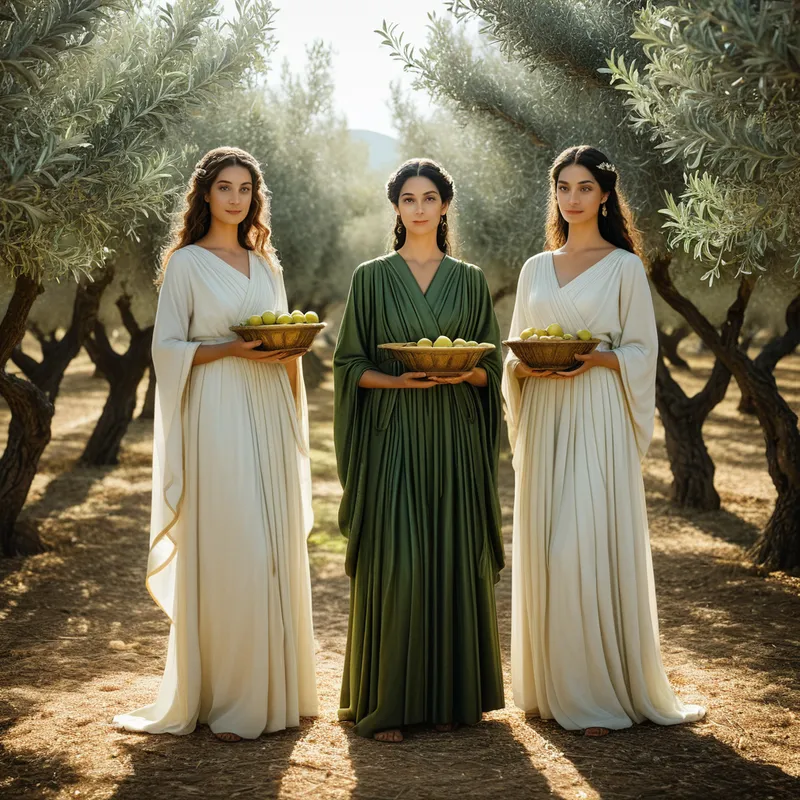
The three Horae, daughters of Zeus and Themis, personify the seasons and the divine order of time, nature, and human society.
The Tale of The Horae
Hush, and listen. Before the frantic tick of clocks, there was a rhythm. It was the deep, patient breath of the world itself, measured not in hours, but in the turning of the earth’s face toward the sun, in the swelling of the fruit, in the retreat of the sap into the roots. This rhythm had keepers. They were called the Horae.
They were born in the first light of a world still settling into its shape, daughters of mighty Zeus and Themis, she who embodies what is right and fixed. From their mother, they inherited a solemn duty; from their father, the authority to enact it. They did not dwell in the shadowy depths or upon the cloud-wreathed peak of Olympus alone, but in the liminal space where heaven touches earth.
Their footsteps were the seasons. You would hear them first as a whisper in the high, cold air—a softening. Then you would see them. First came Thallo, her hair a cascade of young vines, her fingers trailing over the frozen ground. Where she stepped, the iron grip of frost loosened. Pale green shoots, brave and trembling, pushed through the dark soil at her command. The air grew damp and sweet with the scent of awakening earth.
As the sun climbed higher, Auxo took the stage. Her touch was the warmth on your shoulders, the deep green of the oak leaf, the relentless hum of bees in the lavender. She nurtured the blossoms Thallo had summoned, swelling them into hard, green promise, then into the heavy, fragrant bounty of summer. The world grew loud and lush under her care.
But the feast could not last forever. When the light began to slant and the nights grew crisp, Carpo arrived. Her aspect was not one of decay, but of fulfillment. With a sickle that gleamed like the harvest moon, she presided over the gathering. Vines hung heavy with grapes, branches bent with apples, and fields lay golden and ready. Her dance was one of reaping, of storing, of gratitude for the completed cycle.
And then… a stillness. The sisters withdrew. The world held its breath in a silent, white mantle. This was their pause, the necessary void between exhalation and inhalation. In this stillness, the work was unseen—the seed sleeping, the root dreaming of Thallo’s return. For the Horae were not just the turn of the weather; they were the very principle of right timing, of the kairos within the chronos. They were the ones who opened and closed the gates of Olympus, rolling back the thick clouds for the gods to pass. They harnessed the horses of Helios and attended the births of gods and heroes, ensuring each being entered the world at its ordained, proper moment.
Their story has no violent climax, no monstrous foe to slay. Their eternal drama is the quiet, inevitable revolution of the wheel. Their conflict is the resistance of chaos to order; their triumph is the relentless, gentle return of the blossom, the fruit, the harvest, and the rest. To witness their work is to feel the profound peace of a universe that keeps its promises.
Cultural Origins & Context
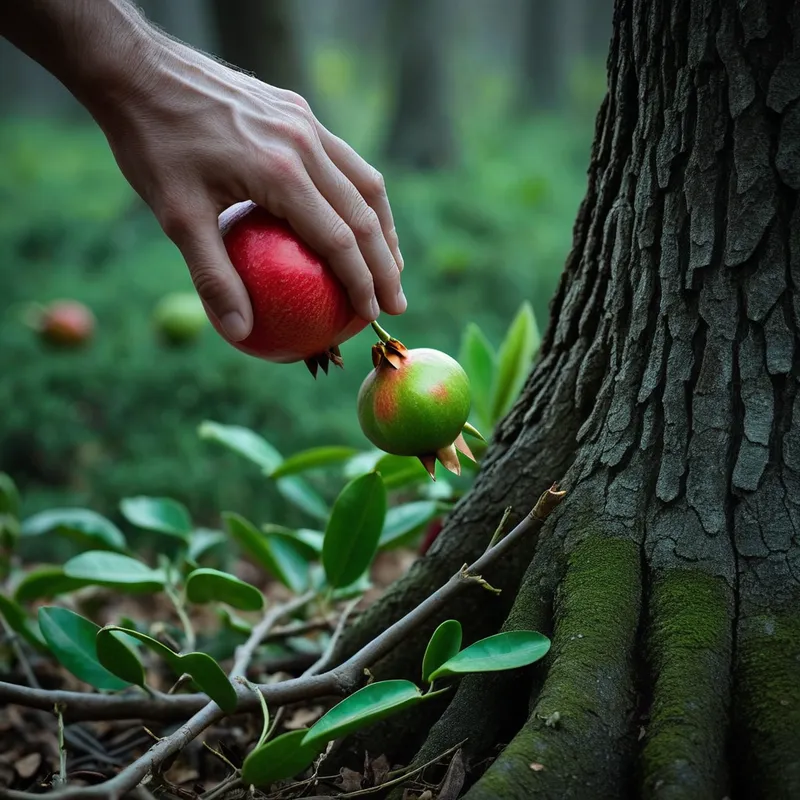
The veneration of the Horae is ancient, rooted in the pre-Olympian, agrarian soul of Greece. Their earliest iterations were strictly tied to the tripartite structure of the agricultural year: Growth, Bloom, and Fruit. This triad mirrored the fundamental concerns of a society living intimately with the land—survival depended on understanding and honoring these cycles.
As Greek city-states evolved and social structures became more complex, so too did the Horae. In the poetry of Hesiod and the hymns of Athens, they transformed. They became Eunomia (Good Order), Dike (Justice), and Eirene (Peace). This was a profound theological and societal development. The natural order of the seasons was now explicitly linked to the civil order of humanity. Just as spring must follow winter for life to continue, justice and good governance must prevail for society to flourish. Peace was the fruitful harvest of a well-ordered community.
They were celebrated in festivals and invoked in oaths. To live in accordance with the Horae was to live in harmonia—not just musical harmony, but the correct fitting together of all parts of the cosmos and the polis. They were the divine justification for law, the celestial model for human conduct. Their myth was passed down not merely as a explanation of weather, but as a sacred blueprint for a stable and righteous life.
Symbolic Architecture
At its core, the myth of the Horae is an articulation of the psyche’s deep need for temporal and moral structure. They symbolize the innate intelligence of cycles and the psychological necessity of boundaries and transitions.
The Horae do not command time; they are the embodiment of its sacred purpose—to provide a vessel for growth, fulfillment, rest, and renewal.
The three sisters represent an essential triad. They are not a linear sequence but a self-sustaining system: Potential (Thallo), Process (Auxo), and Fulfillment (Carpo). Psychologically, this maps onto the genesis of any idea or feeling, its nurturing and development, and its final integration or expression. The later, civic triad—Order (Eunomia), Justice (Dike), and Peace (Eirene)—translates this natural law into the social and internal realm. Inner peace (Eirene) is only possible when the internal psyche is governed by a sense of right order (Eunomia) and fair judgment (Dike).
Their role as gatekeepers of Olympus is particularly potent. They control access to the divine, symbolizing that enlightenment, inspiration, or a connection to the Self (the divine within) is only possible at the right time, and only when one is in alignment with natural and moral law. They guard against premature inflation or untimely spiritual forcing.
The Dreamer’s Resonance
When the pattern of the Horae stirs in the modern unconscious, it often manifests in dreams concerning timing, readiness, and life phases. A dreamer might find themselves waiting at a closed, ornate gate (the Olympus gate), symbolizing a felt sense that a desired transition—a new job, relationship, or creative project—cannot be forced; one must await the “season.” Dreaming of a perpetual, barren winter suggests a psychological state stuck in the Carpo/Eirene phase—a harvest that has been gathered but not followed by the necessary fallow period and subsequent rebirth. The psyche is in hibernation, and the dreamer may feel depressed or stagnant.
Conversely, dreams of chaotic, overlapping seasons—blizzards in July, flowers sprouting in November—point to a life out of sync. The internal Horae are disordered. This often correlates with somatic experiences of burnout, anxiety, or insomnia, where the body’s natural rhythms are ignored or overridden. The dream is a corrective, illustrating the internal chaos that results from living against one’s own natural cycles of effort and rest, engagement and withdrawal.
Alchemical Translation
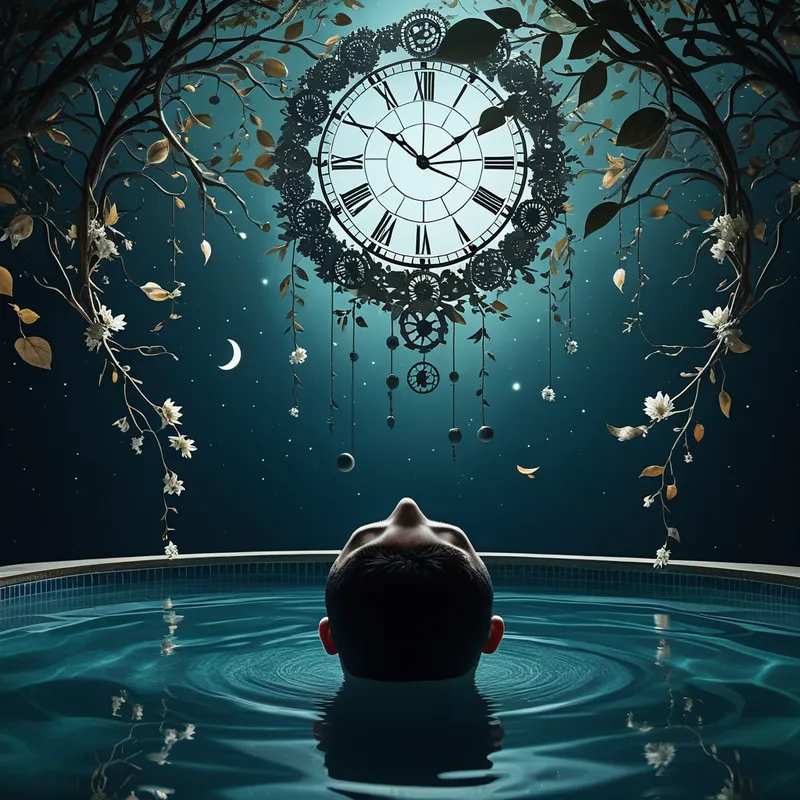
The individuation process, the alchemical opus, is fundamentally about bringing the personal psyche into alignment with the transpersonal, archetypal order. The Horae provide a precise model for this psychic transmutation.
The work begins with Eunomia—establishing inner order. This is the often-unseen labor of therapy, reflection, and shadow work: setting boundaries, acknowledging complexes, and creating an internal structure that can contain the transformative process. It is the “law” of one’s own being.
Next comes Dike—the application of justice within. This involves honest judgment, holding the tension of opposites (the scales), and making difficult choices that favor the soul’s truth over the ego’s comfort. It is cutting away what no longer serves, the “harvest” of self-knowledge, even when it is painful.
The final gift of the Horae is not achievement, but Eirene—the peace that comes from living in right relationship with the times of your own life.
The ultimate goal is Eirene—the inner peace that is the fruit of this labor. This is not a passive state, but the dynamic peace of a system in harmony. It is the feeling of being “in the right place at the right time,” not by accident, but because one has consciously collaborated with the inner seasons. The modern individual learns to discern their personal spring (a time for new beginnings), their summer (a time for vigorous growth and expression), their autumn (a time for reaping rewards and letting go), and their essential winter (a time for introspection, rest, and germination). To defy these inner Horae is to invite psychic entropy; to honor them is to participate in the sacred ordering of one’s own soul.
Associated Symbols
Explore related symbols from the CaleaDream lexicon: