The Gordian Knot Myth Meaning & Symbolism
A prophecy-bound knot, unbreakable by conventional means, is undone not by untying but by a single, decisive stroke from a destined king.
The Tale of The Gordian Knot
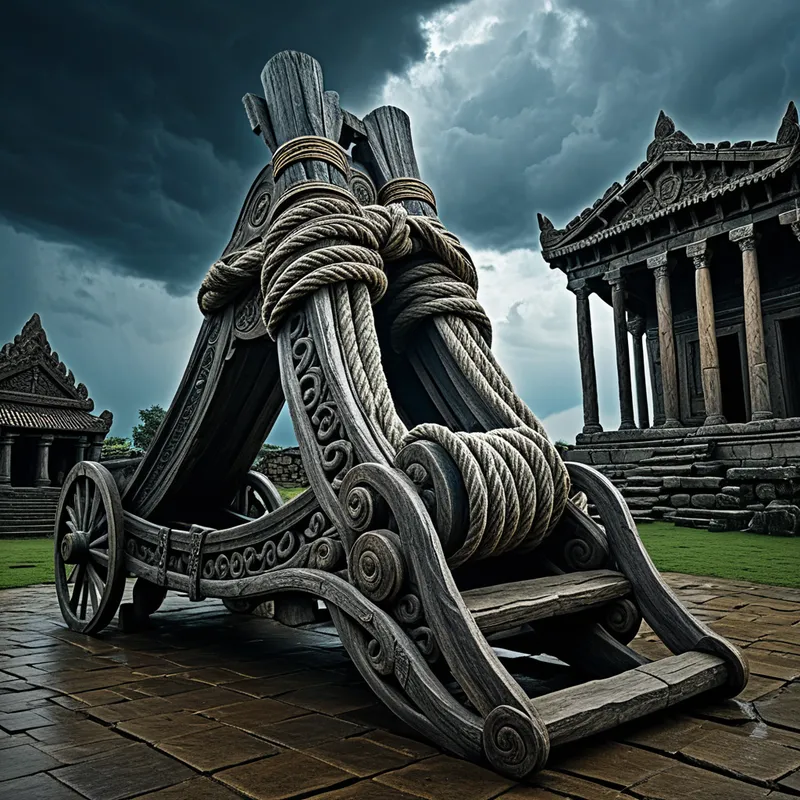
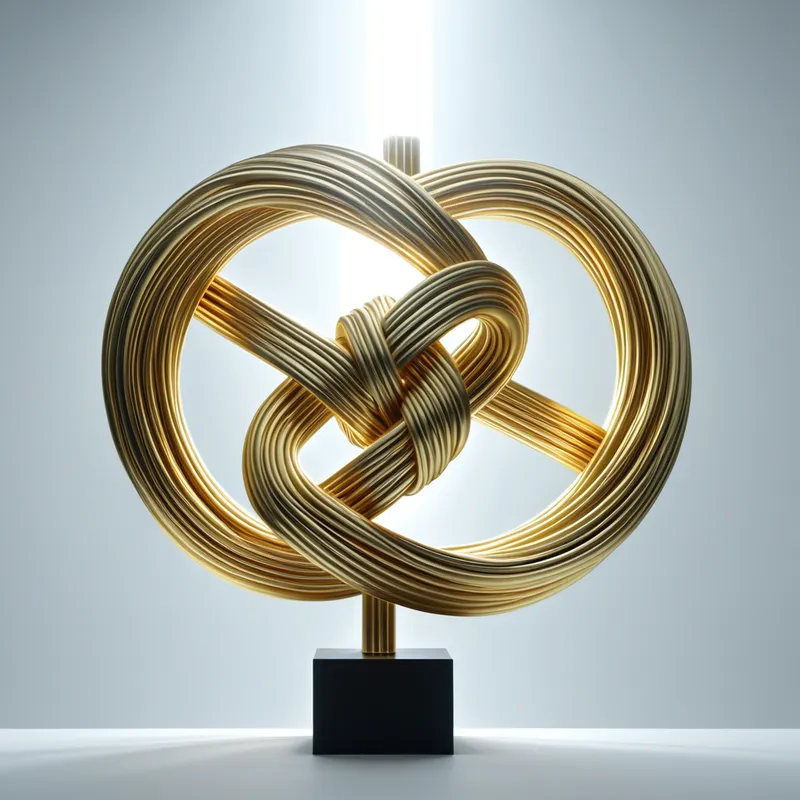
In the high, wind-scoured plains of Phrygia, a kingdom lay without a king. The gods had spoken through an oracle: the next man to ride into the city of Gordium in an ox-cart would be their chosen ruler. The air crackled with the scent of [thyme](/myths/thyme “Myth from Greek culture.”/) and anticipation. Then came a farmer, a son of the soil named Gordias, his cart creaking, his oxen lowing. The people saw the sign and crowned him on the spot. In gratitude, Gordias dedicated his humble cart to Zeus, tying its yoke to a post in the god’s sacred temple with a knot of such fiendish complexity that no end could be found. It was a [labyrinth](/myths/labyrinth “Myth from Various culture.”/) in cord, a puzzle woven from cornel bark, its loops and whorls defying the eye and the finger.
A second prophecy coiled around the first, spoken in the smoky breath of [the temple](/myths/the-temple “Myth from Jewish culture.”/) priests: He who unties this knot shall rule all of Asia. For generations, the knot sat in the dim temple light, a silent challenge. Kings, princes, and cunning men from across [the world](/myths/the-world “Myth from Tarot culture.”/) came to test their wit and fate. They would kneel before it, their breath fogging in the cool air, fingers tracing the maddening paths, only to retreat with aching hands and defeated spirits. The knot became more than wood and rope; it was the solidified riddle of destiny itself, a test that seemed to mock the very idea of a solution.
Decades passed. Then, a new storm approached, not of clouds, but of ambition and iron. Alexander, young king of Macedon, marched his army into Gordium. He had heard the prophecy, and destiny was a currency he spent freely. He entered the temple, a blaze of youth amidst ancient stone. The knot lay before him, dark, dense, a snarled heart of an old world. His generals watched. The priests held their breath. Alexander studied the tangle, his gaze not one of a puzzler, but of a strategist surveying a fortress wall.
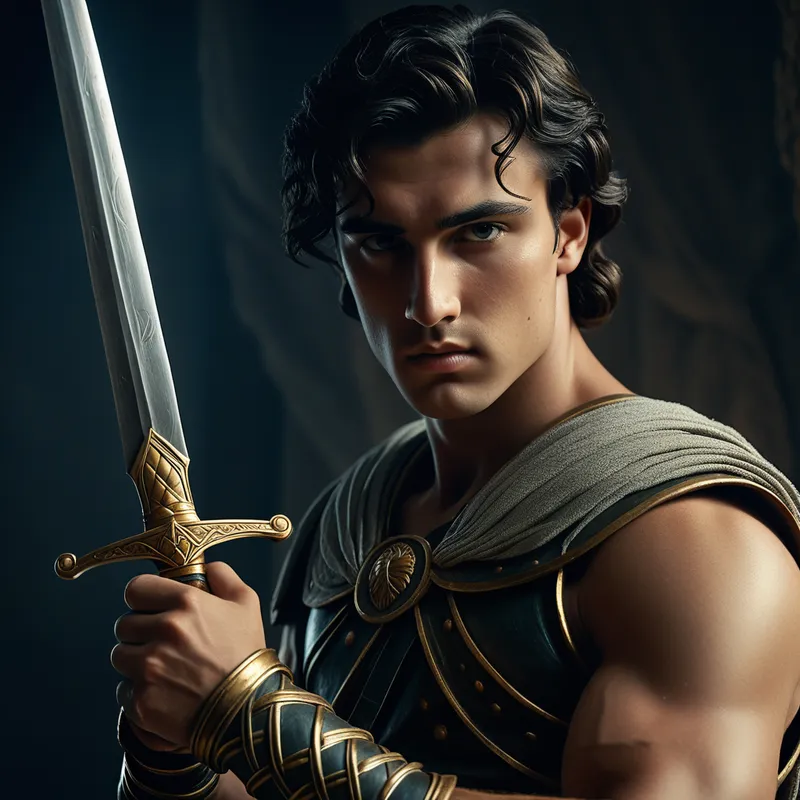
He did not kneel. He did not probe for loose ends. A moment of profound silence held the temple, thick with the incense of centuries. Then, in one fluid motion, he drew his sword. The steel flashed, a silver bolt in the gloom. With a single, decisive stroke, he cleaved the knot in two. The thud of the severed yoke hitting the temple floor echoed like a [thunderclap](/myths/thunderclap “Myth from Various culture.”/). The prophecy was fulfilled—not by untying, but by sundering. That night, the skies roared with thunder, and Zeus himself, it was said, approved the audacious solution.
Cultural Origins & Context
The tale comes to us primarily from the histories of Plutarch and Arrian, written centuries after Alexander’s life, yet it crystallizes a core tension in Greek thought between [metis](/myths/metis “Myth from Greek culture.”/) (cunning intelligence) and bie (sheer force). It was a popular anecdote in the Hellenistic world, serving multiple cultural functions. For the Greeks, it was a parable of brilliant, unconventional problem-solving, a quality they admired in heroes like [Odysseus](/myths/odysseus “Myth from Greek culture.”/). For the successors of Alexander, it was potent propaganda: a divine sanction of his conquests, proof that his rule over Asia was fated, not merely taken.
The myth operated on a societal level as a narrative about legitimacy and the overthrow of old, convoluted systems. The knot, tied by a humble farmer-king, represented an old order, a complex but stagnant form of authority. Alexander’s sword represented the new—direct, imperial, and revolutionary. The story was told and retold not just as history, but as a metaphor for how paradigm-shifting change often looks like destruction from the old paradigm’s perspective.
Symbolic Architecture
At its [heart](/symbols/heart “Symbol: The heart symbolizes love, emotion, and the core of one’s existence, representing deep connections with others and self.”/), the Gordian [Knot](/symbols/knot “Symbol: A knot symbolizes connections, commitments, complications, and the binding or untying of relationships and situations.”/) is the archetypal insoluble [problem](/symbols/problem “Symbol: Dreams featuring a ‘problem’ often symbolize internal conflicts or challenging situations that require resolution and self-reflection.”/). It is not merely a difficult [task](/symbols/task “Symbol: A task represents responsibilities, duties, or challenges one faces.”/); it is a logjam of the [psyche](/myths/psyche “Myth from Greek culture.”/), a [situation](/symbols/situation “Symbol: The ‘situation’ symbolizes the junction between the subconscious and conscious realms, often reflecting the current challenges or dynamics in the dreamer’s waking life.”/) where all conventional avenues of thought and [action](/symbols/action “Symbol: Action in dreams represents the drive for agency, motivation, and the ability to take control of situations in waking life.”/) lead in circles, creating greater entanglement.
The knot is the mind trying to solve the mind with the mind’s own tangled rules.
The knot symbolizes [the self](/myths/the-self “Myth from Jungian culture.”/)-created complexity of our neuroses, the bureaucratic labyrinths of our excuses, and the intricate, self-justifying narratives that keep us bound to a post, going nowhere. It represents any [system](/symbols/system “Symbol: A system represents structure, organization, and interrelated components functioning together, often reflecting personal or social order.”/)—personal, relational, or political—that has become so focused on its own internal complexity that its original function (to bind the [cart](/symbols/cart “Symbol: A cart represents the burden of responsibilities, the journey of life, or the tools we carry with us.”/)) is forgotten, and the complexity itself becomes the idol.
Alexander represents the ego, confronted with a challenge from the Self (the [prophecy](/symbols/prophecy “Symbol: A foretelling of future events, often through divine or supernatural means, representing destiny, fate, and hidden knowledge.”/)). His [solution](/symbols/solution “Symbol: A solution symbolizes resolution, clarity, and the overcoming of obstacles, often representing a sense of accomplishment.”/) is not of the same order as the problem. He introduces a new [dimension](/symbols/dimension “Symbol: Represents the fundamental structure of reality, consciousness, or existence beyond ordinary perception.”/)—the [blade](/symbols/blade “Symbol: A sharp-edged tool or weapon symbolizing cutting action, separation, precision, or violence. It represents both creative power and destructive force.”/). This is the [symbol](/symbols/symbol “Symbol: A symbol can represent an idea, concept, or belief, serving as a powerful tool for communication and understanding.”/) of decisive discrimination, of cutting through illusion, of the will that acts from a place beyond the entangled [logic](/symbols/logic “Symbol: The principle of reasoning and rational thought, often representing order, structure, and intellectual clarity in dreams.”/) of the dilemma. It is not brute force, but focused [application](/symbols/application “Symbol: An application symbolizes engagement, integration of knowledge, or the pursuit of goals, often representing self-improvement and personal development.”/) of a higher principle. The sword is the [insight](/symbols/insight “Symbol: A sudden, deep understanding of a complex situation or truth, often arriving unexpectedly and illuminating hidden connections.”/) that re-frames the entire question.
The Dreamer’s Resonance
When this myth pattern appears in modern dreams, the dreamer is often at an impasse. They may dream of being trapped in a maze of red tape, trying to untangle a hopeless snarl of wires or vines, or facing a locked door with a key that fits but won’t turn. The somatic feeling is one of frustration, mounting anxiety, and circular exhaustion—the feeling of running in place.
Psychologically, this is the process of confronting a psychic knot: a deeply ingrained pattern, a lifelong complex, or a dilemma where every choice seems wrong. The dream is presenting the problem in its full, tangled glory. The presence of the knot in the dreamscape is a sign from the unconscious that the current methods of “untying”—analysis, negotiation, careful step-by-step approaches—have hit their limit. The psyche is illustrating the deadlock, preparing the dreamer for the possibility that the solution may not be found within the rules of the game as they are currently understood. The tension felt in the dream is the necessary friction before a revolutionary insight.
Alchemical Translation
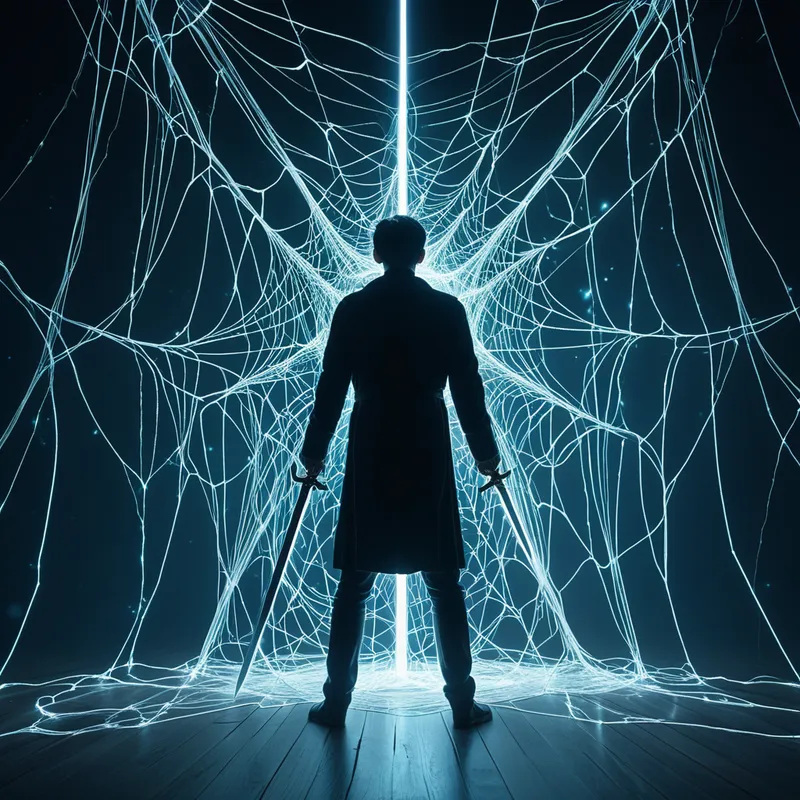
The alchemical process mirrored here is [solutio](/myths/solutio “Myth from Alchemical culture.”/) followed by coagulatio—dissolution and re-formation. The [Gordian Knot](/myths/gordian-knot “Myth from Greek culture.”/) represents the massa confusa, the confused, primal matter at the start of the work. [The alchemist](/myths/the-alchemist “Myth from Various culture.”/)’s first task is not to patiently sort this matter, but to dissolve it with a sharp, penetrating agent (the aqua permanens, or permanent [water](/myths/water “Myth from Chinese culture.”/), often symbolically a sword).
Individuation often requires a sacred violence—not against others, but against the petrified structures of one’s own personality.
For the modern individual, the “Alexandrian cut” is the moment of psychic transmutation. It is the courageous decision to quit the soul-draining job, to end the toxic relationship, to speak the devastating truth, to abandon the identity that no longer fits. It feels like a violation of the old order, a terrifying act of “cutting.” It is not an act of rage, but of clarity. One does not untie the knot of a codependent relationship; one cuts it. One does not patiently unpick the knot of a lifelong fear; one severs its central claim.
The [triumph](/myths/triumph “Myth from Roman culture.”/) is not in domination, but in liberation from a self-imposed, overly complex prison. The prophecy fulfilled—“rule all of Asia”—translates psychologically to achieving sovereignty over the vast, inner continent of the self. By cutting the central knot, Alexander did not destroy the cart (the foundational self); he liberated it from its bindings to a static post. The alchemical outcome is a Self no longer bound by the intricate, self-defeating knots of the past, free to move forward on its own destined path. [The chariot](/myths/the-chariot “Myth from Tarot culture.”/) of the psyche is yoked once more, not to a temple post, but to the will of its rightful king.
Associated Symbols
Explore related symbols from the CaleaDream lexicon: