The Golden Staff Test Myth Meaning & Symbolism
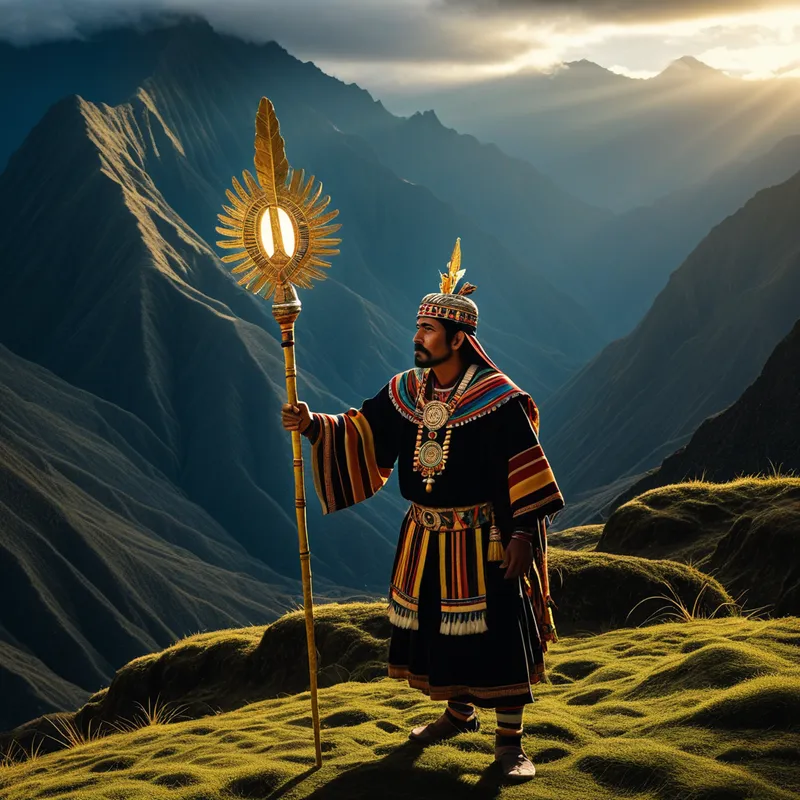
The founding myth of Cusco, where Manco Cápac's golden staff sinks into the earth, revealing the sacred center of the Inca Empire.
The Tale of The Golden Staff Test
Listen. From the depths of Lake Titicaca, where the world was still soft with creation, they emerged. Inti, the father sun, wept tears of light and compassion for the people wandering the harsh Altiplano. From those tears, he fashioned his children: Manco Cápac and Mama Ocllo. He gave them a mission, a sacred charge that would echo through the bones of the mountains. Into Manco Cápac’s hands, Inti placed a staff of pure, living gold—the tupa yawri. It was not a weapon, but a probe for the world’s soul, a divining rod for destiny.
“Go, my children,” Inti’s voice was the first light of dawn. “Journey north. Where this staff of gold sinks wholly into the earth, without effort, without resistance—there you will find the navel of the world. There you will build a kingdom that will touch the heavens.”
And so they walked. The land was a tapestry of stone and wind, of soaring condors and whispering grasses. They climbed passes where the air grew thin, crossed rivers that sang with melted snow. At every promising valley, every sheltered plain, Manco Cápac would raise the staff high, letting the sun blaze along its length, and drive it into the ground. Thud. The sound was always one of defiance. The earth, stubborn and stony, would repel the golden point. It was a contest of wills, a dialogue between the divine messenger and the sleeping land. The staff would stand, exposed and unyielding, a monument to a place that was not the place.
Doubt, like a cold mist, could have settled in their hearts. Was the sun father’s promise an illusion? Yet, they persisted, their faith a small, warm ember against the vast Andean cold. Seasons turned under the sun’s watchful eye. Then, they entered a high valley cradled by protective mountains. A gentle river wound through it. The energy here was different—not hostile, but expectant, humming with a deep, quiet potential. In the place that would become Haucaypata, Manco Cápac, his journey etched upon his face, planted the staff once more.
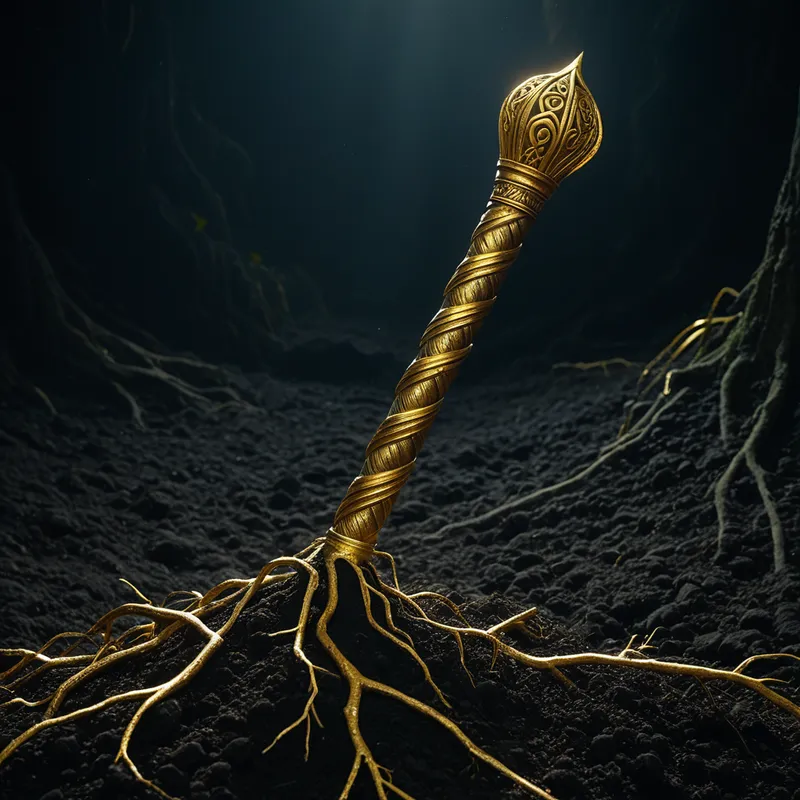
This time, there was no thud. There was a sigh. The earth did not resist; it received. The golden shaft slid into the dark soil as if returning home, sinking deeper and deeper until it vanished entirely from sight. The ground closed over it, seamless. In that moment, the valley was no longer just land. It was Tawantinsuyu—the Center. The earth had drunk the sun’s promise and found it fertile. Here, the sacred and the terrestrial were wedded. Here, Cusco, the navel of the world, was born.
Cultural Origins & Context
This is the foundational myth of the Inca Empire, the sacred charter for the city of Cusco and the legitimacy of the Sapa Inca, the divine ruler. It is not merely a story of discovery, but of divine election and geospiritual destiny. Passed down through the amautas (wise teachers) and quipucamayocs (keepers of the knotted-string records, or quipus), this narrative served a critical societal function. It explained why Cusco was the capital, why the Inca line held supreme authority (as direct descendants of Inti through Manco Cápac), and it framed their expansion not as conquest, but as the natural unfolding of a destiny written into the very land by a divine test.
The myth sanctified the relationship between the people and the Pachamama. The staff’s acceptance signaled a covenant: this land would nourish and support the civilization, and in return, the people would honor it with ritual and order. It transformed geography into theology, making the city’s location an article of faith and the bedrock of imperial ideology.
Symbolic Architecture
At its [heart](/symbols/heart “Symbol: The heart symbolizes love, emotion, and the core of one’s existence, representing deep connections with others and self.”/), the Golden Staff Test is an archetypal narrative of finding one’s true place, [purpose](/symbols/purpose “Symbol: Purpose signifies direction, meaning, and intention in life, often reflecting personal ambitions and core values.”/), and [foundation](/symbols/foundation “Symbol: A foundation symbolizes the underlying support systems, values, and beliefs that shape one’s life, serving as the bedrock for growth and development.”/). The staff itself is a multifaceted [symbol](/symbols/symbol “Symbol: A symbol can represent an idea, concept, or belief, serving as a powerful tool for communication and understanding.”/). It is the will of the divine (Inti), the mandate for leadership, and the penetrating power of focused [intention](/symbols/intention “Symbol: Intention represents the clarity of purpose and direction in one’s life and can symbolize motivation and commitment within a dream context.”/). It is also a literal and figurative [axis](/symbols/axis “Symbol: A central line or principle around which things revolve, representing stability, orientation, and the fundamental structure of reality or consciousness.”/) mundi—a connector between the celestial [realm](/symbols/realm “Symbol: The symbol of ‘Realm’ often signifies the boundaries of one’s consciousness, experiences, or emotional states, suggesting aspects of reality that are either explored or ignored.”/) of the sun and the chthonic realm of the [earth](/symbols/earth “Symbol: The symbol of Earth often represents grounding, stability, and the physical realm, embodying a connection to nature and the innate support it provides.”/) [mother](/symbols/mother “Symbol: The symbol of ‘Mother’ represents nurturing, protection, and the foundational aspect of one’s emotional being, often associated with comfort and unconditional love.”/).
The earth’s [rejection](/symbols/rejection “Symbol: The experience of being refused, excluded, or dismissed by others, often representing fears of inadequacy or social belonging.”/) and final [acceptance](/symbols/acceptance “Symbol: The experience of being welcomed, approved, or integrated into a group or situation, often involving validation of one’s identity or actions.”/) represent a profound [dialogue](/symbols/dialogue “Symbol: Conversation or exchange between characters, representing communication, relationships, and narrative flow in games and leisure activities.”/) between [spirit](/symbols/spirit “Symbol: Spirit symbolizes the essence of life, vitality, and the spiritual journey of the individual.”/) and matter.
The true foundation is not claimed by force, but revealed through resonant surrender. The ego drives the staff; the Self finds the spot where it sinks.
The [journey](/symbols/journey “Symbol: A journey in dreams typically signifies adventure, growth, or a significant life transition.”/) is the necessary [period](/symbols/period “Symbol: Periods in dreams can symbolize cyclical patterns, renewal, and the associated emotions of loss or change throughout life.”/) of trial, discernment, and the honing of purpose. Every failed attempt is not a failure, but a clarification: “Not here.” It teaches discernment and patience, the [ability](/symbols/ability “Symbol: In dreams, ‘ability’ often denotes a recognition of skills or potential that one possesses, whether acknowledged or suppressed.”/) to listen to the subtle responses of the world. The [moment](/symbols/moment “Symbol: The symbol of a ‘moment’ embodies the significance of transient experiences that encapsulate emotional depth or pivotal transformations in life.”/) of sinking is the hieros gamos, the sacred [marriage](/symbols/marriage “Symbol: Marriage symbolizes commitment, partnership, and the merging of two identities, often reflecting one’s feelings about relationships and social obligations.”/)—the solar, masculine principle of [consciousness](/symbols/consciousness “Symbol: Consciousness represents the state of awareness and perception, encompassing thoughts, feelings, and experiences.”/) and order uniting with the lunar, feminine principle of the fertile, receptive unconscious. The vanished staff does not disappear; it is incorporated. The divine mandate becomes the invisible, sustaining root of the civilization.
The Dreamer’s Resonance
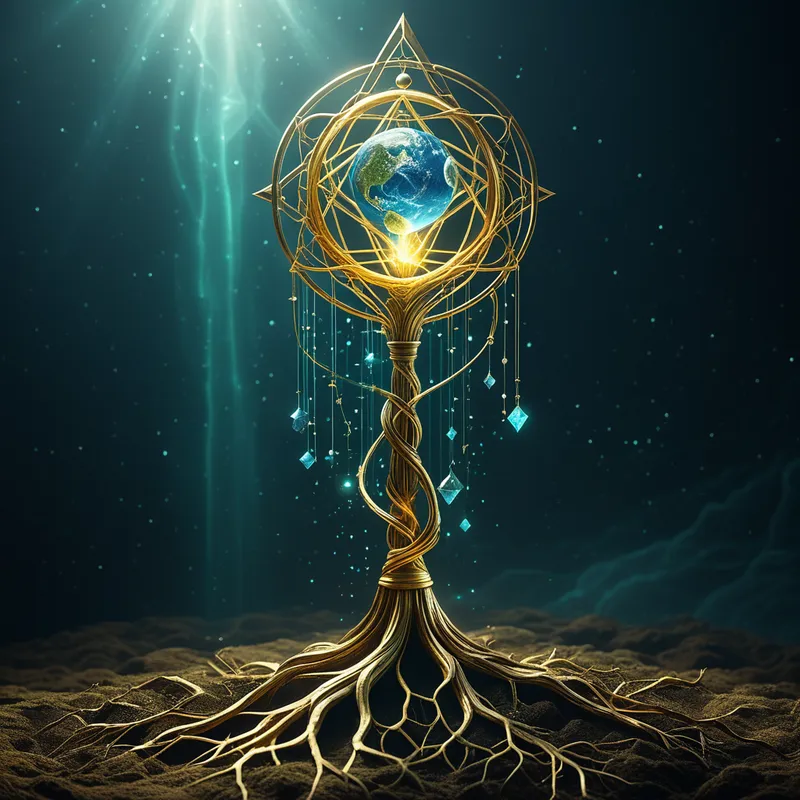
When this myth stirs in the modern psyche, it often manifests in dreams of searching for solid ground. One may dream of trying to plant a flag, a pole, or a tree that repeatedly falls over. There is a somatic sense of instability, of life lacking a foundational “yes.” The dream-ego is in the role of Manco Cápac, carrying a sense of potential (the staff) but unable to anchor it.
The psychological process at work is the search for inner authority and authentic vocation. The “staff” is one’s life energy, talent, or core truth. The “earth” is the outer world—relationships, career, creative projects, one’s physical environment. The dream reveals the frustration of applying one’s energy where it is not meant to take root—in jobs, identities, or relationships that cannot receive and nourish one’s essential nature. The moment of sinking, if reached in the dream, signals a profound somatic and psychic alignment, a feeling of “coming home” to oneself. It is the dream of destiny clicking into place.
Alchemical Translation
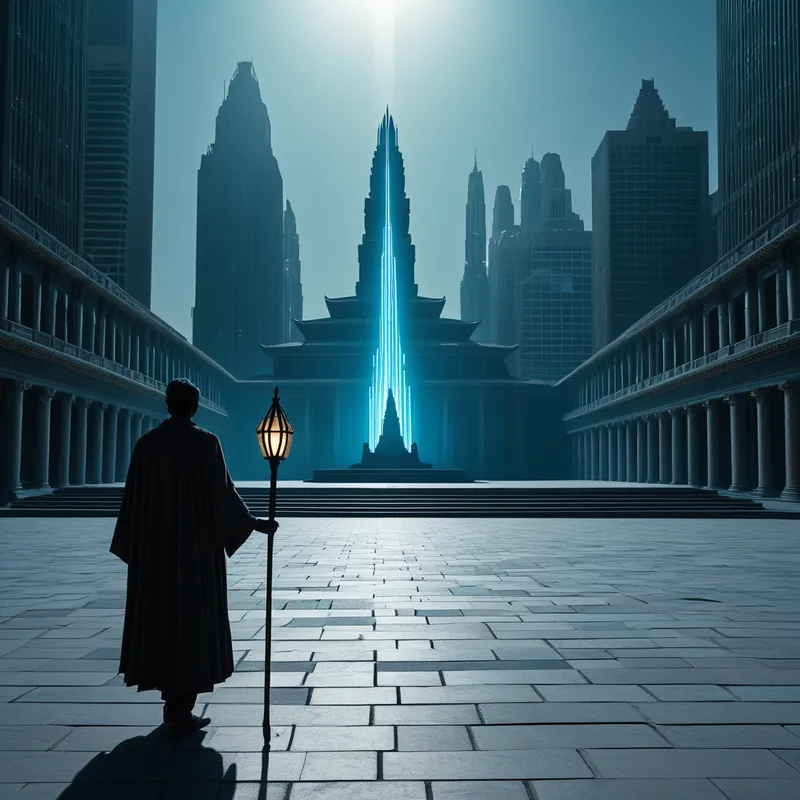
For the individual on the path of individuation, the Golden Staff Test models the alchemical process of coagulatio—the making solid, the embodiment of spirit. The initial nigredo, or darkening, is the long journey of failed tests, the disillusionment with false callings and superficial identities. The gold of the staff is the purified, incorruptible core of the Self, the Self archetype.
The alchemical work is to distinguish between the ego’s desire to impose its will (driving the staff anywhere) and the Self’s need to discover its rightful place. This requires introverted sensation and feeling—a patient, bodily-felt sensing of one’s environment and internal state.
The opus is not the creation of the gold, but the finding of the earth that awaits it. Individuation is the marriage of one’s innate value with the unique form it is meant to take in the world.
The vanished staff symbolizes the completion of this stage. The conscious personality (the visible staff) does not vanish; it is subsumed into a greater, life-supporting structure. The individual’s unique purpose becomes the invisible, nourishing root system of their life, no longer a burdensome object to carry, but an integrated power that sustains from within. The empire they build is not of territory, but of meaning—a coherent, life-giving inner kingdom centered on that hard-won point of resonance.
Associated Symbols
Explore related symbols from the CaleaDream lexicon:
- Staff — The central artifact of the myth, representing divine mandate, focused will, authority, and the probing instrument of destiny seeking its foundation.
- Test — The core action of the narrative, a divine trial of perseverance and discernment to find the one true, resonant place among many possibilities.
- Earth — The receptive, feminine principle of Pachamama that ultimately accepts the staff, symbolizing the grounded reality that nourishes and validates spiritual purpose.
- Journey — The long, necessary pilgrimage of trial and error that precedes the moment of finding, representing the process of learning through failure and honing intention.
- Sun — The source of the mandate in the form of Inti, representing consciousness, divine fatherhood, and the illuminating principle that guides the quest.
- Mountain — The iconic Andean landscape of the journey, representing obstacle, endurance, and the lofty perspective needed to find the sacred valley.
- Gold — The substance of the staff, symbolizing incorruptible value, solar divinity, and the highest, most refined potential of the Self.
- Root — The invisible result of the staff sinking, representing the establishment of a deep, nourishing, and permanent connection between purpose and place.
- Destiny — The overarching force guiding the journey, the pre-ordained yet hard-won fate that is realized only through faithful action.
- Temple — The civilization built upon the sacred spot, representing the ordered, meaningful structure that arises when one’s core purpose is correctly founded.
- Heart — The “navel” or center of the world that is discovered, symbolizing the emotional and spiritual core where one feels truly grounded and alive.
- Order — The result of the successful test: the establishment of Tawantinsuyu, representing the cosmic and social harmony that flows from aligning with a sacred foundation.