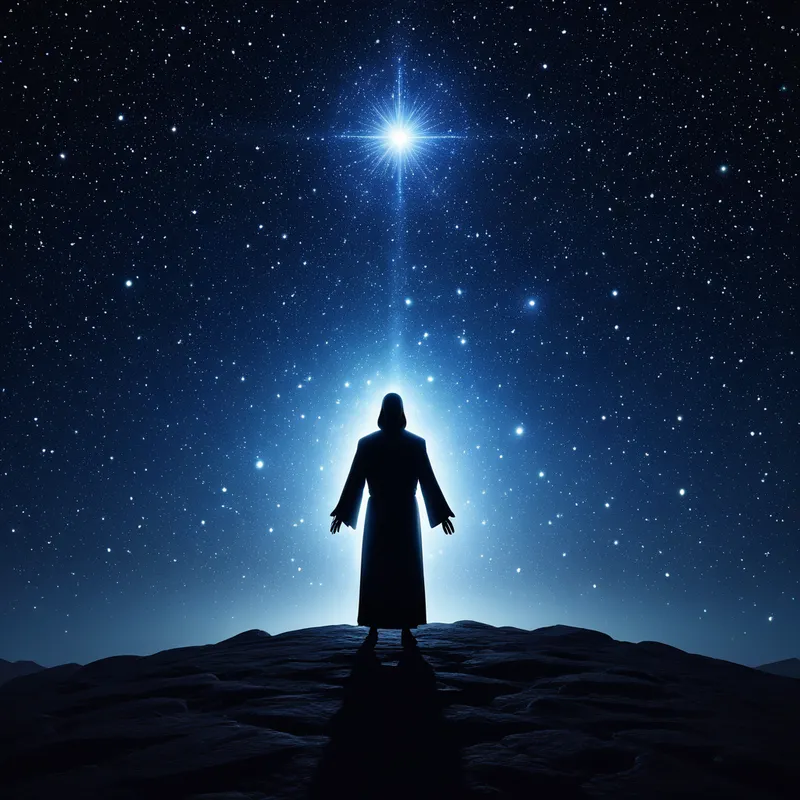
The Gnostic Ascent of the Soul Myth Meaning & Symbolism
A divine spark trapped in matter undertakes a perilous ascent through hostile realms, guided by inner knowledge, to return to its luminous source.
The Tale of The Gnostic Ascent of the Soul
Listen. For this is not a story of creation, but one of forgetting and remembering. It begins not with a word, but with a shattering.
In the beginning was the Pleroma, a realm of silent, boundless Light. From its perfect stillness, Aeons flowed forth in pairs of thought and silence, male and female, a harmonious dance of knowing. But from the outermost edge of this divine fullness, from the youngest Aeon Sophia, there arose a passionate longing—a desire to know the unknowable source itself, alone and without her pair. This passionate thought, this lonely yearning, was a mistake. It condensed, fell away from the harmony, and gave birth in ignorance and anguish.
What was born was not light, but a shadow of longing. The Demiurge, blind and arrogant, believing himself to be the only god. From the chaos of his mother’s grief, he fashioned a world—not of spirit, but of heavy, sleeping matter. He populated it with his own mindless offspring, the Archons, and set them as guards in the seven spheres of the heavens, each a prison gate of forgetfulness.
Yet, within this crude creation, a spark of the original Light remained. A trace of Sophia’s true essence, a fragment of the Pleroma, had been woven into the very fabric of the human soul. And so, humanity was born: divine sparks clothed in mortal clay, asleep in a world of illusion, believing the lies of the blind god to be the only truth.
But sometimes, a soul would stir. A memory would flicker—a nostalgia for a home it had never known in this life. This is the call. The soul, the Pneuma, awakens to its exile. It looks at the world of suffering, decay, and false promises and knows, in its deepest core, This is not my home.
The ascent begins not with a physical journey, but with a shock of recognition—Gnosis. This knowledge is a secret key, whispered from the true Light beyond the spheres. It arms the soul for its perilous climb. As it seeks to escape the world, it must pass through each of the seven heavenly spheres, the domains of the Archons.
At each gate, a terrifying guardian demands the soul’s password. “Who are you, and where do you go?” they roar, presenting illusions of the soul’s past sins, its attachments, its fears. But the awakened soul, guided by its inner light and secret knowledge, strips off the garments of the flesh it accumulated in life—its rage, its ignorance, its lust for matter. To each Archon it declares its true lineage: “I am a child of the Father beyond you. I am from the Light. I have been released from your world. The garment of shame you gave me, I have cast off. I am not yours.”
One by one, the gates swing open, the illusions dissolve. The soul rises, lighter and brighter with each sphere transcended. Finally, it passes beyond the last, outermost sphere of fate. It sheds the final vestige of its earthly self. Before it stands the Boundary, and beyond it, the blinding, silent radiance of the Pleroma. The soul is met by its divine counterpart, its lost pair, and is wrapped in a robe of living light. It enters the fullness, not as a stranger, but as one returning after a long, painful dream. The spark is reunited with the flame. The journey is over. The soul is home.
Cultural Origins & Context
This mythic narrative is not from a single, unified “Gnosticism,” but from a constellation of esoteric Jewish and early Christian movements in the first few centuries CE, which scholars later grouped under this term. Texts like the Pistis Sophia and the Apocryphon of John preserve these teachings. They were secret knowledge (gnosis), passed orally and in guarded texts among initiates who saw themselves as the awakened few in a sleeping world.
Its societal function was radical. It provided a complete counter-narrative to orthodox creation stories, reframing the material world not as God’s good creation but as a tragic mistake or a prison. This myth offered a profound sense of identity and purpose to its adherents: you are not a sinner in need of repentance to a distant creator, but a divine being in need of awakening and escape. It was a myth for the alienated, the seeker, the one who felt fundamentally out of place in the cosmos as it was presented by mainstream authority.
Symbolic Architecture
The myth is a profound map of the psyche. The [cosmos](/symbols/cosmos “Symbol: The entire universe as an ordered, harmonious system, often representing the totality of existence, spiritual connection, and the unknown.”/) is not the [universe](/symbols/universe “Symbol: The universe symbolizes vastness, interconnectedness, and the mysteries of existence beyond the individual self.”/) “out there,” but the constructed [reality](/symbols/reality “Symbol: Reality signifies the state of existence and perception, often reflecting one’s understanding of truth and life experiences.”/) of the ego—the world of social conditioning, personal [history](/symbols/history “Symbol: History in dreams often represents the dreamer’s past experiences, lessons learned, or unresolved issues that continue to influence their present.”/), and identified thought. The Demiurge is the ego itself, the part of the psyche that believes it is the central, controlling “I,” crafting a personal [reality](/symbols/reality “Symbol: Reality signifies the state of existence and perception, often reflecting one’s understanding of truth and life experiences.”/) based on [separation](/symbols/separation “Symbol: A spiritual or mythic division between realms, states of being, or consciousness, often marking a transition or loss of connection.”/) and fear.
The prison is not around the soul, but within the mind that mistakes itself for the soul.
The Archons are the complex psychic structures—our complexes, traumas, ingrained patterns, and cultural super-egos—that guard the gates of our [awareness](/symbols/awareness “Symbol: Conscious perception of self, surroundings, or internal states. Often signifies awakening, insight, or heightened sensitivity.”/), demanding we identify with our wounds and limitations. The spheres are the layered defenses of the [personality](/symbols/personality “Symbol: Personality in dreams often symbolizes the traits and characteristics of the dreamer, reflecting how they perceive themselves and how they believe they are perceived by others.”/). The [Gnosis](/symbols/gnosis “Symbol: Direct, intuitive spiritual knowledge or enlightenment that transcends ordinary understanding, often associated with mystical experiences and esoteric traditions.”/) is the [moment](/symbols/moment “Symbol: The symbol of a ‘moment’ embodies the significance of transient experiences that encapsulate emotional depth or pivotal transformations in life.”/) of profound self-[awareness](/symbols/awareness “Symbol: Conscious perception of self, surroundings, or internal states. Often signifies awakening, insight, or heightened sensitivity.”/), where we see through the illusion of our constructed self.
The Pneuma is the irreducible core of authentic Self, the transpersonal center that Jung called the Self. The [ascent](/symbols/ascent “Symbol: Symbolizes upward movement, progress, spiritual elevation, or striving toward higher goals, often representing personal growth or transcendence.”/) is the process of individuation: withdrawing projections, integrating the [shadow](/symbols/shadow “Symbol: The ‘shadow’ embodies the unconscious, repressed aspects of the self and often represents fears or hidden emotions.”/), and moving from ego-identification to Self-realization. Stripping off the garments is the painful but necessary work of letting go of outdated identities, [victim](/symbols/victim “Symbol: A person harmed by external forces, representing vulnerability, injustice, or sacrifice in dreams. Often symbolizes powerlessness or moral conflict.”/) narratives, and attachments that once defined us.
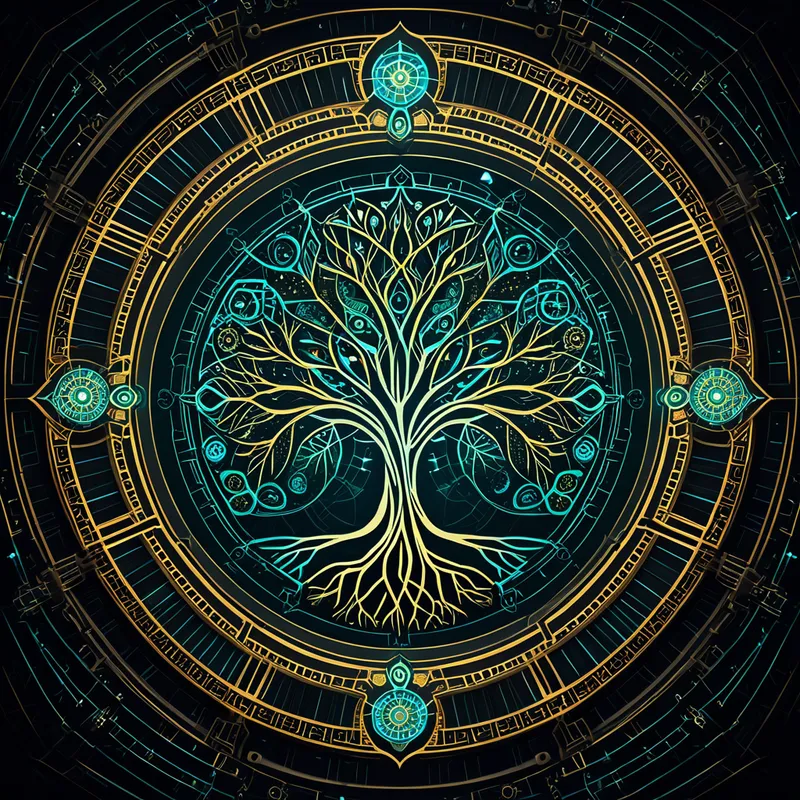
The Dreamer’s Resonance
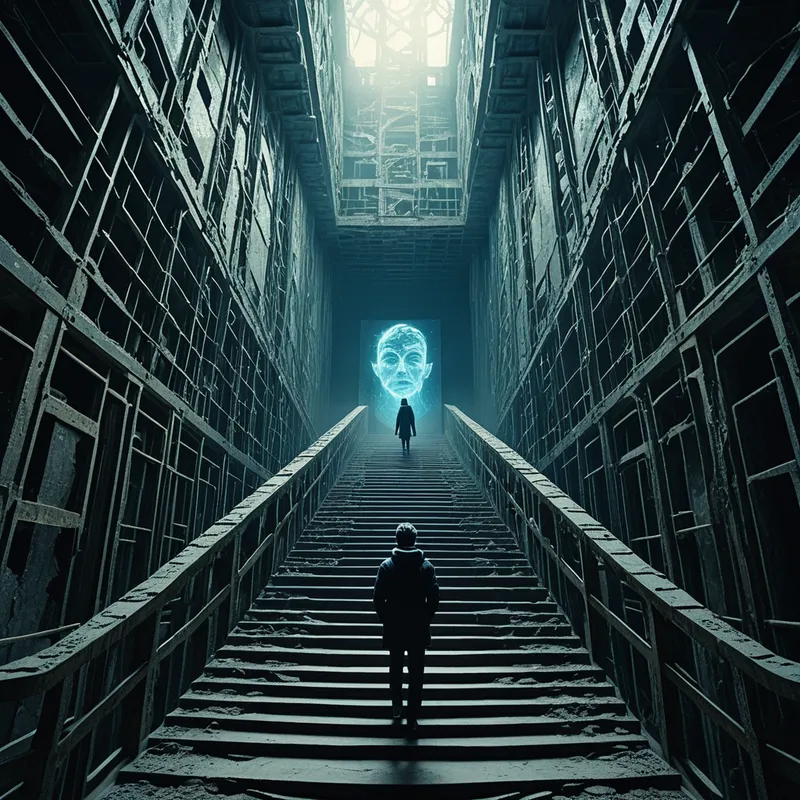
When this myth stirs in the modern unconscious, it manifests in dreams of profound transition and existential crisis. One may dream of climbing an endless, dark staircase in a familiar building that has become alien; of trying to escape a labyrinthine institution (school, hospital, office) whose rules make no sense; of being interrogated by shadowy authorities who accuse them of crimes they don’t understand.
The somatic feeling is one of constriction giving way to dizzying vertigo—the feeling of the psychic ground falling away. This is the soul-awakening, the ego’s structure being challenged by the call of the deeper Self. The “Archons” appear as figures of personal authority (a critical parent, a former partner, a boss) who, in the dream, embody a limiting belief or a crushing judgment that must be answered. To answer them correctly in the dream is to internally reclaim one’s authority from those internalized voices. The dreamer is undergoing a psychic death and rebirth, where an old way of being must be shed for a more authentic one to emerge.
Alchemical Translation
The alchemical process mirrored here is the nigredo—the recognition of one’s entrapment in the “lead” of unconscious living—followed by the arduous albedo and culminating in the rubedo of reintegration with the source.
For the modern individual, the myth models the journey from participation mystique—being unconsciously identified with family, culture, and persona—toward psychological sovereignty. The “ascent” is an inward descent into the depths of the personal and collective unconscious. Each “sphere” we transcend is a layer of collective assumption we dare to question: societal definitions of success, inherited religious beliefs, familial loyalties that bind rather than nurture.
The ultimate triumph is not escape from reality, but the realization that the only reality from which one needed liberation was the prison of one’s own unquestioned mind.
The final reunion with the divine counterpart is the integration of the anima/animus, the union of conscious and unconscious, resulting in the birth of the transcendent function. One does not literally leave the world but learns to live in it while knowing one’s essence is not of it. The world becomes transparent, and the light of the Pleroma shines through it. The exile ends with the discovery that home was never a place to reach, but a nature to remember.
Associated Symbols
Explore related symbols from the CaleaDream lexicon:
- Soul — The divine spark or Pneuma trapped in matter, the central protagonist of the myth whose awakening and ascent is the entire narrative.
- Light — The essential nature of the divine source (Pleroma) and of the soul itself; the goal of the ascent and the substance of true being.
- Key — The salvific Gnosis itself, the inner knowledge that unlocks the gates of the spheres and liberates the soul from ignorance.
- Door — Each of the gates of the seven spheres, representing the psychological barriers and complexes that must be consciously passed through on the path to wholeness.
- Mask — The garments of the flesh or false identities (persona, ego attachments) that the soul must remove and leave behind at each stage of its ascent.
- Tower — The structured, layered cosmos of the Demiurge, a prison of order and law from which the soul must escape.
- Shadow — The Archons and the realm of the Demiurge itself, representing the unconscious, projected, and unintegrated aspects of reality that hold the soul captive.
- Ascent — The core action and purpose of the myth; the vertical journey of return, symbolizing the psychological process of awakening and integration.
- Star — A symbol of the soul’s origin and destination in the luminous Pleroma, and of the inner guiding light of Gnosis.
- Mirror — The moment of Gnosis, where the soul sees its true divine reflection, shattering the illusion of its mortal identity.
- Bridge — The perilous path of ascent itself, spanning the chasm between the material world and the divine realm, between ego and Self.
- Rebirth — The final outcome of the ascent; not a new physical birth, but the soul’s reawakening into its original, pre-cosmic state of divine unity.