The Frog Princess Myth Meaning & Symbolism
A prince finds his destined bride in a frog, embarking on a transformative journey to see past illusion and reclaim her true, radiant nature.
The Tale of The Frog Princess
In the time when the world was woven from story and the old gods still whispered in the wind, there lived a Tsar with three sons, arrows of his heart shot toward the future. The time came for them to seek brides. “Take your bows,” the Tsar commanded, his voice like winter oak. “Shoot an arrow into the wide world. Where it falls, there your fate awaits.”
The eldest son’s arrow flew to a boyar’s courtyard. The middle son’s found a merchant’s fine hall. But the youngest, Ivan Tsarevich, watched his shaft vanish into the deep, forbidden chorny les. With a heart heavy as river stone, he followed.
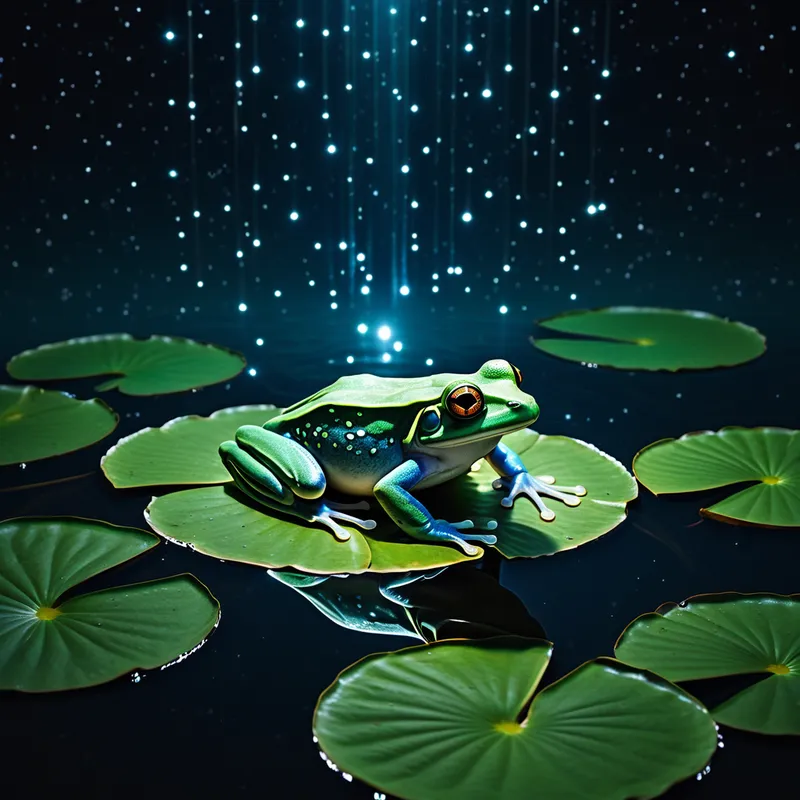
He did not find a maiden, but a bog, green and sighing. And there, upon a broad lily pad, sat a frog. In its mouth, it held his arrow. “Greetings, Ivan Tsarevich,” it croaked, its voice not ugly, but strange and deep, like water over stones. “You have found your destined bride.” Laughter died in Ivan’s throat, replaced by a cold dread. Yet a promise was a thread in the tapestry of fate; to break it was to unravel the world.
At the palace, the Tsar set impossible tasks to test his new daughters. “Bake me bread by morning,” he said. Ivan returned to his chamber in despair. But his frog bride merely said, “Sleep, Ivan Tsarevich. Morning is wiser than evening.” As he slept, she stepped out onto the balcony, shed her frog skin, and became Vasilisa the Wise, daughter of [Koschei the Deathless](/myths/koschei-the-deathless “Myth from Slavic culture.”/). She clapped her hands, and from the mist came her maidservants. Together they baked a loaf so splendid it was adorned with painted cities and singing birds.
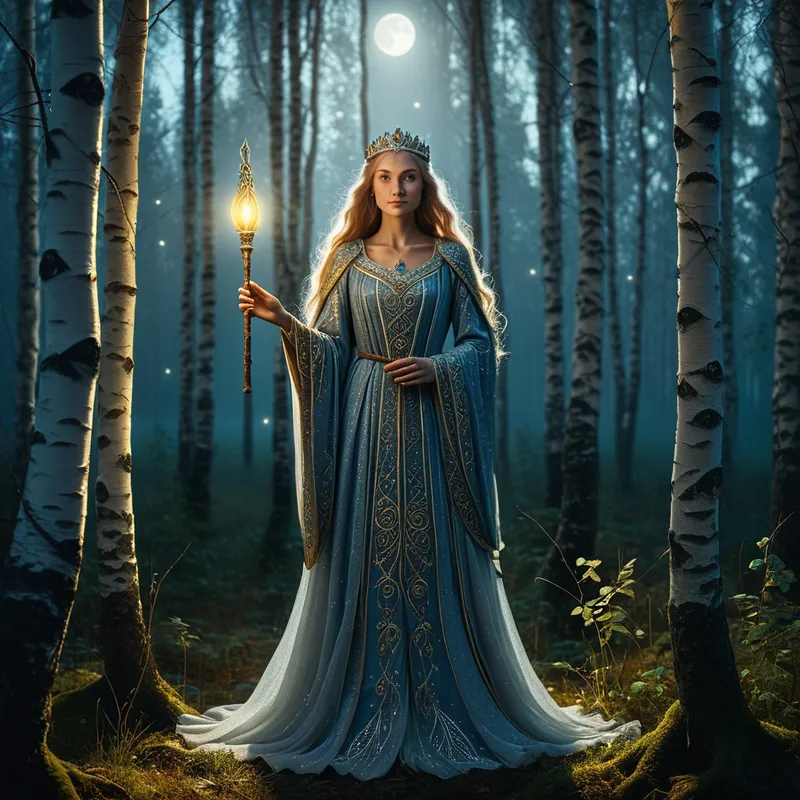
For the next task, to weave a carpet, she performed the same nightly alchemy, creating a tapestry that held the sunrise in its threads. At the final feast, Ivan burned with shame as his brothers arrived with human brides. But then came a sound like thunder—a golden carriage drawn by six fire-maned horses, and from it stepped Vasilisa in her true form, radiant as the moon on snow, her gown the color of the sky at twilight. All were struck dumb by her beauty and grace. In his joy and terror of losing her, Ivan rushed back to their chamber, found the discarded frog skin, and cast it into the fire.
At the moment the skin blackened and curled, Vasilisa appeared at the threshold, her face pale with grief. “Oh, Ivan, what have you done? A little more patience, and I would have been free. Now I must return to my father, Koschei, in his kingdom beyond the thrice-ninth land.” And she vanished, leaving only the scent of birch smoke and distant rain.
Thus began Ivan’s true quest. His journey was not to win a bride, but to reclaim a love he had failed to recognize, guided only by the wisdom of the ancient world—a wolf that served him, a bear that aided him, and the wise pike of the deep waters. He would cross burning plains and glass mountains, and stare into the hut on chicken legs, to find the needle that held the death of Koschei, and with it, win back his Vasilisa the Wise.
Cultural Origins & Context
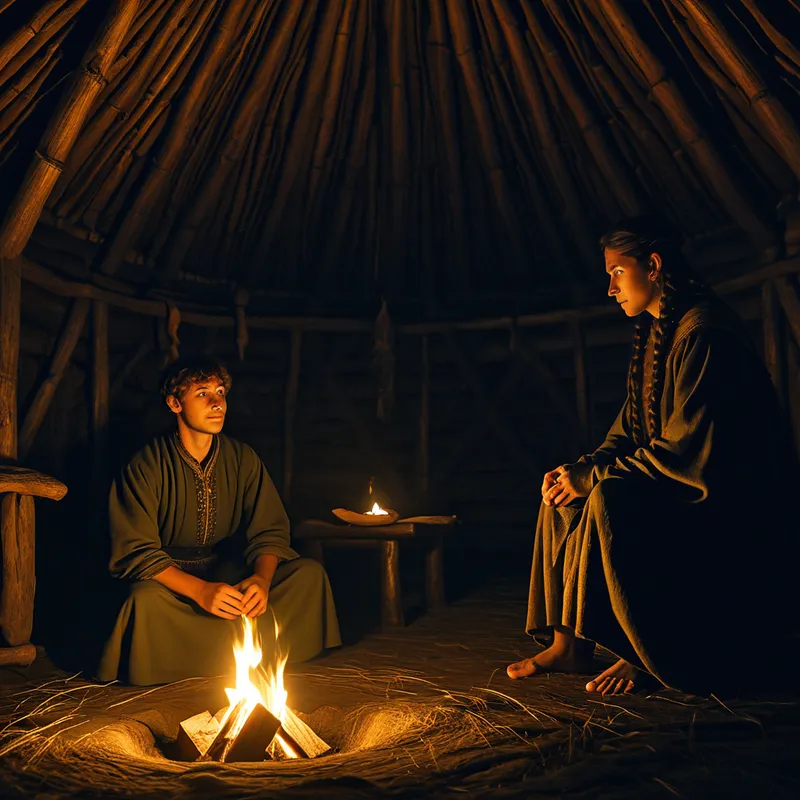
This tale, known as “Tsarevna Lyagushka” (The Frog Tsarevna), is a cornerstone of the East Slavic oral tradition, collected by folklorists like Alexander Afanasyev in the 19th century. It was not a child’s fancy, but a volshebnaya skazka (magical tale) told during the long winter nights, a narrative technology for encoding cultural values, fears, and initiatory wisdom.
The storyteller, often a grandmother or a traveling skazitel, wove this story for a community deeply attuned to the rhythms of nature. The frog, a creature of water and earth, was a potent symbol of fertility, the cyclical rebirth of spring, and the liminal space between worlds (water/land, ugly/beautiful). The tale functioned as a guide for navigating life’s profound transitions: leaving the parental home, choosing a partner, and the necessary “death” of immature perception to achieve a mature, soulful union. It taught that destiny (dolya) often arrives in a disguised, challenging form, and that true sovereignty (of a prince, of a self) is earned through ordeal and refined perception, not bestowed by birthright alone.
Symbolic Architecture
At its [heart](/symbols/heart “Symbol: The heart symbolizes love, emotion, and the core of one’s existence, representing deep connections with others and self.”/), the myth is a profound map of the [psychology](/symbols/psychology “Symbol: Psychology in dreams often represents the exploration of the self, the subconscious mind, and emotional conflicts.”/) of [relationship](/symbols/relationship “Symbol: A representation of connections we have with others in our lives, often reflecting our emotional state.”/)—to others and to the hidden aspects of the self. The [Frog](/symbols/frog “Symbol: A frog symbolizes transformation, adaptability, and connection to nature.”/) [Princess](/symbols/princess “Symbol: The symbol of a princess embodies themes of power, privilege, and feminine grace, often entailing a journey of self-discovery.”/) is not cursed; she is enchanted, operating under a law of her own. She represents the [anima](/symbols/anima “Symbol: The feminine archetype within the male unconscious, representing soul, creativity, and connection to the inner world.”/), the inner feminine principle in the male psyche (and vice-versa as the [animus](/symbols/animus “Symbol: In Jungian psychology, the masculine inner personality in a woman’s unconscious, representing logic, action, and spiritual guidance.”/)), in its most [alien](/symbols/alien “Symbol: Represents the unknown, otherness, and the exploration of new ideas or experiences.”/), rejected, yet utterly potent form. She is the [soul](/symbols/soul “Symbol: The soul represents the essence of a person, encompassing their spirit, identity, and connection to the universe.”/) itself, disguised by the “ugly” or unfamiliar aspects of our own [depth](/symbols/depth “Symbol: Represents profound layers of consciousness, hidden truths, or the unknown aspects of existence, often symbolizing introspection and existential exploration.”/).
The true beloved is always first encountered as a stranger, wrapped in the skin of our deepest resistance.
Ivan’s impulsive burning of the [skin](/symbols/skin “Symbol: Skin symbolizes the boundary between the self and the world, representing identity, protection, and vulnerability.”/) is the critical [error](/symbols/error “Symbol: A dream symbol representing internal conflict, perceived failure, or a mismatch between expectations and reality.”/) of the immature ego. It is the attempt to force transformation, to destroy the container of the [mystery](/symbols/mystery “Symbol: An enigmatic, unresolved element that invites curiosity and exploration, often representing the unknown or hidden aspects of existence.”/) (the frog [skin](/symbols/skin “Symbol: Skin symbolizes the boundary between the self and the world, representing identity, protection, and vulnerability.”/)) before its time, rather than allowing the process to complete itself organically. This act symbolizes the fear of the other’s autonomy and the desire to possess [beauty](/symbols/beauty “Symbol: This symbol embodies aesthetics, harmony, and the appreciation of life’s finer qualities.”/) on one’s own terms, which immediately sends the soul fleeing back into the [realm](/symbols/realm “Symbol: The symbol of ‘Realm’ often signifies the boundaries of one’s consciousness, experiences, or emotional states, suggesting aspects of reality that are either explored or ignored.”/) of the unconscious (Koschei’s [kingdom](/symbols/kingdom “Symbol: A kingdom symbolizes authority, belonging, and a sense of identity within a larger context or community.”/)).
Koschei the Deathless represents the complex of the possessive, deathless (unconscious) [father](/symbols/father “Symbol: The father figure in dreams often symbolizes authority, protection, guidance, and the quest for approval or validation.”/), the archetypal power that hoards [life](/symbols/life “Symbol: The symbol of ‘Life’ represents a journey of growth, interconnectedness, and existential meaning, encompassing both the joys and challenges that define human experience.”/) and [spirit](/symbols/spirit “Symbol: Spirit symbolizes the essence of life, vitality, and the spiritual journey of the individual.”/). To defeat him, Ivan must find his “[death](/symbols/death “Symbol: Symbolizes transformation, endings, and new beginnings; often associated with fear of the unknown.”/),” which is hidden in nested symbols (egg, [duck](/symbols/duck “Symbol: Ducks often symbolize adaptability, emotional balance, and the ability to navigate life’s challenges with grace and ease.”/), hare, [chest](/symbols/chest “Symbol: The chest symbolizes the core of one’s being, encompassing emotions, identity, and the protective barriers we create around ourselves.”/), oak, [needle](/symbols/needle “Symbol: The needle is a powerful symbol of connection, precision, and the intricate threads of life that bind experiences and emotions.”/)). This is the [journey](/symbols/journey “Symbol: A journey in dreams typically signifies adventure, growth, or a significant life transition.”/) of [analysis](/symbols/analysis “Symbol: The process of examining something methodically to understand its components or meaning. In dreams, it represents the mind’s attempt to break down complex experiences.”/)—finding the core, vulnerable point of a seemingly immortal neurosis or complex. The helpers—the [wolf](/symbols/wolf “Symbol: Wolves in dreams symbolize instinct, intelligence, freedom, and a deep connection to the wilderness and primal instincts.”/), bear, and [pike](/symbols/pike “Symbol: A long spear weapon historically used for hunting and warfare, symbolizing aggression, defense, and focused penetration.”/)—are the instinctual forces of the Self that aid the ego when it is aligned with its true [quest](/symbols/quest “Symbol: A quest symbolizes a journey or search for purpose, fulfillment, or knowledge, often representing life’s challenges and adventures.”/).
The Dreamer’s Resonance
When this myth stirs in the modern dreamer, it often signals a profound somatic and psychological process of re-evaluating what is deemed “other” or “unworthy” within one’s life or self. Dreaming of a frog that speaks, or a partner who transforms, points to the emergence of the soul-image from the swampy depths of the unconscious. There is a call to engage with what repulses or confuses you.
The somatic feeling might be one of cold dread (Ivan’s initial shame) mixed with a curious awe. The dreamer may be on the cusp of a relationship deepening or facing the consequences of having “burned the skin”—acted hastily to eliminate an uncomfortable but necessary phase of growth, resulting in a feeling of loss or exile. The dream is an invitation to patience, to see the magical bread being baked in the dark night of the psyche, and to undertake the inner quest to find what has been lost through one’s own fear or impatience.
Alchemical Translation
The myth models the alchemical process of individuation, the journey toward psychic wholeness. The initial state is one of projection: Ivan projects his ideal of a bride onto the external world (the arrow’s flight). The universe answers not with the ideal, but with the contrary—the frog. This is the nigredo, the blackening, the encounter with the prima materia that is base, dark, and unacceptable.
The tasks set by the Tsar are the stages of albedo (whitening)—the purification and revelation of hidden qualities. Vasilisa, working in secret, transforms base ingredients (flour, thread) into magnificent artifacts. This is the unconscious psyche working on the problem of consciousness, creating soul-substance.
The fire that destroys the skin too soon is the fire that fails to transmute; it is mere conflagration, not the alchemist’s sustained heat.
Ivan’s subsequent journey is the citrinitas (yellowing) and rubedo (reddening)—the conscious, sun-lit quest to integrate what was lost. He must actively engage with the shadowy realms (Koschei), aided by his animal instincts (the helpers), to find the precise, needle-point truth that will liberate the captive soul. The final union with Vasilisa the Wise is not a romantic “happily ever after,” but the symbolic marriage of the ego to the Self, where the conscious mind is wedded to the wisdom of the deep, instinctual psyche. The frog skin is not forgotten; it is understood as the necessary vessel without which the transformation could never have begun.
Associated Symbols
Explore related symbols from the CaleaDream lexicon:
- Frog — The initial, disguised form of the soul or the anima, representing fertility, transformation, and the ability to navigate the liminal spaces between water (unconscious) and land (consciousness).
- Princess — The essential, sovereign self hidden within the transformation, representing inner wisdom, destiny, and autonomous spiritual power.
- Fire — The transformative agent; its wise use bakes the magical bread, but its impulsive use destroys the necessary container of transformation, forcing the quest.
- Forest — The chorny les, the realm of the unknown and the magical, where destiny is found and the heroic journey into the unconscious begins.
- Journey — Ivan’s long quest to Koschei’s kingdom, representing the necessary, arduous path of psychological integration and the reclaiming of a lost part of the soul.
- Mask — The frog skin operates as a magical mask, both concealing the true nature of Vasilisa and serving as the crucial, temporary identity that must be honored until its time is complete.
- Shadow — Koschei the Deathless embodies the possessive, life-hoarding aspect of the unconscious shadow, the complex that must be confronted and understood to achieve liberation.
- Transformation — The core alchemical process of the tale, moving from frog to princess, from shame to sovereignty, through the stages of ordeal, patience, and quest.
- Water — The elemental home of the frog, representing the unconscious, the emotional realm, and the fertile, murky source from which new life and forms emerge.
- Key — The nested secret of Koschei’s death (the needle), which is the precise insight or truth that unlocks a seemingly immortal psychological complex.
- Love — Not as sentimental feeling, but as the driving force of the quest and the ultimate goal of union, representing the ego’s need to reconcile with and integrate the soul.
- Patience — The critical virtue Ivan lacks initially; the wisdom to allow a process to complete in its own time, which is the true catalyst for organic transformation.