
The Ferryman Myth Meaning & Symbolism
An archetypal figure who navigates the boundary between worlds, demanding a toll for passage and confronting the soul with the price of transformation.
The Tale of The Ferryman
Listen. There is a shore that is not a shore, a river that does not flow on any map. Its waters are the color of forgotten things, of breath held too long, of the silence between heartbeats. This is the Acheron, the Styx. Its far bank is a shadow against a starless sky, and on it, gates of a metal that drinks the light loom like a promise, or a threat.
Here, on this crumbling, gravel-strewn bank, the shades gather. They are whispers of who they were, formless and faint, drawn by a longing they can no longer name. They mill in silent confusion, a grey tide of regret and memory, until a presence stills them.
From the clinging mist, a shape resolves. A low, black boat, older than the oldest city, its wood polished smooth by countless hands. And in it, a figure. He is not tall, but his stillness is immense. A rough hood shadows his face, but you feel his gaze—ancient, impersonal, weighing. This is Charon. The Ferryman. In his hand is a pole, not for steering, but for pushing away from [the world](/myths/the-world “Myth from Tarot culture.”/) of the living.
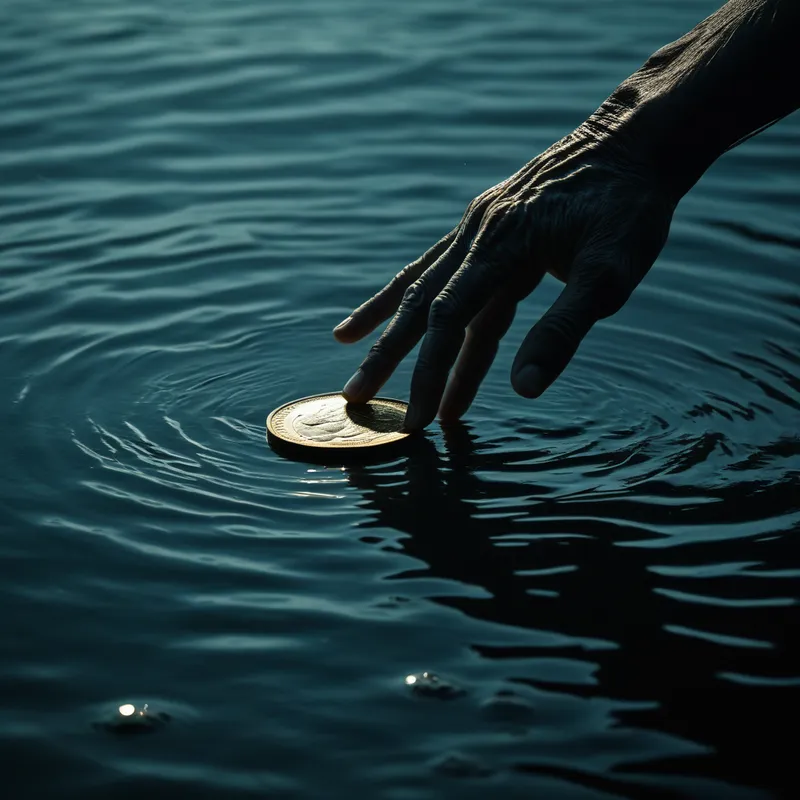
He does not speak. He extends a hand, palm upturned. The demand is absolute. It echoes in the hollows of every shade: The fare. The price of passage.
Some shades step forward. From the folds of their ghostly garments, they produce it: a single, dull coin. An obol, placed on their tongue or over their eyes by grieving hands who remembered the old ways. This coin is their memory, their dignity, their completed story. It is the proof that they were loved enough to be sent off properly. They place the coin in that weathered palm. The hand closes. A slight nod. They may board.
But others… others wail a soundless wail. They claw at empty mouths, pat frantic hands over translucent robes. They have nothing. No coin was placed. No rite was performed. They are the forgotten, the unmourned, the ones who left debts unpaid—not of gold, but of love, of truth, of closure. For them, the Ferryman’s hand remains outstretched, implacable. When they do not pay, he turns away. His pole pushes against the soft bank, and the skiff slides into the dark waters, leaving the penniless shades to wander the grey shore for a hundred years, or perhaps forever, listening to the lap of [water](/myths/water “Myth from Chinese culture.”/) they cannot cross.
The boat glides, silent, through waters that reflect nothing. The Ferryman does not look back. He is the hinge of the door, the moment between the question and the answer. He delivers the paid souls to the far gate, where judges await. For those he carries, the journey continues. For those he leaves, there is only the echo of [the river](/myths/the-river “Myth from Buddhist culture.”/) and the long, cold wait for a coin that will never come.
Cultural Origins & Context
The Ferryman is not a myth of one people, but a psychic artifact of humanity. His most famous incarnation is Charon in Greek tradition, detailed in epic poetry like [Homer](/myths/homer “Myth from Greek culture.”/)’s Odyssey and Virgil’s Aeneid. Yet, he has kin across the globe: the silent boatman of the Duat in Egyptian lore; the somber guides in Mesopotamian and Celtic beliefs. This was not priestly abstraction, but a vital, practical folk belief. The ritual of the coin—the obol for Charon—was a concrete act of love and duty performed by the living for the dead. It ensured safe passage, preventing the soul from becoming a restless, haunting presence. The myth functioned as social glue, reinforcing funeral rites, and as existential map, providing a narrative for the greatest unknown. It was told not to frighten, but to prepare, to make the unimaginable transition feel navigable, contingent on a simple, human act: payment.
Symbolic Architecture
The Ferryman is the archetypal [guardian](/symbols/guardian “Symbol: A protector figure representing safety, authority, and guidance, often embodying parental, societal, or spiritual oversight.”/) of the ultimate threshold. He is not [death](/symbols/death “Symbol: Symbolizes transformation, endings, and new beginnings; often associated with fear of the unknown.”/) itself, but its necessary agent—the personified [condition](/symbols/condition “Symbol: Condition reflects the state of being, often focusing on physical, emotional, or situational aspects of life.”/) for crossing.
He represents the immutable law of the psyche: all profound transition requires a sacrifice. You cannot take your old currency into the new country.
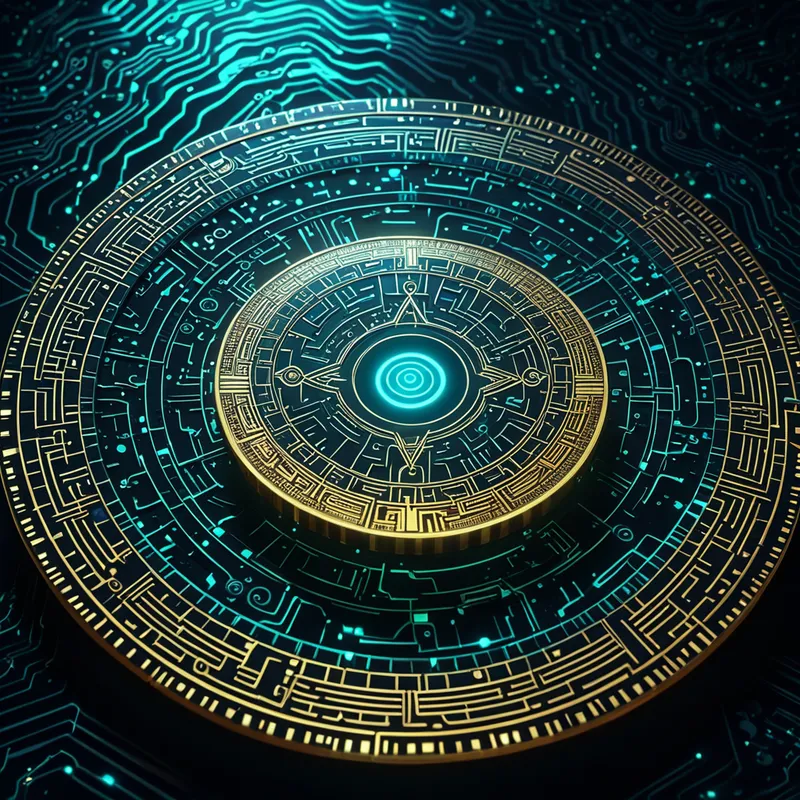
The [River](/symbols/river “Symbol: A river often symbolizes the flow of emotions, the passage of time, and life’s journey, reflecting transitions and movement in one’s life.”/) is the [boundary](/symbols/boundary “Symbol: A conceptual or physical limit defining separation, protection, or identity between entities, spaces, or states of being.”/) between states of being: [life](/symbols/life “Symbol: The symbol of ‘Life’ represents a journey of growth, interconnectedness, and existential meaning, encompassing both the joys and challenges that define human experience.”/) and death, conscious and unconscious, old self and new self. It is the liquid, dissolving medium of transformation itself. The Boat is the fragile [vessel](/symbols/vessel “Symbol: A container or structure that holds, transports, or protects something essential, representing the self, emotions, or life journey.”/) of [identity](/symbols/identity “Symbol: Identity represents the sense of self, encompassing personal beliefs, cultural background, and social roles.”/) or the [soul](/symbols/soul “Symbol: The soul represents the essence of a person, encompassing their spirit, identity, and connection to the universe.”/) that makes this perilous crossing. The Coin is the quintessential [symbol](/symbols/symbol “Symbol: A symbol can represent an idea, concept, or belief, serving as a powerful tool for communication and understanding.”/). It is not [wealth](/symbols/wealth “Symbol: Wealth in dreams often represents abundance, security, or inner resources, but can also symbolize burdens, anxieties, or moral/spiritual values.”/), but value. It represents what must be surrendered to gain [passage](/symbols/passage “Symbol: A passage symbolizes transition, movement from one phase of life to another, or a journey towards personal growth.”/): a cherished identity, a long-held grievance, a comfortable illusion. It is the completed [karma](/myths/karma “Myth from Hindu culture.”/), the acknowledged [truth](/symbols/truth “Symbol: Truth represents authenticity, honesty, and the quest for knowledge beyond mere appearances.”/), the fully felt [emotion](/symbols/emotion “Symbol: Emotion symbolizes our inner feelings and responses to experiences, often guiding our actions and choices.”/). To be “coinless” is to be psychically bankrupt, clinging to forms that have no value in the next world.
The Ferryman’s silence is critical. He offers no counsel, no comfort, no negotiation. He is pure process, a function of [reality](/symbols/reality “Symbol: Reality signifies the state of existence and perception, often reflecting one’s understanding of truth and life experiences.”/). His implacability forces the soul to confront its own accounts. Is your life, your current self, a [currency](/symbols/currency “Symbol: Currency represents value exchange, personal worth, and societal power dynamics. It symbolizes resources, control, and the abstract systems governing human interaction.”/) that is valid for the [journey](/symbols/journey “Symbol: A journey in dreams typically signifies adventure, growth, or a significant life transition.”/) you must now take?
The Dreamer’s Resonance
When the Ferryman rows into modern dreams, he rarely appears as a hooded figure on a Stygian river. He is the dispassionate official at the visa counter denying your paperwork. He is the final, non-negotiable clause in the contract. He is the toll booth on a midnight highway in a landscape you don’t recognize. The somatic feeling is one of arrested transition. You are stuck, anxious, searching pockets for something you know you should have but cannot find.
This dream signals a [psyche](/myths/psyche “Myth from Greek culture.”/) at a critical juncture—the end of a relationship, a career, a life phase, or a deeply held belief system. The unconscious is presenting the archetypal law: to move forward, you must pay. The “coin” you search for in the dream is the specific internal payment required. It might be the humble admission of fault, the surrender of a victim narrative, the acceptance of a painful truth, or the conscious grieving of a loss you’ve been ignoring. The dream is a diagnostic: it shows you are at the riverbank, and asks, What have you brought to pay your way?

Alchemical Translation
In the alchemy of individuation—the process of becoming whole—the Ferryman myth models the [nigredo](/myths/nigredo “Myth from Alchemical culture.”/) stage, the necessary dissolution. The old, outmoded “I” must die for a more conscious self to be born.
The journey to wholeness is not a free ride. The ego, which believes it owns the psyche, must pay a toll to the greater, guiding Self.
The conscious mind (the departing shade) wishes to cross into new, unknown territory of the psyche (greater integration, creativity, depth). But it cannot do so while clutching all its old contents. The Ferryman is the agent of the Self. He demands the coin: the inflation of [the ego](/myths/the-ego “Myth from Jungian culture.”/), the rigid [persona](/myths/persona “Myth from Greek culture.”/), the unresolved complex. You must place your self-importance, your blame, your pride into that impersonal hand. Only then will [the vessel](/myths/the-vessel “Myth from Alchemical culture.”/) of your being be allowed to traverse the dark waters of the unconscious.
The hundred years of wandering for the coinless is the psychic stagnation that follows refusing this work. We see it in prolonged depressions, chronic bitterness, or a life lived in repetitive, empty patterns. The alchemical [triumph](/myths/triumph “Myth from Roman culture.”/) is in the humble offering. When you can identify and willingly surrender what the moment demands—when you pay the Ferryman—the boat moves. [The threshold](/myths/the-threshold “Myth from Folklore culture.”/) is crossed. You are delivered not to an end, but to the next stage of [the great work](/myths/the-great-work “Myth from Alchemical culture.”/), where new forms of judgment and integration await. The Ferryman thus is not a monster, but the ultimate sage: he teaches that freedom is found not in having everything, but in having just enough to pay for the only journey that truly matters.
Associated Symbols
Explore related symbols from the CaleaDream lexicon: