The Fairy Host Myth Meaning & Symbolism
A spectral hunt rides from the hollow hills, a terrifying and awe-inspiring procession that marks the boundary between the living world and the Other.
The Tale of The Fairy Host
Hear now, and listen well, for the wind carries a tale not meant for the light of common day. When the sun drowns in the western sea and the world is painted in the grey hues of samhain, a door opens in the hollow hills. It is not a door of oak and iron, but a sigh in the earth, a thinning of the very air.
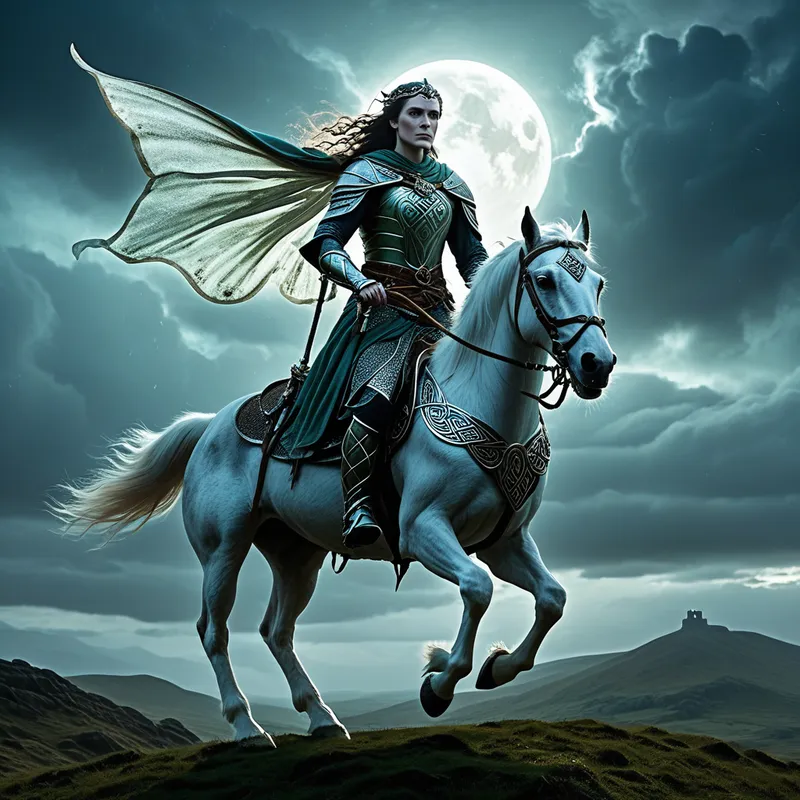
From the ancient sídhe they come. First, a sound—a distant horn, mournful and cold, that chills the blood more than any winter gust. Then, the drumming. Not of a single drum, but of a hundred hooves striking not earth, but the fabric of twilight itself. They crest the hill against a bruised purple sky: The Fairy Host, the Slua Sí.
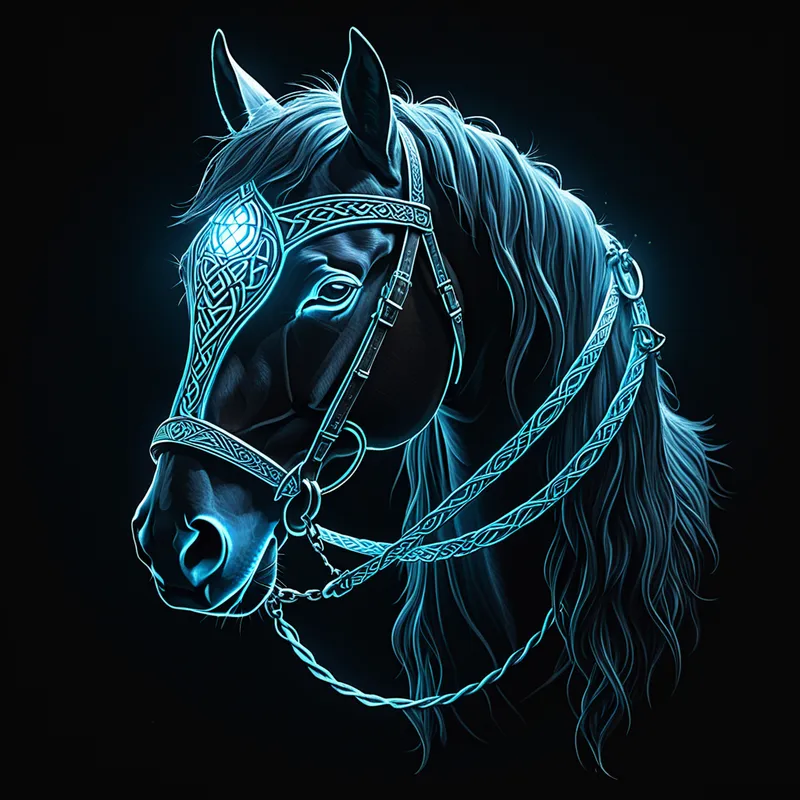
At their head rides a figure of terrible majesty—Finn mac Cumhaill, some whisper, or Donn, the Dark One. His cloak is the storm cloud, his crown the bare, antlered branch. His steed’s eyes are burning coals, and its breath is the mist that steals life from the grass. Behind him streams a cavalcade of the restless dead: heroes with silent mouths, ladies in gowns of faded grandeur, and the Aos Sí themselves in their terrible beauty, eyes bright with a joy that is not human.
They are hunting. But their quarry is not stag nor boar. They hunt the unmoored soul, the promise broken, the life half-lived. Their hounds, sleek and white with ears of red, bay with voices that echo in the hollow of your chest. To see them is to feel a pull, a longing to join that wild, free ride into the forever night. To step from your threshold is to be swept up, a leaf in a spectral gale, lost to the world of hearth and home.
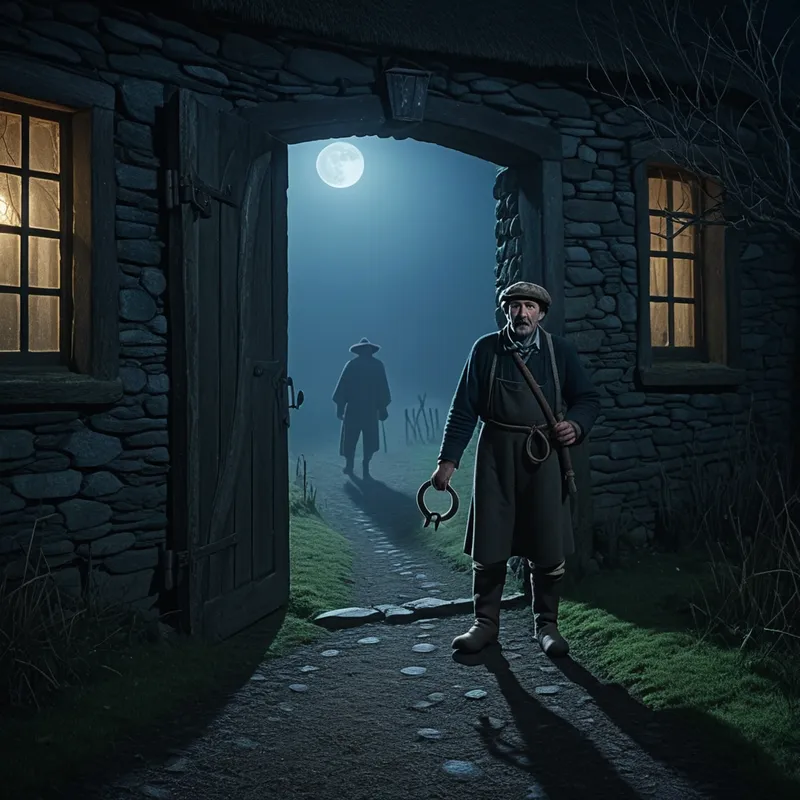
Yet, there is a law. The Host cannot cross a boundary marked by iron, the metal of the human world, of toil and death. A horseshoe nailed above a door, a scythe left by the step. Inside, a family huddles, hearing the cacophony pass—the clash of phantom arms, the eerie music, the weeping of those taken in years long past. They feel the cold seep through the walls and see, if they dare to peek, the endless procession of faces, some known, most forgotten, riding into the maw of the storm.
And then, as the first false dawn greys the east, the sound fades. The horn is a memory. The drumming is your own heart, pounding against your ribs. The door in the hill closes. The world is returned, but it is changed. The air is cleaner, sharper. The veil has been drawn shut once more, but it is thinner now, and forever will be, for those who have heard the call.
Cultural Origins & Context
The myth of the Fairy Host is not a single story but a pervasive folk belief woven into the fabric of Gaelic Scotland, Ireland, Wales, and beyond. It is a folklore of the hearth and the hillside, passed down not by bards in courts, but by seanchaí (storytellers) by peat fires, a warning whispered to children as the autumn nights drew in. Its roots tap deep into the pre-Christian substrate, likely evolving from beliefs about ancestral spirits and deities of the An Saol Eile.
Societally, the Host served multiple functions. It was a cosmological anchor, explaining storms, sudden deaths, and mysterious sounds in the night. It enforced social boundaries: the importance of the hearth (the protected circle), the danger of being abroad at liminal times (dusk, dawn, festivals like Samhain), and the sacredness of promises (lest you become their quarry). Most profoundly, it was a narrative container for the collective anxiety about death, the afterlife, and the restless energy of unfulfilled destinies. The Host was the community’s shadow, riding at the edge of perception, a reminder that the world of the living is but a clearing in a vast, animate, and often perilous forest of spirit.
Symbolic Architecture
The Fairy Host is the ultimate symbol of the limen. It does not belong to the day nor the night, the living nor the dead, the human nor the divine. It is the procession of the in-between.
The Host is the psyche’s own tumultuous procession of all that has been left behind, all unlived life, thundering at the gates of consciousness.
Psychologically, the Host represents the contents of the personal and collective unconscious when they mobilize. The heroic but silent figures are our own dormant potentials; the weeping captives are our repressed traumas and regrets; the fierce, beautiful Aos Sí are the raw, untamed archetypal energies that defy ego control. The hunt is the pressure these contents exert upon the conscious self, the “pull” of depression, mania, obsession, or creative frenzy that feels alien and overwhelming. The iron boundary—the humble horseshoe—is the symbol of the conscious mind’s fragile but necessary defense: discrimination, groundedness, and the simple, stubborn reality of the present moment.
The Dreamer’s Resonance
To dream of the Fairy Host is to experience the unconscious in its dynamic, collective, and autonomous aspect. It is rarely a peaceful dream. One may dream of hearing the distant horn, of seeing the riders through a window, or, most critically, of feeling an irresistible compulsion to join them.
Somatically, this can mirror sensations of anxiety or panic—the pounding heart (the hooves), the shortness of breath (the rushing wind), a feeling of being chased or swept away. Psychologically, it signals a period where contents that have long been held at bay—ancestral patterns, major life transitions, repressed grief, or a calling toward a new but frightening identity—are mobilizing. The ego feels besieged. The dream is a direct experience of the “psychoid” layer, where psychic reality and somatic sensation are one. The dreamer is not analyzing a myth; they are inside it, facing the raw archetypal tide. The critical question the dream poses is: What is your iron? What is the grounded, real, conscious principle that can hold the threshold without breaking?
Alchemical Translation
The individuation journey modeled by the Fairy Host myth is not one of slaying a dragon, but of negotiating with a storm. The goal is not to defeat the Host, but to learn its nature and, in doing so, transform one’s relationship to the unconscious.
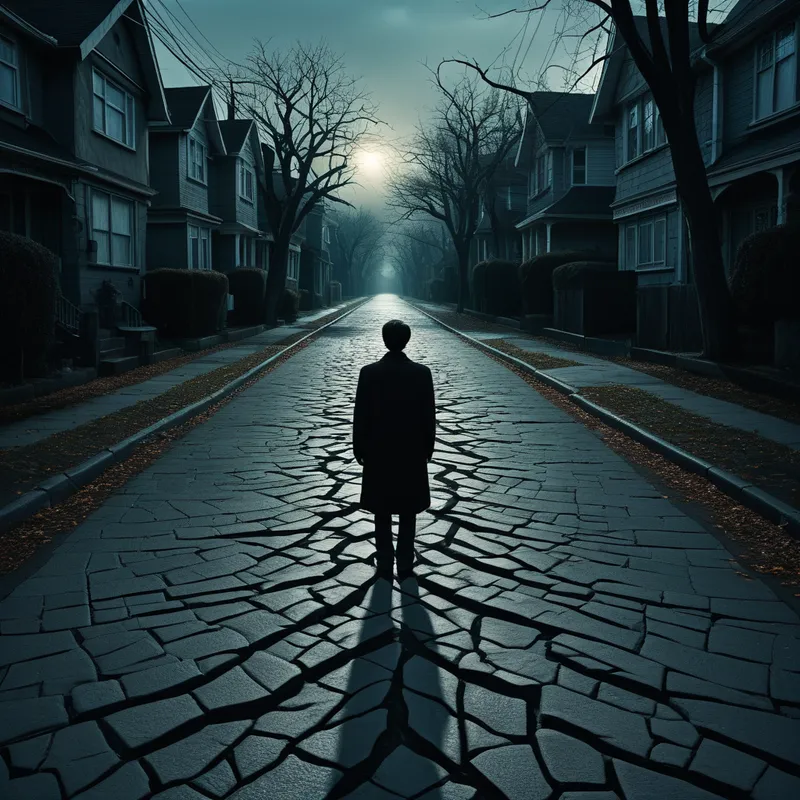
The first alchemical stage is nigredo: the blackening. This is the initial encounter—the terror, the cold, the feeling of being prey. The ego confronts its smallness against the vastness of the psyche. The second stage is separatio: the holding of the boundary. This is the conscious work of “nailing the iron horseshoe.” It is the difficult, daily practice of discernment—journaling, therapy, artistic expression—that provides a vessel to contain the onslaught. It is saying, “This energy is powerful, but I am here, in this body, in this room.”
The final transmutation occurs when one can look upon the Host not with terror, but with awe, and hear in its horn not just a summons to dissolution, but a call to a larger life.
This is the coniunctio: not a merging that destroys the ego, but a sacred marriage where the conscious self acknowledges its citizenship in a much wider kingdom. The restless dead become honored ancestors; the unlived potentials become guides; the wild Aos Sí become sources of creativity rather than fear. The individual no longer merely hides from the ride but understands they are, and always have been, a part of the eternal, cycling procession of life, death, and transformation. They find their place in the story, not as captive or coward, but as a conscious participant in the great, silent hunt that shapes the soul.
Associated Symbols
Explore related symbols from the CaleaDream lexicon: