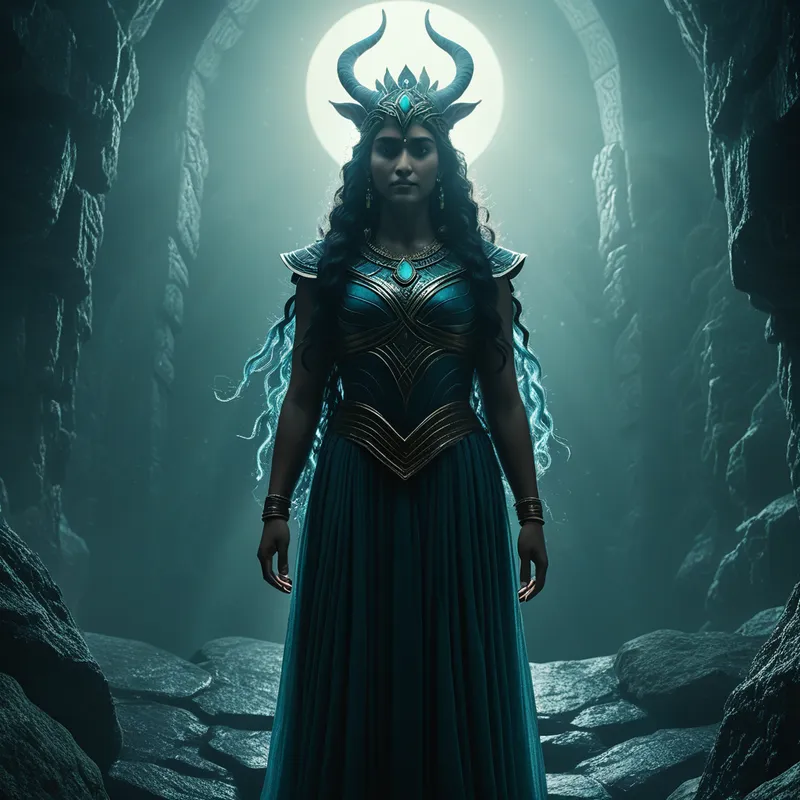
The Enchanted Islands Arabian
Mystical islands in Arabian lore where paradise and peril intertwine, revealing ancient secrets and supernatural wonders.
The Tale of The Enchanted Islands Arabian
The tale begins not with a map, but with a longing—a deep, unspoken yearning that pulls at the soul of a weary traveler or a seeker of hidden truths. It is said that beyond the known seas, veiled by mists that part only for the destined or the damned, lie the Enchanted Islands. They are not one place, but many, scattered like emeralds and pearls upon the sapphire cloth of the ocean, each a world unto itself.
To the mariner who stumbles upon their shores, the first sight is of impossible beauty. Lush forests of trees bearing gem-like fruit crowd against shores of powdered silver sand. Rivers of crystal-clear [water](/myths/water “Myth from Chinese culture.”/), sweet to the taste, wind through meadows of eternal spring. The air is perfumed with flowers unknown to the deserts of Arabia, and a profound, seductive peace settles upon the heart. It is a paradise crafted by jinn or perhaps by the whims of a forgotten god, a place where time itself seems to slow its relentless march.
Yet, woven into the very fabric of this paradise is its peril. The islands are alive with a conscious enchantment. A traveler may drink from a spring and find their deepest wish granted, only to discover the wish was a distorted echo of their soul’s true desire, now a cage of gold. Another may pluck a fruit of dazzling ruby, and gain forbidden knowledge—the language of animals, the secrets of the stars—but this wisdom burns the mind, leaving it haunted by visions no mortal was meant to bear. The islands test not the body, but the spirit. They reflect the inner landscape of the visitor back at them, magnified and made manifest.
Guardians dwell here, seldom seen but deeply felt. They may be noble jinn of ancient power, bound to protect the islands’ mysteries, or terrifying creatures born of shadow and elemental force. Their purpose is not always to destroy, but to discern. They challenge the intruder’s intent: is this a quest for vanity, for power, or for a purer truth? Many tales speak of explorers who, upon solving a riddle posed by a stone [sphinx](/myths/sphinx “Myth from Greek culture.”/) or navigating a [labyrinth](/myths/labyrinth “Myth from Various culture.”/) of whispering reeds, are shown a path to a deeper, more sacred part of the island—a inner sanctum where [the veil](/myths/the-veil “Myth from Various culture.”/) between the physical and the spiritual grows thin.
The ultimate secret of the Enchanted Islands is that they are both a gift and a gauntlet. They offer a glimpse of a world uncorrupted, a divine order in nature, and the intoxicating potential of hidden knowledge. But they demand a price of profound self-awareness. To take from the island without understanding what one brings to it is to invoke a subtle curse: the paradise becomes a prison of one’s own making, the knowledge a torment, the beauty a mirror reflecting a hollow soul. Only those who approach with a heart balanced between courage and humility, who seek not to possess but to witness, may navigate the splendor and [the shadow](/myths/the-shadow “Myth from Jungian culture.”/), and return to [the world](/myths/the-world “Myth from Tarot culture.”/) of men transformed, carrying not treasure, but a silent, luminous truth.
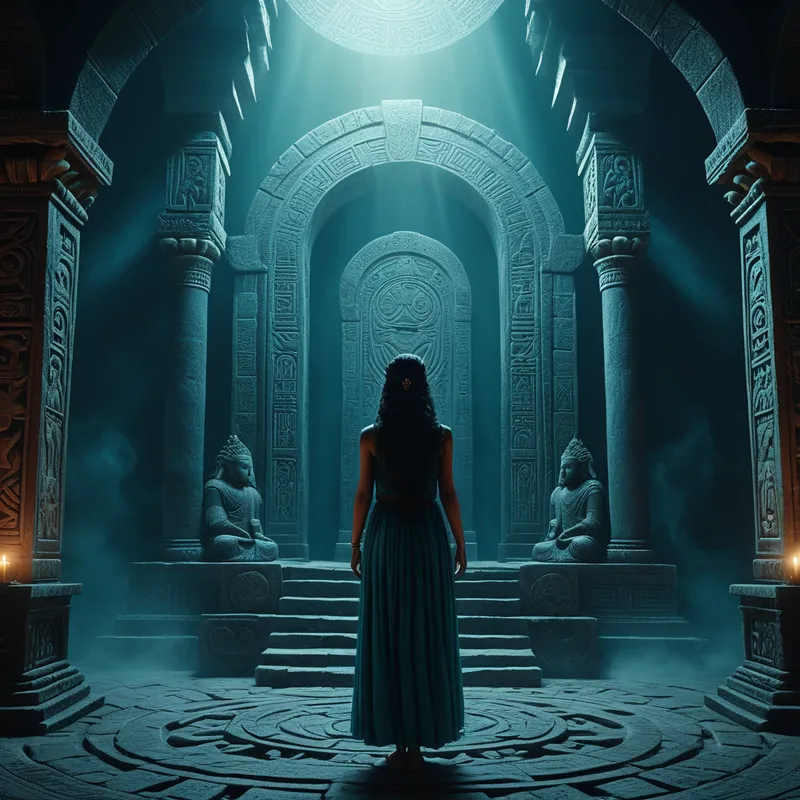
Cultural Origins & Context
The motif of the Enchanted Islands finds fertile ground in the rich soil of Arabian and broader Islamic cosmology. Geographically, the Arabian Peninsula is framed by seas—the Red Sea, the Arabian Sea, the Persian Gulf—making the ocean a realm of both livelihood and profound mystery. It is a space of ghayb, the unseen, where normal laws recede and the imagination projects its deepest fears and hopes. This conceptual space was populated by the jinn, beings of smokeless fire who could create illusory palaces (sarh) and phantom lands, making them perfect architects for such elusive paradises.
These tales also served a moral and psychological function within a worldview deeply concerned with temptation, trial, and the nature of true fulfillment. The Islamic tradition holds powerful narratives of trial by blessing, such as the prophet [Solomon](/myths/solomon “Myth from Biblical culture.”/)’s tests of power and wealth. The Enchanted Islands become an externalized arena for this inner drama. Their seductive beauty mirrors the dunya—the material world—in its most alluring form: offering everything the senses desire, yet potentially diverting the soul from its ultimate purpose (akhirah). They are a narrative embodiment of the warning that not all that glitters is beneficial, and that ease can be a greater test than hardship.
Furthermore, these stories intersect with travel literature and philosophical allegory. In works like The Adventures of Bulukiya from the One Thousand and One Nights, or in the accounts of the legendary sailor Sindbad, voyages to strange, wondrous, and often perilous islands are central. These are not just adventure tales but journeys of ‘irfan (gnosis) and fitnah (trial). The islands represent the unknown territories of [the self](/myths/the-self “Myth from Jungian culture.”/) and the cosmos that the seeker must traverse, where every marvel carries a potential lesson or a pitfall, demanding constant discernment (furqan).
Symbolic Architecture
The Enchanted Islands are a masterwork of symbolic [architecture](/symbols/architecture “Symbol: Architecture in dreams often signifies structure, stability, and the framing of personal identity or life’s journey.”/), where every geographical feature corresponds to an [aspect](/symbols/aspect “Symbol: A distinct feature, quality, or perspective of something, often representing a partial view of a larger whole.”/) of the [human](/symbols/human “Symbol: The symbol of a human represents individuality, complexity of emotions, and social relationships.”/) [psyche](/myths/psyche “Myth from Greek culture.”/) and its spiritual [journey](/symbols/journey “Symbol: A journey in dreams typically signifies adventure, growth, or a significant life transition.”/).
The shoreline represents the threshold of consciousness itself—where the known, structured self meets the vast, unknown depths of the unconscious and the divine. To cross it is to willingly enter a state of vulnerability and potential transformation.
The lush, untamed forests symbolize the fertile but chaotic [realm](/symbols/realm “Symbol: The symbol of ‘Realm’ often signifies the boundaries of one’s consciousness, experiences, or emotional states, suggesting aspects of reality that are either explored or ignored.”/) of the unconscious mind, teeming with latent potentials, forgotten memories, and [primal instincts](/symbols/primal-instincts “Symbol: Primal Instincts represent the basic drives and survival mechanisms inherent in every individual, harkening back to our animalistic nature.”/). The gem-bearing trees are the tantalizing fruits of this inner world—creative insights, psychic abilities, or spiritual powers—which can nourish or poison depending on the purity of the picker’s intent.
The guardians of the [island](/symbols/island “Symbol: An island represents isolation, self-reflection, and the need for separation from the external world.”/), whether jinn or beasts, personify the internal nafs—the [soul](/symbols/soul “Symbol: The soul represents the essence of a person, encompassing their spirit, identity, and connection to the universe.”/) or self in its various stations. They can be the nafs al-ammarah (the commanding soul) that seeks to devour the [seeker](/symbols/seeker “Symbol: A person actively searching for meaning, truth, or a higher purpose, often representing the dreamer’s own quest for identity or fulfillment.”/) in greed, the nafs al-lawwamah (the blaming [soul](/symbols/soul “Symbol: The soul represents the essence of a person, encompassing their spirit, identity, and connection to the universe.”/)) that challenges and judges, or the nafs al-mutma’innah (the soul at [peace](/symbols/peace “Symbol: Peace represents a state of tranquility and harmony, both internally and externally, often reflecting a desire for resolution and serenity in one’s life.”/)) that grants [passage](/symbols/passage “Symbol: A passage symbolizes transition, movement from one phase of life to another, or a journey towards personal growth.”/) to the sacred center. Their riddles and trials are the psyche’s own mechanisms for [integration](/symbols/integration “Symbol: The process of unifying disparate parts of the self or experience into a cohesive whole, often representing psychological wholeness or resolution of internal conflict.”/), forcing a confrontation with [shadow](/symbols/shadow “Symbol: The ‘shadow’ embodies the unconscious, repressed aspects of the self and often represents fears or hidden emotions.”/) and light.
The central sanctum, the heart of the island, is the sirr—the secret, innermost chamber of the heart where divine connection resides. It is the still point around which the tumult of trial and enchantment revolves, accessible only after the outer defenses of the ego have been navigated.
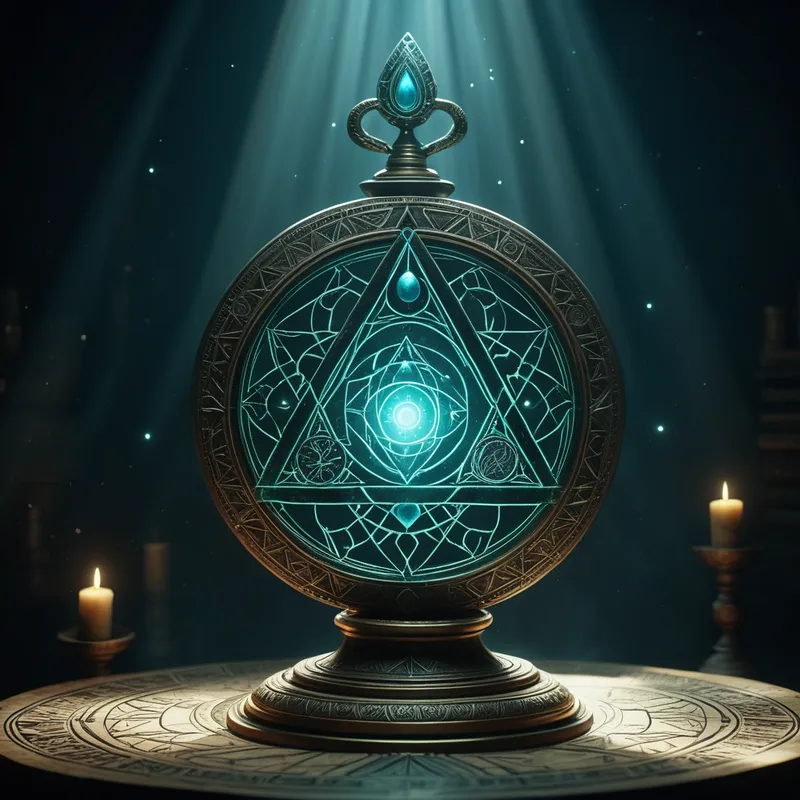
The Dreamer’s Resonance
For the modern dreamer or psychological explorer, the Enchanted Islands are not a distant geographical locale but an ever-present inner topography. They manifest in dreams as landscapes of breathtaking beauty suddenly fraught with unseen danger, or as visions of a perfect sanctuary that remains just out of reach. They resonate with the experience of stumbling upon a profound insight or a state of grace—a psychological “paradise”—only to find it brings with it new responsibilities, shadows, and complexities that must be integrated.
The myth speaks directly to the process of individuation, where [the ego](/myths/the-ego “Myth from Jungian culture.”/) embarks on a voyage into the unconscious. The initial encounter with the island’s splendor is like the first, exhilarating contact with the riches of the psyche: discovered creativity, emotional depth, or spiritual yearning. The subsequent perils—the curses, the haunting knowledge—represent the inevitable confrontation with the shadow, the inflation that comes with psychic powers, and the painful dismantling of old identities required for true growth.
To dream of these islands is to be called to an adventure of self-discovery that is both glorious and terrifying. It warns against the naive consumption of spiritual or psychological experiences without the necessary grounding and self-work. The dreamer is the explorer, and the islands reflect back the contents of their own soul, demanding authenticity, courage, and ultimately, a willingness to be transformed by the journey rather than to plunder it.
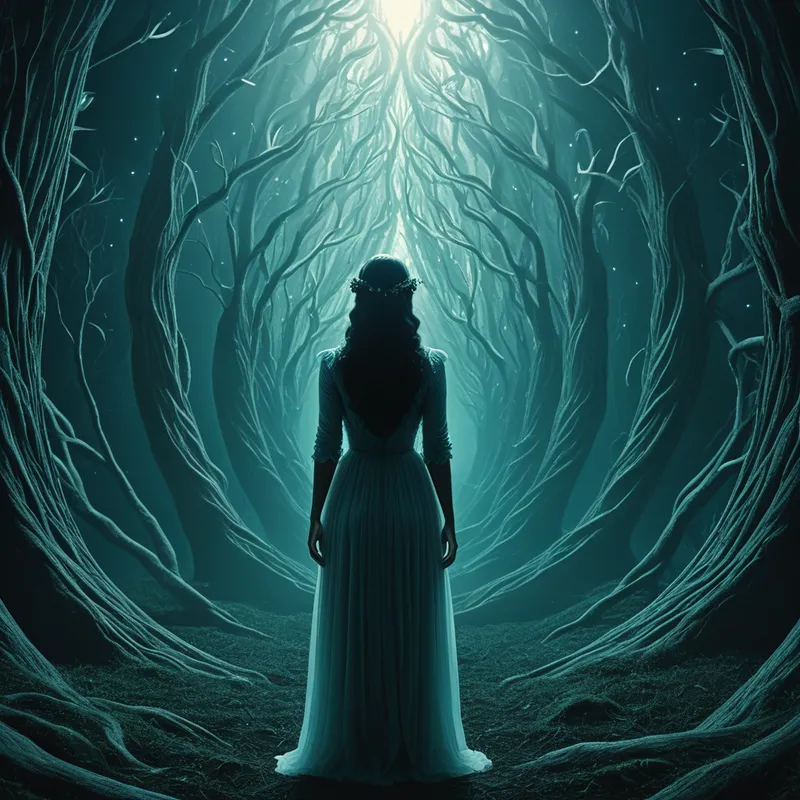
Alchemical Translation
In the alchemical vessel of the soul, the Enchanted Islands represent the entire opus—[the great work](/myths/the-great-work “Myth from Alchemical culture.”/) of transformation. The voyage across [the sea](/myths/the-sea “Myth from Greek culture.”/) is the initial [nigredo](/myths/nigredo “Myth from Alchemical culture.”/), the dissolution of the old, rigid personality in the waters of the unconscious. The island’s dazzling arrival is the [albedo](/myths/albedo “Myth from Alchemical culture.”/), the washing pure, a state of lunar reflection and apparent clarity where the material of the soul is laid bare.
The peril within the paradise is the critical stage of citrinitas, the yellowing, often overlooked. It is the confrontation with the Solar Logos—the searing, discerning light of consciousness that tests the purity of the white stage. The forbidden knowledge is unintegrated sapientia; the curses are psychic toxins released by premature union.
The guardians are the alchemical guardians of [the threshold](/myths/the-threshold “Myth from Folklore culture.”/), the internalized principles of [Mercury](/myths/mercury “Myth from Roman culture.”/) (trickster and guide) and [Sulfur](/myths/sulfur “Myth from Alchemical culture.”/) (passion and will) that must be reconciled. Solving their riddles is the operation of [separatio](/myths/separatio “Myth from Alchemical culture.”/) and [coniunctio](/myths/coniunctio “Myth from Alchemical culture.”/)—distinguishing the essential from the non-essential and marrying opposites.
Finally, reaching the island’s [sacred heart](/myths/sacred-heart “Myth from Christian culture.”/) signifies the attainment of the [rubedo](/myths/rubedo “Myth from Alchemical culture.”/), [the red stone](/myths/the-red-stone “Myth from Chinese culture.”/). This is not a physical treasure but the fully integrated Self, where the paradox of paradise and peril is resolved into a conscious, embodied wholeness. The seeker does not conquer the island; they become, in essence, its worthy inhabitant, carrying its reconciled nature within.
Associated Symbols
Explore related symbols from the CaleaDream lexicon:
- Island — A self-contained world of consciousness emerging from the unconscious sea, representing isolation, introspection, and the totality of the psyche.
- Ocean — The vast, unknown depths of [the collective unconscious](/myths/the-collective-unconscious “Myth from Jungian culture.”/), the source of all potential life and mystery, across which the ego must journey.
- Mirror — The reflective nature of the enchanted realm, which shows the traveler not the outer world, but the unvarnished truth of their own inner landscape.
- Door — The threshold of the shoreline or the entrance to the island’s inner sanctum, symbolizing a point of irreversible transition and access to hidden dimensions of the self.
- Key — The solution to a guardian’s riddle or the correct state of heart required to unlock the deeper mysteries of the island without incurring its curse.
- Trickster — Embodied by the capricious jinn or the deceptive nature of the paradise itself, challenging the seeker’s assumptions and forcing adaptive intelligence.
- Journey — The fundamental archetype of the voyage to and through the islands, representing the soul’s quest for meaning, knowledge, and integration.
- Shadow — The peril hidden within the paradise, representing the repressed, unseen, or feared aspects of the self that must be confronted and acknowledged.
- Dream — The essential medium through which the Enchanted Islands are often accessed, representing a direct pathway to the symbolic and numinous layers of the psyche.
- Rebirth — The potential outcome for the successful explorer who integrates the island’s lessons, returning to the ordinary world fundamentally renewed and transformed.
- Heart — The ultimate destination and treasure, symbolizing the sacred center of the island and the seeker’s own being, where true understanding and peace reside.