
The Elixir of Life Myth Meaning & Symbolism
The alchemist's quest for the Elixir is a mythic journey through decay and purification, seeking the divine spark hidden within the darkest matter.
The Tale of The Elixir of Life
Listen, and hear the tale not written on parchment, but in the silent language of the furnace and the flask. In a time when the world was a younger mystery, there lived a seeker known only as the Magister. His workshop was not a palace, but a cavern of shadow and flickering fire, smelling of salt and sulphur, of vinegar and longing. His hands were stained not with ink, but with the earth’s own tears—verdigris, ochre, and the soot of countless failed prayers.
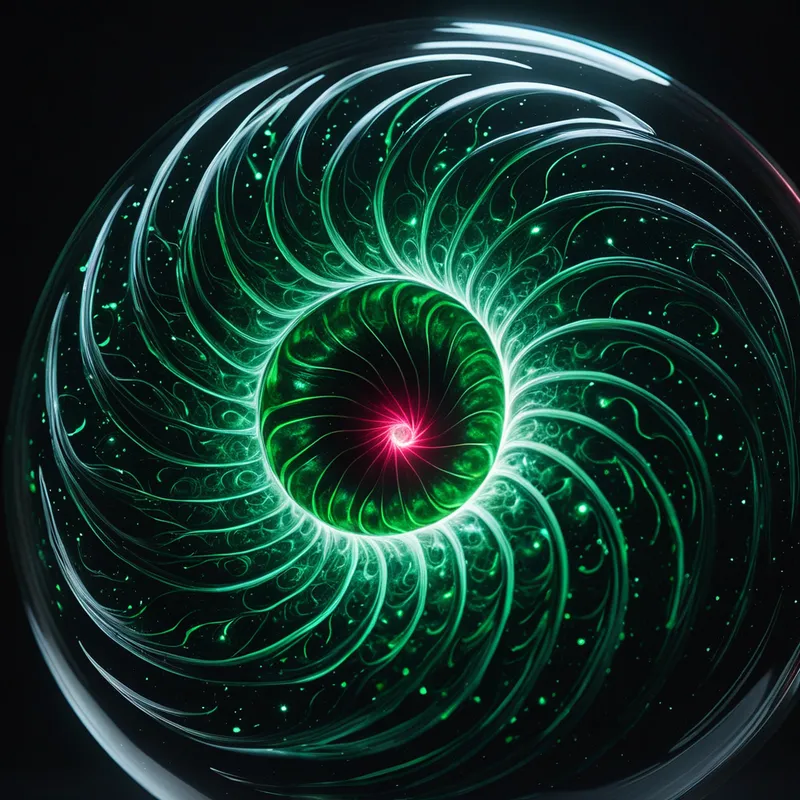
His quest was the whisper of the ages: the Lapis Philosophorum, and from it, the fabled Elixir Vitae. But this was no hunt for treasure. It was a courtship with the hidden soul of matter itself. He began with the Nigredo, the Black Sun. Into his sealed vessel, the vas hermeticum, he placed the raw, chaotic Prima Materia—a lump of lead, the dregs of wine, a lock of his own grey hair. He sealed it against the world, and with the gentle, relentless heat of his despair, he watched it rot. It became a foul, swirling darkness, a miniature cosmos of decay. Here, in the blackest night of the substance, all form died.
For months, he tended this tomb. Then, a miracle of putrefaction: a faint, ghostly white began to rise through the black like a dawn no eye should see—the Albedo. It was the washing of the bones, a lunar frost spreading through the muck. The matter became volatile, rising and falling like a spectral breath. He wept then, for it was beautiful and terribly pure, a spirit divorced from earth.
Now came the fire of the soul. He increased the heat, and the white ash began to blush. A searing, glorious Citrinitas gave way to the roaring, triumphant Rubedo. The matter in the vessel was no longer matter. It was a sun captured in glass, a pulsating heart of ruby and gold. From its center, he distilled a single, heavy drop of a liquid that held light within it like a captive dawn. This was the Elixir. He did not drink it to live forever. He touched a drop to a dead, winter-stripped branch he kept on his bench. Before his breath could fog the glass, a green shoot unfurled, and a single, perfect rose bloomed in the heart of the furnace, its petals the color of living blood.
Cultural Origins & Context
The myth of the Elixir is the backbone of Western alchemical tradition, a spiritual and proto-scientific current flowing from Hellenistic Egypt through the Islamic Golden Age into the medieval and Renaissance workshops of Europe. It was never a single story told in taverns, but a coded doctrine passed in whispers, in cryptic manuscripts like the Tabula Smaragdina, and in the stained-glass laboratories of adepts. Its tellers were not bards, but monks, physicians, and natural philosophers like Hermes Trismegistus, Paracelsus, and the anonymous authors of the Rosarium Philosophorum.
Its societal function was dual. Exoterically, it promised physical healing and the transmutation of base metals, appealing to princes and patrons. Esoterically, and far more importantly, it provided a complete symbolic language for the inner transformation of the human soul. In an age where orthodox religion often separated spirit from matter, alchemy’s myth offered a sacred path to divinity through the material world, not away from it. It was a map for the individuation of the seeker, disguised as a manual for metallurgy.
Symbolic Architecture
The myth’s power lies in its profound symbolic architecture, where every laboratory process mirrors a stage of psychic death and rebirth.
The Elixir is not a substance one finds, but a state of being one becomes. It is the conscious integration of the shadow, the redemption of the despised and base elements within the self.
The Prima Materia represents the chaotic, unconscious contents of the psyche—our raw instincts, forgotten traumas, and unlived potential. The sealed vas hermeticum is the sanctified space of the therapeutic or meditative process, where this chaos is contained and observed without escape. The horrific Nigredo is the essential, unavoidable descent into depression, despair, and the confrontation with one’s own shadow. It is the “dark night of the soul,” where old identities must rot.
The ascent through Albedo and Citrinitas to the glorious Rubedo symbolizes the gradual purification, illumination, and final synthesis of opposites (conscious and unconscious, spirit and body) into a new, whole Self. The Elixir that results is the function of this wholeness—a healing, generative vitality that flows from the integrated personality and can, like the rose on the dead branch, bring life to what was thought barren.

The Dreamer's Resonance
When this myth stirs in the modern unconscious, it manifests in dreams of profound inner work. One may dream of being in a decaying, labyrinthine basement (the Nigredo) sorting through foul, black water or crumbling, worthless artifacts, feeling a deep, somatic weight of futility. This is the psyche initiating its own putrefaction, breaking down a rigid ego-structure.
Another may dream of a brilliant, blinding white light in a sterile room (Albedo), feeling both purified and eerily disconnected from emotion or body. The climactic dream of the Rubedo often involves a potent, numinous symbol: a radiant red gem, a thriving heart, or a child of gold. To dream of drinking a strange, luminous liquid and feeling a surge of warmth and connection to all living things is a direct encounter with the Elixir archetype. These dreams signal a somatic and psychological process of disintegration and reintegration, where the dreamer is the vas hermeticum, the matter, and the alchemist all at once.
Alchemical Translation
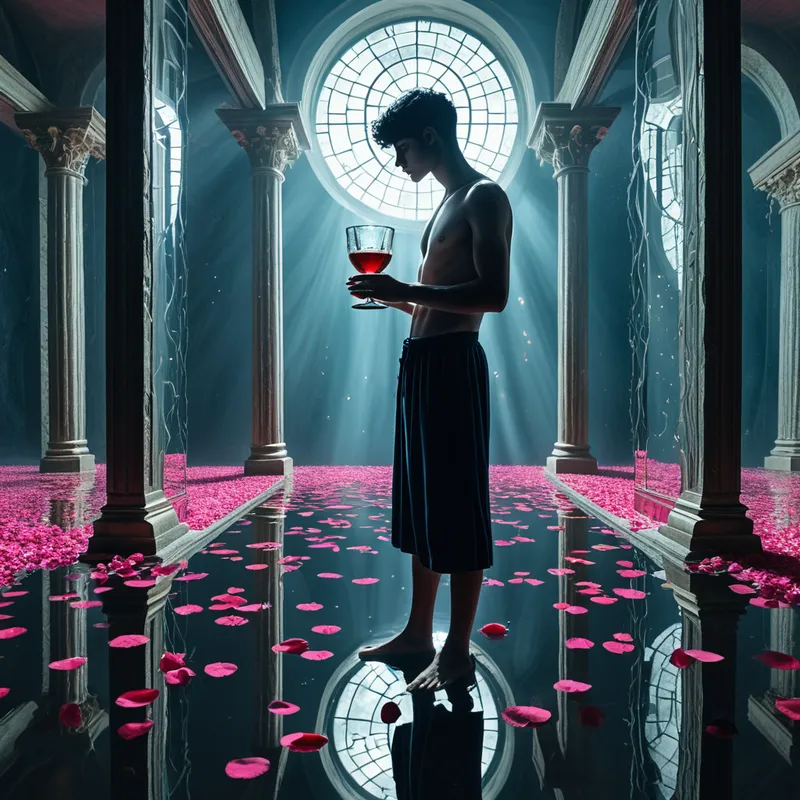
For the modern individual, the myth models the arduous path of psychic transmutation—what Jung called individuation. Our base metal is the conditioned personality, the “lead” of our neuroses, complexes, and inherited patterns. The quest begins with the voluntary descent into the Nigredo: engaging with therapy, shadow work, or any process that consciously confronts our pain, anger, and brokenness without fleeing into distraction. This is the heat of the furnace applied to the soul.
The furnace of transformation is lit by the courage to remain conscious in the presence of one's own darkness. There, in the sealed vessel of attention, the lead of the ego begins its sacred rot.
The subsequent stages translate to the long, patient work of analysis and integration (Albedo), the dawning of new insights and values (Citrinitas), and finally, the embodiment of a new, more authentic way of being in the world (Rubedo). The Elixir produced is not immortality, but vitality—the capacity for deep relationship, creative flow, and resilient joy that springs from a self that has made peace with its own entirety. It is the ability to heal oneself and, in turn, to be a generative, life-giving presence for others. The myth teaches that the gold was in the lead all along; the divine was hidden in the mortal. The quest is simply the long, fiery prayer to remember.
Associated Symbols
Explore related symbols from the CaleaDream lexicon: