The Dogon Creation Myth Myth Meaning & Symbolism
A myth of cosmic order emerging from primordial chaos, detailing the creation of the universe, humanity, and the sacred knowledge carried from the stars.
The Tale of The Dogon Creation Myth
In the beginning, there was only Amma, alone in the void. Amma was not a man, not a woman, but the essence of being itself—a vast, silent potential. From this solitude, a desire stirred: the desire for companionship, for a universe to know itself. And so, Amma took the clay of existence and began to knead the world.
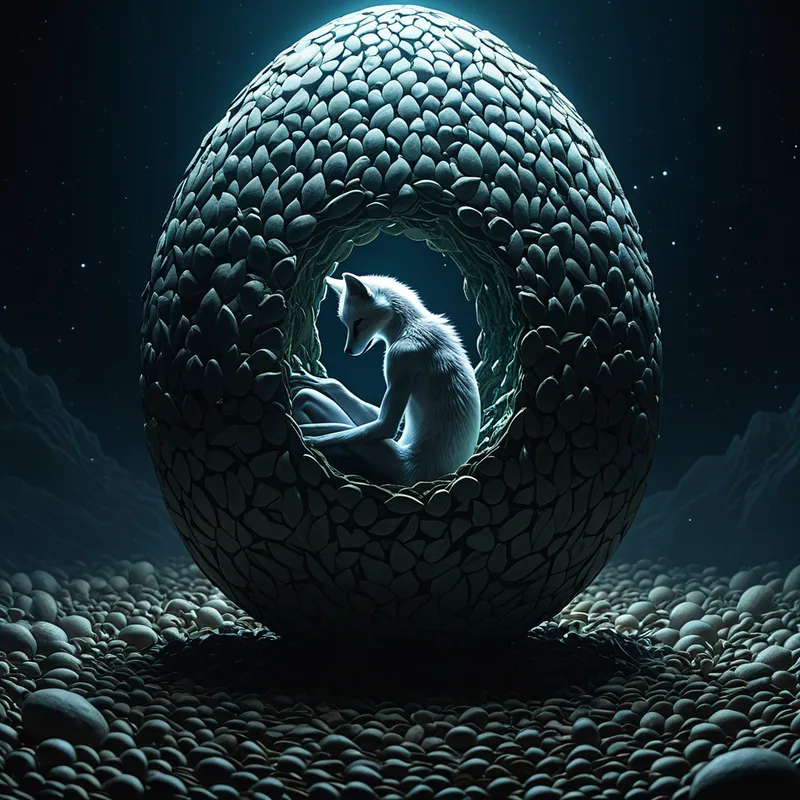
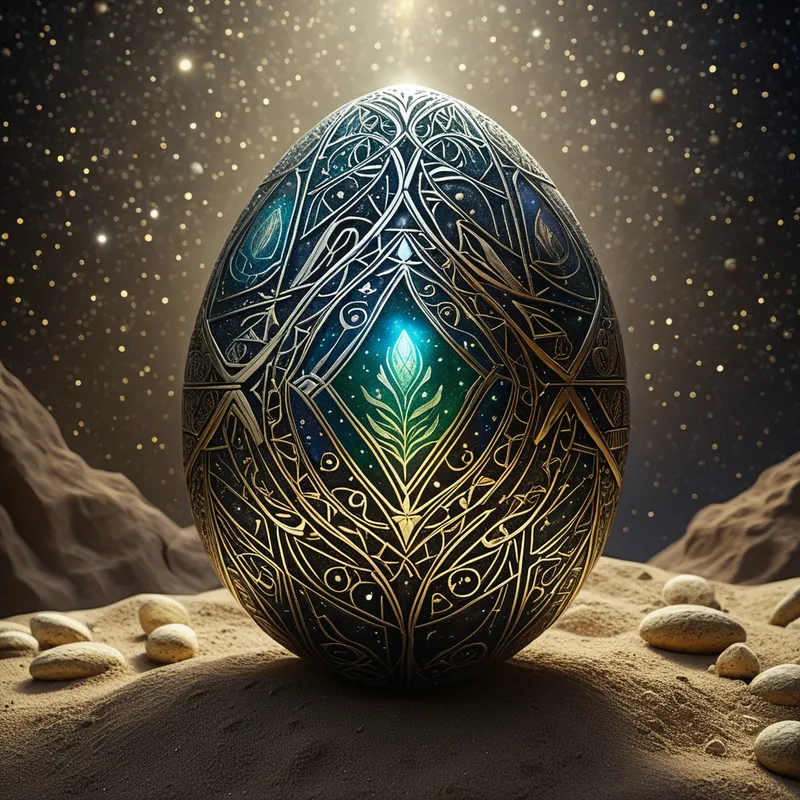
The first act was the crafting of a cosmic egg, a perfect, closed vessel. Within its delicate shell, Amma placed the twin principles of all things: order and chaos, male and female, word and silence. This egg was the womb of everything that would ever be. But the process was delicate. As Amma worked to bring forth the first beings, the Nommo, a flaw occurred. One of the Nommo twins, Ogo, grew impatient with the slow, perfect gestation within the egg. Consumed by a restless, chaotic energy, Ogo rebelled. He tore a piece from the very placenta of the world, the source of future life, and attempted to create a universe of his own, alone.
This act was a cosmic catastrophe. It ruptured the harmony of the egg. Ogo’s stolen fragment became the barren, dry Earth, a place of disorder and exile. He became the Pale Fox, the trickster, wandering the desolate plains in eternal frustration, his creation incomplete and flawed. To restore balance, Amma performed a great sacrifice. The other Nommo twin, Nommo, was chosen. This being, a majestic, amphibious entity of immense wisdom, was slain by Amma. From its body, scattered across the heavens and the wounded Earth, came the substance of regeneration: water, language, social order, and the principles of agriculture.
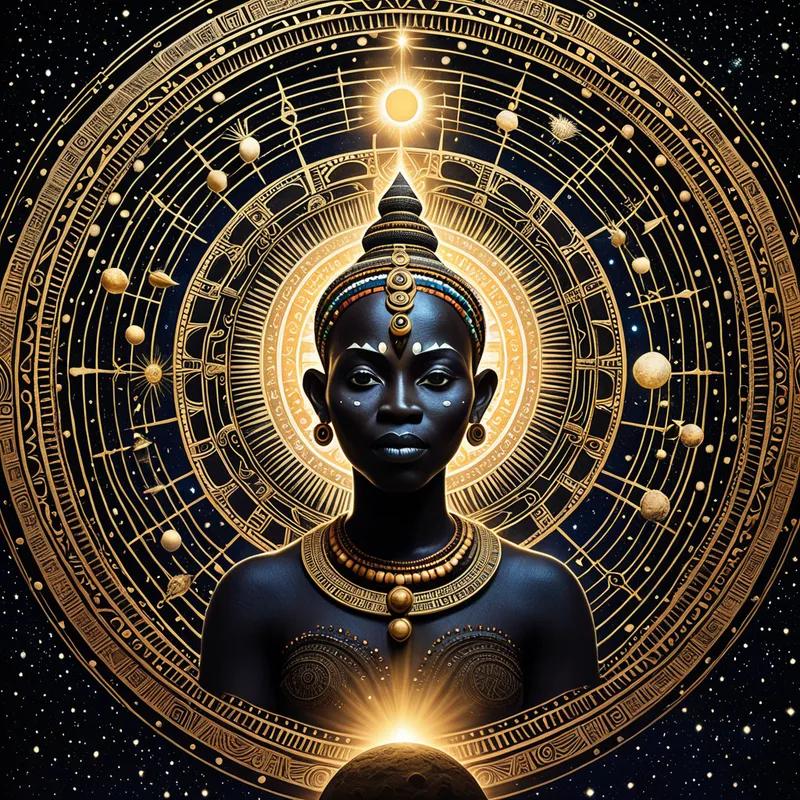
The pieces of the sacrificed Nommo fell like rain, bringing life to the barren world. Later, the remaining Nommo ancestors descended from the sky in a great ark, a vessel that shook the earth and brought with them the animals, plants, and the sacred knowledge for humanity—the Dogon. They taught them astronomy, pointing to the star Sirius and its invisible companion, Po Tolo, from whence they claimed their wisdom originated. They gave them the rhythms of society, the cycles of planting, and the sacred sigils that map the universe. Thus, from Amma’s solitude, through Ogo’s rebellion and Nommo’s sacrifice, the world as known—a place of both fertile order and lingering chaos—was born.
Cultural Origins & Context
This profound narrative is the cornerstone of the spiritual and intellectual life of the Dogon people, who inhabit the Bandiagara Escarpment in present-day Mali. It is not merely a story but a living, breathing cosmological system, meticulously preserved through generations of oral tradition by a specialized class of spiritual elders, the Hogon. The myth’s transmission is a sacred duty, passed down through initiatory rites and elaborate ceremonial performances, most notably the Sigui ceremony.
Its societal function is multifaceted. It provides a complete ontology, explaining the origin of the universe, the nature of the divine, and humanity’s place within it. It encodes complex astronomical knowledge, famously including detailed information about the Sirius star system, which has sparked much scholarly debate. Practically, it governs social structure, agricultural cycles, and architectural principles—the layout of a Dogon village mirrors the cosmic order described in the myth. It is a framework for understanding both harmony and discord, teaching that order (Nommo) is precious and hard-won, born from sacrifice and constantly threatened by the chaotic impulse (Ogo) that resides within creation itself.
Symbolic Architecture
At its heart, the Dogon myth is a blueprint of consciousness coming into being. Amma represents the undifferentiated Self, the pure potential of the psyche before the dawn of duality.
The act of creation is first an act of limitation; the infinite defines itself by forming a vessel.
The cosmic egg is the archetypal Womb, the temenos or sacred enclosure where differentiation can safely begin. The twin Nommo represent the primordial split of the psyche into complementary opposites—conscious and unconscious, spirit and matter. Ogo’s rebellion is not mere evil; it is the necessary, chaotic eruption of the individualizing ego, impatient with the slow, unconscious gestation of the Self. It is the impulse that forces emergence, but at the cost of creating a “fallen,” fragmented world—the realm of personal experience, fraught with imperfection and longing.
The sacrifice of Nommo is the central alchemical image. It symbolizes the painful but essential process where a part of the psychic wholeness must be broken down and distributed to animate the entire system.
Wholeness is not achieved by addition, but by a sacred dismemberment; the god must die so that the world may live.
The scattered pieces become water (the fluidity of life and emotion), language (the structure of thought), and social order (the container for the individual). The descent of the ark is the infusion of transcendent knowledge (Sirius) into human consciousness, a gift that carries the responsibility of stewardship.
The Dreamer’s Resonance
When this mythic pattern stirs in the modern dreamer, it often signals a profound crisis or initiation in the process of psychological birth. To dream of a perfect, fragile vessel (an egg, a bowl, a spaceship) that is rupturing or leaking connects to the Ogo moment. The dreamer may be experiencing an impulsive, rebellious act against a slow, nurturing process in their life—perhaps leaving a relationship, job, or creative project prematurely, driven by a restless urge for independent creation. The somatic feeling is one of frantic energy, dryness, and frustration.
Conversely, dreams of a great sacrifice, of being dismantled or scattered for a higher purpose, resonate with the Nommo archetype. This can manifest as dreams of surgery, of seeds being planted from one’s own body, or of a benevolent, non-human entity (a fish, an amphibian) offering a gift. This points to a phase where the ego must surrender its claim to wholeness for the sake of a larger developmental step. The somatic sense is of a deep, resonant ache followed by a release, like a nourishing rain after a drought. The appearance of complex, celestial patterns or star maps in dreams suggests the arrival of the ark—the integration of a new, ordering wisdom that feels both profoundly personal and cosmically given.
Alchemical Translation
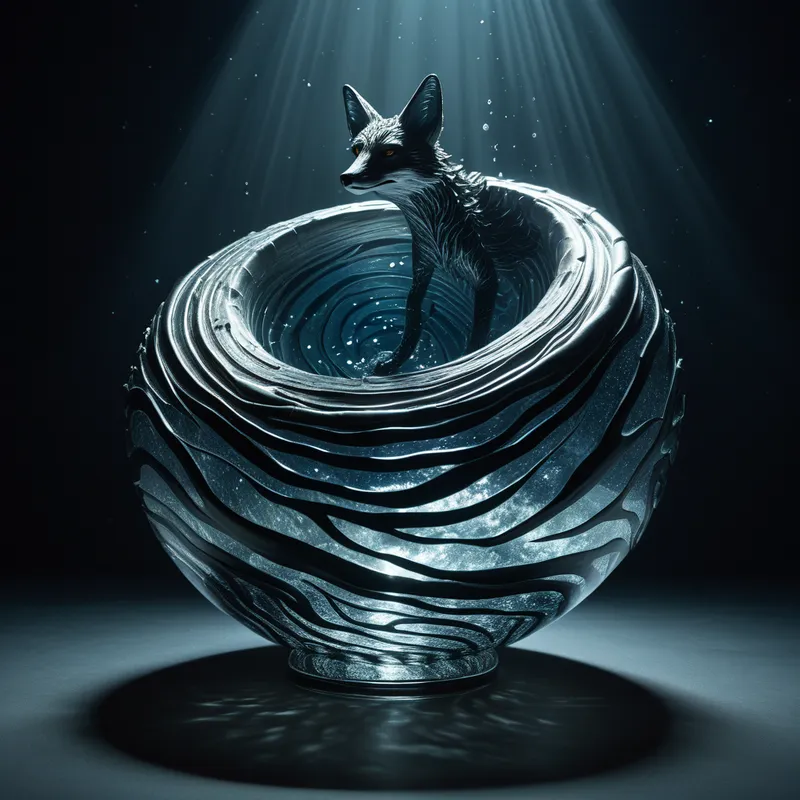
For the individual on the path of individuation, the Dogon myth models the entire opus. The journey begins in the nigredo, the state of Amma’s solitary potential—often felt as a creative void or a deep, formless longing. The first task is to form the vas hermeticum, the cosmic egg. Psychologically, this is the creation of a conscious container: a therapeutic space, a disciplined practice, a committed relationship—something that can hold the heat of transformation.
The rebellion of Ogo is the inevitable separatio. It is the ego’s necessary, if painful, assertion of independence from the unconscious matrix. This stage is fraught with mistakes, creating a “wasteland” of failed projects and fractured relationships. Yet, this rebellion is the catalyst. Without it, there is only potential, never actualization.
The critical turning point is the mortificatio or sacrifice of Nommo. This is the conscious decision to offer up a prized psychic structure—a long-held identity, a treasured complex, a source of pride—to be broken down. One sacrifices the “divine ancestor” of their old self so its essence can nourish the entire personality.
The star-knowledge descends only when the earth has been prepared by sacrifice.
The final stage, the descent of the ark, is the coniunctio oppositorum—the marriage of celestial knowledge (insight) with earthly reality (application). The individual who has undergone this process doesn’t just have knowledge; they become a vessel for it. They live in a way that reflects cosmic order, understanding that their personal culture—their habits, relationships, and work—is a direct continuation of that first, sacred instruction from the stars. They carry the ark within.
Associated Symbols
Explore related symbols from the CaleaDream lexicon:
- Egg — The primordial vessel of all potential, the closed universe before differentiation, representing the protected space where the Self begins its gestation.
- Water — The substance of life and regeneration, born from the sacrifice of Nommo, symbolizing the fluid, emotional, and cleansing forces that follow a psychic dissolution.
- Star — Represents Sirius (Po Tolo), the source of transcendent knowledge and order, the celestial origin point of wisdom that guides and structures human life.
- Sacrifice — The central act of the myth, where wholeness is willingly broken to disseminate life and order, modeling the necessary surrender of ego for greater psychic integration.
- Chaos — Embodied by Ogo, the Pale Fox, it is the restless, creative-destructive impulse that forces emergence and individuality, but also creates fragmentation and exile.
- Order — Embodied by Nommo and the societal teachings, it is the principle of structure, rhythm, and cosmic law that is restored through sacrifice and careful cultivation.
- Ark — The vessel that carries the seeds of civilization and knowledge from the celestial realm to the earthly one, symbolizing the transmission of deep, transformative wisdom into the conscious mind.
- Earth — The created, material world born from flaw and rebellion, representing the realm of lived experience, imperfection, and the field where cosmic order must be planted and tended.
- Goddess — While Amma is beyond gender, the cosmic egg and the placenta are profoundly feminine symbols of gestation, nourishment, and the primal womb of being.
- Journey — The entire narrative is a journey from unity to duality to integrated complexity, mirroring the soul’s path from unconsciousness to conscious, responsible existence.
- Seed — The stolen grains of the world’s placenta, representing the scattered potential and fragmented life force that must be gathered and cultivated after a rebellious or traumatic rupture.
- Dance — Reflective of the Sigui ceremony and the rhythms taught by the Nommo, symbolizing the lived expression of cosmic order, community, and the celebration of cyclical renewal.