
The Chi Personal Spirit Igbo Myth Meaning & Symbolism
The Igbo myth of Chi reveals a personal spirit, a divine fragment that chooses your destiny and walks beside you through life's journey.
The Tale of The Chi Personal Spirit Igbo
Before the first rooster crowed into the silence of the world, when the sky was a bowl of dark water and the earth a sleeping giant, the Great Spirit, Chukwu, called a council. Not of gods or ancestors, but of sparks. Countless fragments of divine light, each a Chi, swirled in the void, humming with potential.
Chukwu’s voice was the sound of a thousand rivers meeting the sea. “You are to be companions,” it thrummed. “Not masters, not slaves. You are the first choice in the great story of a soul.” One by one, the luminous Chi spirits approached the threshold of creation. They peered into the mists of unborn time, seeing the tapestry of a human life—its trials, its joys, its potential for greatness and its capacity for failure.
Here, the critical moment unfolded. The Chi did not simply receive an assignment; it chose. It saw the soul it would accompany and, in an act of profound covenant, agreed to the journey. It accepted the conditions of that life—the family, the era, the inherent challenges. Some say the Chi even bargained with Chukwu, negotiating the terms of destiny. Then, as the first breath filled the newborn’s lungs, the Chi descended. It did not enter the body but took its place at the right shoulder, a constant, invisible witness.
The story is told of a young man named Dike. His name meant “Strength,” yet he felt only weakness. Misfortune dogged his steps; his yam harvests failed, his proposals were rejected. He blamed his Chi, crying out to the heavens that he had been given a lazy, wicked spirit. In despair, he journeyed to the sacred igba-afa, the place of divination. The elder, eyes clouded with seeing, listened to the wind in the oji tree.
“Your Chi is not lazy, Dike,” the elder said, his voice like dry leaves. “It is waiting. You agreed to a path of struggle before you were born, a path that would forge you into true strength. But you have been sleeping at the crossroads. Your Chi can only meet you on the road you choose to walk.”
That night, Dike sat by his cold hearth. Instead of pleading, he spoke to his Chi as to a partner. “I am walking now,” he whispered. “Meet me.” The next morning, he did not return to his withered field. He walked into the dense forest, where thorns tore his skin and the path was unknown. And there, at the base of a great iroko tree, he found a forgotten stream, its banks rich with clay perfect for pottery—a craft his people had long neglected. His Chi had not changed his destiny of initial hardship, but had guided him to the hidden resource within it. He had to choose to move, to act, for the partnership to awaken.

Cultural Origins & Context
This understanding of Chi is central to the worldview of the Igbo people of southeastern Nigeria. It is not a singular, frozen myth but a living, breathing philosophical concept woven into proverbs, daily speech, and ritual life. The saying “Onye kwe, Chi ya ekwe” (“If a person agrees, his Chi agrees”) is a cornerstone, emphasizing human agency within a framework of destiny.
The myth was not contained in one sacred text but was passed down through oral tradition—by elders at moonlit gatherings, by mothers soothing children, by diviners interpreting the cast of okpensi. Its societal function was profound: it created a model of personal responsibility that was simultaneously spiritual. Your station in life was not merely random fate or the whim of a distant god; it was a cosmic agreement. This fostered resilience. Failure was not just bad luck; it could be a dialogue gone silent between a person and their Chi. Success was not just personal pride, but evidence of a harmonious partnership. The myth provided a template for navigating life’s uncertainties with a sense of inherent, divine companionship and co-authorship.
Symbolic Architecture
The Chi is one of the most sophisticated psychological archetypes in world mythology. It represents the portion of the Self that exists at the interface between the eternal and the temporal, the [blueprint](/symbols/blueprint “Symbol: A blueprint represents the foundational plan or design for something, often symbolizing potential, structure, and the mapping of one’s inner self or future.”/) and the lived experience.
The Chi is the divine witness, the silent partner who holds the map of your potential, but will not walk the path for you.
Symbolically, it is your [destiny](/symbols/destiny “Symbol: A predetermined course of events or ultimate purpose, often linked to spiritual forces or cosmic order, representing life’s inherent direction.”/), but not as a predetermined [script](/symbols/script “Symbol: The symbol of ‘script’ indicates a narrative or roadmap for one’s life, representing the conscious and unconscious stories we tell ourselves.”/). It is destiny as calling or potentiality. It is your personal [guardian](/symbols/guardian “Symbol: A protector figure representing safety, authority, and guidance, often embodying parental, societal, or spiritual oversight.”/), reflecting the ultimate individuation—a unique fragment of the divine assigned to a unique [human](/symbols/human “Symbol: The symbol of a human represents individuality, complexity of emotions, and social relationships.”/) [journey](/symbols/journey “Symbol: A journey in dreams typically signifies adventure, growth, or a significant life transition.”/). The right [shoulder](/symbols/shoulder “Symbol: Shoulders are symbols of support, burden-bearing, and personal strength, representing the weight of responsibilities and the ability to carry them.”/), its traditional [location](/symbols/location “Symbol: The symbol of ‘Location’ signifies a sense of place, context, and the environment in which experiences unfold.”/), is significant; it is the place of [strength](/symbols/strength “Symbol: ‘Strength’ symbolizes resilience, courage, and the ability to overcome challenges.”/) and [action](/symbols/action “Symbol: Action in dreams represents the drive for agency, motivation, and the ability to take control of situations in waking life.”/), the side from which one reaches out to engage the world. The Chi is also your [spirit guide](/symbols/spirit-guide “Symbol: A spirit guide is an ethereal being believed to provide wisdom, guidance, and support along one’s life journey.”/), but one you are in constant negotiation with. It does not [rescue](/symbols/rescue “Symbol: The symbol of rescue embodies themes of salvation, support, and liberation from distressing circumstances.”/) you from your choices; it responds to them. Psychologically, it represents the deeper, transpersonal [layer](/symbols/layer “Symbol: Layers often symbolize complexity, depth, and protection in dreams, representing the various aspects of the self or situations.”/) of the psyche—what Jung might call the Self—that is in [dialogue](/symbols/dialogue “Symbol: Conversation or exchange between characters, representing communication, relationships, and narrative flow in games and leisure activities.”/) with the conscious ego. When the ego (the conscious “I”) aligns with the intentions of the Self (the Chi), one experiences meaning, flow, and a sense of being “on [path](/symbols/path “Symbol: The ‘path’ symbolizes a journey, choices, and the direction one’s life is taking, often representing individual growth and exploration.”/).”
The Dreamer’s Resonance
When this mythic pattern stirs in the modern psyche, it often manifests in dreams of profound partnership or frustrating pursuit. You may dream of a luminous figure who always remains just ahead of you on a path, neither waiting nor speeding up—its pace is set by your own resolve. You may dream of a mirror that shows not your current face, but a more radiant, confident, or integrated version of yourself—this is the Chi as your completed potential.
Conversely, dreams of being lost, of having a crucial meeting but missing it, or of a helpful guide who suddenly turns away, may signal a perceived rupture in the Chi-ego partnership. The somatic feeling is often one of anxiety or longing—a sense that you are not living “your” life, but a script written by others. The psychological process at work is the soul’s attempt to re-initiate dialogue with its own deepest purpose. The dream is the forest where that meeting, neglected in waking life, can once again be sought.

Alchemical Translation
The myth of the Chi models the entire alchemical process of individuation. The initial covenant—the Chi choosing the life—is the prima materia, the raw, destined material of the Self. The human life of struggle and choice is the nigredo, the blackening, the necessary suffering and confusion that breaks down the ego’s illusions.
The journey is not to find your Chi, but to remember the agreement you made with it before you were born, and to begin, however falteringly, to uphold your end of the bargain.
Dike’s despair and blame represent the ego’s projection of responsibility outward. His decision to speak to his Chi and walk into the unknown forest is the albedo, the whitening—the conscious turning inward and taking responsibility. The discovery of the hidden clay is the citrinitas, the yellowing—the emergence of a unique talent or insight from the unconscious. The final creation of a new life from this discovery is the rubedo, the reddening—the full integration of the Self’s purpose into conscious life.
For the modern individual, the alchemical translation is clear: your sense of destiny or calling is not “out there” to be found. It is a living, responsive presence within your own psychic architecture. The “work” is to engage in that inner dialogue, to make choices that feel authentic even when difficult, and to understand that your greatest challenges are often the very terrain where your Chi awaits, ready to reveal the hidden key within the wound.
Associated Symbols
Explore related symbols from the CaleaDream lexicon:
- Spirit — The essential, non-material essence of being; the Chi is the ultimate personalization of this universal force, a spirit assigned to a single soul.
- Destiny — Not as fixed fate, but as a dynamic covenant; the Chi holds the blueprint of this destiny, which is realized through human choice and action.
- Journey — The fundamental metaphor for life; the Chi is the constant companion and inner guide on this lifelong path through the forest of experience.
- Mirror — Reflects the true self and potential; the Chi acts as a psychic mirror, showing the individual the face of their highest possibility.
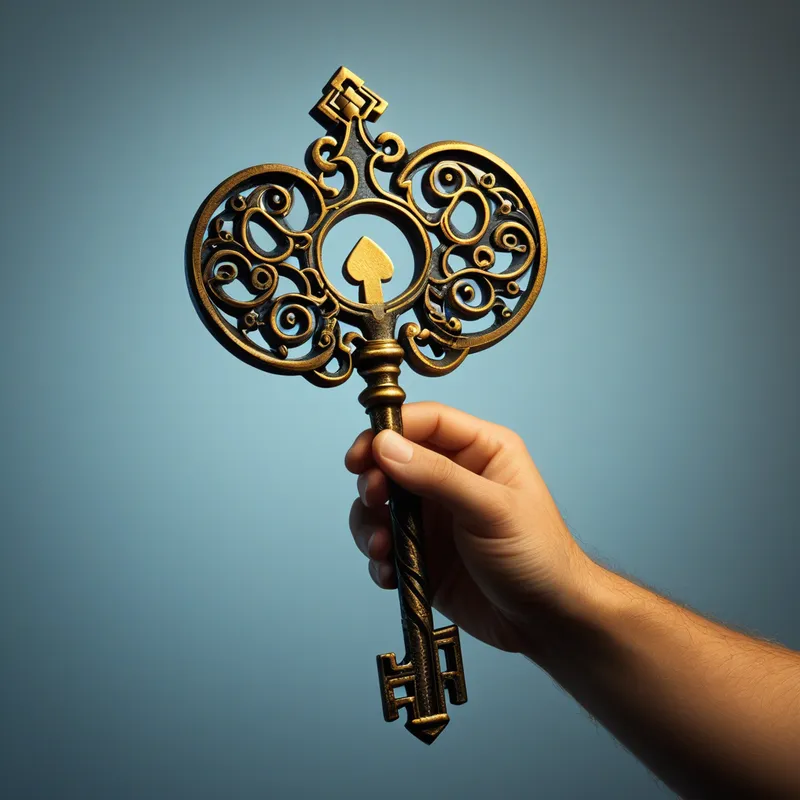
- Key — Represents access, solution, and unlocking potential; aligning with one’s Chi is the key that unlocks the door to a fulfilled and authentic destiny.
- Choice — The central human power that activates destiny; the myth emphasizes that the Chi agrees only when the person first chooses to move.
- Forest — The symbolic landscape of the unknown, the unconscious, and the testing ground of life; it is where one goes to meet and re-negotiate with one’s Chi.
- Personal — Denotes unique individuality; the Chi myth elevates the personal to the divine, asserting that each person’s journey is cosmically significant.
- Bridge — Connects two realms; the Chi serves as the living bridge between the divine realm of potential and the human realm of action and consequence.
- Wound — The site of suffering and initiation; often, the path to one’s Chi leads directly through personal wounds, which contain hidden resources for transformation.
- Hero — The archetype of the one who undertakes a difficult journey for a great goal; every individual in dialogue with their Chi is the hero of their own mythic life.
- Covenant — A sacred, binding agreement; the foundational relationship between a person and their Chi is based on a pre-birth covenant that structures the journey of destiny.