The Cave of Ashab al-Kahf Myth Meaning & Symbolism
A group of faithful youths flee persecution, fall into a miraculous centuries-long sleep in a cave, and awaken to a transformed world.
The Tale of The Cave of Ashab al-Kahf
Listen, and hear a tale not of this time, but for all time. In the days of a tyrant, when the air itself tasted of fear and the old gods demanded blood, a handful of hearts refused to bend. They were young men of noble city, their spirits kindled by a truth that threatened the throne. The king, a man who fashioned himself a god, decreed that all must bow. To refuse was death.
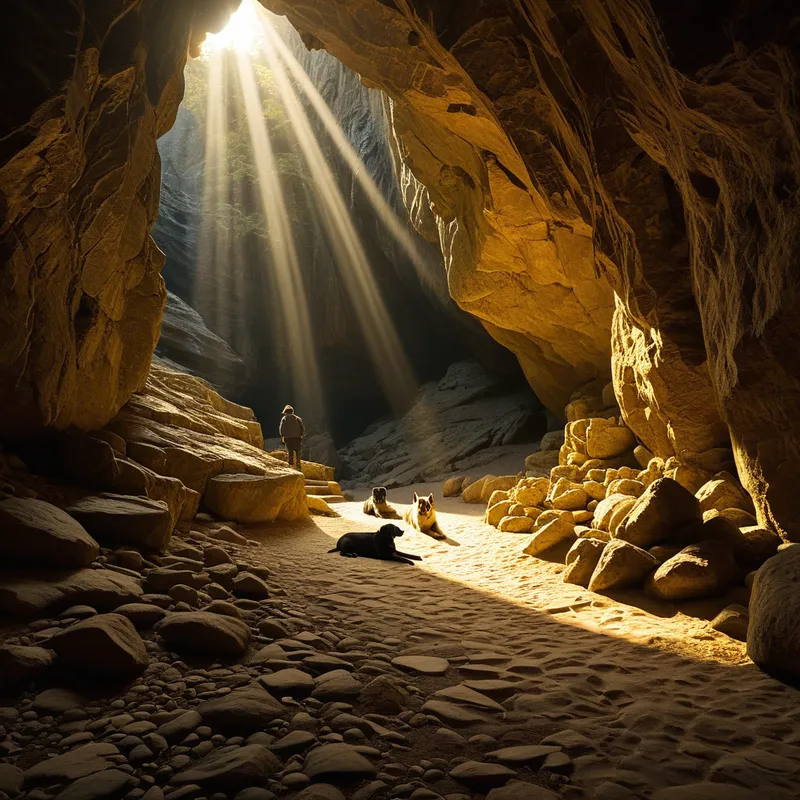
So, under a cloak of night thick with the scent of desert jasmine and dread, they fled. Their footsteps were whispers against the stone, their breath a shared prayer. With them went their most loyal companion, a dog whose name would become legend—Qitmir. The earth seemed to open for them, leading to a shelter of stone: a cave in the side of a mountain. It was not a palace, but to them, it was a sanctuary. Exhausted, their souls stretched thin by flight, they laid down to rest. And as they slept, a divine decree settled over them. Their eyes closed not for a night, but for an age.
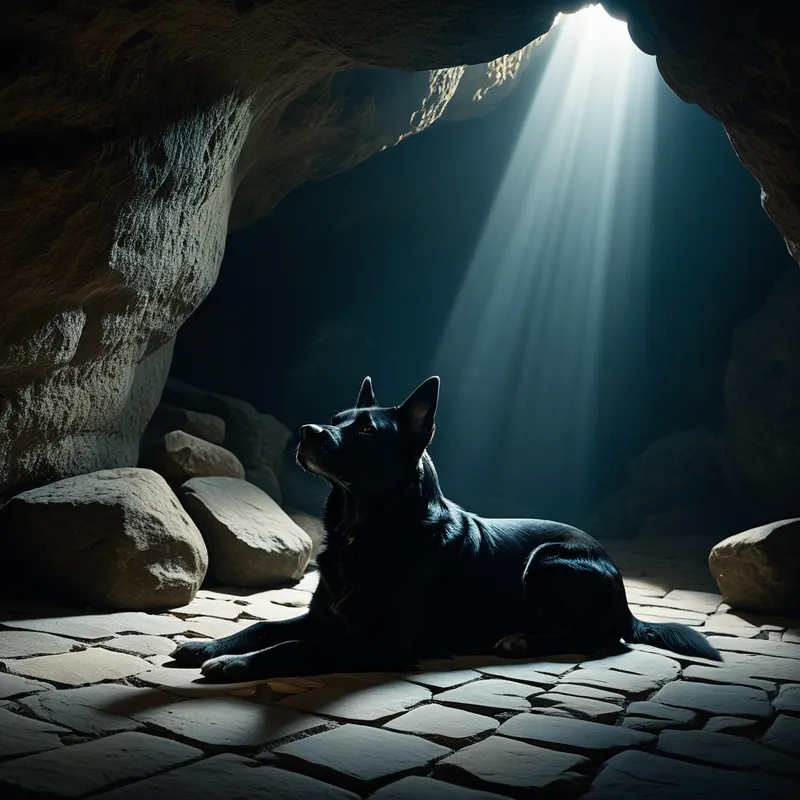
The sun rose and set, but in that sacred hollow, time became a river flowing around a steadfast stone. Their bodies did not wither; their forms were preserved in a sleep so profound it was a cousin to death, yet pulsed with the quiet rhythm of protected life. Qitmir lay at the entrance, one paw outstretched, a silent sentinel for centuries. The world outside convulsed. Kingdoms of stone and pride crumbled to dust. Forests grew where cities once stood. The very faith they had fled for took root and flourished, until their persecution was but a forgotten ghost in a new world’s story.
Then, the divine will stirred. The mechanism of their protection shifted. They awoke, blinking in the gloom, believing only a day or a part of a day had passed. Hunger, that ancient reminder, touched them. They chose one from among them, Yamlikha, to venture forth with a silver coin to buy bread, warning him to be cautious. But caution was meaningless against the shock that awaited. The city he knew was gone. The language of the marketplace was strange. And when he offered his ancient, pristine coin, it was seen as a treasure from a lost era, a wonder that drew the city’s ruler to the mouth of the cave.
There, the truth was unveiled. The Sleepers told their tale to a ruler who now believed in the One they had died to uphold. Their story complete, their testimony delivered, they laid down once more. This time, their mortal sleep was final. A sanctuary was built, and they passed from history into eternity, their cave sealed, a testament written not on parchment, but on the heart of time itself.
Cultural Origins & Context
The narrative of Ashab al-Kahf is enshrined in the Qur’an (Surah Al-Kahf, 18:9-26), which presents it as a true sign of God’s power and protection for those who believe. Islamic tradition holds that this revelation came in response to questions posed by the Quraysh, testing Prophet Muhammad. The story, however, echoes a widespread “Seven Sleepers of Ephesus” tradition, demonstrating how Islam engaged with, refined, and re-contextualized existing monotheistic lore to affirm core theological principles: the reality of the Resurrection, the certainty of divine reckoning, and the ultimate protection afforded to sincere faith.
It functioned as a powerful narrative anchor for early Muslim communities facing persecution in Mecca—a direct promise that steadfastness (sabr) leads to divine sanctuary. The story was told in mosques, recounted in sermons, and elaborated upon in Qisas al-Anbiya (Stories of the Prophets) literature. It served not as mere folklore, but as a living paradigm of exile, divine care, and the ultimate vindication of truth over temporal tyranny.
Symbolic Architecture
At its core, the myth is a profound map of the [soul](/symbols/soul “Symbol: The soul represents the essence of a person, encompassing their spirit, identity, and connection to the universe.”/) in [exile](/symbols/exile “Symbol: Forced separation from one’s homeland or community, representing loss of belonging, punishment, or profound isolation.”/). The cave is the ultimate [symbol](/symbols/symbol “Symbol: A symbol can represent an idea, concept, or belief, serving as a powerful tool for communication and understanding.”/) of the temenos, a sacred [enclosure](/symbols/enclosure “Symbol: A bounded space representing psychological containment, social boundaries, or existential limitations. It can symbolize both safety and restriction.”/) where the psyche retreats under unbearable pressure from a hostile, [soul](/symbols/soul “Symbol: The soul represents the essence of a person, encompassing their spirit, identity, and connection to the universe.”/)-crushing outer world (the tyrannical [kingdom](/symbols/kingdom “Symbol: A kingdom symbolizes authority, belonging, and a sense of identity within a larger context or community.”/)). This is not an escape into oblivion, but a necessary descent into a protected state of [incubation](/symbols/incubation “Symbol: A period of internal development, rest, or hidden growth before emergence, often associated with healing, creativity, or transformation.”/).
The cave is not a tomb, but a womb of time. The sleep is not death, but a sacred pause in which the soul is preserved while the world, which could not accommodate its truth, is transformed around it.
The youths represent the nascent, authentic self—the “[faith](/symbols/faith “Symbol: A profound trust or belief in something beyond empirical proof, often tied to spiritual conviction or deep-seated confidence in people, ideas, or outcomes.”/)” that must go underground when confronted with the collective ego-[consciousness](/symbols/consciousness “Symbol: Consciousness represents the state of awareness and perception, encompassing thoughts, feelings, and experiences.”/) of a tyrannical order. Their dog, Qitmir, is a crucial figure of instinctual loyalty and guardianship at the threshold. He symbolizes the natural, protective function that aligns itself with the soul’s [purpose](/symbols/purpose “Symbol: Purpose signifies direction, meaning, and intention in life, often reflecting personal ambitions and core values.”/), standing watch between the sacred [interior](/symbols/interior “Symbol: The interior symbolizes one’s inner self, thoughts, and emotions, often reflecting personal growth, vulnerabilities, and secrets.”/) and the profane exterior. The centuries-long sleep signifies a [period](/symbols/period “Symbol: Periods in dreams can symbolize cyclical patterns, renewal, and the associated emotions of loss or change throughout life.”/) of psychic latency, where a [truth](/symbols/truth “Symbol: Truth represents authenticity, honesty, and the quest for knowledge beyond mere appearances.”/) is held in potential, outside of historical time, until the conditions for its awakening and recognition are ripe.
The Dreamer’s Resonance
To dream of this pattern—a deep, protected sleep in a hidden place while the world changes—suggests a critical somatic and psychological process is underway. The dreamer may be in a state of profound transition, where an old identity or way of life has become untenable. The conscious ego feels persecuted, exhausted, or utterly out of sync with its environment.
The dream signals that the psyche has initiated a necessary retreat. It is a “time out” from life’s demands, a descent into the unconscious for sanctuary and re-ordering. This can manifest in life as depression, illness, creative block, or a powerful urge to withdraw. The dream reassures: this is not failure, but a sacred hibernation. The loyal “dog” in the dream—perhaps a protective animal, a trusted friend, or an intuitive feeling—represents the instinctual self-care that makes this vulnerable period safe. The dream cautions against a premature return, urging the dreamer to trust the internal timing, to sleep until the “coin” of their old self is no longer currency in a world that must, and will, change.
Alchemical Translation
The journey of the Sleepers is a perfect allegory for the alchemical process of individuation—the forging of the true, integrated Self. The tyrannical king represents the oppressive grip of the personal and collective persona, demanding conformity and worship of false gods (status, approval, outdated ideals). The flight is the nigredo, the necessary separation and descent into darkness, often experienced as a crisis.
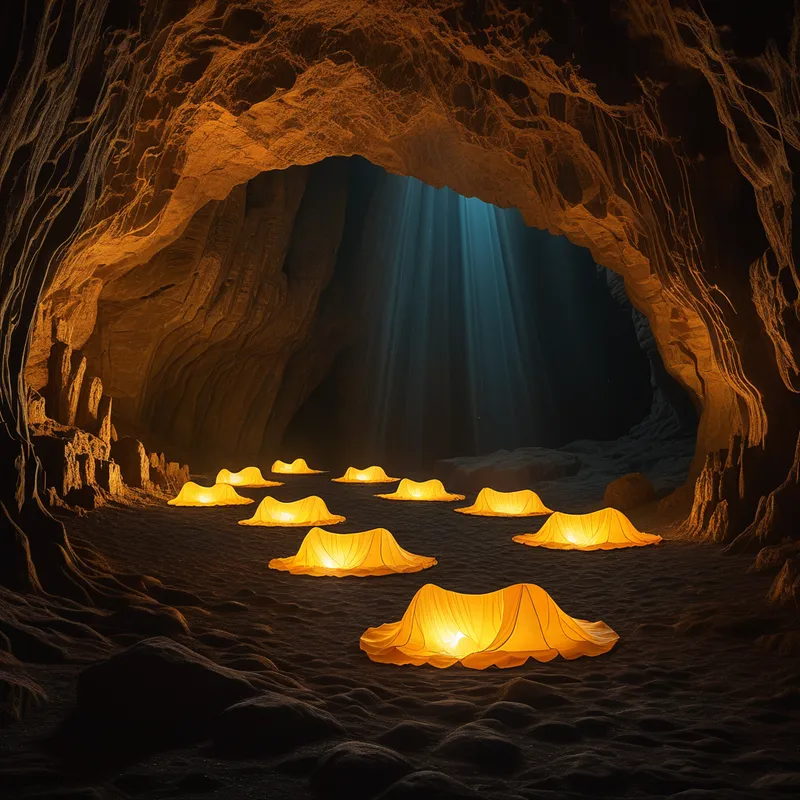
The cave is the vas hermeticum, the sealed vessel where the transformation occurs. Here, the solutio (dissolution into sleep) and coagulatio (re-formation in stillness) take place outside of linear time. The long sleep is the patient work of the unconscious, slowly disintegrating old ego attachments and reorganizing psychic substance around the core of the Self (the unwavering faith).
Awakening is not a return, but an emergence into a world you have, by your steadfastness, helped to create. The old persecutor is gone because the inner tyranny has been dissolved.
The final awakening and interaction with the new world is the albedo and rubedo—the whitening and reddening. The sleeper emerges with a purified, timeless quality (the ancient coin) and offers it to the world. This act integrates the long-held inner truth into a renewed relationship with reality. The final death is not a defeat, but the conscious assimilation of this profound experience into the eternal aspect of the psyche, leaving behind a legend—an internal monument—that guides the individual henceforth.
Associated Symbols
Explore related symbols from the CaleaDream lexicon:
- Cave — The primary vessel of transformation and sanctuary, representing a sacred retreat into the unconscious for protection and psychic incubation.
- Dog — Instinctual loyalty, protection, and guardianship of the threshold between the sacred inner world and the profane outer world.
- Sleep — A state of divine preservation, psychic latency, and a sacred pause outside of chronological time, necessary for deep transformation.
- Journey — The essential flight from persecution (a psychological tyranny) toward a destined sanctuary, representing the soul’s necessary exile.
- Light — The divine guidance and protection that preserves the sleepers, and the illumination of truth that comes with their awakening into a new era.
- Stone — The enduring, unchanging nature of faith and the protective walls of the cave, which shelter the vulnerable self from external corruption.
- Door — The threshold of the cave, a liminal space guarded by the dog, separating the timeless sanctuary from the changing world.
- Rebirth — The core theme of awakening into a transformed world with a preserved but matured identity, mirroring the process of resurrection.
- Fear — The initial catalyst for the flight into the cave, representing the legitimate terror of the conscious ego facing annihilation by a hostile collective.
- Time — The malleable, non-linear experience within the myth, where centuries pass as a moment, symbolizing the soul’s existence outside of mundane chronology.
- Underground Cave — Emphasizes the depth of the retreat, a descent into the foundational layers of the psyche for safety and profound restructuring.
- Islamic Mosque — The cultural and religious framework that sanctifies the narrative, transforming it from legend into a divine sign and a place of communal remembrance.