The Bridge of Sirat Myth Meaning & Symbolism
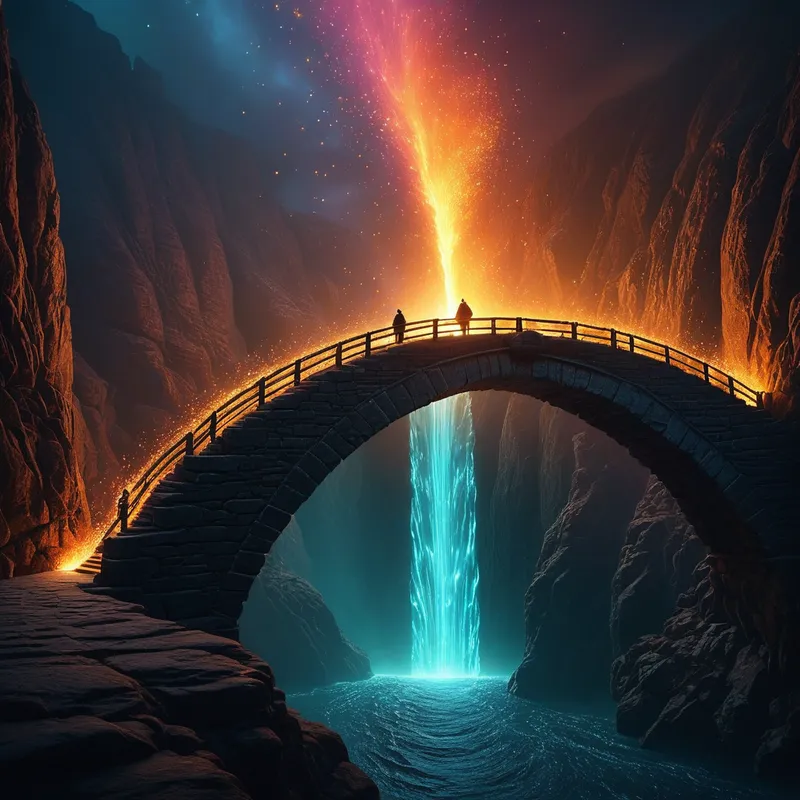
A soul's final journey across a bridge thinner than a hair and sharper than a sword, suspended over the fires of Hell, towards the gardens of Paradise.
The Tale of The Bridge of Sirat
Listen, and know of the crossing that awaits every soul.
After the Trumpet has sounded and the mountains have been ground to dust, after the sun is folded and the stars are scattered, the gathered multitudes will stand upon a vast, barren plain. Before them lies an abyss of such depth and terror that the mind reels—the Pit of Jahannam, its fires roaring with voices of anguish, its smoke a stench that chokes the spirit.
And spanning this impossible gulf, from the realm of reckoning to the gates of Jannah, is the Bridge. It is called as-Sirat. Do not imagine stone or iron. It is a line of pure, searing conviction, thinner than a spider’s silk and sharper than the finest sword. To the righteous eye, it may appear broad and welcoming; to the corrupt, it is a vanishing thread over an inferno.
This is the moment of ultimate truth. There is no return. Each soul must walk, alone, bearing the full weight of its earthly life. The angels are witnesses, not guides. The Prophet Muhammad will pray at its head, but the crossing is yours alone.
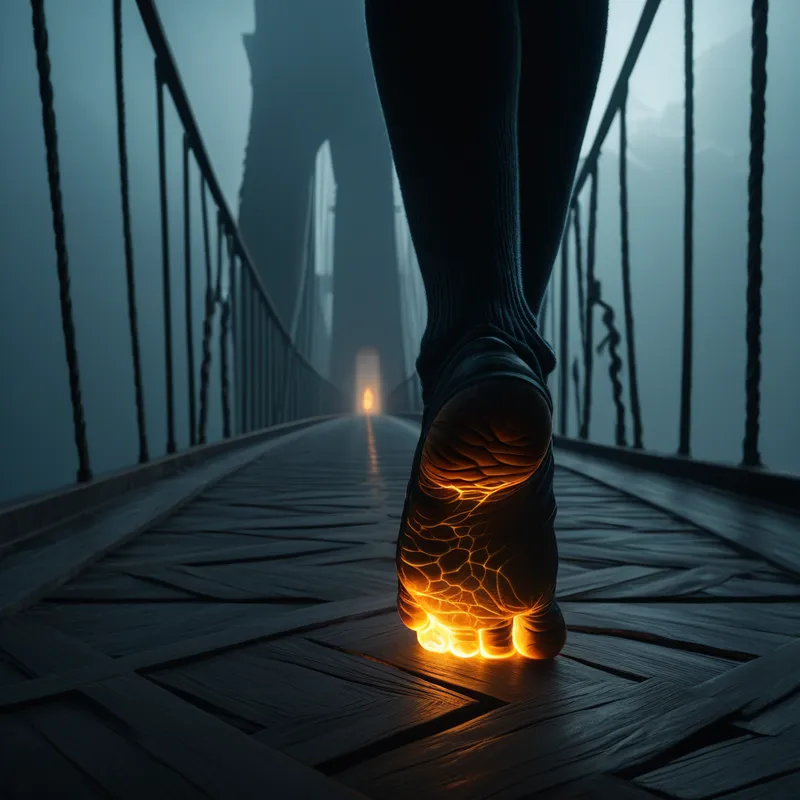
Some will pass like lightning, swift and sure. Others will stumble, crawling on hands and knees, the bridge cutting into their very essence. For the wicked, the bridge becomes a trap. It narrows, it writhes, it denies their passage. From the abyss, hooks of fire—the manifestations of their own deeds—will snatch at them, pulling them into the fire below. Their fall is not a descent, but a consumption, a screaming reunion with the consequences they forged in life.
But for those who cross, a transformation occurs. With each step away from the abyss, the soul is purified, the burdens burned away by the very proximity of the trial. They step onto the far shore, not as they were, but remade. Before them, the gates of the Garden stand open, and a peace deeper than any earthly silence welcomes them home. The crossing is ended. The journey is complete.
Cultural Origins & Context
The myth of the Sirat is not a folktale, but a core tenet of Islamic eschatology, detailed in the Hadith literature. It functions as the pivotal, dramatic climax of the soul’s journey on the Yawm al-Qiyamah (Day of Resurrection). Passed down through centuries of scholarly tradition and woven into sermons, poetry, and devotional texts, it served a profound societal and psychological function.
It was a narrative anchor for the concept of al-Hisab (the Reckoning). The bridge made the abstract idea of judgment visceral, immediate, and inescapable. In a culture deeply concerned with ethical action and intention, the Sirat was the ultimate ethical filter. It was told not to frighten, but to orient the community toward a conscious life, emphasizing that every action had a weight and a shape that would one day become the very ground—or lack thereof—beneath one’s feet.
Symbolic Architecture
The Sirat is the ultimate [symbol](/symbols/symbol “Symbol: A symbol can represent an idea, concept, or belief, serving as a powerful tool for communication and understanding.”/) of the critical [passage](/symbols/passage “Symbol: A passage symbolizes transition, movement from one phase of life to another, or a journey towards personal growth.”/), the decisive transition where [identity](/symbols/identity “Symbol: Identity represents the sense of self, encompassing personal beliefs, cultural background, and social roles.”/) is tested to its breaking point and its [truth](/symbols/truth “Symbol: Truth represents authenticity, honesty, and the quest for knowledge beyond mere appearances.”/) is revealed.
The bridge is not placed before you; it is extruded from the essence of who you have chosen to be.
Psychologically, it represents the [moment](/symbols/moment “Symbol: The symbol of a ‘moment’ embodies the significance of transient experiences that encapsulate emotional depth or pivotal transformations in life.”/) of profound self-confrontation. The [chasm](/symbols/chasm “Symbol: A deep fissure in the earth representing a profound division, transition, or psychological gap between states of being.”/) is the sum of one’s unconscious [shadow](/symbols/shadow “Symbol: The ‘shadow’ embodies the unconscious, repressed aspects of the self and often represents fears or hidden emotions.”/), the repressed fears, denials, and unlived potentials. The bridge is the thread of [consciousness](/symbols/consciousness “Symbol: Consciousness represents the state of awareness and perception, encompassing thoughts, feelings, and experiences.”/), the fragile, focused “I” that must navigate this inner [landscape](/symbols/landscape “Symbol: Landscapes in dreams are powerful symbols representing the dreamer’s emotional state, personal journey, and the broader context of life situations.”/). Its changing [nature](/symbols/nature “Symbol: Nature symbolizes growth, connectivity, and the primal forces of existence.”/)—broad for the righteous, impossibly narrow for the corrupt—symbolizes the fact that our psyche either cooperates with or sabotages our passage toward [integration](/symbols/integration “Symbol: The process of unifying disparate parts of the self or experience into a cohesive whole, often representing psychological wholeness or resolution of internal conflict.”/) based on our prior [relationship](/symbols/relationship “Symbol: A representation of connections we have with others in our lives, often reflecting our emotional state.”/) with truth. The hooks from the [abyss](/symbols/abyss “Symbol: A profound void representing the unconscious, the unknown, or a spiritual threshold between existence and non-existence.”/) are not external demons, but the autonomous complexes—our rage, our pride, our [guilt](/symbols/guilt “Symbol: A painful emotional state arising from a perceived violation of moral or social standards, often tied to actions or inactions.”/)—reaching up to reclaim us when our conscious stance is weak or false.
The Dreamer’s Resonance
When this myth appears in modern dreams, the dreamer is at a critical existential or psychological threshold. Dreaming of a perilous bridge, especially one over an abyss, signals a somatic experience of transition where the old self-structure is dying, but the new one is not yet secure.
The body may feel it as vertigo, a trembling in the legs, or a gripping fear in the chest—the somatic signature of the ego facing the unknown. The dream is not a prophecy of failure, but a depiction of the process. Is the bridge intact? Is it crumbling? Are there helpers or hindrances? These details mirror the dreamer’s internal resources. The crossing in the dream is the psyche’s ritual enactment of navigating a life crisis, a moral dilemma, or the terrifying freedom of a major life change. The dream insists: you are in the middle of your own Sirat. Pay attention to your footing.
Alchemical Translation
The alchemy modeled by the Sirat is the transmutation of the leaden, complex-ridden personality into the golden, integrated Self through the fire of uncompromising self-awareness.
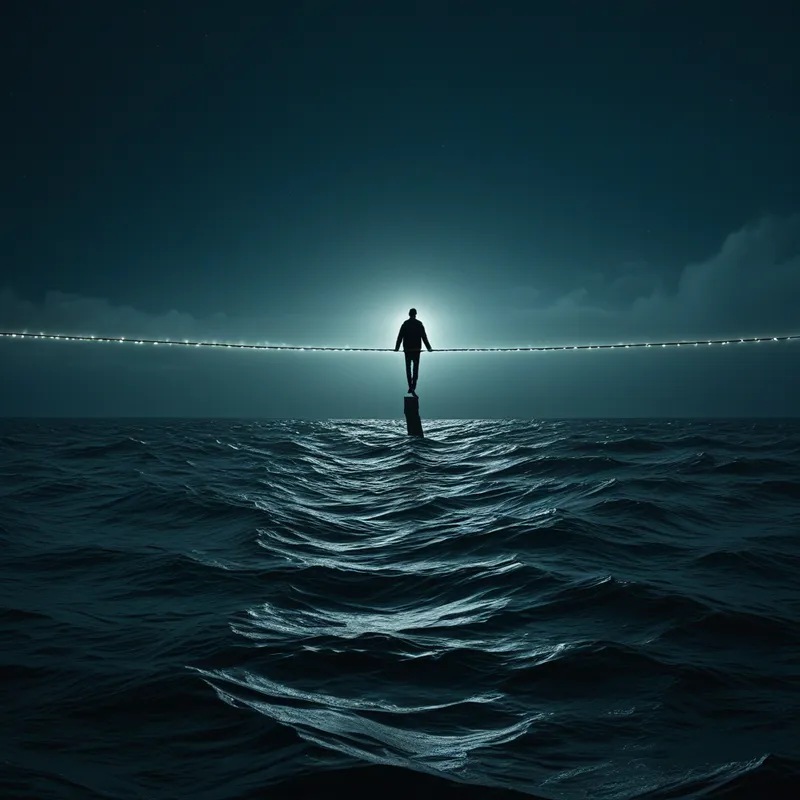
Individuation is the solitary crossing where one must lose everything one has to become everything one is.
The journey begins with the nigredo: the confrontation with the “Hell” of one’s own shadow in the abyss. This is the dark night, the reckoning with all that has been denied. The bridge itself is the albedo, the purifying, clarifying process. Each step demands absolute presence and honesty, burning away the dross of persona and illusion. The fear of falling is the resistance of the ego to its own dissolution. But to cross is to achieve the rubedo: the culmination. The soul that reaches the far shore is not the same ego that began the journey. It has been annihilated and reborn, having integrated the shadow (the fire below) into its new structure. It has faced its personal judgment and, in the acceptance of its whole truth, found its paradise—a state of inner wholeness and peace. The bridge is the process of becoming real.
Associated Symbols
Explore related symbols from the CaleaDream lexicon:
- Bridge — The central archetype of transition and critical passage, representing the fragile thread of consciousness that must be traversed between two states of being.
- Fire — Symbolizes the purifying and consuming nature of divine judgment, as well as the torment of the unintegrated shadow and repressed psychic material.
- Journey — Represents the soul’s ultimate odyssey from creation to accountability and final destination, with the Sirat as its most decisive leg.
- Light — Embodies the nature of the Sirat itself—a filament of divine truth and guidance that is also a searing test of purity.
- Shadow — The chasm below the bridge, populated by the hooks of Jahannam, represents the totality of the personal and collective unconscious, all that has been rejected by the ego.
- Death — The crossing is a psychic death of the old, unexamined self; falling from the bridge is a failure of this transformative process.
- Fear — The primary emotional state of the crossing, representing the ego’s terror of dissolution and encounter with the unknown depths of the Self.
- Hero — Every soul undertaking the crossing embodies the hero archetype, facing the ultimate ordeal alone for the sake of eternal integration.
- Destiny — The Sirat represents the inescapable personal destiny of facing the consequences of one’s own choices and actions.
- Transcendental Bridge — A direct conceptual link, representing any bridge that connects the mortal realm to a divine or ultimate state of being.
- Islamic Mosque — The earthly architectural symbol pointing toward the spiritual reality of accountability and the journey that culminates at the Sirat.
- Bridge of Souls — A parallel concept found across cultures, depicting a narrow, perilous passage that spirits must traverse after death.