The Breaking of the Vessels
A Kabbalistic creation myth describing how divine light shattered its vessels, scattering sparks of holiness throughout the world for humanity to gather.
The Tale of The Breaking of the Vessels
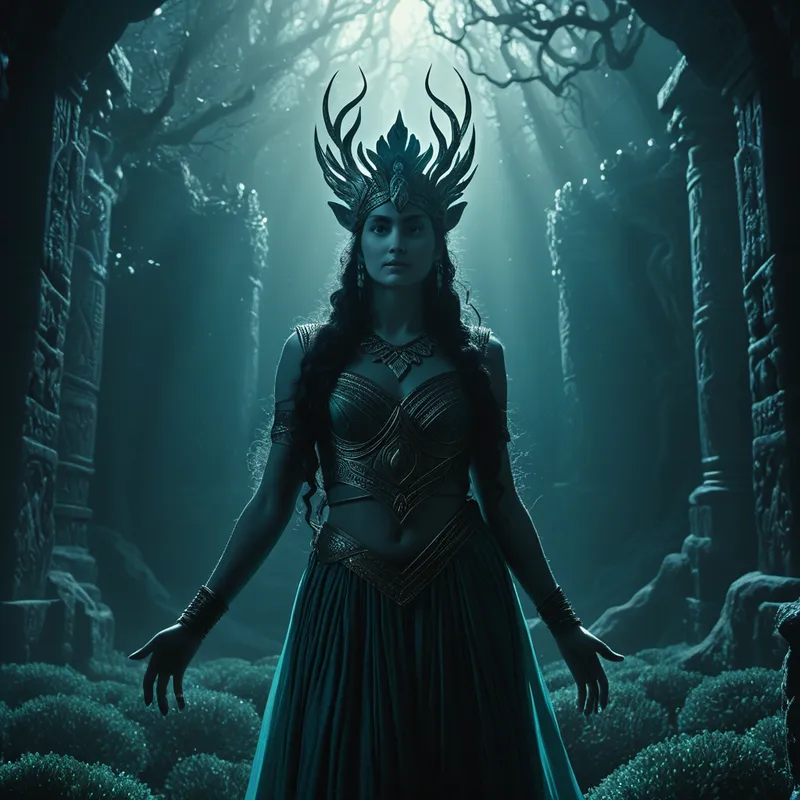
In the beginning, before beginnings, the Infinite—[Ein Sof](/myths/ein-sof “Myth from Kabbalistic culture.”/)—existed in a state of pure, undifferentiated being. There was no vessel, no form, only the boundless, effulgent light of the Divine. Yet, from within this perfect unity arose a desire: to be known, to be revealed, to create. And so, the first act of creation was not an expansion, but a contraction. [Tzimtzum](/myths/tzimtzum “Myth from Kabbalistic culture.”/). The Infinite withdrew its light from a central point, creating a vacated space, a womb of potential darkness.
Into this primordial void, a ray of [divine light](/myths/divine-light “Myth from Christian culture.”/) descended, a single, focused beam from the unknowable source. This light did not come naked; it formed itself into vessels. These were the Sefirot, the primordial structures of reality: vessels of Chesed, of Gevurah, of Tiferet. They were perfect in conception, designed to hold the descending light and channel it into the orderly birth of worlds.
But the light was too pure, too potent, too full of the unbridled love of the source. It was a torrent where a stream was needed. The vessels, rigid in their nascent forms, could not contain the searing intensity of the influx. From the highest, most subtle sefirah down, they trembled, strained, and then—shattered.
The sound was the first cosmic catastrophe, a symphony of breaking. The vessels fractured, and the holy light within them did not simply vanish. It shattered alongside them, fracturing into infinite sparks. Some sparks, lighter and more refined, rose back toward their source. But countless others fell, cascading down through the empty realms, becoming embedded in the fragments of the broken vessels. These fragments, now thick with the residue of the shattered light, formed the kelipot—the “shells” or “husks” of darkness and materiality. The sparks of holiness became prisoners within them, scattered like divine seeds sown in the coarse soil of a fractured cosmos.
Thus, [the world](/myths/the-world “Myth from Tarot culture.”/) as we know it was born not from a perfect act, but from a cataclysm. Creation is a broken universe, a mosaic of divine light trapped in shards of darkness. The primordial human, [Adam Kadmon](/myths/adam-kadmon “Myth from Kabbalistic culture.”/), was also fractured by this event. And the task, the sacred imperative born from this breaking, was set: Tikkun Olam, the mending of the vessels, the gathering of the scattered sparks. This is the hidden drama of existence: every righteous act, every moment of conscious kindness, every prayer uttered with true intention, is an act of retrieval. It is a reaching into the shell of [the world](/myths/the-world “Myth from Tarot culture.”/) to liberate a spark of the original light, lifting it back to its home, slowly, painstakingly reassembling the shattered unity of God and world.
Cultural Origins & Context
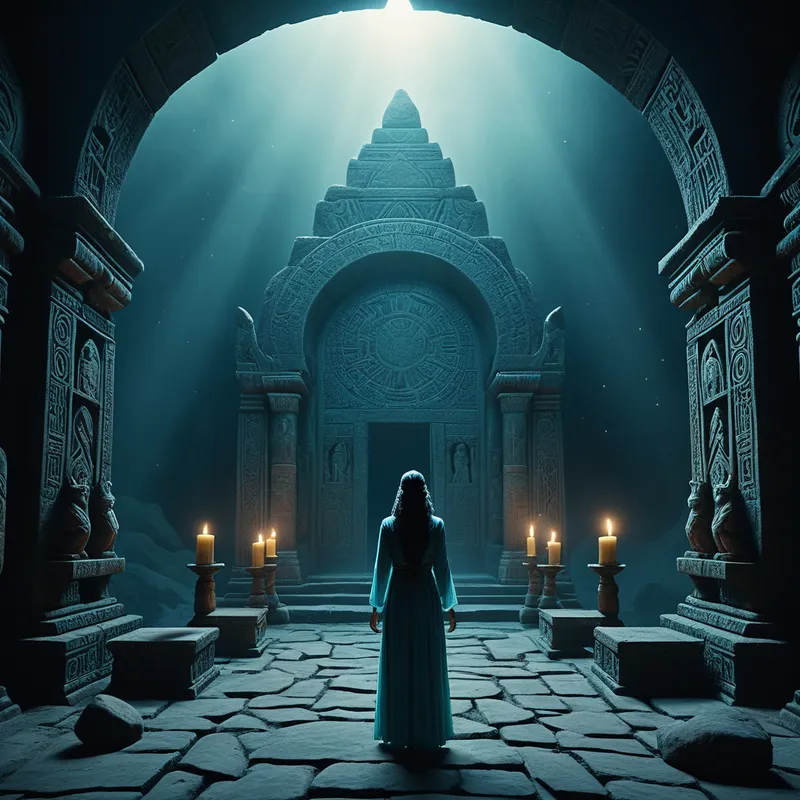
The myth of the Breaking of the Vessels, or Shevirat HaKelim, is the heart of the revolutionary Kabbalistic system articulated in the 16th [century](/myths/century “Myth from Biblical culture.”/) by Rabbi [Isaac](/myths/isaac “Myth from Biblical culture.”/) Luria in the Galilean town of Safed. While drawing on much older esoteric threads from the Zohar and earlier Jewish mysticism, Luria and his disciples synthesized these into a coherent, profound, and tragic cosmic narrative. Its emergence was not accidental. It came in the aftermath of the traumatic expulsion of Jews from Spain in 1492, a cataclysm that shattered the Jewish world geographically and spiritually. The old, rationalistic medieval cosmologies could not account for such profound exile and suffering.
Lurianic Kabbalah provided a theodicy of immense psychological power. It proposed that exile and brokenness were not signs of divine abandonment, but were woven into the very fabric of creation from its first instant. The Jewish people’s historical exile mirrored the primordial exile of the divine sparks. Thus, human suffering was given cosmic meaning; every act of faithfulness in a dark world became a participant in the divine drama of restoration. This myth moved Jewish spirituality from a focus solely on legal observance to an emphasis on mystical intention (kavanah) and ethical action as instruments of cosmic repair. It transformed the Jew from a passive subject of divine law into an active, indispensable partner in the redemption of God Himself.
Symbolic Architecture
The myth’s power lies in its dense, interlocking [symbolism](/symbols/symbolism “Symbol: The use of symbols to represent ideas or qualities, often conveying deeper meanings beyond literal interpretation. In dreams, it’s the language of the unconscious.”/), portraying a [universe](/symbols/universe “Symbol: The universe symbolizes vastness, interconnectedness, and the mysteries of existence beyond the individual self.”/) that is fundamentally wounded yet quivering with redemptive potential.
The Vessels symbolize structure, form, and the limits of reception. They represent the ego, the body, the law, and any system that attempts to contain the infinite. Their breaking is the necessary failure of all perfect systems when confronted with raw, unbounded reality.
The Sparks are the essence of soul, consciousness, and divine value trapped within materiality. They are the holy in the mundane, the pinpricks of meaning in chaos, the latent potential for goodness in every fragment of existence.
The Kelipot (Shells) are not pure evil, but the necessary byproduct of the catastrophe—the hardened forms of judgment without mercy, matter without spirit, isolation without connection. They are the world experienced as opaque, resistant, and alienated.
The entire process is a dynamic of descent for the sake of [ascent](/symbols/ascent “Symbol: Symbolizes upward movement, progress, spiritual elevation, or striving toward higher goals, often representing personal growth or transcendence.”/). The light had to shatter and descend into the lowest realms so that it could be consciously gathered and elevated, a process that creates a higher unity than the original, unconscious state of perfection. The breaking is thus not a mistake, but a destined, if painful, stage in the [soul](/symbols/soul “Symbol: The soul represents the essence of a person, encompassing their spirit, identity, and connection to the universe.”/)-making of the [cosmos](/symbols/cosmos “Symbol: The entire universe as an ordered, harmonious system, often representing the totality of existence, spiritual connection, and the unknown.”/). The [human](/symbols/human “Symbol: The symbol of a human represents individuality, complexity of emotions, and social relationships.”/) [role](/symbols/role “Symbol: The concept of ‘role’ in dreams often reflects one’s identity or how individuals perceive their place within various social structures.”/) is not to mourn the break, but to engage in the sacred archaeology of [spirit](/symbols/spirit “Symbol: Spirit symbolizes the essence of life, vitality, and the spiritual journey of the individual.”/), sifting through the shells of [history](/symbols/history “Symbol: History in dreams often represents the dreamer’s past experiences, lessons learned, or unresolved issues that continue to influence their present.”/), [nature](/symbols/nature “Symbol: Nature symbolizes growth, connectivity, and the primal forces of existence.”/), and the [psyche](/myths/psyche “Myth from Greek culture.”/) to find and free the imprisoned light.
The Dreamer’s Resonance
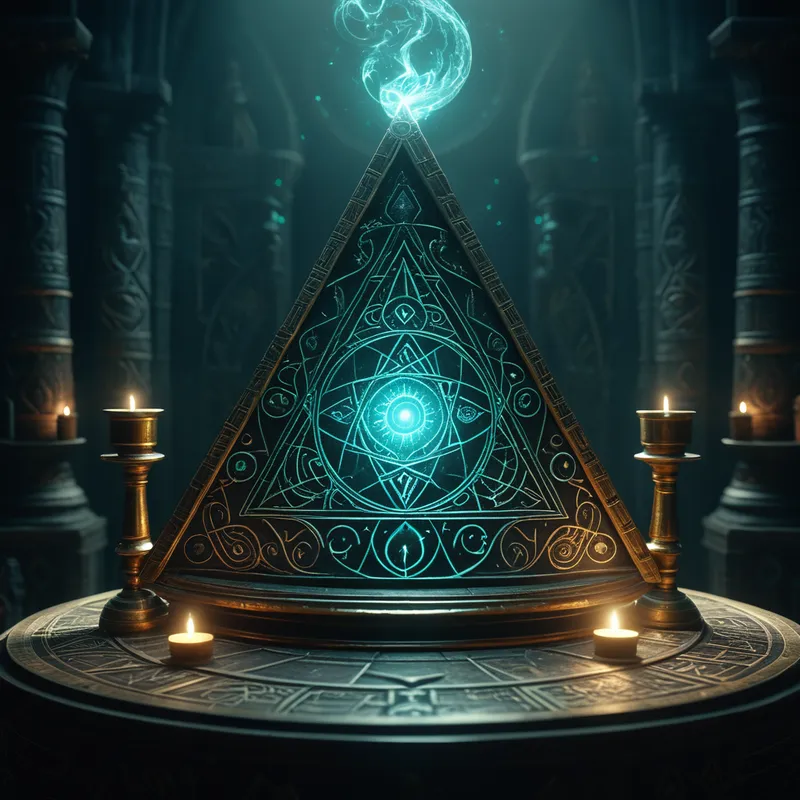
To the depth psychologist, the Breaking of the Vessels is not merely a cosmic event but an intrapsychic one. It is the myth of individuation. The psyche does not emerge whole. The initial, unconscious unity of the infantile state must “break” to make space for a conscious ego—a fragile vessel that often shatters under the influx of powerful archetypal energies (divine light). This creates the fragmented, “scattered” feeling of modern life: parts of our wholeness (the sparks) are lost, projected onto others, buried in complexes (the kelipot), or trapped in past trauma.
The process of Tikkun, then, is the work of psychotherapy and inner work: gathering those split-off parts of [the self](/myths/the-self “Myth from Jungian culture.”/), integrating shadows, and healing fractures. The myth validates the experience of brokenness not as a personal failure, but as a universal, even necessary, condition preceding a more authentic wholeness. It suggests that our wounds are not just injuries, but often the very places where a lost spark of our deepest potential lies buried, waiting to be recognized and redeemed. We are all, in our inner worlds, living in the aftermath of the shevirah, tasked with the endless, sacred labor of gathering our own scattered light.
Alchemical Translation
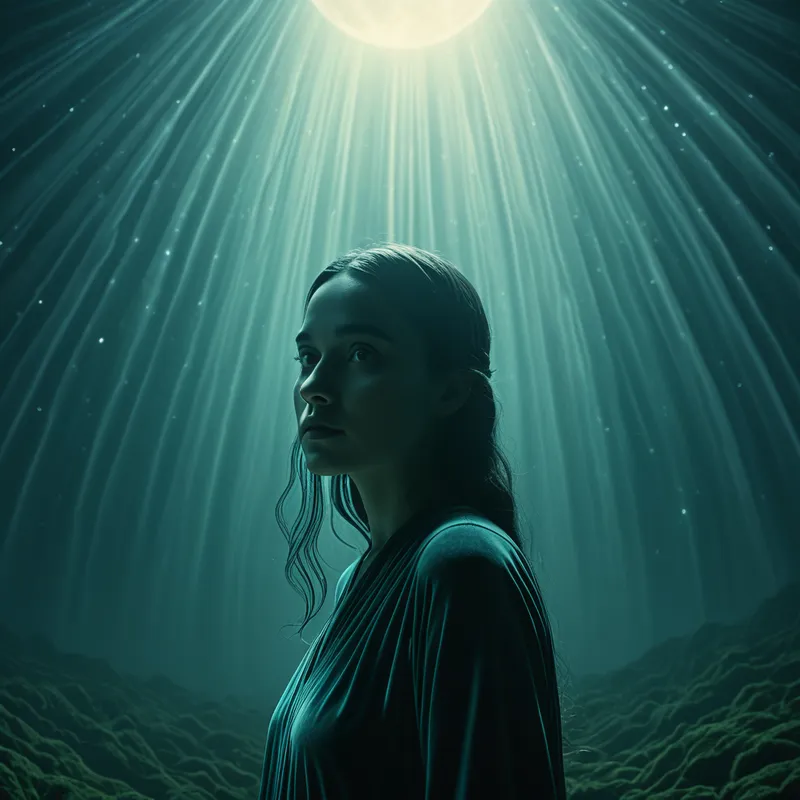
In the alchemical opus, the Lurianic myth finds a striking parallel. The [prima materia](/myths/prima-materia “Myth from Alchemical culture.”/), the base, chaotic matter, corresponds to the shattered vessels and shells—the world in its unredeemed state, full of dross and confusion. The divine sparks are the aurum potabile, the drinkable gold, the spiritual essence hidden within this gross matter.
The alchemical process of solve et coagula (dissolve and coagulate) mirrors shevirah and tikkun. First, the original unity must be dissolved (the vessels break). Then, through the meticulous, stage-by-stage work of purification (nigredo, albedo, rubedo), the essential spirit is extracted from the dross and reconstituted into a higher, conscious form—the lapis philosophorum, the Philosopher’s Stone. This stone is the symbol of the fully repaired vessel, the Self that has integrated all fragmentation and now contains the light without breaking.
Both traditions understand that redemption is an opus, a work. It is not bestowed by grace alone but requires the furnace of conscious effort. [The alchemist](/myths/the-alchemist “Myth from Various culture.”/) in their laboratory and the Kabbalist in their prayer and ethical action are engaged in the same transformative labor: the liberation of spirit from the bondage of matter, achieved through a loving and patient dialogue with the brokenness of existence.
Associated Symbols
Explore related symbols from the CaleaDream lexicon:
- Vessel — A container for spirit or life, representing the fragile forms—body, mind, relationship, society—that seek to hold meaning and often break under its weight.
- Light — The primordial substance of consciousness and divine [emanation](/myths/emanation “Myth from Neoplatonic/Gnostic culture.”/), which must be mediated and contained, yet whose pure intensity is often what shatters its containers.
- Break — The catastrophic moment of fragmentation that is also the genesis of multiplicity, potential, and the long journey toward a more conscious wholeness.
- Redemption — The active process of gathering, healing, and restoring that which was lost or scattered, transforming exile into homecoming.
- Spark — The irreducible unit of divine value and consciousness, trapped in matter, awaiting liberation through recognition and ethical action.
- Shadow — The kelipot or shells; the hardened, opaque aspects of reality and the psyche that conceal but also protect the latent light within.
- Journey — The endless pilgrimage through a fractured world, guided by the task of seeking and lifting the hidden sparks.
- Seed — The scattered spark as a potentiality planted in the dark soil of the world, requiring cultivation to sprout into its destined form.
- Cup — A vessel of reception, akin to [the Sefirot](/myths/the-sefirot “Myth from Kabbalistic culture.”/); the sacred chalice that must be strong enough to hold the intoxicating wine of divine influx.
- Symmetry Breaking — The cosmic principle where a unified state fractures into multiplicity, creating the diversity and tension necessary for relationship and evolution.
- Rebirth — The state achieved not by returning to the original, unconscious unity, but by being reconstituted at a higher level of integration after the shattering.
- God — Not as a static monarch, but as a dynamic presence whose very being is involved in the cosmic drama of contraction, breaking, and collaborative repair.