
The Behemoth Myth Meaning & Symbolism
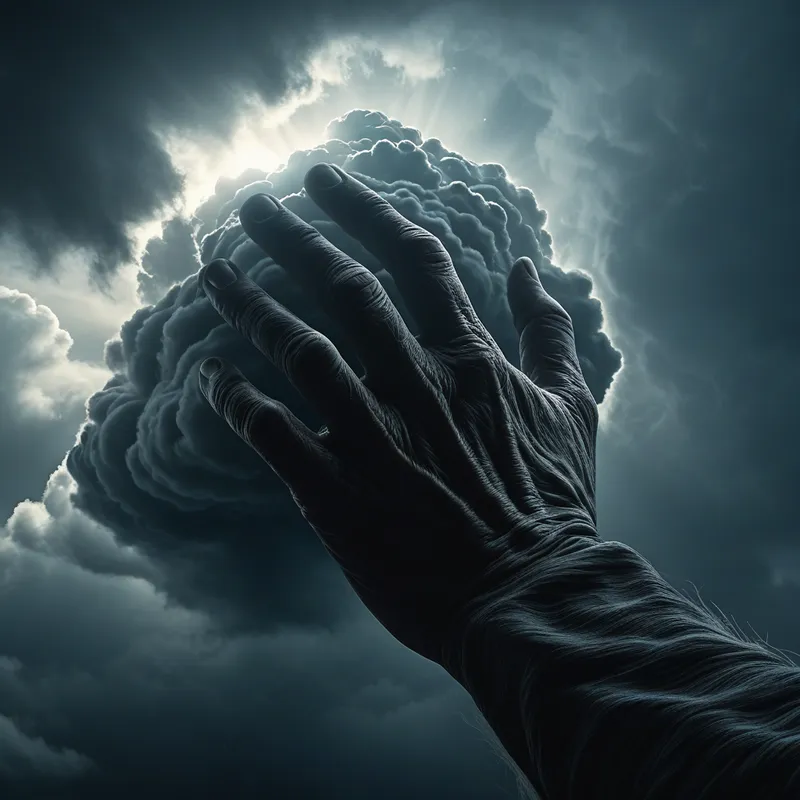
A mythic portrait of a primordial beast, embodying raw, untamed creation, destined for a final, sacred confrontation that orders the cosmos.
The Tale of The Behemoth
Listen. Before the first city was raised, before the first law was carved, the world was a younger, wilder place. The breath of the YHWH still stirred the dust of the newly formed earth, and in that creative fury, He did not make only lambs and doves. From the clay of the seventh day’s twilight, from the residue of power too vast to contain, He fashioned the Behemoth.
It is not born; it is presented. See it now, in the mind’s eye, where the Jordan runs deep and cold from northern mountains. The reeds part not with a rustle, but with a sound like stone grating on stone. A shadow falls across the water, a living hillock of muscle and might. Its tail is a cedar, thick and swaying. Its bones are tubes of bronze, its limbs pillars of iron. It does not merely drink from the river; it causes the river to bend to its thirst, swallowing whole streams in a single, echoing gulp.
This creature knows no fear. The raging torrent holds no terror for it; it lounges in the current as a man might in a gentle bath. Lions, the kings of the wilderness, slink away from its path, for its domain is not theirs. Its home is the marsh, the mountain, the secret places where the raw earth shows its teeth. It is the first power, the embodied yes of creation in its most untamed, uncompromising form.
And then, a Voice. It comes not from the sky, but from within the fabric of things, from the whirlwind that speaks to a man named Job. The Voice does not describe a pet or a monster. It describes a masterpiece. “Look at Behemoth, which I made just as I made you.” The comparison is a thunderclap. This chaos is kin. This terror is a sibling in creation.
The tale does not end with a hunt or a slaying. It ends with a promise, a divine decree that hangs in the air like the scent before a storm. This force, this raw, earth-shaking vitality, is not for man to conquer. It is reserved. For on a day appointed, when the sun stands still in a sky of brass, the Behemoth and its twin, the Leviathan of the deep, will be brought forth. Not for destruction, but for a final, sacred confrontation. They will be met, they will be engaged, and in that ultimate meeting, the last wildness will be integrated, the final chaos ordered. The myth ends not with an end, but with the tension of a destined, holy struggle.
Cultural Origins & Context
The Behemoth emerges not from a standalone epic, but from the profound theological crucible of the Book of Job. This is a text of wisdom literature, a poetic and philosophical debate staged in the court of cosmic suffering. Its primary audience was a people wrestling with the problem of evil, the nature of justice, and the terrifying majesty of a God who operates beyond human moral calculus.
The myth is delivered not by a narrator, but by YHWH Himself from the whirlwind. This is critical. It is not a folktale told around a fire, but a divine revelation meant to shock Job—and the listener—out of a limited, legalistic understanding of the cosmos. The function here is not entertainment, but reorientation. By presenting Behemoth (and Leviathan), God is asserting that the world contains powers and purposes vastly older, wilder, and more complex than human concerns. The myth serves as a humbling antidote to anthropocentrism, placing humanity within a creation that is awe-inspiring, dangerous, and fundamentally sacred in all its parts, even those that seem monstrous.
Symbolic Architecture
The Behemoth is the archetypal [symbol](/symbols/symbol “Symbol: A symbol can represent an idea, concept, or belief, serving as a powerful tool for communication and understanding.”/) of the untamed, instinctual [foundation](/symbols/foundation “Symbol: A foundation symbolizes the underlying support systems, values, and beliefs that shape one’s life, serving as the bedrock for growth and development.”/) of existence. It is not evil, but pre-moral. It represents the raw, chthonic [life](/symbols/life “Symbol: The symbol of ‘Life’ represents a journey of growth, interconnectedness, and existential meaning, encompassing both the joys and challenges that define human experience.”/) force that precedes and undergirds civilization, order, and even conscious ego.
The Behemoth is the psychic bedrock, the unshaped potency that must be acknowledged before it can be integrated. To deny it is to build a city on a fault line.
Psychologically, it embodies the totality of the instinctual self—the drives of survival, aggression, procreation, and territorial power in their pure, unmediated form. In the [dialogue](/symbols/dialogue “Symbol: Conversation or exchange between characters, representing communication, relationships, and narrative flow in games and leisure activities.”/) with Job, God does not show him a model of moral perfection, but a [vision](/symbols/vision “Symbol: Vision reflects perception, insight, and clarity — often signifying the ability to foresee or understand deeper truths.”/) of sublime, terrifying [strength](/symbols/strength “Symbol: ‘Strength’ symbolizes resilience, courage, and the ability to overcome challenges.”/). The Behemoth is the [Shadow](/symbols/shadow “Symbol: The ‘shadow’ embodies the unconscious, repressed aspects of the self and often represents fears or hidden emotions.”/) of creation itself, not as a personal flaw, but as a cosmic fact: a necessary, formidable counterpart to the [spirit](/symbols/spirit “Symbol: Spirit symbolizes the essence of life, vitality, and the spiritual journey of the individual.”/). Its destined confrontation symbolizes the ultimate reconciliation of these primal opposites—the land and the sea, the raw and the cooked, the instinctual and the spiritual—into a coherent whole.
The Dreamer’s Resonance
When the Behemoth stirs in modern dreams, it rarely appears as a literal monster. Its presence is more often somatic and environmental. The dreamer may find themselves in a house where the foundation groans and shifts, or feel the ground become unstable beneath them. They may dream of a forgotten, overgrown basement teeming with a palpable, sleeping power, or of a beloved pet that suddenly reveals a terrifying, ancient size and strength.
These dreams signal a confrontation with what psychologist James Hillman called the “acorn” — the raw, daimonic seed of one’s deepest nature that society has asked you to prune and tame. The trembling is the ego-structure shaking as this foundational power demands recognition. The process is one of grounding, but a grounding that involves first acknowledging the earthquake within. The dreamer is not being attacked; they are being visited by the sheer magnitude of their own latent life force, which feels alien and overwhelming because it has been exiled from conscious life.

Alchemical Translation
The individuation process modeled by the Behemoth myth is not one of heroic conquest, but of sacred recognition and destined engagement. The first alchemical stage, nigredo, is embodied by the beast itself: the black, chaotic, prima materia of the soul. This is the unrefined ore of one’s being, heavy, daunting, and seemingly useless.
The divine speech to Job represents the albedo, the illuminating insight. The light here is the shocking realization: “This chaos is not your enemy; it is your kin. It was made by the same hand that made you.” This whitening is the purification of perception, seeing the shadow not as a stain, but as a substance with divine provenance.
The ultimate alchemy is not the destruction of the base material, but its transmutation through a conscious, willing confrontation.
The promised future struggle is the rubedo, the reddening or final union. In psychological terms, this is the integration of the shadow. The ego does not slay the Behemoth; it prepares for a ritual encounter with it. This is the work of a lifetime: building an ego strong enough, conscious enough, to finally stand in the presence of its own primal power without fleeing or identifying with it, but to engage it in a way that orders the entire inner cosmos. The sacrifice is the illusion of a safe, tame, and small self. The reward is wholeness—a personality grounded in the terrifying and glorious reality of its own complete nature.
Associated Symbols
Explore related symbols from the CaleaDream lexicon:
- Earth — The Behemoth is the embodied spirit of the land, representing the raw, foundational, and untamable substance from which all life springs and to which it returns.
- Mountain — Symbolizing immense, immovable mass and ancient stability, the Behemoth’s form is a living mountain, a testament to primordial strength and endurance.
- River — The beast drinks from and dominates the river, representing its mastery over the vital, flowing forces of life and its connection to the source of sustenance.
- Chaos — The Behemoth is the archetypal form of pre-cosmic chaos, the wild, unordered potential that exists before and beneath the structures of civilization and conscious order.
- Order — Its destiny is a final, sacred confrontation that will establish ultimate cosmic order, showing that true stability comes not from excluding chaos, but from integrating it.
- Shadow — Psychologically, the Behemoth is the ultimate personal and collective Shadow, the repository of immense, instinctual power that the conscious ego fears yet must acknowledge.
- Bone — Its bones described as bronze beams speak to the indestructible framework, the core, skeletal truth of one’s nature that underlies the softer flesh of personality.
- Sacrifice — The myth points toward a future, holy sacrifice of pure, wild power, modeling the necessary surrender of untamed instinct to a higher, integrative purpose.
- Strength — It is the pure embodiment of physical and primordial strength, a force that exists for its own sake, as a demonstration of creative potency.
- God — The Behemoth is explicitly a creation of and testament to God, representing the aspect of the divine that is wild, formidable, and beyond human moral understanding.