The Bard's Satchel Myth Meaning & Symbolism
A bard's voice is stolen by the underworld king. To reclaim it, he must journey through the silent hollows of Annwn, guided only by memory and a sacred vessel.
The Tale of The Bard’s Satchel
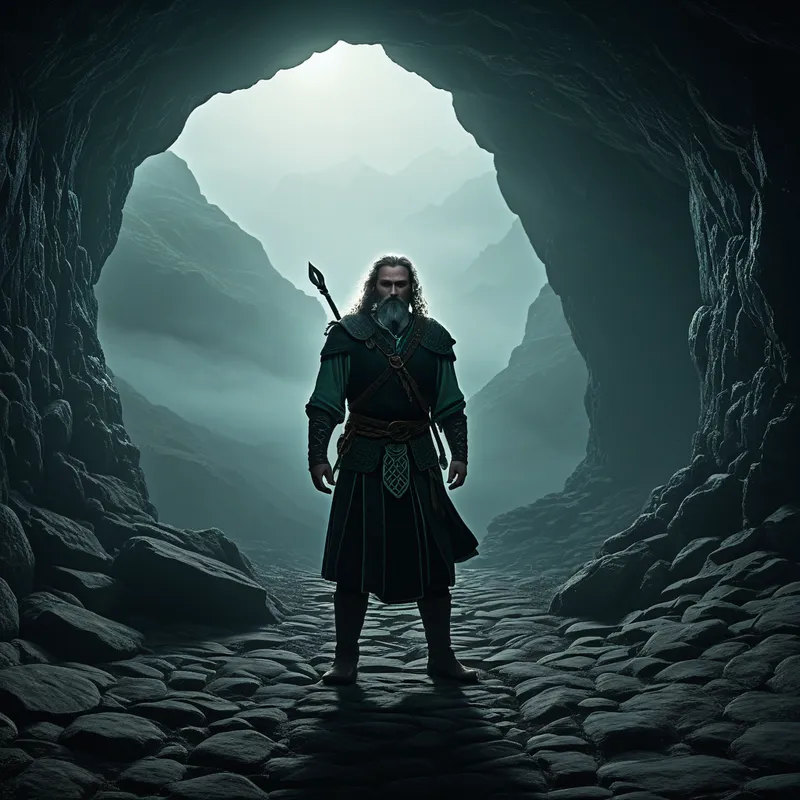
Hear now a tale from the time when [the mist](/myths/the-mist “Myth from Celtic culture.”/) clung low to the oak groves, and the boundary between this world and the Annwn was thin as a [spider](/myths/spider “Myth from Native American culture.”/)’s silk. There was a bard, Caoimhín, whose voice was not his own, but a gift on loan from [the world](/myths/the-world “Myth from Tarot culture.”/) itself. When he sang, stags would pause their grazing, rivers would slow their rush to listen, and the very stones seemed to soften. His songs held the memory of the land—the names of forgotten kings, the secret language of [the wind](/myths/the-wind “Myth from Various culture.”/) in the reeds, the first sigh of love.
But in his pride, he sang a satire so sharp and clever it withered the crops of a jealous chieftain. This was a misuse of the sacred gift, a weaponization of truth. That night, as he slept by his hearth, a chill seeped from [the earth](/myths/the-earth “Myth from Hindu culture.”/). A figure emerged from the shadows, not of flesh and bone, but of damp clay and ancient root. It was a messenger of Arawn, Lord of Annwn. Without a word, it passed a cold hand over Caoimhín’s lips. When [the bard](/myths/the-bard “Myth from Celtic culture.”/) awoke at dawn, his throat was sealed. Not by pain, but by a profound, hollow silence. His voice was gone, stolen away to the silent halls of [the underworld](/myths/the-underworld “Myth from Greek culture.”/).
Desperate, he sought the Ban-drui, who read the omen in the flight of crows. “Your voice lies with Arawn,” she whispered, her own words rasping like dry leaves. “He collects what is misused. To retrieve it, you must go to him. But you cannot go empty-handed, nor can you speak a plea. You must carry a vessel for its return.”
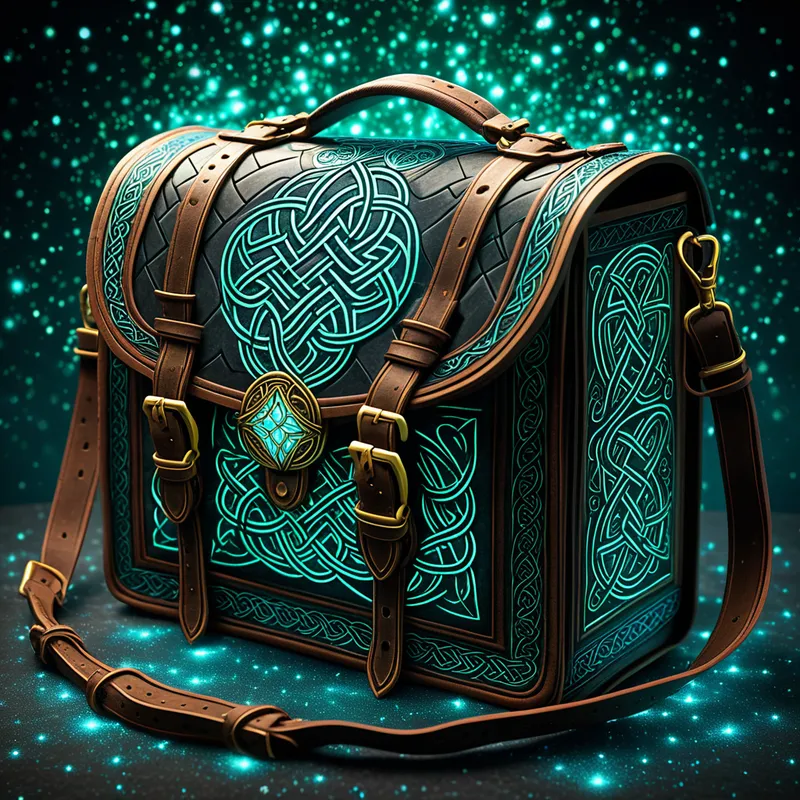
From the hide of a white stag he had once sung to sleep, Caoimhín fashioned a satchel. He lined it with moss from a north-facing stone and stitched it with hair from his own head. It was an empty [thing](/myths/thing “Myth from Norse culture.”/), a womb of potential. Thus began his descent. He walked into a barrow mound where the air grew thick and cold, the light of the world fading behind him. He journeyed through the Annwn, a landscape of inverted echoes, where rivers flowed silently and trees stood in perfect, motionless rows. He met shades who mimed their lost lives, their silent screams more terrible than any sound.
Finally, he stood in Arawn’s hall. The king sat on a throne of petrified yew, his face a mask of serene stillness. All was quiet, a silence so complete it pressed upon the ears. Caoimhín, his heart a drum against his ribs, could utter no word. Instead, he remembered. He poured every memory of song into his hands—the warmth of the sun on a melody, the weight of a lament, the sharp joy of a satire. He placed these memories, like invisible treasures, into the satchel.
He then approached the throne and opened the satchel before Arawn, offering not a plea, but a container. From the folds of the king’s cloak, Arawn drew forth a shimmering, nebulous form—the bard’s stolen voice. It was not a tongue, but a captured songbird of light and vibration. He looked from the silent, expectant bard to the humble satchel. Arawn, understanding the sacrifice and [the vessel](/myths/the-vessel “Myth from Alchemical culture.”/), gently placed the shimmering essence into the leather pouch. The satchel glowed, pulsing softly. With a nod that was both judgment and mercy, Arawn dismissed him.
The ascent was lighter. The satchel hummed against his chest. When he broke back into the world of light and sound, the first birdcall was a shock. He fell to his knees, opened the satchel, and let the essence flow back into him. His first sound was not a song, but a sob. And then, a whisper of gratitude to the wind. His voice was returned, but it was different—deeper, carrying within it the memory of the hollow silence from which it was reclaimed.
Cultural Origins & Context
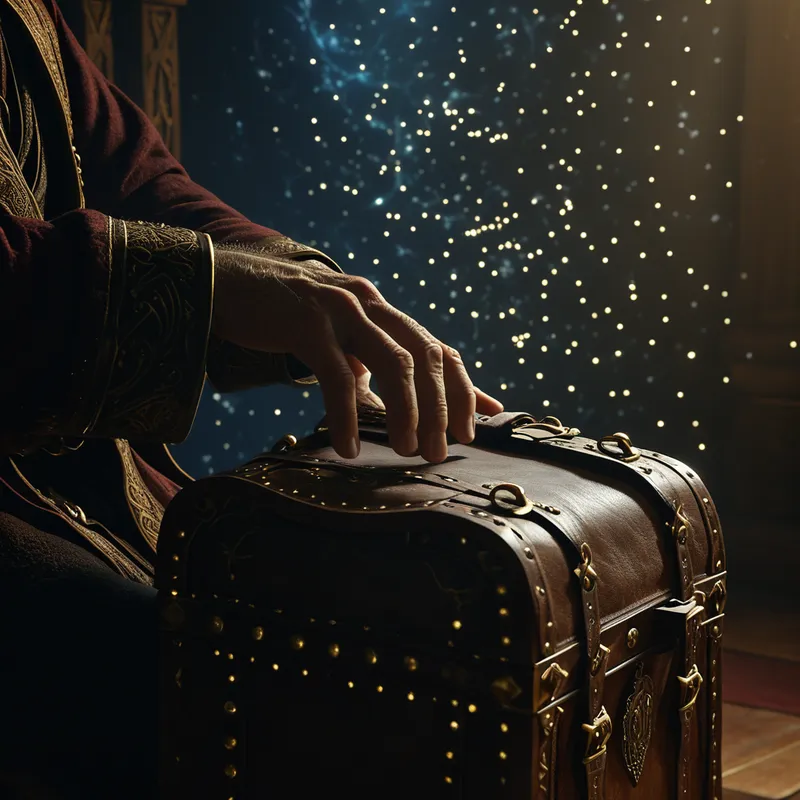
This tale belongs to the rich, fragmented tapestry of Insular Celtic lore, particularly resonant in the Irish and Welsh traditions where the bard (filí in Ireland, bardd in Wales) held a sacrosanct position. Unlike mere entertainers, bards were the living memory of the tribe, the weavers of fírinne. Their words had tangible power—to satirize and destroy reputations, to bless kings, to recall history.
The myth of the stolen voice speaks directly to this immense responsibility. It was likely told within bardic schools (ollamh) as a cautionary and initiatory narrative, emphasizing the sacred contract of the gift. The voice is not a personal possession but a trust from [the Otherworld](/myths/the-otherworld “Myth from Celtic culture.”/), personified by Arawn or similar deities of sovereignty and the unseen. To misuse it for petty spite or personal gain was to invite a literal dis-empowerment.
The story’s transmission would have been oral, its details shifting with each teller, but its core structure—the loss, the descent to the [underworld](/myths/underworld “Myth from Greek culture.”/) king, the retrieval via a correct vessel—remains a stable archetype. It functioned as societal medicine, a mythic reinforcement of ethical conduct for those who wielded the power of language, ensuring that the tribe’s narrative soul remained connected to a source deeper than human ego.
Symbolic Architecture
At its [heart](/symbols/heart “Symbol: The heart symbolizes love, emotion, and the core of one’s existence, representing deep connections with others and self.”/), this myth maps the [journey](/symbols/journey “Symbol: A journey in dreams typically signifies adventure, growth, or a significant life transition.”/) of the creative [spirit](/symbols/spirit “Symbol: Spirit symbolizes the essence of life, vitality, and the spiritual journey of the individual.”/) through a [crisis](/symbols/crisis “Symbol: A crisis symbolizes turmoil, urgent challenges, and the need for immediate resolution or change.”/) of authenticity. The [bard](/symbols/bard “Symbol: Bards represent the power of storytelling, music, and the transmission of culture and history.”/)’s voice symbolizes the innate, [soul](/symbols/soul “Symbol: The soul represents the essence of a person, encompassing their spirit, identity, and connection to the universe.”/)-deep [capacity](/symbols/capacity “Symbol: A measure of one’s potential, limits, or ability to contain, process, or achieve something, often reflecting self-assessment or external demands.”/) for [expression](/symbols/expression “Symbol: Expression represents the act of conveying thoughts, emotions, and individuality, emphasizing personal communication and creativity.”/) and meaning-making—our true voice.
The satchel is not the gift; it is the conscious vessel we must build to carry the gift. It represents the prepared self—the discipline, the humility, the embodied life—that can safely hold inspiration.
The theft by Arawn is not a cruel [punishment](/symbols/punishment “Symbol: A dream symbol representing consequences for actions, often tied to guilt, societal rules, or internal moral conflicts.”/) but a necessary recall. When we misuse our creative power—for manipulation, for superficial acclaim, for harm—the soul itself withdraws the gift. We experience this as burnout, block, a feeling of being a hollow [shell](/symbols/shell “Symbol: Shells are often seen as symbols of protection, transition, and the journey of personal growth.”/), speaking words that have no roots. Annwn here is the inner [underworld](/symbols/underworld “Symbol: A symbolic journey into the unconscious, representing exploration of hidden aspects of self, transformation, or confronting repressed material.”/), the unconscious, where disowned parts of our [psyche](/myths/psyche “Myth from Greek culture.”/) reside.
The descent is the dark [night](/symbols/night “Symbol: Night often symbolizes the unconscious, mystery, and the unknown, representing the realm of dreams and intuition.”/) of the soul, the depressive or arid phase where old identities and arrogant certainties are stripped away. The silent shades are the muted aspects of our own unlived [life](/symbols/life “Symbol: The symbol of ‘Life’ represents a journey of growth, interconnectedness, and existential meaning, encompassing both the joys and challenges that define human experience.”/). The pivotal act is not fighting or begging, but remembering and offering a container. The bard, in his silence, must recollect the feeling of his art, its [source](/symbols/source “Symbol: The origin point of something, often representing beginnings, nourishment, or the fundamental cause behind phenomena.”/) in lived experience, not in performance. He must [fashion](/symbols/fashion “Symbol: Fashion signifies personal expression, societal status, and cultural identity through clothing and styles.”/) a new [relationship](/symbols/relationship “Symbol: A representation of connections we have with others in our lives, often reflecting our emotional state.”/) to his gift, one based on reverence rather than ownership.
The Dreamer’s Resonance
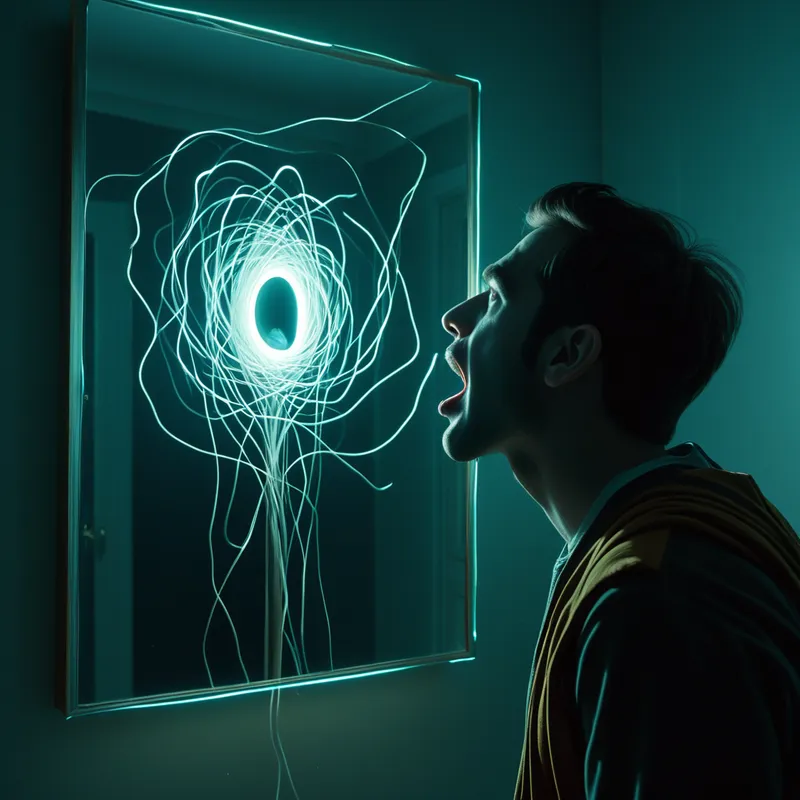
When this myth stirs in the modern psyche, it often surfaces in dreams of profound muteness or vocal paralysis. You dream of screaming in a crucial moment but producing no sound. You may dream of losing a precious, identity-defining object—a locket, an instrument, a book—and searching for it in labyrinthine, institutional basements (the modern Annwn).
Somatically, this can coincide with actual throat tightness, a sense of constriction in the chest, or a feeling of being “tongue-tied” in life. Psychologically, you are undergoing the “theft.” Your authentic voice—your true opinions, your creative impulses, your need to set a boundary or express a love—has been silenced, often by your own inner critic (the inner Arawn) who deems it unworthy or dangerous. The dream is not a prophecy of loss, but a diagnosis: your current mode of expression has become disconnected from your soul’s purpose. The dream-quest is the call to begin the descent, to stop forcing speech and instead turn inward to listen and remember who you are beneath the roles you play.
Alchemical Translation
The myth of the Bard’s Satchel is a precise allegory for the Jungian process of individuation, specifically the integration of the creative function with the demands of [the Self](/myths/the-self “Myth from Jungian culture.”/). The initial state is a psychic inflation—[the ego](/myths/the-ego “Myth from Jungian culture.”/) identifies with the divine gift (“I am a great bard”). The theft is a necessary enantiodromia, a swing to the opposite, plunging the ego into the depths of the inferior function (silence, incapacity).
The alchemical vessel, the vas, is not given; it must be crafted from the substance of one’s own life. The white stag hide is instinct purified, the moss is humility gathered from shadowed places, the hair is the sacrifice of personal identity to a higher purpose.
The journey through Annwn is the nekyia, the night-sea journey, where one confronts the silent, unlived aspects of the psyche (the shades). The meeting with Arawn is the confrontation with the Self, the inner king who holds the totality of the psyche, both light and dark. One cannot argue with the Self; one can only present one’s readiness.
The final transmutation occurs when the reclaimed voice is integrated. It is no longer the same. It now carries the memory of the silence within it. This is the hallmark of mature creativity and authentic voice: it speaks from a place that has known its own absence. It is potent not because it is always loud, but because it is rooted in the fertile void from which all true things emerge. The individual no longer “has a gift”; they have become a faithful vessel through which the gift of being itself can flow, in both song and sacred silence.
Associated Symbols
Explore related symbols from the CaleaDream lexicon: