
The Banshee Myth Meaning & Symbolism
A spectral woman whose mournful wail is not a threat, but a profound announcement from the Otherworld, marking the sacred threshold between life and death.
The Tale of The Banshee
Listen. The wind does not always sing of the sea. Sometimes, it carries a song older than the standing stones, a melody woven from loss and memory. When the dusk deepens to the colour of a bruise and the hearth-fire gutters low, she comes.
They call her the Bean Sídhe—the Woman of the Sí. You will not see her at first. You will feel her: a coldness that is not of the air, a silence that swallows the cricket’s chirp and the owl’s call. Then, a sound. It begins as a whisper, a sigh that seems to come from the very roots of the hawthorn tree. It rises, this keen, this caoineadh. It is the sound of a heart breaking in a language before words, a lament that pours from a throat that has known eternity’s grief.
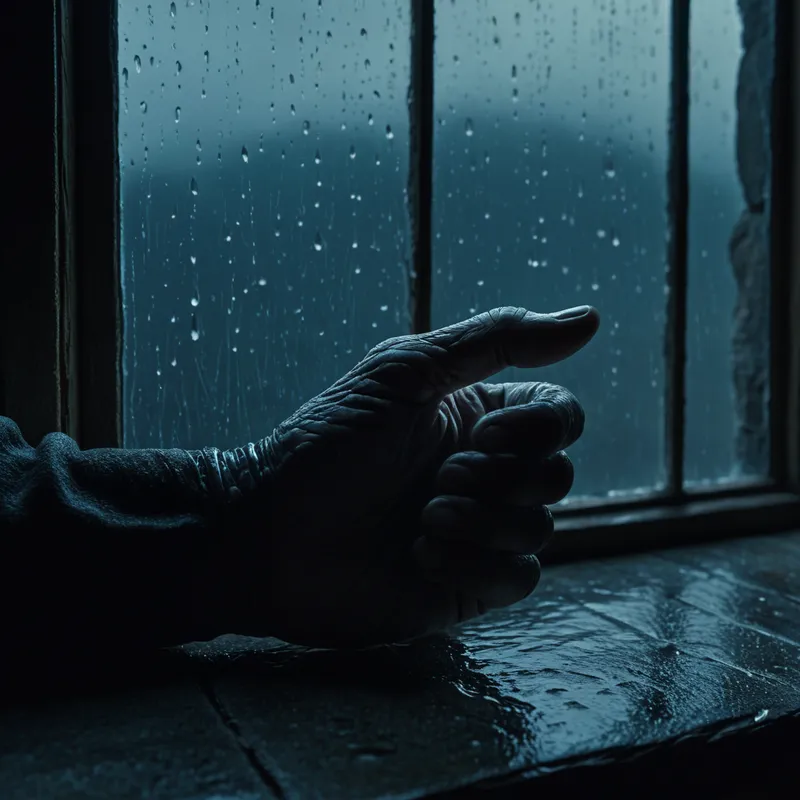
She may appear as a noble lady in a gown of grey, her face pale as moon-bleached bone, her hair a river of silver. Or she may be a shrouded crone, her form bent with the weight of centuries, washing blood-stained shrouds in a black stream. She is seen at the edge of the ancestral woods, by the old family ford, or gliding past the window of the one whose thread is near its end. Her eyes, if you could meet them, hold the depth of all the farewells ever spoken.
She does not cause the death. She announces it. Her wail is a herald’s cry, a sacred signal that a soul is preparing to cross the threshold from an Saol Seo to an Saol Eile. It is a sound of unbearable sorrow, yet within it lies a terrible, ancient dignity. It is the sound of the world itself acknowledging a passing. When the final note fades, swallowed back into the mist from whence it came, a profound stillness remains. A door has been sensed, if not yet seen. The waiting begins, wrapped in the echo of her song.
Cultural Origins & Context
The Banshee is not a singular invention but a coalescence of deep Celtic beliefs. Her roots tap into the pre-Christian veneration of the Morrígna and other female deities of fate, war, and sovereignty, like Badb, who would shriek above battlefields. She is a descendant of the Tuatha Dé Danann, said to have retreated into the Sí mounds, becoming the Aos Sí.
This myth was not preserved in grand epics but in the oral tradition—shared in whispers by the fireside, in stories told to explain the uncanny sounds of the Irish landscape. Her function was profoundly societal. She was primarily attached to the old, Gaelic aristocratic families (the Ó and Mac names), serving as a supernatural emblem of lineage and a guardian of ancestral memory. Her cry was a specific, spiritual alert system, binding the family to its past and its fate. She transformed the impersonal fact of death into a ritualized, communal event, announced by a being from the Otherworld, thus sanctifying the transition and reinforcing the family’s connection to the timeless realm of the Sí.
Symbolic Architecture
The Banshee is not a monster of horror, but a profound symbol of the psyche’s relationship with inevitability. She represents the aspect of the unconscious that knows our deepest timelines.
She is the embodied voice of fate itself—not cruel, but implacable. Her wail is the psyche’s own alarm at the approach of a fundamental transformation.
Psychologically, she personifies the anima in its most ancient, fateful aspect—the feminine spirit as the mediator of life and death. Her keen is the sound of the soul’s recognition of an ending, the emotional truth that precedes intellectual acceptance. The blood-stained shrouds she washes are not mere gore; they symbolize the necessary, often painful, cleansing and preparation of the ego for dissolution. She stands at the liminal space—the river ford, the forest edge—the very image of the threshold between consciousness and the vast, unknown unconscious, between a known life and an unknowable transition.
The Dreamer’s Resonance
To dream of the Banshee is to encounter the psyche’s early-warning system. The modern dreamer may not hear a literal wail but may experience its equivalent: a sudden, overwhelming wave of somatic dread with no clear source; a dream of a weeping woman who cannot be comforted; or a haunting, discordant melody that disrupts the dream narrative.
This signals that the unconscious is processing a profound ending or transformation. It may not be physical death, but the death of a relationship, a career, a long-held identity, or a phase of life. The Banshee’s appearance marks the moment the deep self acknowledges this ending before the conscious mind has caught up. The feeling is one of deep, ancestral sorrow—a grief not just personal, but transpersonal, as if one is mourning through all one’s lineage. The process is one of somatic premonition, where the body and the emotional psyche register a seismic shift that the logical mind has yet to map.

Alchemical Translation
The journey with the Banshee myth is an alchemy of acceptance. Her call begins the nigredo—the blackening, the confrontation with mortality, loss, and the end of things as they are. The initial terror of her wail is the ego’s resistance to this blackening.
The triumph is not in silencing her, but in learning to listen. Her lament, when fully heard, transmutes from a scream of terror into a song of sacred passage.
The alchemical work is to stand in the field of her sound and not flee. To allow the keen to pass through you, to feel the dissolution it announces. This is the distillation of the spirit from its attachment to a fixed form. By internalizing her role, we become our own heralds. We learn to recognize and honor the inner signs of necessary endings. We perform the ritual washing of the old shrouds—the conscious review and release of what is dying. In doing so, we claim the Banshee not as an external omen of doom, but as an internal archetype of profound care. She is the ultimate caregiver of the soul, ensuring no transition is made alone or without witness, guiding the psyche through its most sacred and terrifying threshold. Her gift is the solemn dignity of conscious ending.
Associated Symbols
Explore related symbols from the CaleaDream lexicon: