The Ayar Brothers Myth Meaning & Symbolism
Four brothers and four sisters emerge from a sacred cave, destined to find a homeland. Through trials, betrayal, and transformation, one brother becomes the divine founder of Cusco.
The Tale of The Ayar Brothers
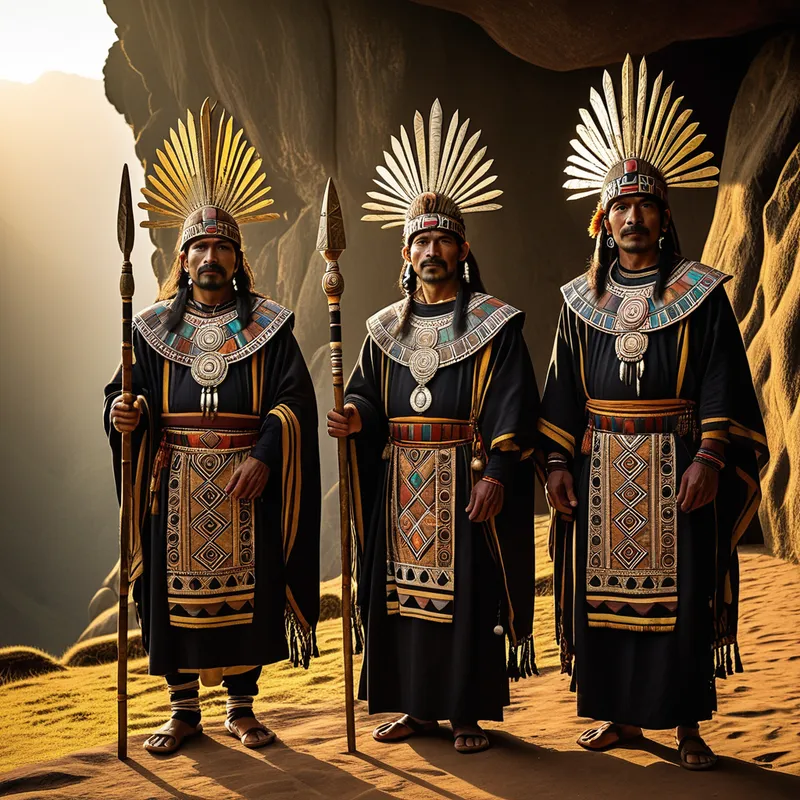
Listen. The world was still soft, the mountains young. From the womb of the earth, from the sacred cave of Pacaritambo, they came forth. Not as infants, but as full-formed beings of power and purpose. Four brothers: Ayar Manco, Ayar Auca, Ayar Cachi, and Ayar Uchu. And with them, their four sisters, who were also their wives: Mama Ocllo, Mama Huaco, Mama Ipacura, and Mama Raua.
The sun god, Inti, had gifted them. To Ayar Manco, he gave a staff of the finest gold. “Carry this,” the sun whispered on the wind. “Walk until the land itself accepts this gift. Where it vanishes into the earth, there you shall make your navel, the center of the world.”
So began the great journey. They traveled with their people, the Marcas, leaving the darkness of the cave for the high, thin air of the Andes. The land was vast, a tapestry of brutal rock and sudden, green valleys. But discord walked with them. Ayar Cachi, possessed of terrible strength, could split mountains with his sling. His power bred fear and resentment in his brothers. They conspired.
“Return to Pacaritambo,” they told him, their voices honeyed with deceit. “We have forgotten the sacred qero and the seeds. Fetch them for our people.” Trusting, Ayar Cachi returned to the cave mouth. But his siblings had sent their servant ahead. As Ayar Cachi entered, the servant rolled a mighty stone, sealing the cave forever, entombing the powerful brother within the earth that bore him.
The journey continued, but the crime hung heavy. They came to Huana-cauri. Here, a marvel appeared—a great idol of stone, a huaca of immense power. Awed, Ayar Uchu approached to pay homage. As he drew near, a sacred force seized him. He began to stiffen, his flesh cooling, his form settling. He cried out not in pain, but in a final, prophetic breath, blessing his brother Manco before his voice turned to the silence of stone. He became a sacred huaca, a guardian of the mountain pass.
Now only two brothers remained. They reached a plain called Matahua. Here, Ayar Auca, whose name meant “the joyful,” felt a new calling. He sprouted great, feathered wings from his back. With a cry that echoed the wild skies, he transformed into a magnificent condor. He soared once over his brother and his people, a dark silhouette against the sun, before flying ahead to scout the promised land.
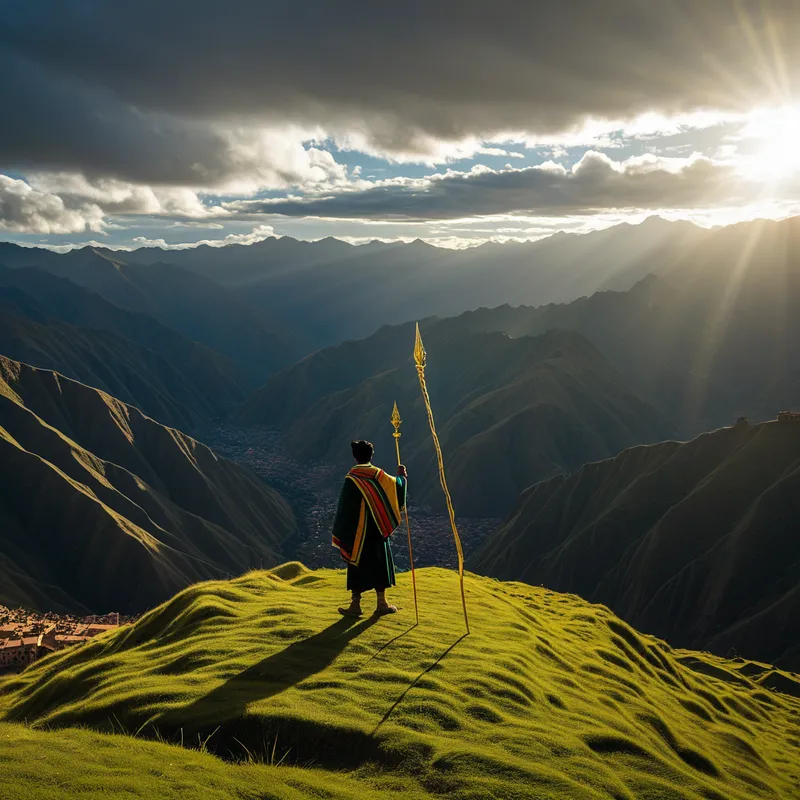
Finally, Ayar Manco—now truly becoming Manco Capac—arrived at a broad, fertile valley cradled by protective hills. He took his golden staff and, with all the hope and weariness of his long pilgrimage, drove it into the earth. It did not strike stone. It sank deep, deeper, and vanished entirely into the soft, receptive soil. The land had accepted the sun’s gift. Here, he founded Cusco. The condor returned, settling on the rock that was his brother. The stone of Uchu watched. The sealed cave held its secret. From one, through sacrifice and transformation, the empire was born.
Cultural Origins & Context
This foundational narrative, known as the Ayar Siblings Myth, was the sacred history of the Inca state. It was not mere folklore but the ideological bedrock of imperial authority, recited by official memorizers, the amautas, and performed during state rituals. The myth served multiple vital functions: it legitimized the divine right of the Sapa Inca (descended from Manco Capac), it explained the sacred geography of the Cusco region (each brother’s fate creating a huaca), and it articulated core Incan values of duality (yanantin—the brother-sister pairs), agricultural settlement, and the transformation of chaotic, ancestral power into ordered, civilized rule.
Passed down orally and later recorded by Spanish chroniclers like Bernabé Cobo and Garcilaso de la Vega, the myth provided a template for understanding history as a purposeful journey from a point of origin (Pacaritambo) to a destined center (Cusco), a process requiring both divine mandate and difficult, often painful, human choices.
Symbolic Architecture
The myth is a profound [blueprint](/symbols/blueprint “Symbol: A blueprint represents the foundational plan or design for something, often symbolizing potential, structure, and the mapping of one’s inner self or future.”/) for the [birth](/symbols/birth “Symbol: Birth symbolizes new beginnings, transformation, and the potential for growth and development.”/) of [consciousness](/symbols/consciousness “Symbol: Consciousness represents the state of awareness and perception, encompassing thoughts, feelings, and experiences.”/) and culture from the primal, unconscious [earth](/symbols/earth “Symbol: The symbol of Earth often represents grounding, stability, and the physical realm, embodying a connection to nature and the innate support it provides.”/). The cave of Pacaritambo is the [womb](/symbols/womb “Symbol: A symbol of origin, potential, and profound transformation, representing the beginning of life’s journey and the unconscious source of creation.”/) of potential, the undifferentiated [source](/symbols/source “Symbol: The origin point of something, often representing beginnings, nourishment, or the fundamental cause behind phenomena.”/). The [emergence](/symbols/emergence “Symbol: A process of coming into being, rising from obscurity, or breaking through a barrier, often representing birth, transformation, or revelation.”/) of the four brothers represents the [differentiation](/symbols/differentiation “Symbol: The process of distinguishing or separating parts of the self, emotions, or identity from a whole, often marking a developmental or psychological milestone.”/) of psychic energies or the splitting of a unified [ancestral spirit](/symbols/ancestral-spirit “Symbol: A spiritual entity representing deceased family members or lineage, often seen as a guide, protector, or source of wisdom connecting the living to their heritage.”/) into distinct archetypal forces.
The journey from the cave is the irreversible movement from unconscious unity into the conscious, historical world—a fall into time, responsibility, and conflict.
Ayar Cachi symbolizes raw, untamed power—the explosive, creative-destructive force that is too dangerous for the nascent ego (the traveling group) to integrate. His entombment is not merely a [betrayal](/symbols/betrayal “Symbol: A profound violation of trust in artistic or musical contexts, often representing broken creative partnerships or artistic integrity compromised.”/) but a necessary repression, burying a part of the primal self to allow the [social order](/symbols/social-order “Symbol: Dreams of social order reflect subconscious processing of hierarchy, belonging, and one’s place within collective structures.”/) to proceed. Ayar Uchu’s [petrification](/symbols/petrification “Symbol: A state of being turned to stone, representing paralysis, permanence, or transformation in the face of overwhelming fear, trauma, or awe.”/) represents sacrifice and memorialization; the fluid, moving self becomes fixed as a sacred [landmark](/symbols/landmark “Symbol: A recognizable feature that marks a significant point in a journey, representing achievement, orientation, or a turning point in life’s path.”/), a point of orientation in the new psychic [landscape](/symbols/landscape “Symbol: Landscapes in dreams are powerful symbols representing the dreamer’s emotional state, personal journey, and the broader context of life situations.”/). Ayar Auca’s transformation into the condor is the [sublimation](/symbols/sublimation “Symbol: Transforming base impulses into creative or socially acceptable outlets, often seen in artistic expression.”/) of earthly joy into spiritual [vision](/symbols/vision “Symbol: Vision reflects perception, insight, and clarity — often signifying the ability to foresee or understand deeper truths.”/), scouting the [path](/symbols/path “Symbol: The ‘path’ symbolizes a journey, choices, and the direction one’s life is taking, often representing individual growth and exploration.”/) ahead from a transcendent [perspective](/symbols/perspective “Symbol: Perspective in dreams reflects one’s viewpoints, attitudes, and how one interprets experiences.”/). Manco Capac, the survivor, integrates these losses. His staff is the [axis](/symbols/axis “Symbol: A central line or principle around which things revolve, representing stability, orientation, and the fundamental structure of reality or consciousness.”/) mundi, the connecting principle between the divine mandate (the sun) and the nourishing earth. Its disappearance signifies a successful [marriage](/symbols/marriage “Symbol: Marriage symbolizes commitment, partnership, and the merging of two identities, often reflecting one’s feelings about relationships and social obligations.”/), the founding of a centered, conscious [identity](/symbols/identity “Symbol: Identity represents the sense of self, encompassing personal beliefs, cultural background, and social roles.”/).
The Dreamer’s Resonance
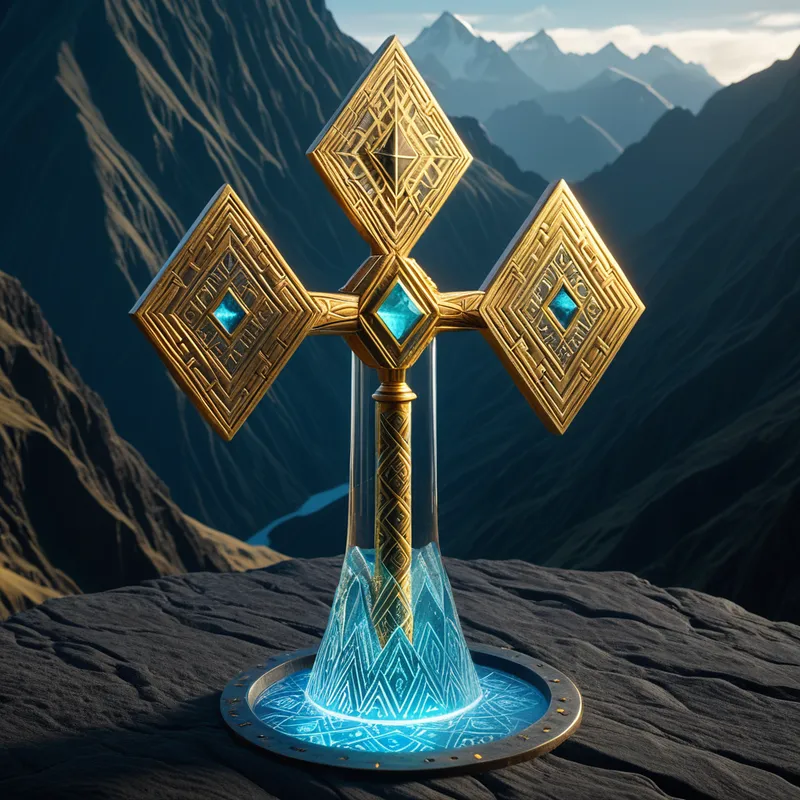
When this myth stirs in the modern dreamer, it often signals a profound life transition—a calling to leave a familiar, if confined, psychic “cave” (a job, identity, or relationship) to seek one’s true “navel of the world.” The dreamer may encounter sibling figures in conflict, or find themselves returning to a sealed cave, grappling with a buried, powerful aspect of themselves (the Ayar Cachi complex).
Somatically, this can feel like a pressure in the chest or a grounding in the feet—the weight of destiny and the need to walk one’s path. Psychologically, it is the process of differentiation: realizing that to become who you are meant to be, parts of your old self must be left behind, memorialized, or transformed. Dreams of turning to stone may reflect a fear of losing flexibility, while dreams of flight may indicate a needed shift to a higher perspective. The core tension is between the collective identity of the “we” that left the cave and the inevitable, lonely responsibility of the “I” who must plant the final staff.
Alchemical Translation
The alchemy here is not of lead to gold, but of family to founder, of group destiny to individual sovereignty. It models the individuation journey with stark, Andean clarity. The initial state is the prima materia: the unified sibling group in the cave, rich with potential but unmanifest.
The first operation is separatio, brutally illustrated by the betrayal of Ayar Cachi. The conscious ego (the traveling brothers) must distinguish itself from, and often suppress, the shadowy, overwhelming power of the unconscious instincts to function in the world. The second operation is immobilis (fixation), seen in Ayar Uchu. Aspects of the personality are sacrificed and fixed as internal values or principles—they become the unmovable, sacred points of our moral landscape. The third is sublimatio: the rising of spirit, as with Ayar Auca, where base emotions are transmuted into vision and guidance.
The final, integrative stage is conjunctio: the marriage of the conscious will (Manco Capac) with the soul of the world (the receptive earth). The staff’s vanishing act is the ultimate symbol of this union—the tool of seeking becomes one with the found home.
For the modern individual, the myth asks: What golden staff have you been given? What cave have you left? And what brothers—what parts of your own psyche—must you respectfully, mournfully, leave entombed, turned to monument, or set free to the skies, so that you can finally plant your life where it belongs?
Associated Symbols
Explore related symbols from the CaleaDream lexicon:
- Cave — The womb of the world and the unconscious, the place of origin from which all potential and all destiny emerges. To leave it is the first, necessary act of consciousness.
- Mountain — The sacred landscape of trial and revelation, the testing ground where transformation (to stone, to condor) occurs and from which the promised land is first glimpsed.
- Sun — The divine father, Inti, whose gift of the golden staff provides the mandate and the measuring tool for the entire journey of foundation and civilization.
- Brother — The archetype of the close rival, the other part of the self that must be differentiated from, contended with, and ultimately sacrificed for a singular destiny to be fulfilled.
- Stone — The end of fluid journeying; the state of becoming a fixed, sacred point of memory, law, or identity, as with the petrified Ayar Uchu.
- Bird — The spirit of transcendence and elevated perspective, the ability to rise above the earthly path and scout the future, as embodied by Ayar Auca the condor.
- Journey — The fundamental narrative of life as a purposeful pilgrimage from an origin point to a destined center, fraught with necessary losses and revelations.
- Sacrifice — The voluntary or forced surrender of a part of the self or the group for the greater destiny to manifest, the core price of creation.
- Gold — The divine, solar metal of kingship and connection; the staff is not for wealth but for testing the world, a tool of sacred alignment.
- Earth — The receptive, feminine principle that ultimately accepts and integrates the divine mandate, swallowing the staff to birth a civilization.
- Destiny — The inescapable pull toward a specific place and purpose, a path that demands the sequential transformation or removal of all competing possibilities.
- Shadow — The powerful, repressed aspect of the self (Ayar Cachi) that is sealed away in the dark cave of the unconscious, necessary for orderly progress but never truly gone.