The Audience's Applause Myth Meaning & Symbolism
A myth of a divine actor who performs for a silent, empty house, learning that the only true applause is the echo of an authentic soul.
The Tale of The Audience’s Applause
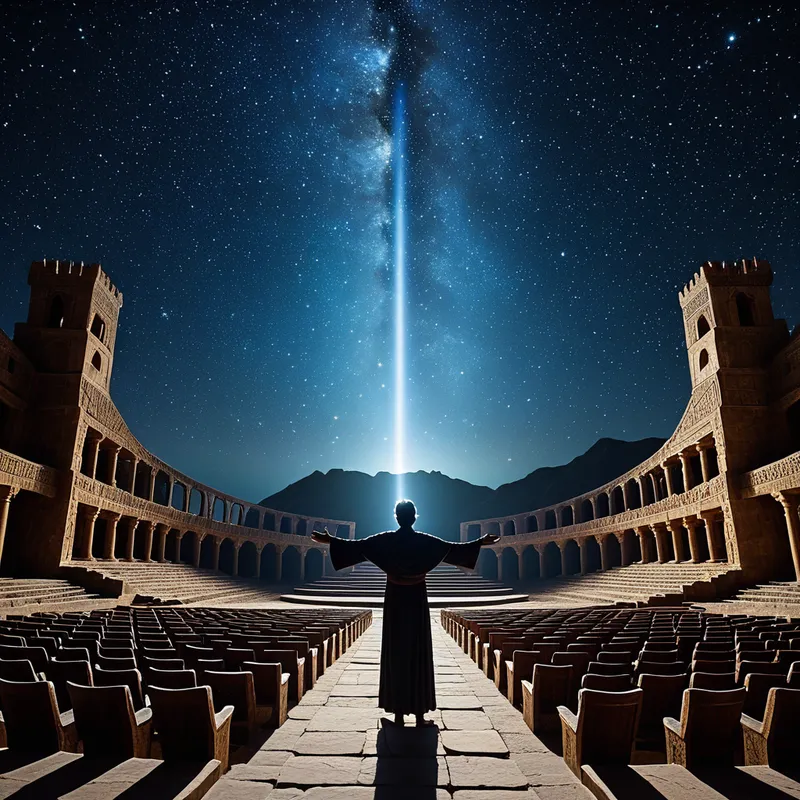
Listen. Before the first curtain rose, before the first footlight flickered, there was only the Great Stage. It was not built of wood or stone, but of potential itself, a vast plane of silence beneath a cosmos of watching stars. And upon it walked Thespis Prime, the First Actor.
Thespis Prime was a being of sublime artifice. They could weave laughter from the sigh of dawn and sculpt tragedy from the shadow of a falling leaf. Their voice held every accent of the human heart, and their form could shift to embody king, beggar, lover, and fool. Yet, for all this divine craft, a hollow wind whistled through their essence. Their magnificent performances echoed into the void, unanswered.
Driven by a yearning that was the first true ache of creation, Thespis Prime called into being the Auditorium. From the dust of longing, they sculpted row upon row of seats, vast and tiered, a silent amphitheater carved from expectation. “Now,” they whispered, their voice trembling with hope, “now I shall be seen.”
And so began the Eternal Performance. Thespis Prime poured their entire being into their art. They performed epics of conquest, intimate whispers of love, cunning comedies of error. They played to the empty seats with a fervor that shook the foundations of the stage. They awaited the rustle of approval, the indrawn breath of shock, the thunder of acclaim. Only silence answered—a deep, profound, and judging silence.
Centuries of performance bled into millennia. Thespis Prime’s craft became flawless, technically perfect, and utterly sterile. The costumes grew more elaborate, the speeches more rhetorically complex, the stage machinery more dazzling. Yet the silence only deepened, becoming a physical weight. In a final, desperate act, Thespis Prime broke the ultimate rule. They stepped to the edge of the stage, peered into the dark well of the front row, and spoke not in character, but from the raw, unscripted core of their lonely being.
“Who is there?” The question was not projected. It was a crack, a vulnerability. “What do you want from me?”
The silence seemed to lean forward. And then, a single, dry leaf, blown from some unseen corner of the cosmos, skittered across the empty stage. In that mundane, un-orchestrated sound, Thespis Prime heard everything. They did not hear an answer, but an echo. The echo of their own question, thrown back not by an audience, but by the architecture of their own creation.
In that moment, the performance ended. Thespis Prime let fall the scepter they held. The majestic robes dissolved into simple light. They stood, utterly exposed, no longer playing a role, but simply being present on the stage. They were not a god performing for an audience, but a consciousness inhabiting a moment.
And then it came. Not from the seats, but from the stage itself, from the very air around them. A sound like a thousand hearts synchronizing. A wave of warmth that was not fire, but recognition. It was the Applause. It did not praise the performance; it affirmed the presence. It was the cosmos itself acknowledging not the mask, but the being who had dared to remove it. Thespis Prime did not bow. They simply breathed in the sound, and for the first time, felt complete.

Cultural Origins & Context
This myth is the foundational narrative of the Theater Tradition culture, a civilization that viewed drama not merely as entertainment, but as the primary technology of the soul. It was recited not at public festivals, but in the secret, sacred space of the Green Room, by the Dramaturges to initiates on the eve of their first major performance.
Its function was prophylactic and profound. In a society where social roles were explicitly understood as performances, the myth served as a warning against the psychic peril of externalization—the fatal error of believing one’s essence is defined by the approval of the Gallery. It taught that the desire for applause is natural, but to perform solely for it is to feed one’s soul to a silent, empty maw. The myth was a map, showing that the journey of the artist—and by extension, every individual—must pass through the terrifying desert of perceived failure (the silent Auditorium) to reach the oasis of authentic self-validation (the true Applause).
Symbolic Architecture
The myth constructs a powerful symbolic universe around the psyche’s relationship with the Other.
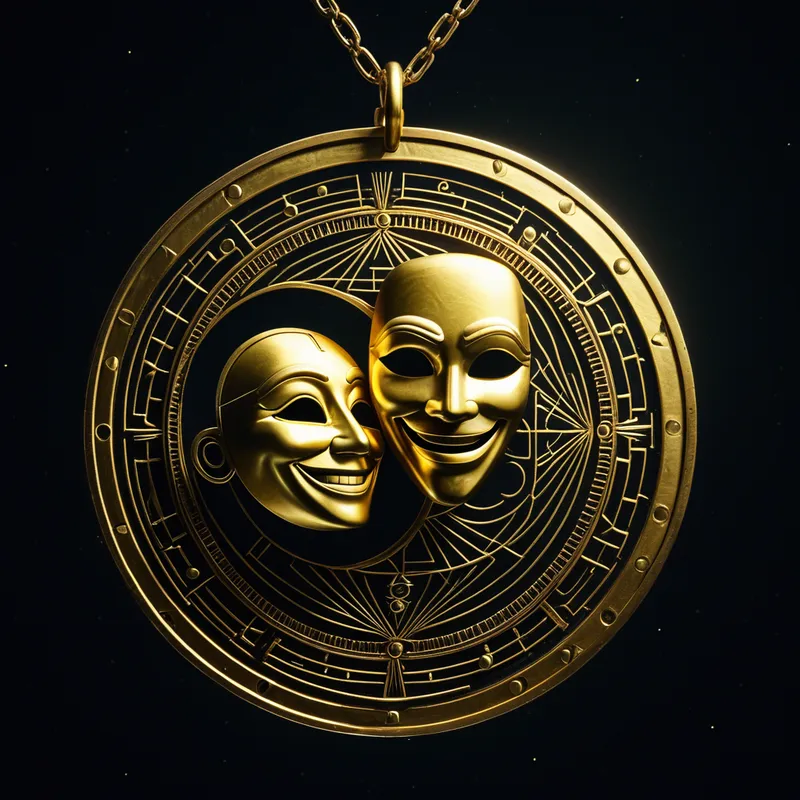
Thespis Prime represents the Persona in its ultimate, divine form. It is our capacity to create a self for the world to see. Initially, this persona is the whole of existence, believing its artistry is its entirety.
The Auditorium symbolizes the internalized Collective Gaze. It is not literally other people, but our psychic projection of them—the seats are always empty because the “audience” out there is a fiction we maintain within. Its silence is the crushing weight of living for an abstract, external standard that can never truly be satisfied.
The Applause is the mythic symbol for Authentic Self-Acceptance. Crucially, it does not come from the audience, but through the act of abandoning performance for that audience. It is described as coming from “the stage itself,” indicating it is a quality of being in right relationship with one’s own ground of existence.
The true applause is not the sound of others validating your mask. It is the resonant echo of your own soul, heard only when the performance stops.
The pivotal moment—the breaking of character and the raw question—is the Cracking of the Persona. This is not a failure of craft, but its transcendence. The skittering leaf represents the first intrusion of the real, the unscripted, the mundane self, which is the catalyst for the entire alchemical process.
The Dreamer’s Resonance
When this myth stirs in the modern unconscious, it often manifests in dreams of profound exposure and evaluation. The dreamer may find themselves on a stage, delivering a vital speech they have not memorized, to an audience of shadowy, disapproving, or utterly indifferent figures. Alternatively, they may perform a task perfectly—solving an equation, playing a concerto—only to be met with silence or scorn.
The somatic experience upon waking is key: a tight chest, a hollow stomach, a flush of shame. This is the body remembering the ancient silence of the Auditorium. Psychologically, these dreams surface during life transitions where the “performance” of a previous identity (the competent professional, the perfect partner, the agreeable child) is no longer sustainable. The psyche is signaling that the cost of maintaining the persona for its external audience has become too great. The dream is not a prophecy of failure, but an invitation to the terrifying, liberating act witnessed by Thespis Prime: to step out of role and ask, from the raw self, “What do you want from me?”—directed inward.
Alchemical Translation
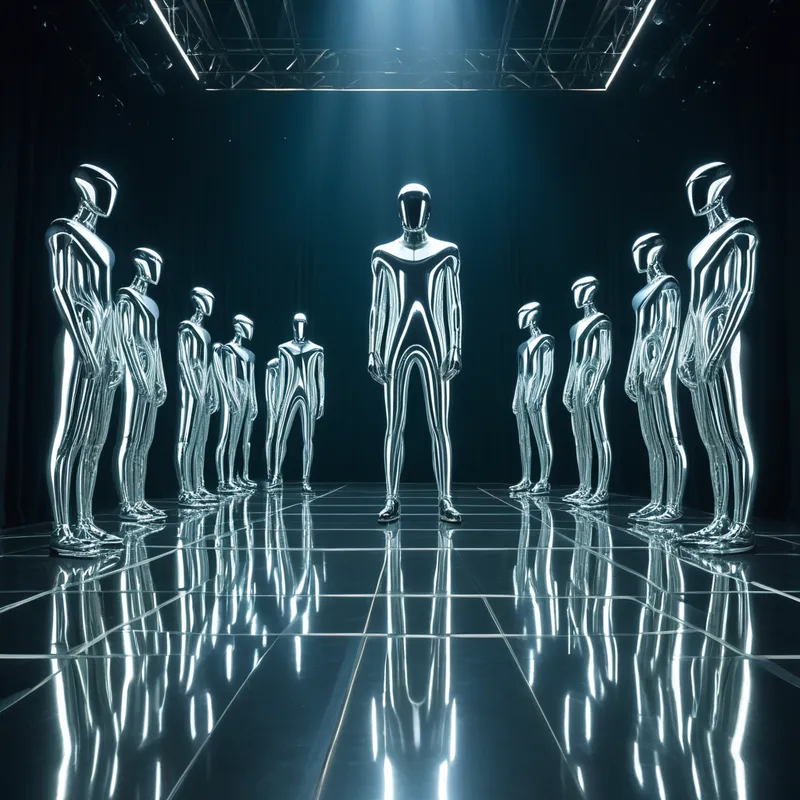
The myth of Thespis Prime is a perfect allegory for the Jungian process of Individuation. The initial state is identification with the persona: “I am what I perform for others.” The Auditorium’s silence represents the inevitable enantiodromia—the swing into the opposite, where the once-prized skill brings only despair and emptiness. This is the necessary descent, the nigredo of the soul.
The breaking of character is the conscious confrontation with the shadow—all those unperformed, “unacceptable” parts of the self that were edited out of the performance. Asking the desperate question is the beginning of a dialogue with the Self, the central archetype of wholeness.
The alchemical gold is not found in perfecting the performance for the empty seats, but in dissolving the performer into the authenticity of the moment.
The final stage is not a return to the beginning, but a transcendent integration. Thespis Prime does not stop acting; they stop acting for the Auditorium. The Applause signifies the birth of a new center of gravity. The individual no longer performs from a place of seeking external validation, but from a place of internal authority and expression. The persona becomes a flexible tool of the authentic self, rather than its master. In this translation, every individual is Thespis Prime on the stage of their own life, and the myth teaches that our ultimate triumph is not a standing ovation from the world, but the profound, resonant silence of self-possession that makes all other applause superfluous.
Associated Symbols
Explore related symbols from the CaleaDream lexicon: