
Te Fiti Myth Meaning & Symbolism
A goddess of creation, her stolen heart plunges the world into decay, until a hero's journey restores her and the balance of life.
The Tale of Te Fiti
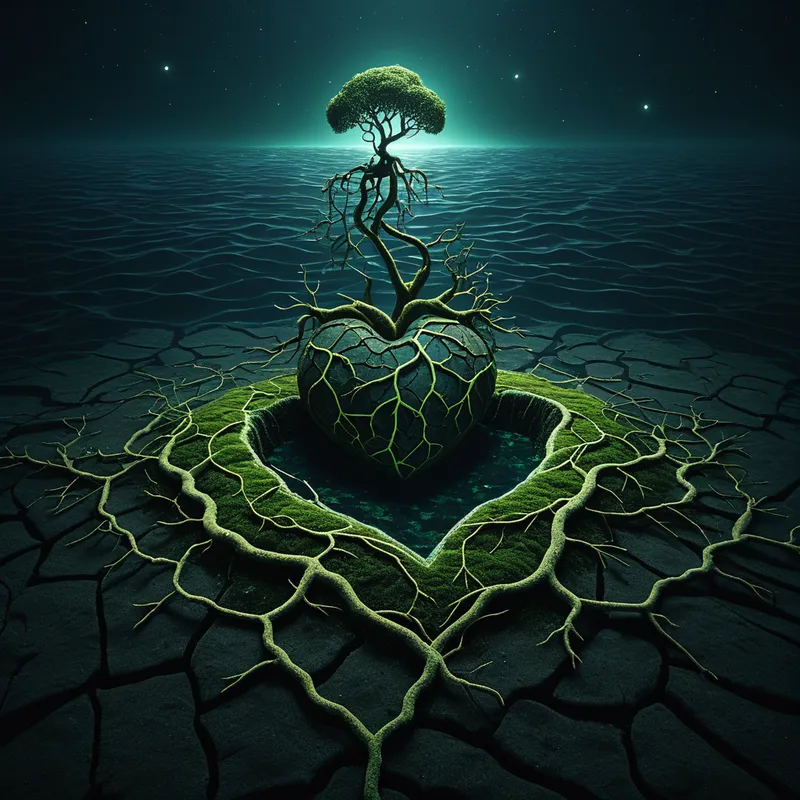
In the beginning, before the great voyagers filled the sea with their sails, there was only the deep ocean and the wide sky. And from their meeting, from the foam and the mist, arose Te Fiti. She was not a being separate from the land, but the land itself. Her skin was the rich, dark soil; her hair, the cascading waterfalls and swaying palms; her heart, a pulsing, green stone of pure creation. With every beat, life blossomed. Islands rose from her slumbering form, forests clothed her slopes, and all creatures knew her as mother.
For an age, the world was in perfect pono. But from the far edges of the map, a whisper of lack grew into a shadow. Maui, the great trickster-hero, whose deeds were already legend, listened to this shadow. He was a creator, yet he felt incomplete, a foundling longing for a love he could not name. A voice, perhaps his own ambition, whispered that the answer lay in the heart of creation itself. To give humanity the ultimate gift, he would need the ultimate power.
He journeyed to the sacred island, to the place where Te Fiti slept in peaceful creation. He saw her heart-stone, glowing with a light that sang of deep, dreaming life. In that moment, the hero was eclipsed by the thief. He did not ask. He did not honor. With a cunning shape-shifted form, he stole the heart from the goddess’s very core.
The world screamed.
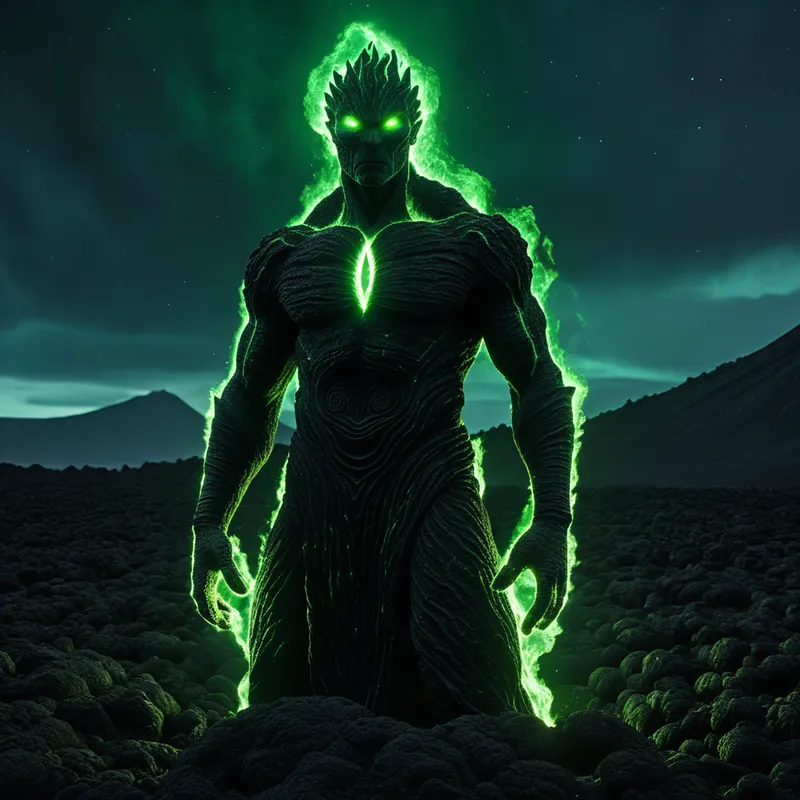
Te Fiti did not wake with a roar, but with a terrible, silent crumbling. The green light vanished from her form. Where there was lush forest, gray stone remained. Where there was fertile valley, only cracked earth. Her body became a barren mountain, her life-force extinguished. And Maui? The heart-stone, meant for creation, burned the thief. As he fled, a wrathful demon of earth and fire, Te Ka, erupted from the depths to claim what was lost. The heart was lost to the sea, and the demon’s rage made the ocean tremble.
Generations passed. The islands grew sickly. The fish grew scarce. The people remembered the time of green life only in stories, told in hushed tones around fading fires. The balance was broken.
Until a chosen one, not a demigod but a mortal girl named Moana, was called by the ocean itself. Guided by the deep and her own unwavering will, she found the lost heart-stone. She sought out the fallen Maui, his magic fishhook broken, his confidence as shattered as the world. Their journey was a gauntlet: battling the coconut-armored Kakamora, facing the realm of monsters, and, finally, confronting the fiery barrier of Te Ka, who struck at them with volcanic fury.
In the final, desperate moment, understanding dawned. Moana saw not a mindless demon, but the wounded goddess beneath the rage. The defense of the stolen self. She commanded the sea to part and walked, not with a weapon, but with the glowing heart held before her. She approached the terrifying visage of Te Ka and sang a song of remembering. She placed the heart not against the demon’s fire, but against its stony forehead.
The fire receded. The hard, black stone softened into rich earth. The violent spikes melted into gentle slopes. Where Te Ka raged, Te Fiti awoke. She looked upon the one who restored her, and with a touch as gentle as sunrise, healed the wounded world. Islands re-blossomed. The sea teemed. Pono was restored, not by a battle won, but by a heart returned.
Cultural Origins & Context
The myth of Te Fiti, as presented in modern narrative, is a beautiful tapestry woven from the deep, shared threads of Polynesian cosmogony. While Te Fiti herself is a creative interpretation for storytelling, her essence is profoundly authentic, drawing directly from the core Polynesian understanding of the world. In traditions across the Pacific, the concept of a foundational, feminine earth mother or creation force is ubiquitous—seen in Papatūānuku of the Māori, or the generative force of mana that imbues all living things.
This story functions as a pūrākau, a teaching narrative. It would have been passed down by navigators, priests (tohunga), and elders, not merely as entertainment but as a vital map of ecological and spiritual principles. The myth encodes the sacred relationship between humanity and the natural world, the catastrophic consequences of taking without reciprocity (tapu violation), and the arduous path to restoration (muru). It is a narrative vessel for the central tenet of pono—right relationship, balance, and responsibility. The hero’s journey across the sea mirrors the real, historical voyages of Polynesian wayfinders, for whom navigation was a spiritual practice of reading the signs of nature, a constant dialogue with the elements.
Symbolic Architecture
At its core, the myth is a profound allegory of the Self, its violation, and its necessary restoration. Te Fiti represents the primordial, integrated state of being—the Self in its wholeness, where consciousness and the unconscious, spirit and matter, exist in harmonious creation.
The theft of the heart is the primal wound of separation, the moment the ego—here, Maui—believes it must steal its own essence from the source to become complete.
Maui symbolizes the gifted but fractured ego. His motivations are not purely evil; they stem from a deficit of self-worth (“I am not enough”) and a misguided attempt at heroic inflation. His theft is the archetypal act of seeking power over life rather than wisdom from it. The resulting catastrophe—Te Fiti’s transformation into Te Ka—is not the birth of a new monster, but the revelation of the Self in its wounded, defensive, and enraged aspect. Te Ka is the Shadow of the Life-Giver, the creative force turned destructive when its core integrity is violated.
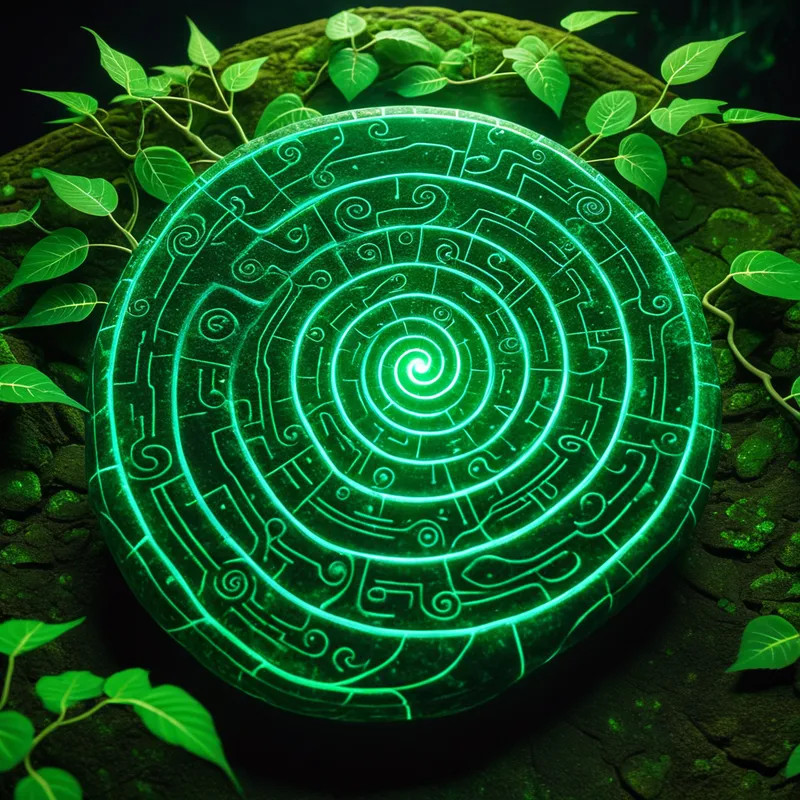
The heart-stone, the koru spiral at its center, is the symbol of the true center, the axis mundi of the psyche. It is not a tool to be wielded, but the core of identity to be recognized and returned to. Moana represents the conscious ego that is called to a purpose greater than itself. She is the vessel of the ocean’s will—the deep, guiding unconscious. Her journey is one of re-ligio, a re-binding. She does not defeat Te Ka; she recognizes her. This is the pivotal psychological move: seeing the destructive rage not as an external enemy to slay, but as the rightful fury of a betrayed and buried wholeness.
The Dreamer’s Resonance
When this mythic pattern stirs in the modern dreamer, it signals a profound process of reclamation. To dream of a lost, glowing green stone in a dark sea is to feel the call of one’s own displaced center. The somatic experience is often one of deep emptiness or a hollow ache in the chest—a literal “heart-sink” feeling—coupled with a restless, oceanic longing.
Dreams of a benevolent, sleeping giantess (earth) turning into a volcanic, fiery demon point directly to the psyche’s reaction to prolonged self-betrayal. The dreamer may be living a life that plunders their own vitality for external validation (like Maui’s quest for glory), and the unconscious is now presenting the bill in the form of burning anger, depression (the barren landscape), or explosive, seemingly disproportionate reactions to small slights (Te Ka’s rage). The dream is showing the cost of the theft. The journey across a treacherous ocean in the dream is the felt sense of the arduous, disorienting, but necessary path back to oneself, often requiring the help of a seemingly broken or unreliable inner guide (the fallen Maui aspect).
Alchemical Translation
The alchemical process modeled here is the opus contra naturam—the work against the current fallen state—which is, paradoxically, a return to original nature. It is the transmutation of the leaden, hardened state of Te Ka back into the golden, generative state of Te Fiti.
The first stage, nigredo, is the blackening: the theft, the loss, the descent into the barren, volcanic state. This is the necessary crisis, the dark night that makes restoration imperative.
Maui’s initial failure and broken hook represent the shattering of the old, inflated ego’s tools. It is only in this brokenness that a new partnership can form—between the determined, humble consciousness (Moana) and the humbled, skilled aspects of the psyche (Maui). Their journey is the albedo, the whitening or purification, facing the monstrous, trickster defenses of the unconscious (the Kakamora, Tamatoa).
The final confrontation is the rubedo, the reddening or culmination. Here, the critical operation is not combat but recognition. The conscious self must stand before its own furious, wounded Shadow and see the true form within. Placing the heart-stone back is the act of restitutio ad integrum—restoration to integrity. It is the moment one stops fighting their own pain and instead says, “This too belongs. This rage is my own, and it is justified.” This acknowledgment is the healing touch.
The resulting transformation is not merely a return, but a resurrection. The restored Te Fiti is the Self that has integrated the experience of violation and rage. She is wiser, more conscious. For the modern individual, this alchemy translates to the healing of core wounds of unworthiness, the cessation of self-exploitation, and the courageous act of returning one’s own stolen attention, love, and vitality back to the center. One becomes not just a creature of the world, but a conscious, healing island in it, capable of restoring green life to the internal and external landscapes laid waste.
Associated Symbols
Explore related symbols from the CaleaDream lexicon: