The Dream of Restoration: Mending the Architecture of the Self
The Somatic Echo
It begins not as a thought, but as a sensation—a deep, cellular sigh. It is the feeling of a weight you had forgotten you were carrying, suddenly lifting from the marrow of your bones. It is the quiet hum in the chest, a vibration of recognition, as if a fundamental frequency long out of tune has finally been corrected. There is a warmth that spreads from the center, not the heat of fever or passion, but the gentle, pervasive warmth of a stone wall that has absorbed the sun all day and now releases it slowly into the cool evening. This is the body’s knowing, long before the mind can articulate the dream of a mended bridge, a healed wound, a revived garden. It is the somatic echo of a structure remembering its original, intact blueprint.
The Dreamer's Log
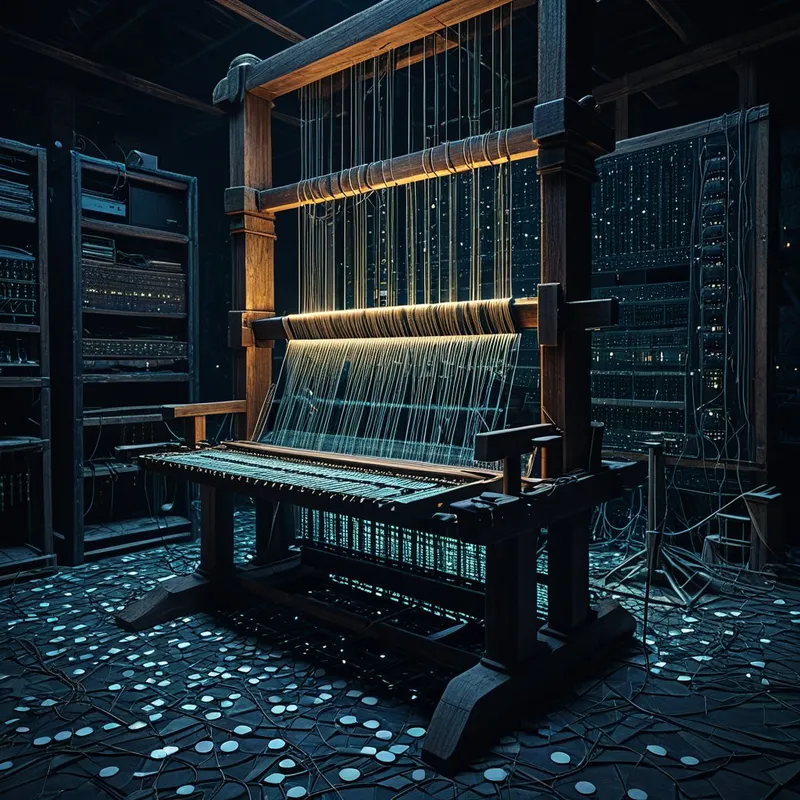
In the dream, I am in an abandoned, cavernous server farm, all cold metal and dead screens. On the floor lies a priceless, ancient vase, shattered into a hundred pieces. Without tools, I begin to weave its fragments into a loom I didn’t know was there, not to recreate the vase, but to make a new, luminous tapestry from its broken edges.
Here, restoration is not a return to a prior state, but an alchemical recombination; the valued object is not glued back together but transmuted into a new, functional wholeness.
The False Lead
Restoration is not mere repair. It is not the psychological equivalent of slapping spackle over a crack and painting it white. That is suppression, a cosmetic cover-up that leaves the foundational fault line untouched. Nor is it nostalgia—a melancholic longing for a “before” that may never have existed in the pristine form memory suggests. To dream of restoration is not to wish for a reversal of time, but for a revolution in structure. It is the difference between patching a leaky roof and discovering that the entire house can be rebuilt from its own ruins, stronger and more beautifully integrated with the land it stands upon.
Psychological Architecture
The deep work of restoration occurs in the shadowed sub-basement of the psyche, where our internal family of selves resides. A part of you—the Orphan, perhaps—holds the memory of the fracture, the loss, the betrayal. Another part—the vigilant Guardian—has been holding the perimeter ever since, ensuring the wound is never touched again. The dream of restoration enters as a third force, the Magician, who does not dismiss the Guardian or invalidate the Orphan’s grief. Instead, it invites them to the same table. The process is one of re-membering: not recalling, but literally putting the members of your inner system back into communication. The grief of the Orphan becomes the clay. The fierce protection of the Guardian becomes the boundary of the kiln. The alchemical heat is the intense, compassionate attention required to hold both at once, allowing them to transmute from isolated, frozen roles into collaborative aspects of a sovereign self. The restored whole is not the innocent that existed before the break, but a conscious, resilient entity that contains the history of its own breaking within its newfound strength.
Mythic Resonance
This process echoes through our oldest stories. Consider the Egyptian myth of Osiris, dismembered and scattered across the land. Isis does not simply find and resuscitate the old body. She gathers the fragments and, through her magic, reconstitutes him into a new form—the Lord of the Underworld, a ruler of a deeper, more profound realm. The restoration here creates a sovereign of the shadows, not a king returned to his sunny throne. Similarly, in the Japanese art of Kintsugi, the broken pottery is mended with lacquer mixed with gold, silver, or platinum. The philosophy is clear: the breakage and repair are part of the object’s history, to be highlighted, not hidden. The vessel becomes more valuable for having been broken. These are not tales of erasure, but of integration; the flaw is the very site of the new strength and beauty.
Symbolic Nodes
- Mending Tools: Needles and thread, glue, welding torches, looms, soldering irons—especially when used on unexpected materials.
- Revived Spaces: Dead gardens blooming, dry fountains flowing, darkened rooms illuminated by a single, persistent light source.
- Reconstituted Objects: Puzzles completing themselves, scattered pages forming a new book, sand coalescing into glass.
- Biological Renewal: Scar tissue transforming into smooth skin, a withered tree sprouting a single green shoot, a silent heart receiving a steady, new rhythm.
Archetypal Resonance
The core energy of Restoration resonates most powerfully with The Magician Archetype. The Magician’s domain is the hidden structure of reality, the fundamental laws that can be understood and aligned with to create transformation. This is not flashy sorcery, but the deep, patient work of recognizing the latent wholeness within apparent fragmentation. The somatic echo of warmth and resonance is the Magician sensing the correct alignment, the point where energy can flow again. The alchemical potential lies in the Magician’s core ability: to hold the vision of the whole while working diligently with the broken parts, transmuting the base material of trauma and loss into the gold of integrated consciousness. It is the archetype of the conscious intermediary who facilitates the soul’s own restorative logic.
The Alchemical Process
The transmutation in Restoration requires the heat of conscious grief and the pressure of radical responsibility. The false lead is to bypass the grief—to try to build the new atop the un-mourned old. The alchemical furnace must first burn away the hope for a simple return. This is the nigredo, the blackening, where one fully feels the despair of the fracture. The pressure comes from the unwavering decision to be the agent of one’s own renewal, even from a place of devastation. This is not about blaming the self for the break, but claiming the authority to mend it. In the albedo, the whitening, the fragmented parts are seen clearly, without judgment, as pure material. The final rubedo, the reddening, is the integration: the liberated energy of the healed wound now fuels a broader, more compassionate sovereignty. You are no longer a victim of the break; you are the architect of the synthesis that followed.
The Integration Protocol
Question 1: In my waking life, what is the "shattered vase" I am secretly tending to? What cherished form broke, and am I trying to simply glue it back together, or can I imagine weaving its pieces into something new?
Question 2: Which member of my internal family system (the wounded part, the protector, the critic) holds the memory of the break most fiercely? What would it need to feel safe enough to participate in a restoration?
Question 3: Where in my body do I feel the resonance of wholeness? If restoration has a frequency, can I locate its quiet hum in my physical being?
Action 1 (Somatic Grounding): For five minutes each day, place a hand over your heart and a hand over your solar plexus. Breathe deeply, not trying to change anything, but simply listening for the subtle, warm hum of intrinsic coherence between these two centers. Imagine it as a tuning fork’s vibration.
Action 2 (Creative Re-weaving): Gather physical fragments—old pottery, broken jewelry, dried leaves, discarded paper. Without a plan, use thread, wire, or glue to combine them into a single, new small sculpture or talisman. The goal is not beauty, but the physical act of creating cohesion from fragmentation.
Action 3 (Ritual of Acknowledgment): Light a candle in a dark room. Speak aloud, to the empty air, a concise history of a specific fracture in your life. Then, blow out the candle. Sit in the darkness for a full minute. Relight the candle from a new source (a different match, a lighter) and state one sentence that begins: "From these fragments, I now choose to weave..."
Final Validation
The path of restoration is often walked in the twilight, where the shape of what was lost is still visible, but the form of what is to come has not yet fully dawned. This in-between space is fraught with the ghosts of the old blueprint and the tremors of the new foundation being laid. It is difficult, sacred work. Yet, to dream of restoration is to receive a profound vote of confidence from the deepest strata of your being. It is evidence that your psyche, in its infinite intelligence, has not abandoned the site of the ruin. It is patiently, relentlessly, calling you not to be its custodian, but its co-architect. The power to mend the world always begins with the courage to feel the break within, and then to pick up, not the glue of forgetfulness, but the golden thread of conscious re-weaving.