Tasogare Myth Meaning & Symbolism
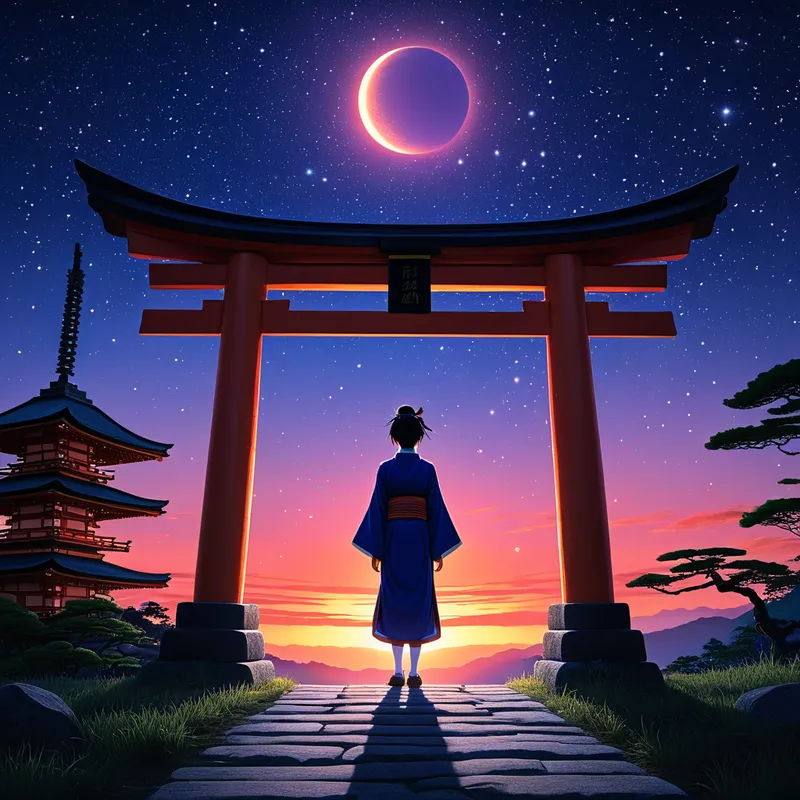
The myth of Tasogare personifies the twilight hour as a sacred, transformative threshold where worlds blur and profound psychic alchemy becomes possible.
The Tale of Tasogare
Listen, and let your breath still. [The world](/myths/the-world “Myth from Tarot culture.”/) holds its breath, too, in that sacred pause between the hammer-stroke of day and the velvet cloak of night. This is not merely an hour; it is a presence. This is Tasogare.
In the age when gods walked just beyond the sight of men, when every rock and river had a name and a spirit, there existed a being born not of parentage, but of transition itself. As Amaterasu’s radiant chariot began its descent behind the western peaks, and before [Tsukuyomi](/myths/tsukuyomi “Myth from Japanese culture.”/)’s cool [pearl](/myths/pearl “Myth from Chinese culture.”/) ascended to claim [the sky](/myths/the-sky “Myth from Persian culture.”/), the world would falter. Light bled into shadow, color softened into memory, and the firm boundaries of the world—solid earth and empty air, mortal realm and Takamagahara—would grow thin, like rice paper held before a flame.
Into this luminous ambiguity, Tasogare would stir. Not with a footfall, but with a sigh that was the rustle of leaves settling for the night. Not with a form, but with the very quality of the air—cooling, yet holding the day’s last warmth. The deity was [the threshold](/myths/the-threshold “Myth from Folklore culture.”/) itself, the living door. Farmers in the fields would straighten their backs, their tools falling silent. Children would be called inside, their games pausing without command. A profound, collective hush would fall over the land, not of fear, but of deep recognition. This was a time for neither action nor rest, but for witnessing.
It is said that in this liminal breath, one could sometimes see—or feel—the shimmering procession of kami passing between their hidden realms and ours. That a whispered prayer at Tasogare carried further, tangled in the descending light. That secrets spoken then were heard by the very fabric of the world. The myth tells of no great battle, no quest, no theft of fire. Its drama is one of exquisite tension and patient revelation. Tasogare was the moment the universe turned its head, the hinge upon which reality swung. And then, as the first star pricked the deepening blue, the presence would gently dissolve, its duty complete, leaving behind a world transformed by night, and the souls of those who witnessed it, subtly altered.
Cultural Origins & Context
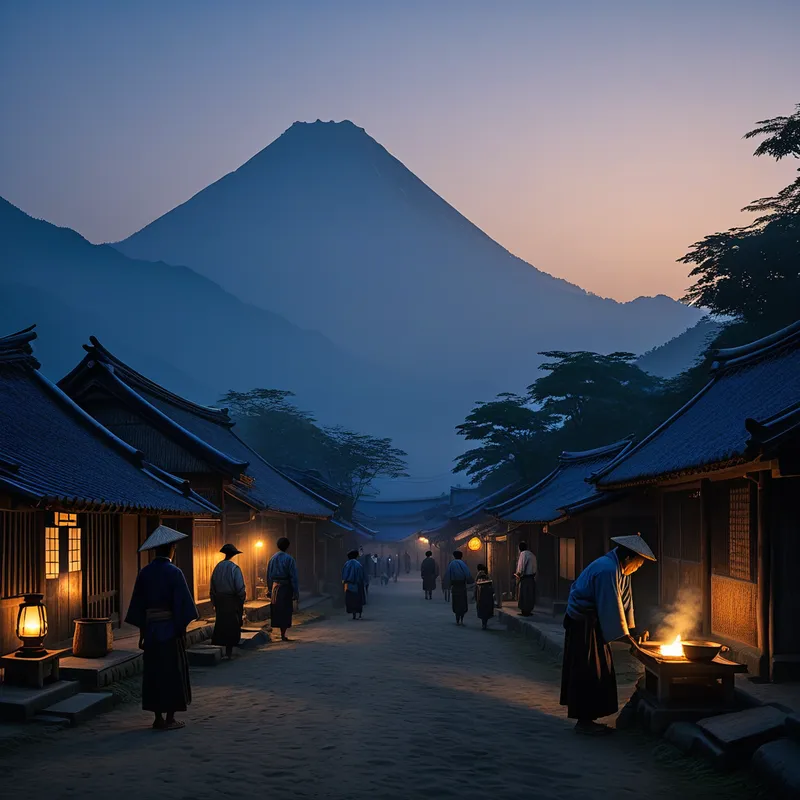
The concept of Tasogare is deeply woven into the animistic and Shinto heart of Japanese culture, where the sacred (kami) is immanent in nature and its phenomena. Unlike the grand, narrative-driven Kojiki or Nihon Shoki, Tasogare’s myth is less a formal chronicle and more a pervasive folk understanding—a “[yūgen](/myths/ygen “Myth from Japanese culture.”/)” given temporal form. It was passed down not solely by priests, but by grandparents, poets, and farmers, embedded in the daily rhythm of life.
Its societal function was multifaceted. Practically, it marked a time of transition—ceasing labor, securing the home, a natural curfew. Spiritually, it was a time of heightened awareness and potential danger, a period when [the veil between worlds](/myths/the-veil-between-worlds “Myth from Celtic culture.”/) was thin, necessitating both caution and reverence. This birthed traditions like avoiding mountains or forests at dusk, lest one encounter spirits, or the practice of evening purification. Culturally, it became a supreme aesthetic and poetic ideal, captured endlessly in waka and later [haiku](/myths/haiku “Myth from Japanese culture.”/), where twilight (tasogare) is synonymous with poignant beauty, melancholy, and ephemeral insight. It served as a daily reminder of the universe’s fluid, sentient nature, grounding the community in a shared, sacred rhythm.
Symbolic Architecture
Psychologically, Tasogare is the archetypal [symbol](/symbols/symbol “Symbol: A symbol can represent an idea, concept, or belief, serving as a powerful tool for communication and understanding.”/) of the [limen](/myths/limen “Myth from Roman culture.”/)—the threshold. It represents every critical [juncture](/symbols/juncture “Symbol: A critical point of decision, transition, or convergence where paths, choices, or timelines meet, demanding action or reflection.”/) where one state of being must end for another to begin, but where a transformative, ambiguous [space](/symbols/space “Symbol: Dreaming of ‘Space’ often symbolizes the vastness of potential, personal freedom, or feelings of isolation and exploration in one’s life.”/) exists in between.
Tasogare is the psyche’s sacred hesitation, the necessary pause where the ego’s certainty dissolves so that a deeper, more holistic knowing can emerge.
The deity embodies the reconciliation of opposites: sun and [moon](/symbols/moon “Symbol: The Moon symbolizes intuition, emotional depth, and the cyclical nature of life, often reflecting the inner self and subconscious desires.”/), day and [night](/symbols/night “Symbol: Night often symbolizes the unconscious, mystery, and the unknown, representing the realm of dreams and intuition.”/), conscious and unconscious, known and unknown. It is not the conflict of these pairs, but the alchemical [vessel](/symbols/vessel “Symbol: A container or structure that holds, transports, or protects something essential, representing the self, emotions, or life journey.”/) that contains their meeting. This makes Tasogare a supreme symbol of the transcendent function. The “hush” that falls is the quieting of the conscious mind’s chatter, allowing the whispers of the unconscious to be heard. The thinning of boundaries mirrors the [dissolution](/symbols/dissolution “Symbol: The process of breaking down, dispersing, or losing form, often representing transformation, release, or the end of a state of being.”/) of the [persona](/symbols/persona “Symbol: The social mask or outward identity one presents to the world, often concealing the true self.”/)’s rigid walls, permitting contact with inner figures—the spirits and archetypes of our personal Takamagahara. Tasogare is thus the time of potential [insight](/symbols/insight “Symbol: A sudden, deep understanding of a complex situation or truth, often arriving unexpectedly and illuminating hidden connections.”/), where what was hidden may briefly be glimpsed, not through forceful seeking, but through receptive witnessing.
The Dreamer’s Resonance
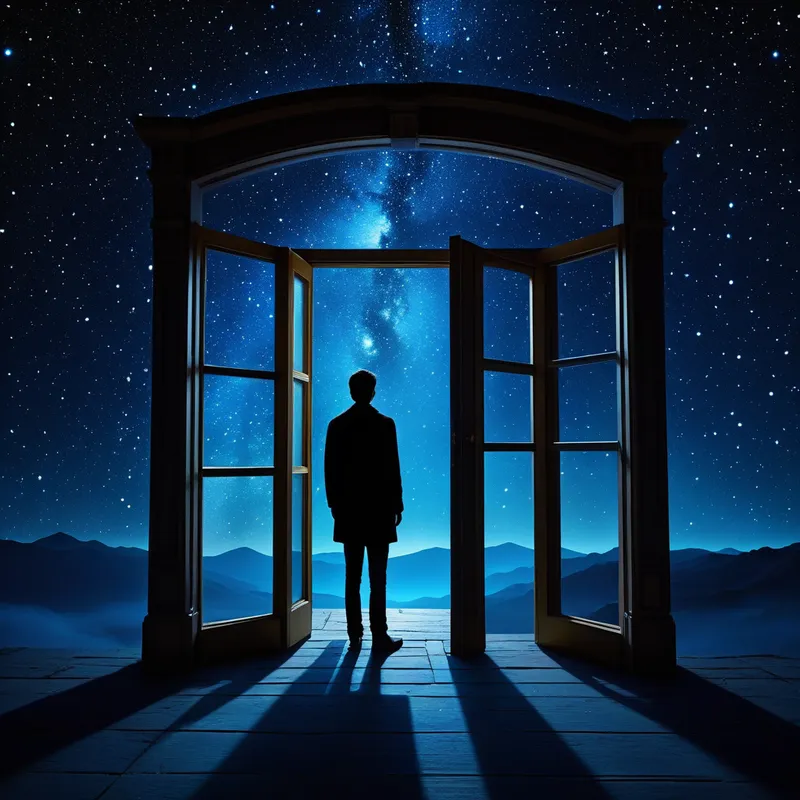
When the pattern of Tasogare manifests in modern dreams, it signals the dreamer is in a profound state of psychic transition. The dream imagery is often one of thresholds: standing in doorways, at crossroads, on bridges, or on shorelines between [water](/myths/water “Myth from Chinese culture.”/) and land. Time in the dream feels suspended; it is perpetually dusk. There may be a palpable atmosphere of awe, quiet anxiety, or serene expectancy.
Somatically, this can correlate to feelings of being “in between”—perhaps between jobs, relationships, life stages, or states of health. Psychologically, it indicates [the ego](/myths/the-ego “Myth from Jungian culture.”/) structure is loosening to accommodate new material from the unconscious. The dreamer is not actively fighting a battle (the hero’s task) but is being asked to hold the space for a transformation to occur. There may be shadowy figures or luminous presences glimpsed at the edges of the dream, representing disowned parts of [the self](/myths/the-self “Myth from Jungian culture.”/) or new psychic potentials waiting at the threshold of consciousness. The dream’s imperative is not to act, but to attend—to cultivate the receptive, witnessing consciousness that Tasogare personifies.
Alchemical Translation
For the modern individual pursuing individuation, the myth of Tasogare models a crucial, often overlooked phase of psychic transmutation: the liminal incubation. Our culture glorifies the heroic quest and the decisive breakthrough, but Tasogare teaches the alchemy of the threshold itself.
The process begins with the recognition of an ending—the “sunset” of an old attitude, identity, or complex. The alchemical work is to consciously enter and dignify the twilight that follows. This means tolerating ambiguity, resisting the impulse to prematurely rush into the “night” of a new, but perhaps untested, certainty. One must learn to be the living threshold, to hold the tension of opposites without collapsing into one pole or the other.
This conscious dwelling in the in-between is the forge of the magician archetype, where raw experience is transmuted into meaning, and the lead of confusion becomes the gold of insight.
Practically, this translates to practices of receptive mindfulness in times of life transition, active imagination dialogues at the edges of awareness, and journaling from the “threshold” perspective. It is about asking, “What is being revealed in this ambiguity? What spirits (inner voices) are moving at the edges of my perception?” By honoring this Tasogare state, we allow the transcendent function to operate. The new consciousness—the “night” with its own stars and moon—does not come by force, but emerges organically from the fully experienced twilight, leaving the Self subtly and irrevocably transformed, having integrated a measure of the sacred mystery into the fabric of daily life.
Associated Symbols
Explore related symbols from the CaleaDream lexicon: