Tabula Rasa Myth Meaning & Symbolism
The myth of the cosmic blank slate, a primordial void that births consciousness through a sacred act of self-inscription, modeling the soul's journey.
The Tale of Tabula Rasa
Before the First Flame, before the Whisper of the First Word, there was only the Tabula Rasa. Not a darkness, for darkness implies a thing that is seen, but a vast and silent whiteness—a canvas stretched across the womb of eternity, untouched, unblemished, waiting. It was the perfect potential, the breath held before the song, the thought before the word.
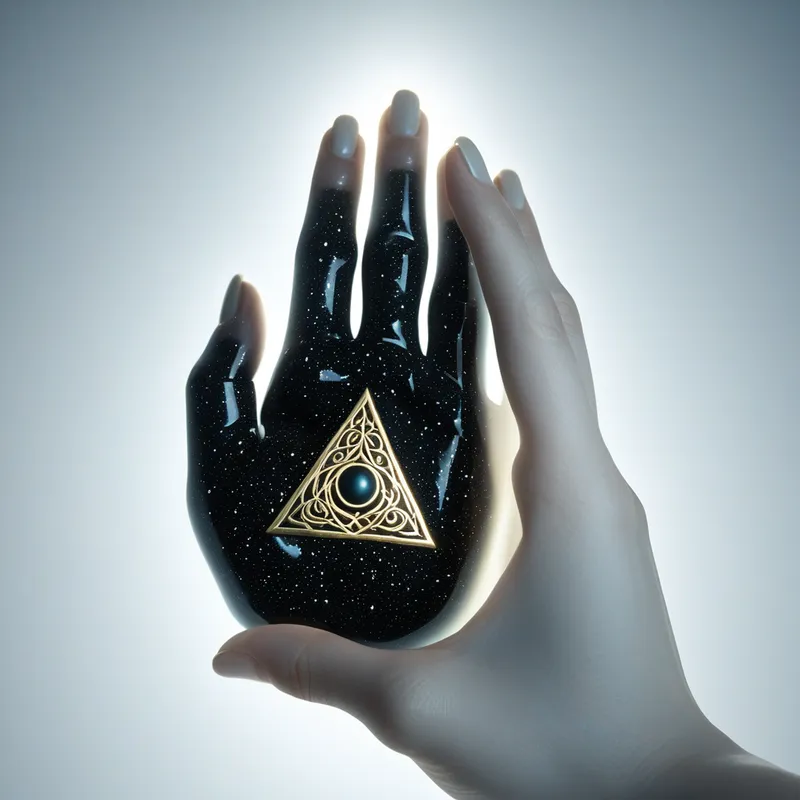
And in that perfect stillness, a presence stirred. Not a god of thunder or a goddess of earth, but the Prima Intentio, the First Intent. It was not a being with form, but a yearning so profound it became a force—the desire for definition, for story, for a mark to break the seamless horizon of the possible. From this yearning, a hand coalesced. It was formed of polished obsidian, dark as the space between stars, and cool to the touch of the void.
The hand reached into the blinding field of the Tabula Rasa. For an acon, it simply hovered, a single note of contrast against the infinite chorus of white. The tension was the universe. Then, with a slowness that held the weight of all time to come, its index finger extended.
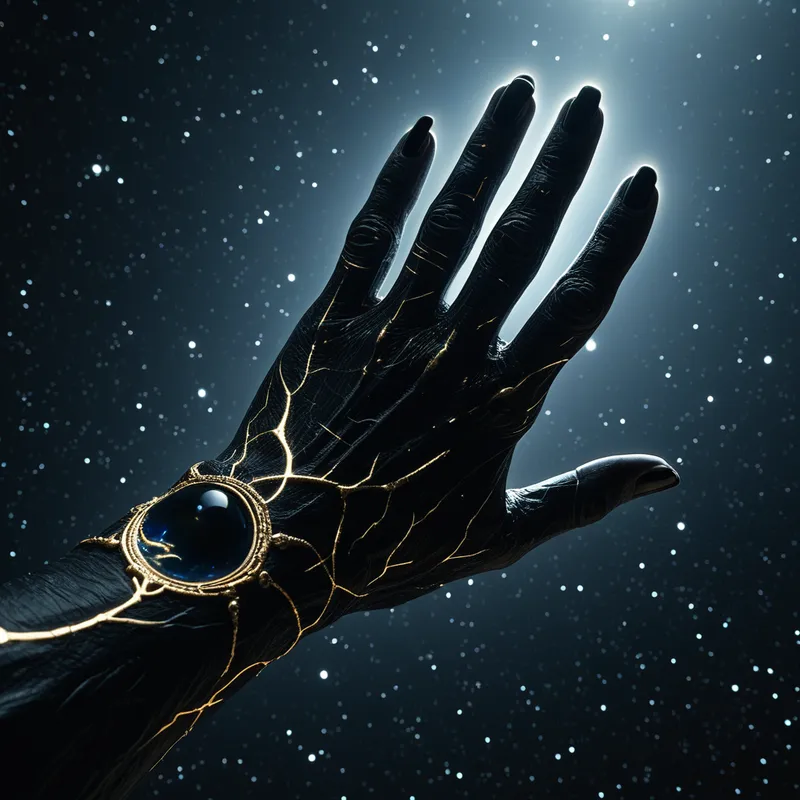
Where it touched the void, a soundless rupture occurred. Not a crack, but a birth. A single line of liquid, living gold bled from the tip. It was the First Stroke. It was pain and ecstasy, limitation and liberation, all at once. The line curved, spiraled, branched. It was not writing a command, but asking a question. It was not drawing a map, but feeling a path.
The white resisted, for its nature was to remain unmarked, pure potential forever. The gold insisted, for its nature was to become, to manifest, to mean. This was the sacred conflict: the agony of creation against the peace of non-being. The golden sigil grew—a labyrinth, a constellation, a language of one. It was the first memory, the first law, the first dream, etched directly onto the soul of the possible.
As the final curve of the sigil met its origin, completing the circuit, a great sigh echoed through the nascent cosmos. The Tabula Rasa was no longer blank. It was inscribed. And in that act of inscription, the observer and the observed, the writer and the page, the Prima Intentio and the Tabula Rasa, recognized each other. The myth ends not with a bang, but with a knowing gaze: the cosmos had begun to read its own first word.
Cultural Origins & Context
The myth of Tabula Rasa finds its roots not in popular folklore, but in the secretive scriptoria and meditation chambers of the Alchemical tradition. It was an "initiate's myth," passed orally from master to apprentice during the Nigredo phase—the initial descent into the unconscious, or "blackening." Its tellers were not bards for the masses, but guides for those undertaking the Magnum Opus.
Societally, its function was paradoxical. It was a story of cosmic creation used to model the process of utterly deconstructing the self. Before the alchemist could hope to transmute base metal into gold, they first had to reduce their own psyche to its primordial, undefined state—to achieve a personal Tabula Rasa. The myth thus served as both map and reassurance: the terrifying blankness they sought was not annihilation, but the very ground of being from which the Prima Intentio of their own truest self could emerge and inscribe a new destiny.
Symbolic Architecture
At its heart, the myth is a profound metaphor for the birth of consciousness itself. The Tabula Rasa represents the undifferentiated psyche, the pure potential of the infant, or the state of deep meditation where identity dissolves. It is not emptiness, but pregnant fullness without form.
The blank slate is not a void of nothing, but a plenum of everything—the unspoken alphabet of the soul.
The Prima Intentio is the archetypal drive toward individuation—the innate, often unconscious impulse to become a distinct, conscious entity. The obsidian hand signifies that this creative force emerges from the depths of the unconscious (obsidian), making the process one of self-discovery from within, not imposition from without.
The golden sigil is the first complex of the ego, the initial "I am." Its creation is portrayed as a sacred, painful, and beautiful struggle because the formation of a conscious self is a cosmic event for the individual. It is the first separation, the first boundary, and the source of all future meaning.
The Dreamer's Resonance
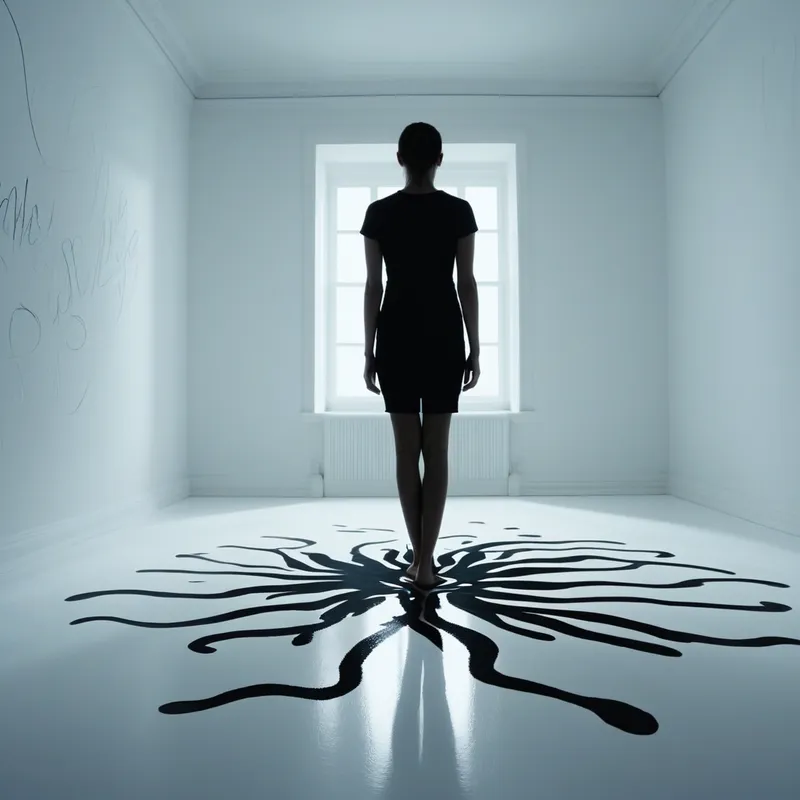
When this myth stirs in the modern dreamscape, it often manifests in periods of profound transition or identity crisis. The dreamer may find themselves in endless, featureless spaces—white rooms, empty deserts, fog-bound plains. These are somatic experiences of the personal Tabula Rasa, the psyche having dissolved old structures and not yet built new ones.
Dreams of trying to write on a surface that won't hold ink, or of a pen that writes in disappearing letters, mirror the conflict between the Prima Intentio (the desire to define oneself anew) and the resistance of the old, dissolving self. A dream of a single, mysterious symbol appearing on a wall or on one's own skin is a direct manifestation of the golden sigil—the unconscious presenting the nascent form of a new self-concept or life direction. The psychological process is one of active deintegration followed by re-creation, often accompanied by feelings of both profound anxiety and exhilarating freedom.
Alchemical Translation
For the modern individual, the myth of Tabula Rasa models the most courageous phase of individuation: the voluntary dissolution of the outworn personality. Our culturally inscribed identities—the roles, traumas, and expectations that form our "golden sigil"—can become prisons. The alchemical work is to have the courage to return, consciously, to the blank slate.
To become who you are, you must first cease to be who you are not. This is the sacred violence of the eraser that precedes the pen.
This is not annihilation, but a return to potential. The "obsidian hand" in our own lives is the deep, often silent call from the Self, the totality of the psyche, urging us to shed a life that no longer fits. The subsequent "inscription" is not about crafting a perfect, static identity, but about engaging in the ongoing, conscious act of self-creation. It asks: If you are not your job, your past, your relationships, or your pain, then what is the essential mark you choose to make upon the canvas of your existence? The myth teaches that we are both the pristine page and the hand that writes, eternally engaged in the dynamic, creative tension of becoming.
Associated Symbols
Explore related symbols from the CaleaDream lexicon: