Tā Moko Myth Meaning & Symbolism
The myth of how the sacred art of Tā Moko descended from the gods, etching not just skin but the soul, transforming the human form into a living ancestral record.
The Tale of Tā Moko
Listen, and hear the story that is not written on paper, but carved into the very breath of the people. In the time before memory solidified, when the world was raw and the gods walked just behind the veil, there was a great longing. The people of Aotearoa were strong, their histories vast as the ocean, their lineages deep as the roots of the kauri. Yet they felt a silent terror—that these stories, these sacred connections to the land and to each other, would fade like mist on a morning sea. They were bodies of flesh, destined to return to Papatūānuku, but how would their essence remain?
Their prayers rose like smoke, a lament carried on the wind to the realm of Ranginui. And in the dark, star-strewn belly of the sky, a god heard. He was Rūaumoko, the unborn child, the restless shaper stirring within the Earth Mother. But another answered the call—Tāne, the separator of earth and sky, the bringer of light and knowledge.
Tāne descended, not with thunder, but with a whisper of fern fronds. In his hand, he did not carry a weapon, but a kit. Within it were tools of bone and stone, and pigments made from the ashes of sacred wood—the burned essence of memory itself. He sought not a warrior, but a willing soul. He found a young man, standing at the cliff’s edge, gazing at his reflection in a tidal pool, his face a blank page of longing.
“Your reflection is water,” Tāne said, his voice the rustle of a thousand leaves. “It shows only the moment. I will give you a reflection that endures.”
The young man consented. Tāne took the first tool, the uhi, its edge sharper than a god’s thought. He did not merely prick the skin; he carved a groove, a channel. With each tap of the mallet, a line was born—not of ink, but of story. The pain was fire and ice, the agony of being unmade. The young man wept, but did not flinch, for with each tear, he felt a new presence settling into his bones. The curve of a spiral spoke of his family’s migration across the sea. A series of lines mapped the battles his grandfather had survived. A pattern of koru, the unfurling fern, etched the promise of his own future lineage.
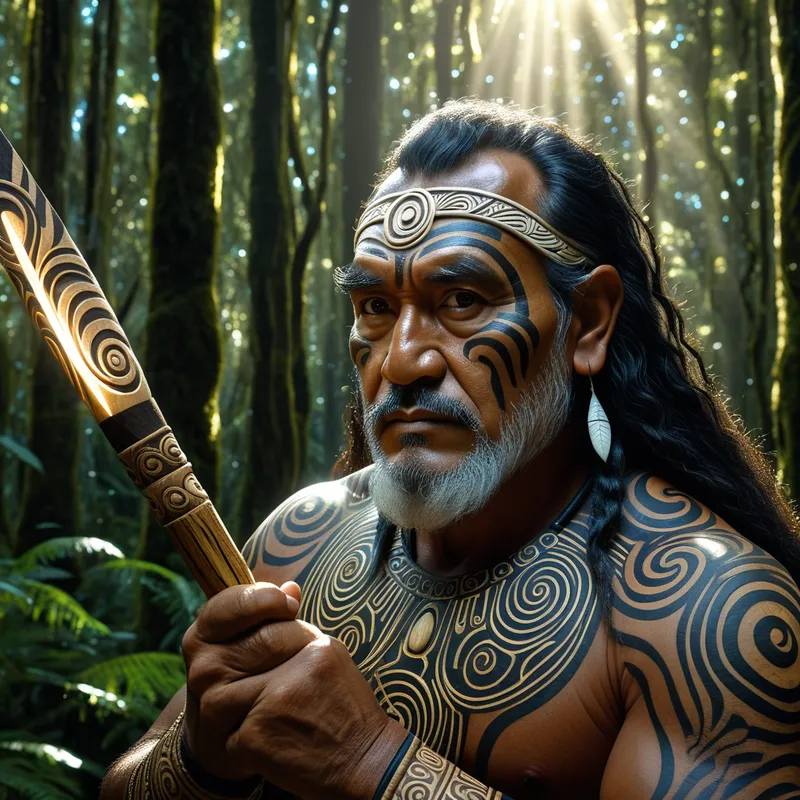
As the blood and sacred pigment mingled, something miraculous happened. The patterns began to glow with a soft, inner light. They were no longer on the skin; they were the skin. They were a living parchment, a topographical map of his soul. When Tāne finally stepped back, the young man rose. He was the same, yet utterly transformed. His face was a sacred text. His body was a walking wharenui. He carried his ancestors on his brow, his achievements on his cheeks, his prayers on his chin. The great longing of the people was answered. They now had a vessel for memory that could walk, speak, and gaze into the eyes of the future.
Cultural Origins & Context
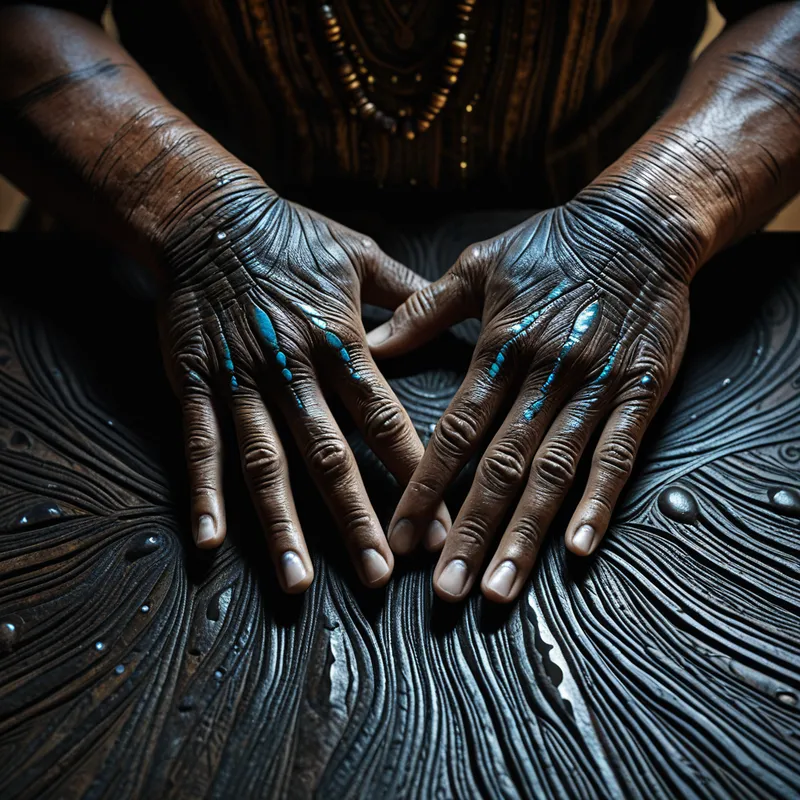
This is the mythic origin story for Tā Moko, the sacred tattoo practice of the Māori. Unlike the punctured-skin method of other Polynesian tatau, Tā Moko uses chisels to carve the skin, creating permanent grooves—a literal inscription into the human form. The myth was not a singular tale told around a fire, but the living cosmology embedded within the practice itself, passed down through the act of receiving and wearing the Moko.
The story-tellers were the tohunga tā moko (master carvers) and the elders. The myth served a profound societal function: it sacralized immense physical ordeal, transforming it from mutilation into a rite of passage. It established Tā Moko as a divine technology for encoding identity. Every mark declared one’s whakapapa (genealogy), tribal affiliation, social status, and personal history. Your face was your resume, your family tree, and your spiritual record, all in one. To have Moko was to be a complete person, fully integrated into the cosmic and social order. To copy another’s Moko without right was a profound sacrilege—the theft of a soul’s map.
Symbolic Architecture
At its core, the myth of Tā Moko is about the transformation of the amorphous self into a legible, sacred text. The blank, water-like reflection symbolizes the unformed ego, vulnerable to time and oblivion. The god Tāne represents the archetypal force of differentiation and culture—the impulse to carve order from chaos, to bring the inner world into visible, structured form.
The chisel does not decorate the surface; it excavates the depths. The pain of Tā Moko is the pain of consciousness making itself known, of the intangible soul demanding a tangible signature.
The sacred pigment, born from ash, is alchemical: it is memory solidified, the past made permanent. The resulting patterns are not arbitrary art but a symbolic architecture. Spirals (koru) speak of cyclical return and potential. Interlocking panels speak of community and connection. The process itself models a sacred contract: the individual’s courageous surrender to a pain that confers meaning, and the culture’s responsibility to provide the template for that meaning. The marked body becomes a liminal space where the individual and the collective, the mortal and the divine, the past and the future, are permanently married.
The Dreamer’s Resonance
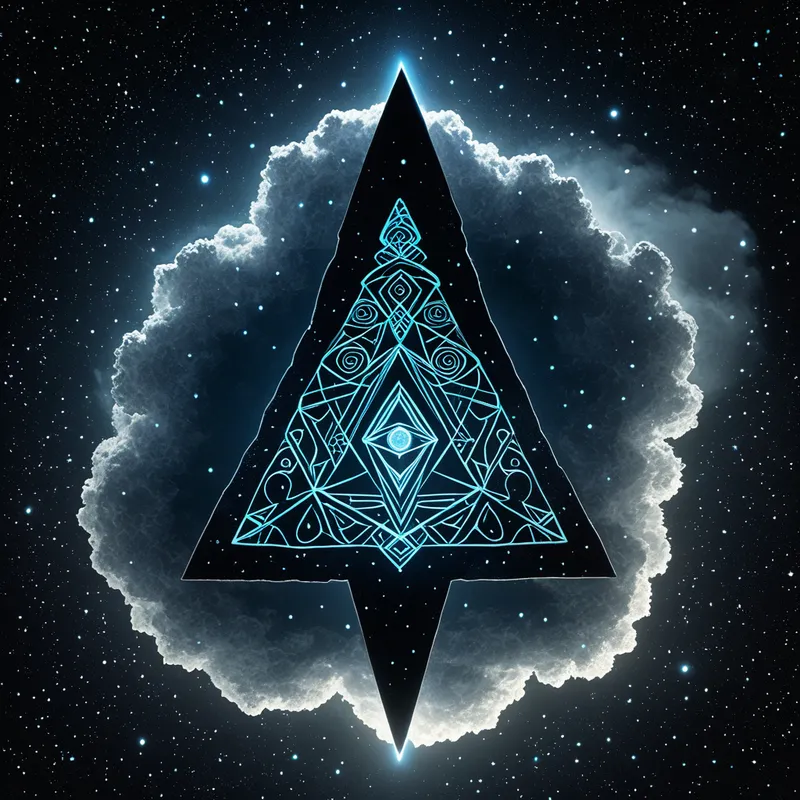
When this myth stirs in the modern dreamer, it often manifests not as a literal tattooing, but as a profound somatic process of inscription and claim. One might dream of intricate patterns rising to the surface of the skin from within, of being written upon by an unseen force, or of discovering ancient, glowing glyphs on one’s own body.
Psychologically, this signals a critical phase of individuation—the psyche’s imperative to carve out a unique and authentic identity from the raw material of inherited traits, family expectations, and social masks. The “pain” in the dream is the discomfort of this self-definition, the necessary suffering of differentiating oneself. The emerging “pattern” is the dreamer’s own innate blueprint coming to consciousness. It is the soul insisting, “I am not a blank page. I have a specific, intricate design. I must be seen for what I truly am.” Such dreams call the dreamer to stop reflecting the world like water, and to start bearing the permanent, courageous marks of their own hard-won truth.
Alchemical Translation
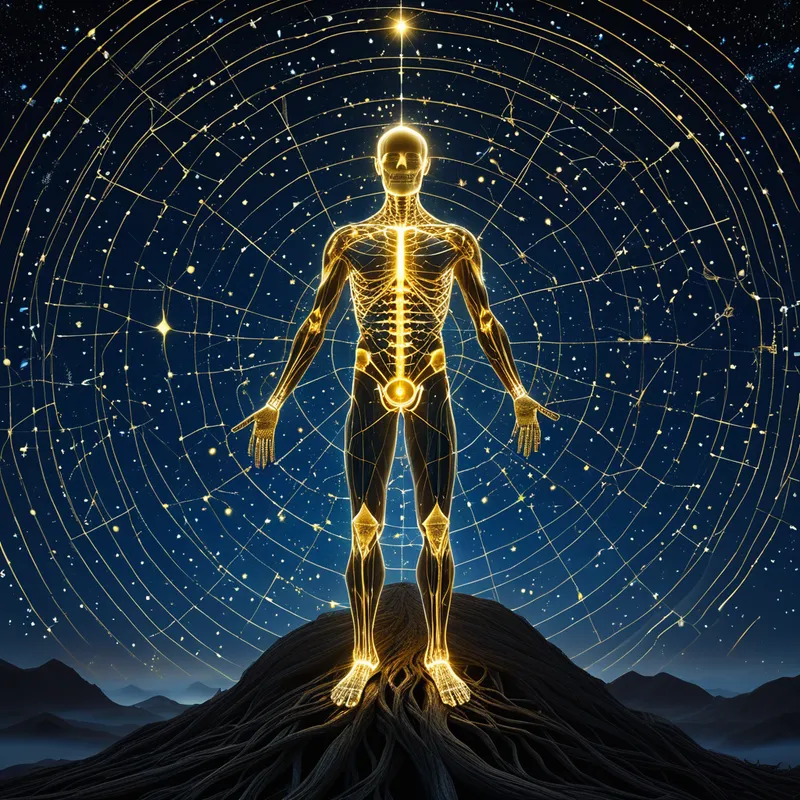
The alchemical journey modeled by Tā Moko is one of psychic transmutation through voluntary, sacred suffering. The prima materia is the unmarked self, full of potential but without definition. The nigredo, or blackening, is the searing pain of the chisel—the confrontation with shadow, history, and the painful process of breaking old, smooth surfaces.
The goal is not to avoid the chisel, but to consent to its work, understanding that the groove it cuts is the channel through which your essence will flow into the world.
The albedo, or whitening, is the infusion of the sacred pigment—the integration of ancestral wisdom and cultural meaning into the personal wound, transforming it into a mark of honor. The rubedo, the reddening or culmination, is the moment the pattern becomes alive and luminous—the birth of the true, indelible Self. The modern individual undergoing this process might not carve their skin, but they must find their equivalent of the uhi: the therapy session that cuts deep, the creative act that demands discipline, the life choice that severs old ties. They must allow their history (both personal and ancestral) to be not a hidden burden, but a visible, integrated part of their identity. The triumph is to become a walking testament—a person whose very presence declares, “This is who I am, where I come from, and what I stand for.” In a world that often encourages erasure and conformity, the myth of Tā Moko is a timeless summons to wear your soul on your skin, and to bear its beautiful, painful, glorious design with pride.
Associated Symbols
Explore related symbols from the CaleaDream lexicon: