Sinchi Roca Myth Meaning & Symbolism
The mythic tale of the second Sapa Inca, Sinchi Roca, who embodies the transition from primal warrior strength to the sacred order of civilization.
The Tale of Sinchi Roca
Listen. The stones of Cusco remember a time before they were laid. They remember the wild earth, the untamed huacas, and the breath of [Viracocha](/myths/viracocha “Myth from Incan culture.”/) still fresh upon the mountains. They remember the first king, Manco Cápac, who plunged the golden staff and founded order from chaos. And they remember his son.
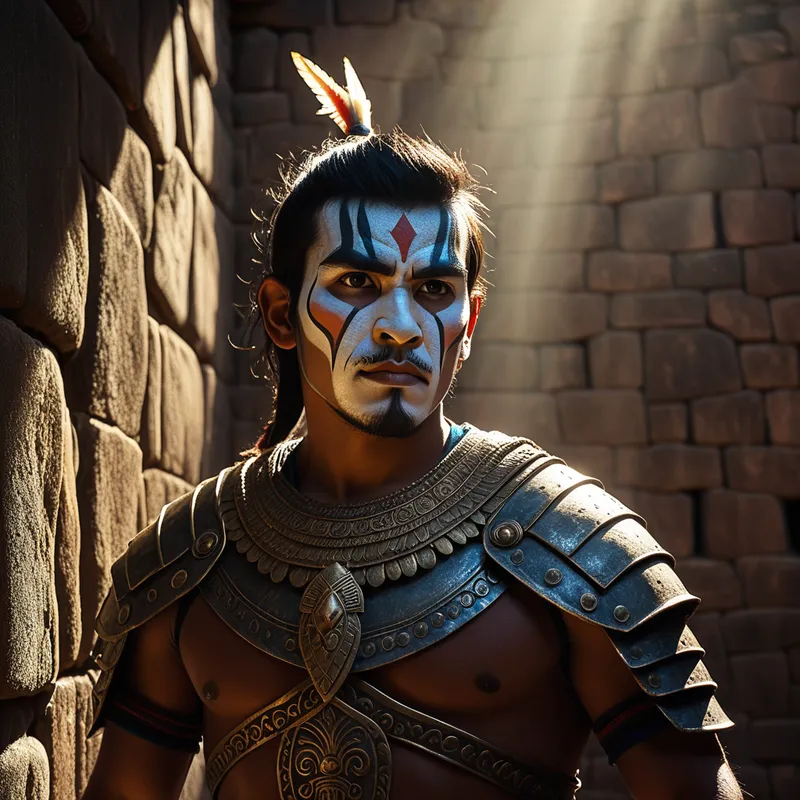
His name was Sinchi Roca. But before he was a name in the royal quipu, he was a force. He was the strength of the mountain cat, the swiftness of the river in spate. He was Sinchi—the Valiant, the Strong, the Warrior. His world was the clash of spear on shield, the raw contest of power among the fledgling clans of the valley. His inheritance was not yet a throne, but a fierce and unproven bloodline.
The story whispers that his father, the founder, passed into the realm of the ancestors. The nascent kingdom, this delicate Tawantinsuyu in embryo, trembled. Could a son of battle become a father of a people? The air in the sacred valley grew thick with question. Rival sinchis, local war-chiefs, eyed the nascent power in Cusco. The order brought by the golden staff was fragile, a new melody against the ancient, rhythmic drum of conquest.
Then came the moment of turning. It is said the earth itself spoke. Perhaps it was a shaman’s vision in the smoke of sacred despacho. Perhaps it was the silent, imposing gaze of the Inti upon him. The call was not to more battle, but to a different kind of strength. The warrior was summoned to become the cornerstone.
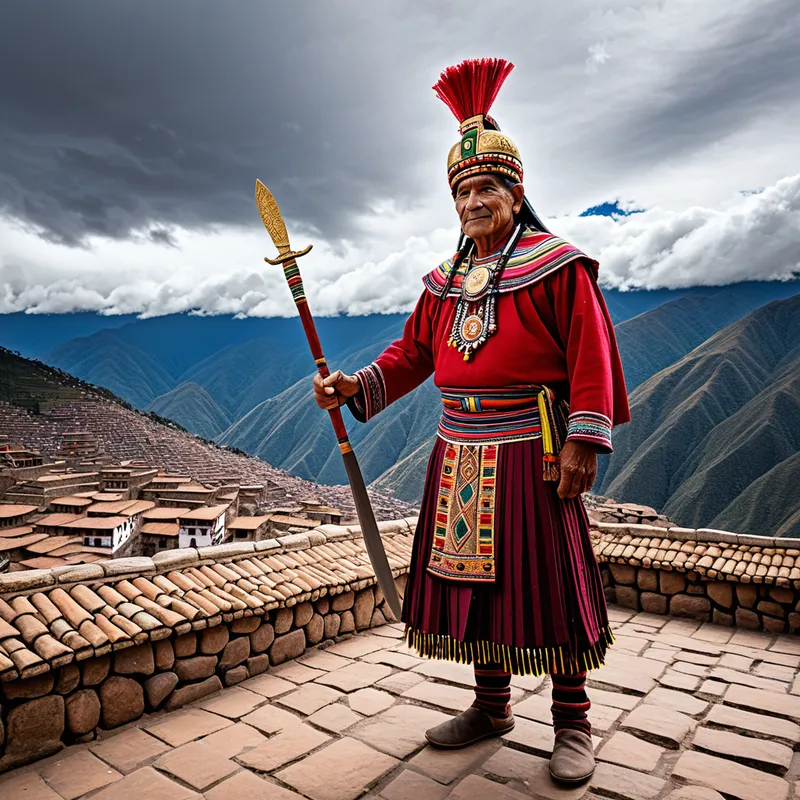
We see him then, not on a battlefield, but in the heart of Cusco. The crimson fringe, the mascapaycha, is placed upon his brow. It is heavier than any helmet. In his hand, the spear is exchanged for the scepter of authority. His mother, Mama Ocllo, the wise weaver of social fabric, stands beside him. The myth tells of his marriage to Mama Cura, a union that cemented the lineage, turning a warrior’s house into a royal dynasty.
His great deed was not a conquest of enemies, but a conquest of lack. He brought water. He orchestrated the channeling of life-giving streams to the arid plains around Cusco, transforming them into fertile fields. The warrior who once took life now gave the means for life to flourish. He built upon his father’s foundation, not with walls of defense, but with canals of sustenance. The people did not bow to a conqueror; they gathered around a provider. The fierce Sinchi was absorbed into the enduring Sapa Inca, Sinchi Roca. The man of war became the architect of peace, and the valley, once a stage for conflict, began to truly hum with the ordered song of civilization.
Cultural Origins & Context
The narrative of Sinchi Roca comes to us filtered through the lens of imperial Inca historiography, primarily recorded by Spanish chroniclers like Bernabé Cobo and Pedro Sarmiento de Gamboa after the conquest. These accounts were based on the testimonies of Inca nobles, who recited the official dynastic history. It is crucial to understand this not as a “myth” in the sense of a story about gods, but as a foundational legend—a sacred history that legitimized the Inca state.
The Inca did not have a written language; their history was preserved in the memories of professional rememberers, the amautas (sages), and encoded in the complex knots of the quipu. The story of Sinchi Roca served a vital societal function: it explained and justified the transition from a period of local, charismatic warrior leadership (sinchi) to a hereditary, theocratic monarchy (Sapa Inca). It anchored the authority of the second emperor in a divine mandate, showing that true power evolves from brute force into cultivated, life-giving order. This myth was a cornerstone of Inca ideology, illustrating the principle that the ruler’s primary duty is to organize and improve the world for his people, mirroring the creative acts of Viracocha himself.
Symbolic Architecture
At its core, the myth of Sinchi Roca is an [allegory](/symbols/allegory “Symbol: A narrative device where characters, events, or settings represent abstract ideas or moral qualities, conveying deeper meanings through symbolic storytelling.”/) for the [birth](/symbols/birth “Symbol: Birth symbolizes new beginnings, transformation, and the potential for growth and development.”/) of [consciousness](/symbols/consciousness “Symbol: Consciousness represents the state of awareness and perception, encompassing thoughts, feelings, and experiences.”/) from the [womb](/symbols/womb “Symbol: A symbol of origin, potential, and profound transformation, representing the beginning of life’s journey and the unconscious source of creation.”/) of instinct. The figure of Sinchi Roca represents the psychic pivot point where raw, undifferentiated power—the sami of the [warrior](/symbols/warrior “Symbol: A spiritual archetype representing inner strength, discipline, and the struggle for higher purpose or self-mastery.”/)—is harnessed and directed toward a conscious, creative [purpose](/symbols/purpose “Symbol: Purpose signifies direction, meaning, and intention in life, often reflecting personal ambitions and core values.”/).
The first king plants the seed of order in the wild soil; the second king must tend the garden, imposing not his will upon the land, but the land’s potential upon his will.
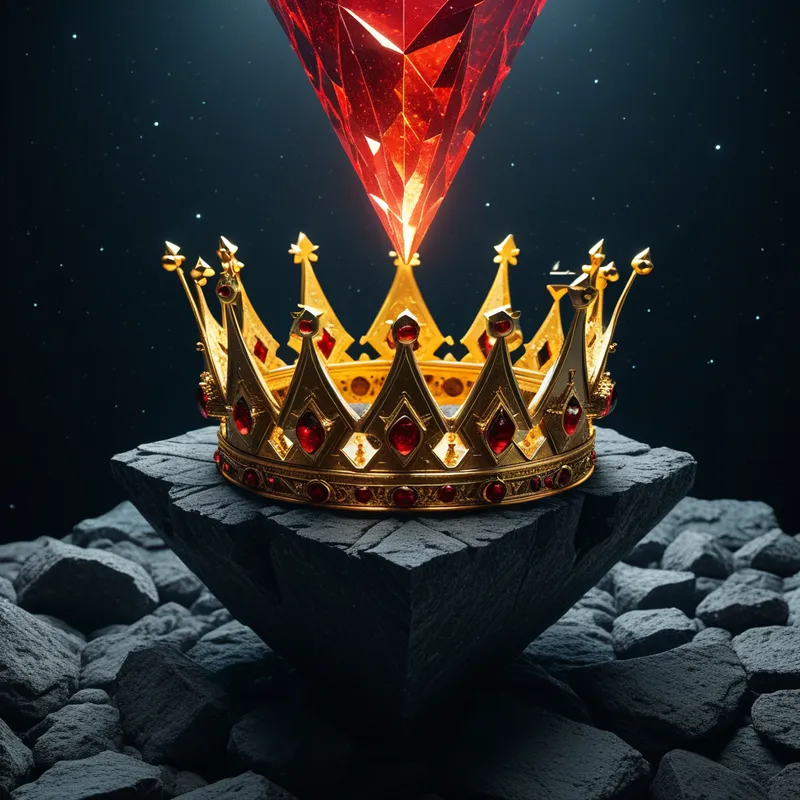
The warrior (Sinchi) symbolizes the unrefined libido, the aggressive and defensive energies necessary for survival and establishing a [boundary](/symbols/boundary “Symbol: A conceptual or physical limit defining separation, protection, or identity between entities, spaces, or states of being.”/) of self. The mascapaycha, the crimson fringe, symbolizes the burden and the sanctification of this [energy](/symbols/energy “Symbol: Energy symbolizes vitality, motivation, and the drive that fuels actions and ambitions.”/). It is the [crown](/symbols/crown “Symbol: A crown symbolizes authority, power, and achievement, often representing an individual’s aspirations, leadership, or societal role.”/) of consciousness, the [moment](/symbols/moment “Symbol: The symbol of a ‘moment’ embodies the significance of transient experiences that encapsulate emotional depth or pivotal transformations in life.”/) the individual recognizes they are not merely a [cluster](/symbols/cluster “Symbol: A dense grouping of similar elements, representing complexity, patterns, or interconnectedness within a larger system.”/) of drives, but a [vessel](/symbols/vessel “Symbol: A container or structure that holds, transports, or protects something essential, representing the self, emotions, or life journey.”/) for a larger [pattern](/symbols/pattern “Symbol: A ‘Pattern’ in dreams often signifies the underlying structure of experiences and thoughts, representing both order and the repetitiveness of life’s situations.”/). The act of bringing [water](/symbols/water “Symbol: Water symbolizes the subconscious mind, emotions, and the flow of life, representing both cleansing and creation.”/) is the quintessential [symbol](/symbols/symbol “Symbol: A symbol can represent an idea, concept, or belief, serving as a powerful tool for communication and understanding.”/). [Water](/symbols/water “Symbol: Water symbolizes the subconscious mind, emotions, and the flow of life, representing both cleansing and creation.”/) is the unconscious, [life](/symbols/life “Symbol: The symbol of ‘Life’ represents a journey of growth, interconnectedness, and existential meaning, encompassing both the joys and challenges that define human experience.”/)-giving, but also formless and chaotic. To channel it is the archetypal act of civilization and of ego-consciousness: to give form to the formless, to direct the flow of psychic [energy](/symbols/energy “Symbol: Energy symbolizes vitality, motivation, and the drive that fuels actions and ambitions.”/) (libido) from destructive or random paths into constructive, nourishing channels that sustain the internal and external [community](/symbols/community “Symbol: Community in dreams symbolizes connection, support, and the need for belonging.”/).
The Dreamer’s Resonance
When this myth stirs in the modern psyche, it often manifests in dreams of profound transition and integration. One might dream of receiving a heavy award or uniform that feels both honorable and constricting. One might dream of standing before a wild, beautiful landscape and being handed architectural blueprints, feeling the tension between preserving its wildness and building something lasting within it.
Somatically, this can feel like a pressure in the crown of the head (the mascapaycha), a tightening in the jaw (the warrior’s grit) giving way to an opening in the hands (the act of channeling, giving). Psychologically, it is the process of moving from a life strategy based on reaction, defense, and personal conquest (“How do I win? How do I secure my territory?”) to one based on responsibility, structure, and nurture (“What am I building? How do I sustain and provide for the world I am part of?”). It is the often-uncomfortable initiation from the heroic ego into the stewardship of the ruling self.
Alchemical Translation
In the alchemical vessel of the soul, the myth of Sinchi Roca models the stage of Coagulatio—the fixing of the volatile spirit into a solid, enduring form. The initial, fiery Nigredo of the warrior’s struggles (the battles for identity, the burning away of old selves) must cool and solidify into the structured Albedo of conscious order.
Individuation is not merely about discovering one’s unique power, but about crucially deciding what to build with it. The king is not crowned in the triumph of battle, but in the solemn silence after, when he asks, “For what purpose is this victory?”
The modern individual undergoes this alchemy when they move from a life of “finding themselves” (the warrior’s quest) to “creating their world” (the ruler’s duty). This is the psychic transmutation of ambition into vocation, of passion into discipline, of personal freedom into meaningful responsibility. The “water” we are called to channel is our own latent creativity, emotional depth, and spiritual energy. The “fields” we irrigate are our relationships, our work, our community, and the inner landscape of our soul. To refuse this transition is to remain an eternal adolescent, a powerful but ultimately destructive force. To embrace it is to become a true founder of one’s own inner kingdom, building upon the primal foundation of the self a legacy of ordered, nourishing life.
Associated Symbols
Explore related symbols from the CaleaDream lexicon:
- Mountain — Represents the foundational, enduring authority Sinchi Roca must embody, the solid ground of the ruler upon which civilization is built.
- Water — Symbolizes the chaotic, life-giving force of the unconscious and nature that Sinchi Roca must channel and direct through conscious order for his people’s survival.
- Crown — The mascapaycha fringe, representing the sacred burden of sovereignty, the transformation of personal power into institutional, responsible authority.
- Warrior — The primal aspect of Sinchi Roca’s identity, the raw strength and defensive energy that must be integrated and transcended for true rule.
- Temple — The ordered, sacred space of civilization that Sinchi Roca helps to consolidate, representing the structured psyche and social order.
- River — The directed flow of water, symbolizing the successful application of conscious will to guide natural and psychic energies toward fertile ends.
- Father — The lineage and legacy of Manco Cápac, the foundational principle Sinchi Roca must inherit and expand upon, moving from son to patriarch.
- Stone — The enduring, crafted material of Incan civilization, representing the lasting institutions and laws established during this mythic transition.
- Order — The central theme of the myth, the divine mandate to structure chaos (Uku Pacha) into the harmonious, human world (Kay Pacha).
- Hero — The initial stage of Sinchi Roca’s journey, which must be completed and evolved beyond into the archetype of the Ruler for the cycle to be whole.