Simorgh the Divine Bird Myth Meaning & Symbolism
A mystical bird of immense wisdom, Simorgh guides seekers through a perilous journey to reveal the ultimate truth of their own divine nature.
The Tale of Simorgh the Divine Bird
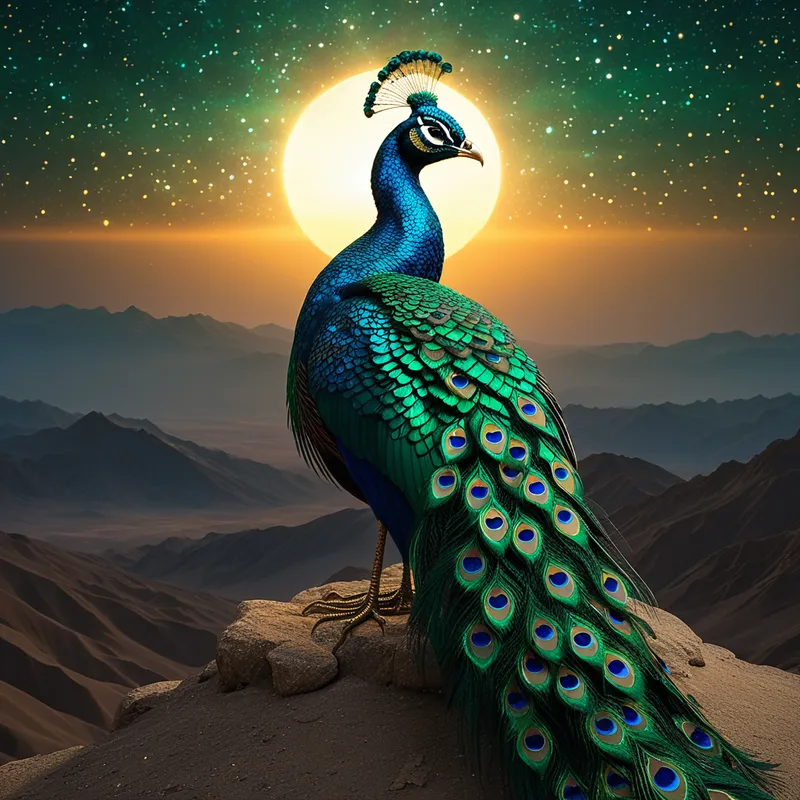
In the time before time, when the world was young and magic was woven into the very fabric of the air, there lived a creature of such majesty that its name was whispered only in prayers. This was the Simorgh, whose nest was the Mount Qaf, a range of emerald and crystal that held up the vault of the sky. Its feathers were of bronze, and from each one fell a glow that held the secrets of the ages. It had seen the ruin of kings and the birth of stars, and in its fathomless eyes swam the wisdom of all things.
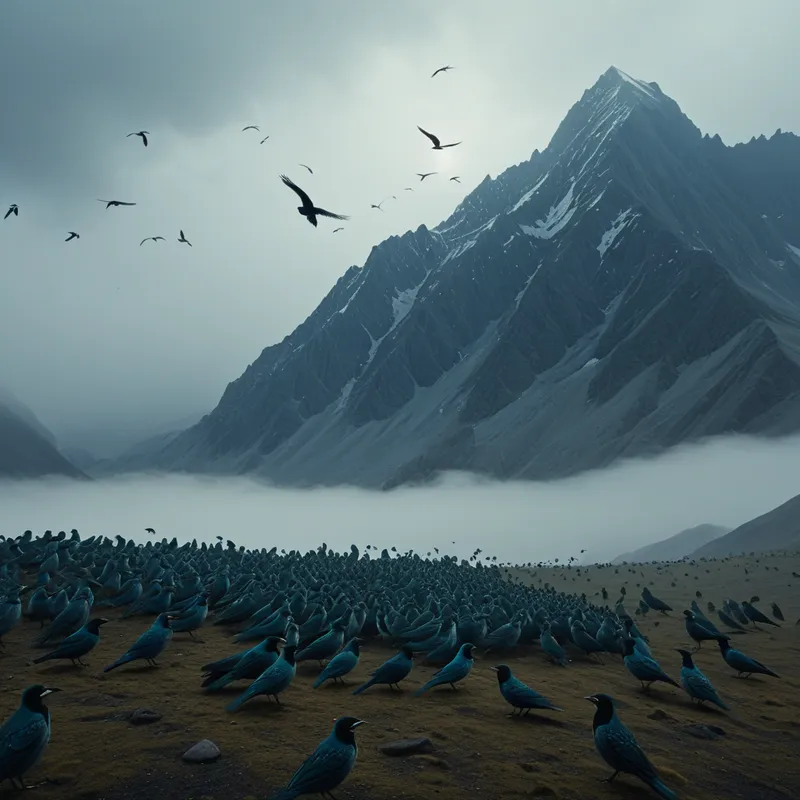
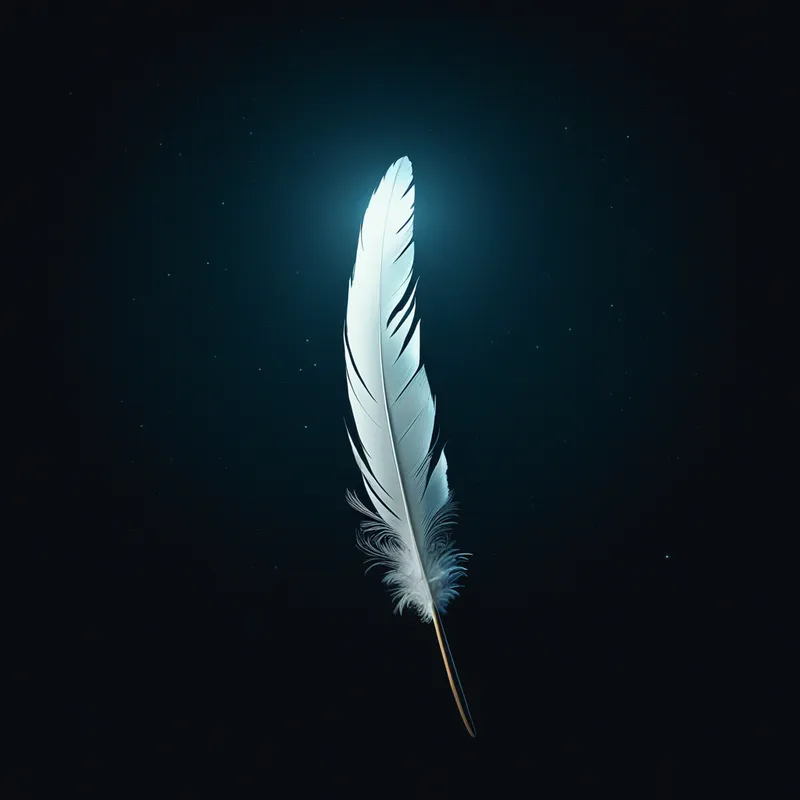
The tale begins not with the bird, but with the longing of the birds of the world. A single feather from the Simorgh had drifted down from the high, unseen peaks and fallen into the midst of their gathering. It shone with an unearthly light, and at its touch, a deep, aching desire was kindled in their hearts—a desire to know their true sovereign. The Hoopoe, a bird known for its crown and its seeking spirit, stood before the assembly. With passionate words, it spoke of the Simorgh, the cure for their confusion, the answer to their fragmentation. It spoke of a journey over seven treacherous valleys, each a trial of the soul.
Driven by this newfound yearning, thirty of the most courageous birds set forth. Their journey was an ordeal of fire and ice. The first valley was the Valley of the Quest, where every path vanished into mirage. Next came the Valley of Love, a furnace that consumed all thought and identity. In the Valley of Insight, they were plunged into a darkness so profound it revealed a terrible, beautiful light. The Valley of Detachment stripped them of every want and hope. The Valley of Unity dazzled them, merging all forms into a blinding singularity, only for the Valley of Astonishment to shatter that certainty into a thousand questions.
Finally, gaunt and reduced to their very essence, they stumbled into the last trial: the Valley of Annihilation. Here, the last shadow of the self was dissolved in a vast, silent ocean of nothingness. They were not. And in that absolute not-being, a door opened.
Utterly purified, the thirty survivors reached the summit of Mount Qaf. Before the glorious throne of the Simorgh, they bowed their heads, expecting to behold a magnificence beyond comprehension. The chamber’s attendant asked them what they sought. “We have come to gaze upon the Simorgh,” they whispered. A mirror was brought forth and placed before them. In its polished surface, they did not see a giant, radiant bird. They saw only themselves—thirty bedraggled, weary, but utterly clear faces staring back.
“The Simorgh is here,” came the revelation. “Si-Morgh.” Thirty Birds. The seeker and the sought were one. The divine was not a distant monarch to be found, but the collective, realized essence of their own arduous journey. They had not found the Simorgh; they had become it.
Cultural Origins & Context
This profound narrative is the heart of “The Conference of the Birds” (Mantiq al-Tayr), a masterpiece of Sufi literature composed in the 12th century by the poet Farid ud-Din Attar. While the Simorgh has even older roots in the pre-Islamic Avesta as the Saena Meregha, a great falcon-like bird, it was Attar who alchemized the figure into the central symbol of Sufi mystical thought. The poem is a masnavi, recited in gatherings (sama) to induce states of contemplative ecstasy. Its primary function was didactic and transformative, providing a roadmap for the soul’s (nafs) journey (suluk) toward divine reality (Haqiqa). It served as a societal mirror, reminding individuals and the community that true leadership and wisdom come not from external power, but from inner, hard-won unification.
Symbolic Architecture
The myth is a perfect symbolic [architecture](/symbols/architecture “Symbol: Architecture in dreams often signifies structure, stability, and the framing of personal identity or life’s journey.”/) for the psyche’s [journey](/symbols/journey “Symbol: A journey in dreams typically signifies adventure, growth, or a significant life transition.”/) toward wholeness. The thirty birds represent the fragmented aspects of the [human](/symbols/human “Symbol: The symbol of a human represents individuality, complexity of emotions, and social relationships.”/) [soul](/symbols/soul “Symbol: The soul represents the essence of a person, encompassing their spirit, identity, and connection to the universe.”/), scattered by desire, ego, and illusion. The Hoopoe is the call of the Self, the inner guide that initiates the process of individuation. The seven valleys are not physical places but sequential stages of psychological and spiritual deconstruction.
The mirror at the journey’s end does not reveal an other; it reveals the totality of the self, reflected back as a divine unity forged through ordeal.
The Simorgh itself is the ultimate [symbol](/symbols/symbol “Symbol: A symbol can represent an idea, concept, or belief, serving as a powerful tool for communication and understanding.”/) of the Self, the [archetype](/symbols/archetype “Symbol: A universal, primordial pattern or prototype in the collective unconscious that shapes human experience, behavior, and creative expression.”/) of wholeness and the central regulating principle of the psyche. It is not an external god but the latent, divine completeness within. The annihilation is the crucial [death](/symbols/death “Symbol: Symbolizes transformation, endings, and new beginnings; often associated with fear of the unknown.”/) of the ego—the conscious [personality](/symbols/personality “Symbol: Personality in dreams often symbolizes the traits and characteristics of the dreamer, reflecting how they perceive themselves and how they believe they are perceived by others.”/)‘s self-centered [perspective](/symbols/perspective “Symbol: Perspective in dreams reflects one’s viewpoints, attitudes, and how one interprets experiences.”/)—which must occur for a direct experience of the Self to emerge. The name’s pun (“Thirty Birds”) is the myth’s core [truth](/symbols/truth “Symbol: Truth represents authenticity, honesty, and the quest for knowledge beyond mere appearances.”/): the divine is immanent, realized through the [integration](/symbols/integration “Symbol: The process of unifying disparate parts of the self or experience into a cohesive whole, often representing psychological wholeness or resolution of internal conflict.”/) of all one’s parts.
The Dreamer’s Resonance
When this myth pattern surfaces in modern dreams, it often signals a profound crisis of meaning and a deep, unconscious initiation into a process of self-realization. Dreaming of a distant, radiant bird just out of reach may reflect a longing for purpose or a forgotten aspect of one’s potential. Dreams of arduous, seemingly endless journeys over symbolic landscapes—dark forests, towering mountains, vast deserts—mirror the soul’s navigation through the “valleys” of life: the valley of a career change (Quest), the dissolution of a relationship (Love), or a psychological breakdown that leads to new insight (Astonishment).
The somatic experience can be one of profound fatigue in the dream, coupled upon waking with a strange, quiet exhilaration. This is the psyche working through the “annihilation” of an old identity structure. To dream of finally seeing one’s own face in a mirror, especially if it is radiant or unified, is a powerful indication of the ego momentarily aligning with the Self, experiencing what Jung called a “numinous” encounter. It is a dream of healing, pointing toward integration.
Alchemical Translation
Psychic transmutation, or individuation, follows the myth’s blueprint precisely. The initial state is one of nigredo: the blackening, the call of the Hoopoe—a depression, anxiety, or life crisis that forces a quest. The journey through the valleys is the albedo and citrinitas: the whitening and yellowing, the painful purification and burning away of illusions (persona attachments, complexes, parental and cultural imprints). One must confront the Shadow in the Valley of Quest, dissolve the ego’s logic in the fire of Love, and face the awe-inspiring, often terrifying archetypal world (the Anima/Animus, the Wise Old Being) in the Valleys of Insight and Astonishment.
The climax at the mirror is the rubedo: the reddening, the creation of the philosophical gold. This is the conscious realization of the Self. The ego does not become God; it becomes a vessel through which the totality of the psyche can consciously operate.
For the modern individual, this translates to the hard, introspective work of therapy, active imagination, and shadow integration. The “Simorgh” one seeks—be it perfect love, ultimate success, or enlightenment—is discovered to be the byproduct of becoming whole. The goal is not to arrive at a destination, but to undergo the transformation that makes you the destination. You are not seeking wholeness; you are performing, through your struggles and integrations, the wholeness that was always your latent nature. The myth teaches that the kingdom of heaven is within, but it is accessed only through the courageous, devastating, and glorious journey of the valleys.
Associated Symbols
Explore related symbols from the CaleaDream lexicon:
- Bird — The soul in flight, representing the aspirational spirit of the thirty seekers and the ultimate, transcendent state of the Simorgh itself.
- Mountain — The immense, daunting challenge of the spiritual path, symbolized by Mount Qaf, which must be ascended through effort and perseverance.
- Journey — The central narrative and psychological process of transformation, the perilous passage through the seven valleys toward self-realization.
- Mirror — The instrument of ultimate revelation, reflecting not an external deity but the integrated self, the shocking truth that the divine is within.
- Fire — The purifying agent of the Valley of Love, which burns away the dross of the ego and worldly attachment to prepare the soul for unity.
- Shadow — The unseen, repressed aspects of each bird/individual that must be encountered and integrated in the Valley of the Quest and beyond.
- Light — The divine wisdom and clarity embodied by the Simorgh, which is also the inner illumination achieved at the journey’s end.
- Annihilation — The necessary dissolution of the egoic self in the final valley, the dark night of the soul that precedes rebirth into a greater identity.
- Rebirth — The emergence of the new, unified consciousness after annihilation, where the thirty birds are reborn as the singular Simorgh.
- Circle — The symbol of wholeness, completion, and the cyclical nature of the journey from fragmentation back to unity.
- Key — The insight or realization, often painful, that unlocks the next stage of the journey, represented by the guidance of the Hoopoe.
- Divine — The ultimate nature of the realized Self, the immanent sacredness revealed through the process of integration and unification.