Shona Spirit Mediums Myth Meaning & Symbolism
A story of chosen individuals who become vessels for ancestral spirits, bridging the living and the dead to heal communities and restore cosmic balance.
The Tale of Shona Spirit Mediums
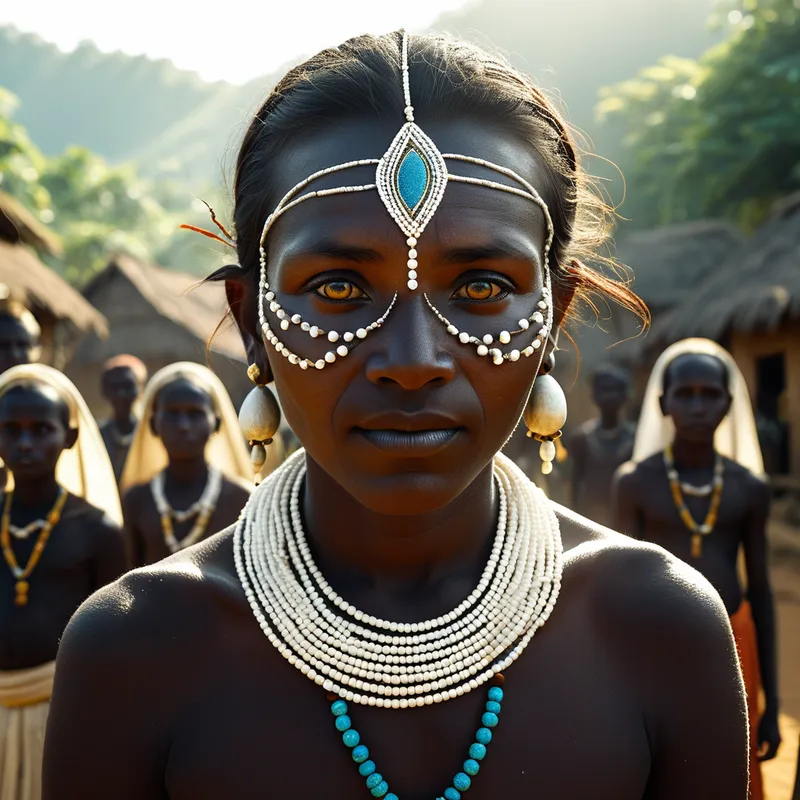
Listen. The air in the village is still, heavy with the scent of crushed herbs and dry earth. The sun is a molten coin sinking behind the hills, and the shadows stretch long, like fingers reaching from the world beyond. The people gather, a circle of breath and heartbeat around the empty space. They have come for the one who is not one, for the svikiro.
She sits in the center, a woman of the community, known for her steady hands and quiet ways. But now, her head is bowed. A gourd rattle lies beside her, a staff carved with the faces of the old ones rests against her knee. The drum begins—a deep, insistent pulse that does not echo in the air but in the bone. Thum-thum. Thum-thum. It is the heartbeat of the earth itself.
She begins to tremble. A fine shiver, at first, like a leaf in a distant wind. Then her shoulders shake. Her breath comes in ragged gasps. The people lean forward, their own breaths held. The drum quickens. Her head snaps back, eyes wide and unseeing, rolled white to the heavens. A groan tears from her throat, a sound that is not her own. It is the voice of cracked stone and forgotten streams, the voice of the ancestor.
The body of the woman is now a vessel, a mhondoro has entered. The spirit stands, movements jerky, unfamiliar in the limbs of the living. It speaks. The voice is guttural, ancient, speaking of droughts unseen by the living, of broken taboos that sour the land, of a sickness born not from body but from discord with the vadzimu. The community listens, for the spirit names truths that have festered in silence. It prescribes rituals: an offering of white doro poured at the sacred rushanga, a black goat to be sacrificed, words of apology to be spoken to a neglected grave.
As the message concludes, the possessed body sags. The firelight dances on a face slick with sweat, now empty of the otherworldly presence. The woman returns, blinking, disoriented, the bridge between worlds dissolving. The community exhales. The message has been delivered. The path to healing is revealed. The medium, spent and sacred, is helped to her feet. The circle is whole again, for a moment, the living and the dead aligned. Balance is restored, not by a hero’s sword, but by a surrendered soul becoming a voice for the timeless chorus.
Cultural Origins & Context
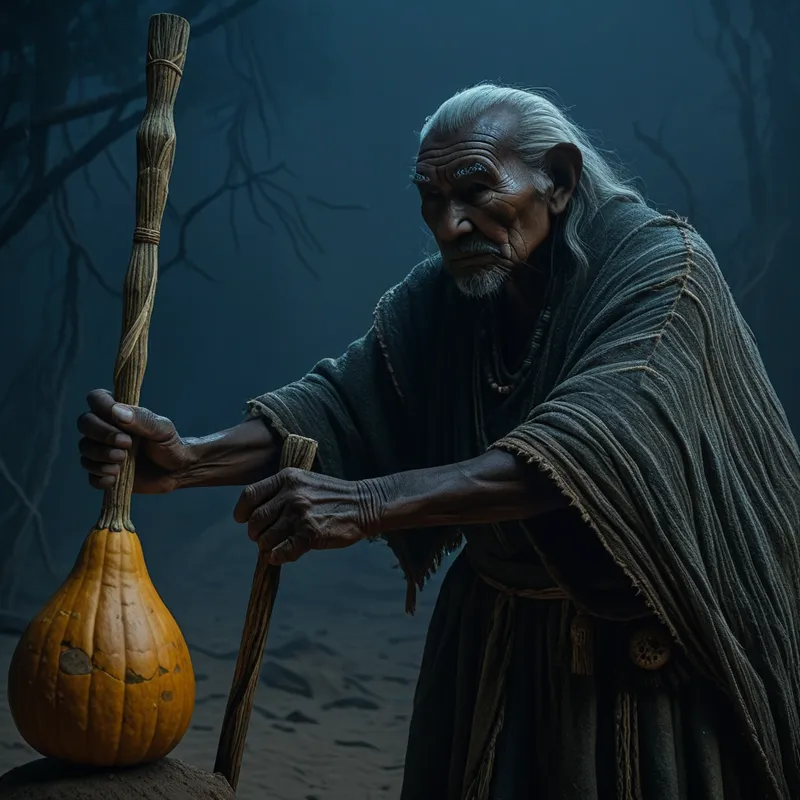
This is not a myth of a distant, finished past, but a living, breathing tradition of the Shona people of Zimbabwe and central Mozambique. The practice of spirit mediumship is woven into the very fabric of Shona cosmology, a cornerstone of their religious and social life. It is an oral tradition, passed down not as a static story but as a performed reality, witnessed and validated by the community across generations.
The mythic narrative is enacted in real time. The svikiro is not an actor playing a part; they are understood to be genuinely possessed by a specific ancestral spirit, often one of great historical importance like a founding clan leader or a legendary hero. These spirits, the mhondoro (lion spirits) or the more general vadzimu, are the guardians of the land, the moral arbiters, and the repositories of tribal wisdom. They intervene in human affairs to correct imbalance, punish transgression, and guide the people through crises.
The societal function is profound. The medium provides a direct line of communication to the ultimate source of authority and order—the ancestors. This system legitimizes leadership, resolves disputes, diagnoses the root causes of communal misfortune (illness, drought, conflict), and prescribes the ritual actions necessary for restoration. The medium is the living nexus where history, morality, ecology, and community health converge.
Symbolic Architecture
At its core, the myth of the Shona [spirit](/symbols/spirit “Symbol: Spirit symbolizes the essence of life, vitality, and the spiritual journey of the individual.”/) medium is a powerful [drama](/symbols/drama “Symbol: Drama signifies narratives, emotional expression, and the exploration of human experiences.”/) of voluntary possession and sacred intermediacy. It presents a model of [consciousness](/symbols/consciousness “Symbol: Consciousness represents the state of awareness and perception, encompassing thoughts, feelings, and experiences.”/) where the individual ego is not the [pinnacle](/symbols/pinnacle “Symbol: The highest point or peak, representing achievement, culmination, or spiritual transcendence.”/) of [identity](/symbols/identity “Symbol: Identity represents the sense of self, encompassing personal beliefs, cultural background, and social roles.”/) but a temporary [station](/symbols/station “Symbol: Signifies a temporary stop, transition point, or a place of waiting in life’s journey.”/) that can—and sometimes must—be relinquished for a greater good.
The ultimate act of power is not in asserting one’s will, but in becoming a clear vessel for a will greater than one’s own.
The Medium is the ultimate [symbol](/symbols/symbol “Symbol: A symbol can represent an idea, concept, or belief, serving as a powerful tool for communication and understanding.”/) of the bridge. They are the Bridge between the living and the dead, the present and the past, the personal and the collective, the [human](/symbols/human “Symbol: The symbol of a human represents individuality, complexity of emotions, and social relationships.”/) and the divine. Their possession is not a [loss](/symbols/loss “Symbol: Loss often symbolizes change, grief, and transformation in dreams, representing the emotional or psychological detachment from something or someone significant.”/) of self but a radical [expansion](/symbols/expansion “Symbol: A symbol of growth, increase, or extension beyond current boundaries, often representing personal development, opportunity, or overwhelming change.”/) of it, a temporary merger with the [Ocean](/symbols/ocean “Symbol: The ocean symbolizes the vastness of the unconscious mind, representing deeper emotions, intuition, and the mysteries of life.”/) of ancestral experience.
The [Ancestral Spirit](/symbols/ancestral-spirit “Symbol: A spiritual entity representing deceased family members or lineage, often seen as a guide, protector, or source of wisdom connecting the living to their heritage.”/) represents the [Spirit Guide](/symbols/spirit-guide “Symbol: A spirit guide is an ethereal being believed to provide wisdom, guidance, and support along one’s life journey.”/), the voice of deep time and inherited wisdom. It is the [Father](/symbols/father “Symbol: The father figure in dreams often symbolizes authority, protection, guidance, and the quest for approval or validation.”/) and [Mother](/symbols/mother “Symbol: The symbol of ‘Mother’ represents nurturing, protection, and the foundational aspect of one’s emotional being, often associated with comfort and unconditional love.”/) of the tribe consolidated into a directive force. The process—the trembling, the altered voice—symbolizes the violent yet necessary [rupture](/symbols/rupture “Symbol: A sudden break or tear in continuity, often representing abrupt change, separation, or the shattering of established patterns.”/) of ordinary consciousness to allow the numinous to speak. It is a [Death](/symbols/death “Symbol: Symbolizes transformation, endings, and new beginnings; often associated with fear of the unknown.”/) of the mundane self for a [Rebirth](/symbols/rebirth “Symbol: A profound transformation where old aspects of self or life die, making way for new beginnings, growth, and renewal.”/) of communal [truth](/symbols/truth “Symbol: Truth represents authenticity, honesty, and the quest for knowledge beyond mere appearances.”/).
The Dreamer’s Resonance
When this mythic pattern stirs in the modern dreamer, it often manifests as dreams of being overtaken by a powerful external force, hearing voices, or feeling an overwhelming pressure to speak a truth that feels alien yet urgent. One might dream of their body transforming, filled with strange energies, or of being in a council where ancient figures speak through them.
Psychologically, this signals a profound somatic and psychic process: the ego’s confrontation with contents of the Shadow and the collective unconscious that demand expression. The “possession” in the dream is the psyche’s dramatic way of illustrating that a part of the self long buried—a legacy of family trauma, a neglected talent, a cultural memory, or a deep instinct—is now powerful enough to seize control of the conscious personality. The disorientation upon “awakening” in the dream mirrors the integrative shock that follows any major psychological revelation. The dreamer is undergoing a spontaneous, involuntary Ritual of channeling what the conscious mind has refused to acknowledge.
Alchemical Translation
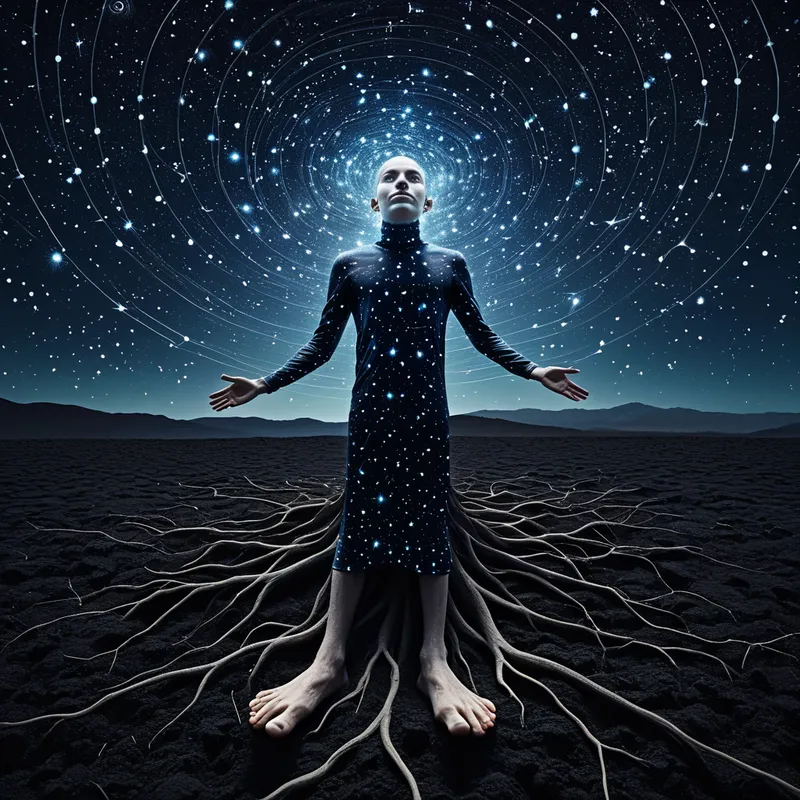
For the modern individual on the path of individuation, the Shona medium offers a radical blueprint for psychic transmutation. Our culture prizes ego-strength, autonomy, and personal expression. The alchemy here works in reverse: the lead of the inflated, isolated ego is transmuted into the gold of the permeable, connected self through voluntary surrender.
Individuation is not about becoming who you are, but about becoming who you are a part of.
The first stage is the Call, often felt as a persistent illness, depression, or a sense of meaninglessness—the “communal drought” of the soul. This is the ancestral content (the spirit) knocking, causing disturbance because it is not being heard.
The Crisis of Possession is the pivotal alchemical fire. This is the moment of breakdown, therapy, creative block, or intense emotion where the ego-structure cracks. We tremble and groan as the repressed complex forces its way into awareness. The key is not to resist this as madness, but to recognize it as a sacred, though terrifying, Dance with a deeper aspect of the self.
The Message is the insight gained: the clear articulation of the wound, the taboo, the neglected duty. In analysis, this is the interpretation; in art, it is the piece created; in life, it is the painful truth finally spoken.
Finally, the Return is integration. The ego, having been displaced, does not die. It returns, humbled and enlarged, now in service to the greater Self that includes both personal consciousness and the ancestral, archetypal depths. One becomes a grounded medium for one’s own soul, able to channel its wisdom without being destroyed by it. The circle of the personality is restored, not to its old, smaller shape, but to a new, more inclusive and balanced wholeness.
Associated Symbols
Explore related symbols from the CaleaDream lexicon:
- Spirit — The fundamental force of consciousness and agency that transcends individual life, seeking expression and connection through chosen vessels.
- Bridge — The medium themself, representing the critical link between the realms of the living and the dead, the conscious and the unconscious.
- Ancestral Spirit — The specific guiding intelligence from the collective past that possesses the medium, embodying inherited wisdom, law, and identity.
- Ritual — The structured ceremony of drumming, dance, and offering that creates the sacred container necessary for the dangerous and transformative act of spirit possession.
- Death — The symbolic ego-death experienced by the medium during trance, a necessary sacrifice for the rebirth of communal truth and healing.
- Voice — The instrument of the spirit; the medium’s altered speech represents the channeling of a truth that originates beyond the personal self.
- Vessel — The human body and psyche of the medium, which must be prepared, consecrated, and emptied to become a fit container for divine communication.
- Community — The essential circle of witnesses who validate the possession, receive the message, and enact the healing, completing the circuit of the ritual.
- Drum — The sonic heartbeat that calls the spirits and alters the medium’s consciousness, synchronizing the physical and spiritual realms.
- Shadow — The repressed ancestral or personal contents that initially manifest as disturbing spirits or illness before being integrated through the medium’s work.
- Healing — The ultimate purpose of the possession: to diagnose and cure spiritual and social fractures that manifest as physical or communal misfortune.
- Tree — A symbol of the medium’s connection, with roots deep in the ancestral world and branches in the community, often the sacred site (rushanga) for communication.