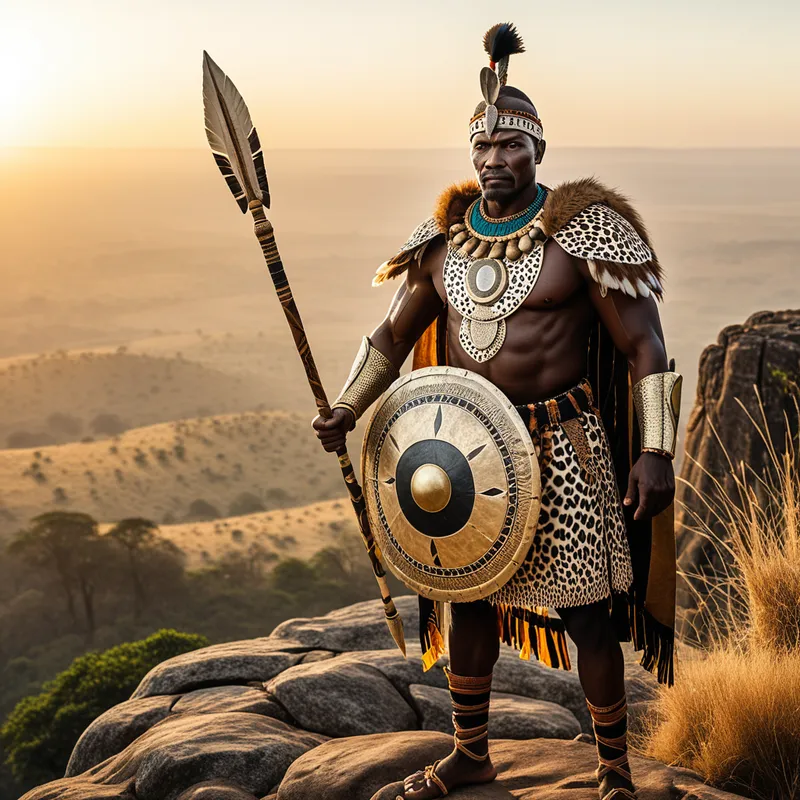
Shaka Zulu and the Prophecy Myth Meaning & Symbolism
A mythic tale of a prophesied king, born from a forbidden union, who must overcome exile and forge a new identity to unite a people and fulfill his destiny.
The Tale of Shaka Zulu and the Prophecy
Listen. The wind does not just blow across the high veld; it carries whispers from the old ones. Before the thunder of a thousand assegai strikes, there is a silence. And in that silence, a prophecy is born.
In the land of the amaZulu, the People of Heaven, a king named Senzangakhona ruled. A sangoma, a seer whose bones spoke with the voices of the ancestors, came to him. The vision was clear, yet terrifying: a great iShaka would be born. This beetle, a pest that devoured crops, was the name given to the child of prophecy. He would be a unifier, a fire that would forge scattered clans into a single, mighty nation. But fire also consumes. The prophecy held a double edge: this child would bring both supreme order and immense bloodshed. He would be born of a union considered improper, a sign of his disruptive, world-changing power.
And so it happened. Senzangakhona took a maiden named Nandi, “The Sweet One,” from the neighboring eLangeni people. From this union, the child was conceived. His name was given: Shaka. From his first breath, he was marked—by the prophecy, by the stigma of his parents’ controversial union, and by a fierce, intelligent spirit that unsettled the elders. His childhood was a crucible of taunts and rejection. He and his mother Nandi were cast out, forced to wander between clans, living as unwelcome guests. Shaka grew tall, strong, and fiercely protective of his mother, his heart hardening like sun-baked clay under the heat of scorn.
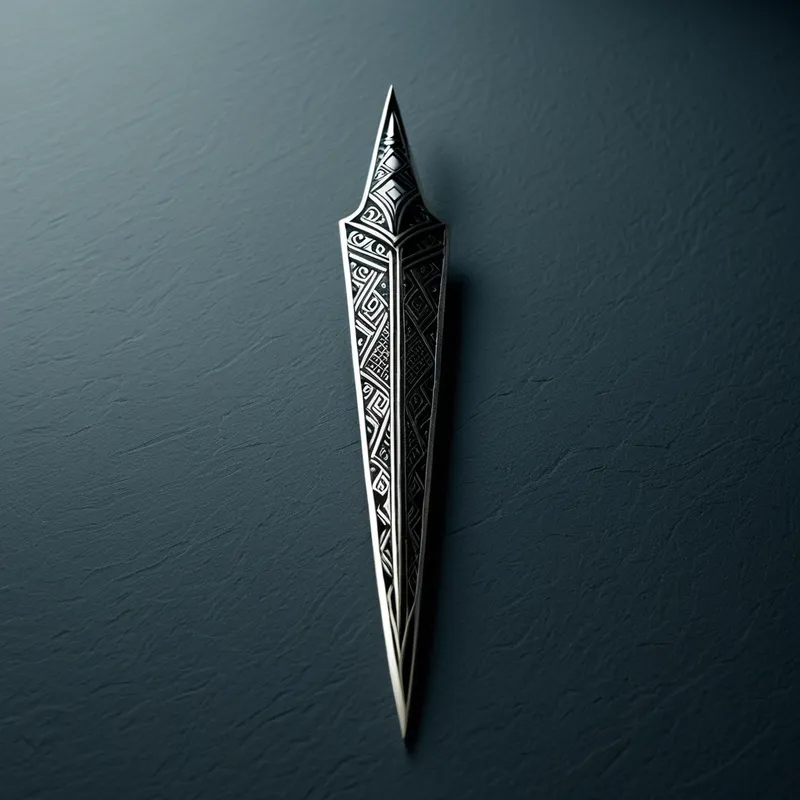
His exile became his training ground. As a herdsman for the Mthethwa people under the wise chief Dingiswayo, Shaka was not idle. He watched the ways of war. He saw the weakness of the traditional throwing spear, the assegai. In the solitude of the cattle posts, he dreamed of a new weapon: a short, broad-bladed stabbing spear—the iklwa—used with a large shield to close with and destroy the enemy. He drilled himself, transforming the dances of the herdsmen into lethal martial exercises.
When the call to destiny came, it was not a fanfare, but a test of loyalty and cunning. Dingiswayo, recognizing the lion in the youth, supported Shaka’s claim to his father’s vacant throne. The return was not a homecoming, but an invasion. Shaka, with a core of Mthethwa warriors and his revolutionary tactics, defeated his rivals. The prophecy began its inexorable unfoldment.
He did not merely become king. He became the architect of a people. He broke the old clan lineages, integrating warriors into new regiments based on age, not birth. He perfected the “bull’s horns” formation, a tactic of encirclement and annihilation. The impi was born, an instrument of terrifying efficiency. The scattered clans were absorbed, one by one, into the rising Zulu kingdom. The iShaka was indeed devouring, but what it consumed was disunity, forging the consumed into something harder, sharper, and united.
Yet the prophecy’s shadow lengthened. The fire of his will, which forged the nation, also burned those closest to him. Grief-stricken after the death of his mother Nandi, his heart, already tempered in conflict, turned to stone. Edicts of mourning led to widespread death. The very system he created—the celibate, regimented amakhanda—bred tensions. The cycle of creation and destruction, foretold from the beginning, reached its zenith. In the end, the instrument of his fall was not a foreign army, but the betrayal of his own half-brothers, a final, bloody act in the drama the sangoma had glimpsed in the smoke of the ancestors’ fire. The king was gone. The nation remained.

Cultural Origins & Context
This is not merely a historical account, but a living izithakazelo, a narrative tapestry woven from oral history, praise poetry (izibongo), and ancestral memory. The tale of Shaka exists in the space between documented event and mythic amplification. It was carried and shaped by izimbongi (praise singers) and elders, for whom history was not a list of dates but a moral and cosmological lesson about power, identity, and the consequences of destiny.
Its societal function was multifaceted. For the Zulu kingdom, it served as a foundational myth, explaining and legitimizing the radical social and military revolution that created them. It framed a period of immense trauma and change within a narrative of prophecy and inevitability, providing a sense of ordained purpose. On a personal level, it served as a parable about resilience, the transformative power of exile and hardship, and the double-edged nature of genius and absolute power. The myth does not shy away from Shaka’s brutality, presenting it as an intrinsic part of the prophetic package—a necessary, if terrible, medicine for the birth of a nation.
Symbolic Architecture
At its core, this is a myth of the [Hero](/symbols/hero “Symbol: A hero embodies strength, courage, and the ability to overcome significant challenges.”/) who is also a [Trickster](/symbols/trickster “Symbol: A boundary-crossing archetype representing chaos, transformation, and the subversion of norms through cunning and humor.”/), a figure of [Destiny](/symbols/destiny “Symbol: A predetermined course of events or ultimate purpose, often linked to spiritual forces or cosmic order, representing life’s inherent direction.”/) who must walk a [path](/symbols/path “Symbol: The ‘path’ symbolizes a journey, choices, and the direction one’s life is taking, often representing individual growth and exploration.”/) of thorns to claim his [crown](/symbols/crown “Symbol: A crown symbolizes authority, power, and achievement, often representing an individual’s aspirations, leadership, or societal role.”/).
The prophet is not the author of the prophecy; he is its first and most bound subject. His life becomes the ritual through which the unseen world manifests in the seen.
Shaka represents the eruptive force of individuation on a cultural scale. His illegitimate [birth](/symbols/birth “Symbol: Birth symbolizes new beginnings, transformation, and the potential for growth and development.”/) symbolizes the new [consciousness](/symbols/consciousness “Symbol: Consciousness represents the state of awareness and perception, encompassing thoughts, feelings, and experiences.”/) that is always initially rejected by the old order. His [exile](/symbols/exile “Symbol: Forced separation from one’s homeland or community, representing loss of belonging, punishment, or profound isolation.”/) is the necessary withdrawal into the [wilderness](/symbols/wilderness “Symbol: Wilderness often symbolizes the untamed aspects of the self and the unconscious mind, representing a space for personal exploration and discovery.”/), the [Forest](/symbols/forest “Symbol: The forest symbolizes a complex domain of the unconscious mind, representing both mystery and potential for personal growth.”/) of the [soul](/symbols/soul “Symbol: The soul represents the essence of a person, encompassing their spirit, identity, and connection to the universe.”/), where the old [identity](/symbols/identity “Symbol: Identity represents the sense of self, encompassing personal beliefs, cultural background, and social roles.”/) is stripped away and the new self is forged in solitude. The cattle he herds are the raw, instinctual energies he must learn to master and direct.
The iklwa is more than a [weapon](/symbols/weapon “Symbol: A weapon in dreams often symbolizes power, aggression, and the need for protection or defense.”/); it is a [symbol](/symbols/symbol “Symbol: A symbol can represent an idea, concept, or belief, serving as a powerful tool for communication and understanding.”/) of psychological [precision](/symbols/precision “Symbol: The quality of being exact, accurate, and meticulous. It represents control, clarity, and the elimination of error in thought or action.”/) and close confrontation. It represents the move from [projection](/symbols/projection “Symbol: The unconscious act of attributing one’s own internal qualities, emotions, or shadow aspects onto external entities, people, or situations.”/) (throwing the [spear](/symbols/spear “Symbol: The spear often symbolizes power, aggression, and the drive to protect or conquer.”/), blaming the outer world) to introjection and direct engagement with one’s [shadow](/symbols/shadow “Symbol: The ‘shadow’ embodies the unconscious, repressed aspects of the self and often represents fears or hidden emotions.”/). The large [shield](/symbols/shield “Symbol: A symbol of protection, defense, and boundaries, representing personal security, resilience, and the need to guard against external threats or emotional harm.”/) is the strengthened ego, the necessary [boundary](/symbols/boundary “Symbol: A conceptual or physical limit defining separation, protection, or identity between entities, spaces, or states of being.”/) that allows one to enter the fray of transformation. The [military](/symbols/military “Symbol: The military symbolizes discipline, authority, and often the need for structure or control in one’s life.”/) reforms symbolize the restructuring of the psyche—integrating disparate, warring complexes (clans) into a disciplined, hierarchical whole under the rule of a central consciousness (the [king](/symbols/king “Symbol: A symbol of ultimate authority, leadership, and societal order, often representing the dreamer’s inner power or external control figures.”/)).
The Dreamer’s Resonance
When this myth stirs in the modern Dream, it often heralds a profound, and often turbulent, call to self-realization. To dream of a Shaka-figure—an exiled, potent, and misunderstood leader—suggests the dreamer is grappling with a nascent, powerful aspect of their own identity that feels at odds with their family system, social environment, or internalized “tribal” rules.
Somatically, this may manifest as a tightness in the chest (the burden of a secret strength), a clenched jaw (unspeakable will), or restless energy in the legs (the urge to march toward one’s own destiny). Psychologically, it is the process of moving from a state of being defined by others (the scorned child) to defining oneself through disciplined action and vision (the king-architect). The dream may be populated with themes of unfair exile, of inventing new “weapons” or tools for life, or of facing the terrifying responsibility that comes with true autonomy. The shadow side, the prophecy’s cost, appears as dreams of unintended destruction, betrayal by close allies, or the chilling isolation of absolute authority.
Alchemical Translation
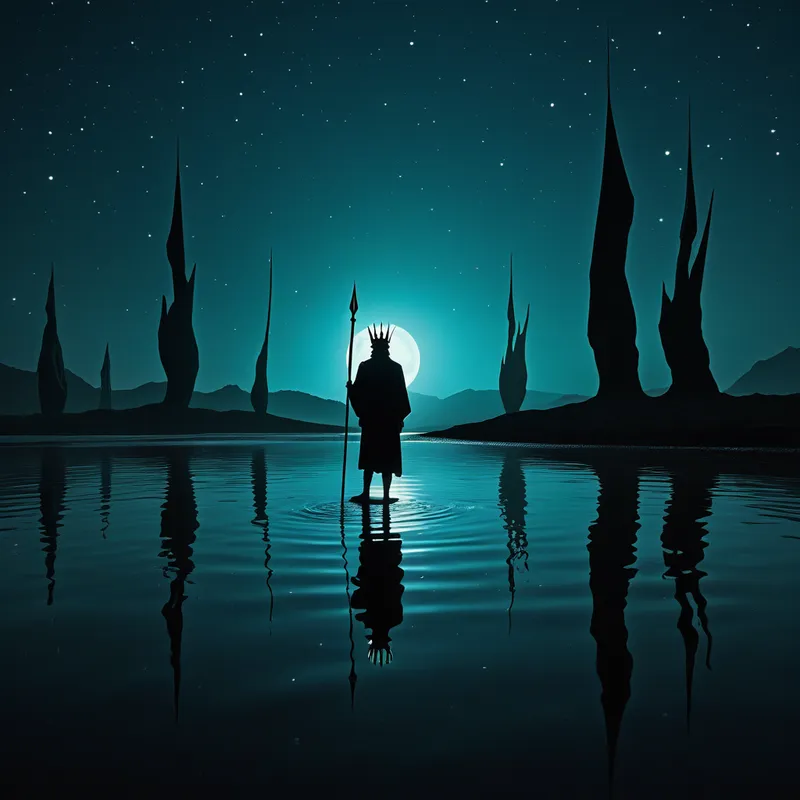
The alchemical journey mirrored in Shaka’s myth is that of separatio, coagulatio, and the perilous integration of the king and shadow.
The nation is born in the individual psyche first. To unite one’s inner clans requires a prophecy—a compelling, non-negotiable vision of who you are meant to be—and the courage to let it burn away who you are not.
The initial separatio is brutal: the expulsion from the familiar tribe, the rejection of the “illegitimate” self. This is the nigredo, the blackening, where the old identity dies in the fires of shame and hardship. The young Shaka in exile is the prima materia, the raw, suffering substance.
His innovations—the iklwa, the tactics—represent coagulatio, the giving of new form. This is not a return to the old form, but the creation of a new one. He doesn’t seek to become a better version of the old chiefs; he invents a new paradigm of power. In our individuation, this is the stage where we stop trying to fit broken molds and instead design our own principles, our own “weapons” for navigating the world.
The final, most difficult stage is the integration of the ruler with his inevitable shadow. The prophecy contained both light (unifier) and dark (destroyer). Shaka’s tragedy, and his mythic lesson, is that he could not integrate the latter. His grief, his rage, his paranoia—the unprocessed shadow—eventally turned his creation against him. The alchemical gold of a unified psyche requires acknowledging and tempering the destructive power that is the twin of great creativity. The modern individual’s journey is to heed the call of their own “prophecy” (unique destiny), endure the exile of differentiation, forge their own tools, but also to build a ibandla within—an inner council that prevents the king from becoming a tyrant to the self.
Associated Symbols
Explore related symbols from the CaleaDream lexicon:
- Hero — The archetypal journey from rejected outcast to nation-founder, embodying the struggle to realize a destined, transformative identity against all odds.
- Prophecy — The inescapable narrative of destiny that shapes Shaka’s life, representing the compelling, often burdensome call of one’s deepest purpose or fate.
- Exile — The necessary period of isolation and suffering where the old self is shed and the new, potent identity is forged in the fires of hardship and solitude.
- Spear — Specifically the iklwa, symbolizing innovation, close confrontation with challenge, and the focused, penetrating will required to enact profound change.
- Shield — The large cowhide shield represents defense, the establishment of strong boundaries, and the platform from which to engage directly with life’s battles.
- Dance — The war drills and martial exercises, transforming movement into discipline, symbolizing the ritualized, practiced embodiment of a new way of being.
- Mother — Nandi, “The Sweet One,” represents the foundational, nurturing love that is also a source of vulnerability and profound grief, shaping the hero’s emotional core.
- Shadow — The destructive, tyrannical aspect of Shaka’s power, the unintegrated darkness that accompanies great light and which ultimately leads to his downfall.
- King — The achieved state of sovereignty and order, the psyche’s central ruling principle that organizes disparate elements into a cohesive, powerful whole.
- Destiny — The overarching force of fate that drives the narrative, suggesting that some lives are lived as enactments of a larger, pre-ordained pattern with immense consequences.
- Betrayal — The inevitable consequence of unmitigated power and shadow, representing the fragmentation of trust and the turning of one’s own creations against the self.
- Transformation — The core process of the myth, the alchemical change from scattered clans to unified nation, mirroring the psychic journey from fragmentation to wholeness.