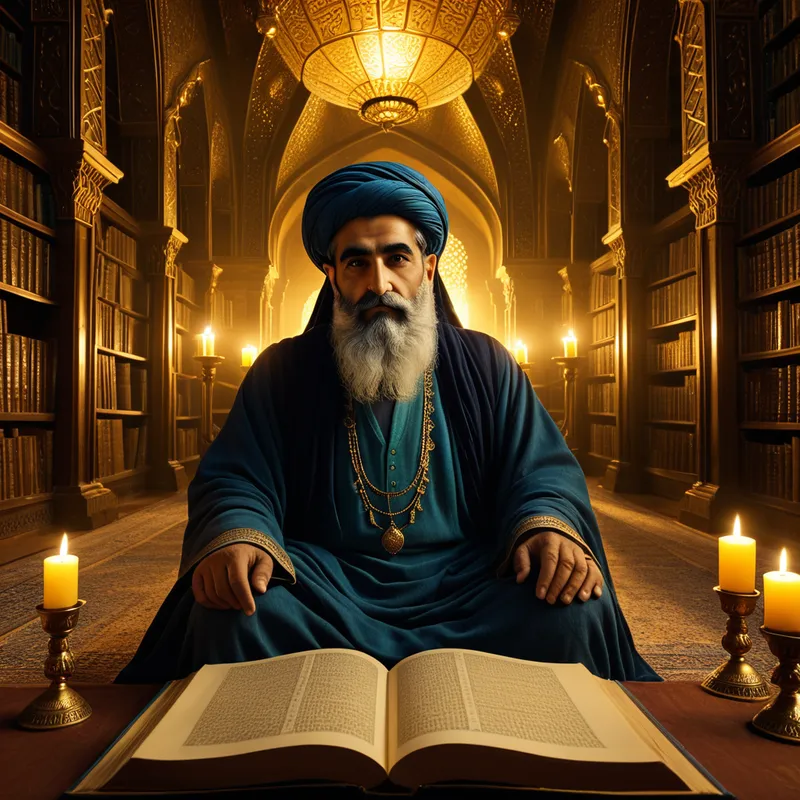
Shahnameh Epic Introduction Myth Meaning & Symbolism
The poet Ferdowsi, guided by divine inspiration, undertakes a lifelong quest to gather the scattered fragments of Iran's ancient glory into an immortal epic.
The Tale of Shahnameh Epic Introduction
Listen, and let the smoke of time clear. In the land of Khurasan, under a sky that had witnessed the rise and shatter of empires, there lived a man whose soul was a vessel for a nation’s ghost. His name was Abul-Qâsem Ferdowsi. He was not born to royalty, but to the quiet earth of Paj. Yet, in his chest beat a drum that echoed with the hoofbeats of Rostam’s horse, and in his ears whispered the laments of a thousand forgotten kings.
The land was wounded. The glorious tapestry of Iran’s memory—its heroes, its codes of Farrah (divine glory), its epic battles between light and shadow—was fraying, thread by thread, stolen by the relentless wind of years and conquest. The old tongues were fading; the stories were becoming half-remembered dreams told by firelight. A great silence, more terrifying than any dragon, was descending.
Then, a vision came to Ferdowsi, not in a blaze of fire, but as a deep, resonant calling from the very soil. It was the call of the Iran-zamin. He saw his purpose not as a choice, but as a sacred debt. He would become the memory-keeper, the word-smith, the one who would forge a Dezh of language to shelter the spirit of his people from the siege of oblivion.
For thirty long years, he labored. He became a wanderer in the deserts of time, seeking out the scattered fragments of the past. He consulted the Khwaday-Namag, listened to the songs of aged minstrels, and pieced together lineages from the whispers of ruins. His ink was his blood; his pen, a bone of his resolve. He wrestled with the demon of despair as funds dwindled and patrons turned away. He saw his own life passing—his youth spent, his hair turning to winter snow—all poured into the vast, growing manuscript.
Finally, in the twilight of his life, the great work was complete. He named it the Shahnameh. It was a universe bound in leather, 60,000 couplets holding the breath of a civilization. He sent it to the court of Sultan Mahmud, hoping for recognition, for a simple gesture that would honor the soul he had saved. The reward was an insult, a pittance. Heartbroken but unbowed, the old poet gave the money away and walked back into the obscurity from which he came.
Yet, in that seeming defeat lay his eternal victory. For the Shahnameh did not die. It took root in the heart of the people. It became their mirror, their compass, their unbreakable cord to a heroic self. Ferdowsi, the creator, had vanished into his creation, becoming immortal not as a man, but as the very voice of Iran’s enduring spirit.
Cultural Origins & Context
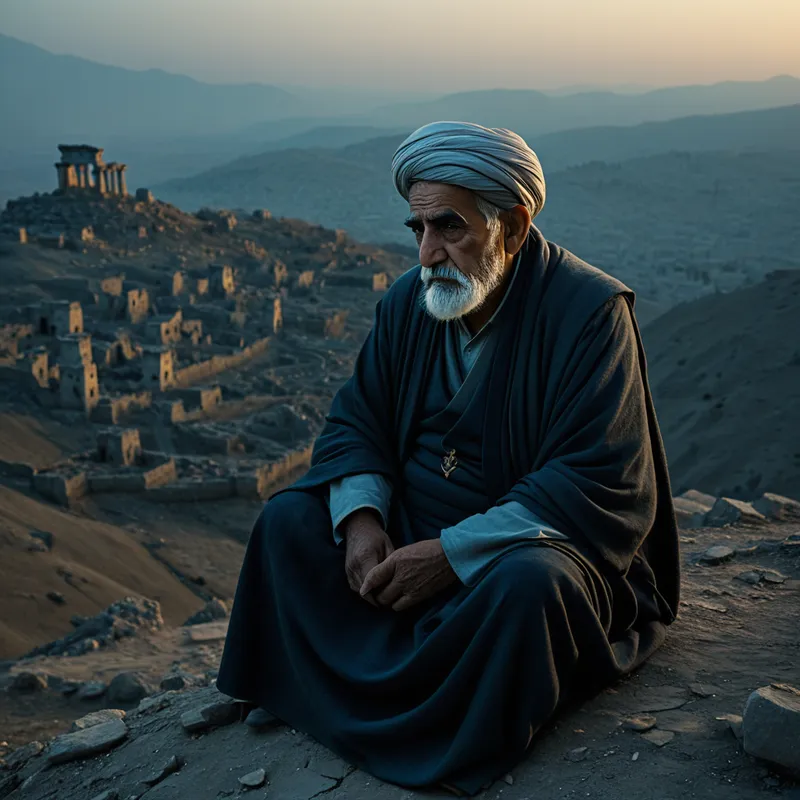
The Shahnameh was composed in the early 11th century CE, a pivotal moment in Persian history. The Arab conquests of the 7th century had brought profound linguistic and religious change. While Islam took root, a profound anxiety about cultural loss—the erasure of the pre-Islamic Iranian identity—permeated the learned classes. Ferdowsi’s work was the culmination of a deliberate, centuries-long project of cultural preservation known as the Shu’ubiyya movement.
He wrote in pure Persian, deliberately avoiding Arabic vocabulary, making the epic a fortress for the language itself. It was passed down not just in royal courts but in coffee houses, by Naqqals who would perform its verses with dramatic gestures, making Rostam and Siavash household names. Its societal function was multifaceted: it was a national history, a moral treatise on justice and kingship, a repository of Zoroastrian-inspired ethics like Asha, and, most importantly, the bedrock of Persian cultural identity for a millennium, defining what it meant to be Iranian through mythic memory.
Symbolic Architecture
The myth of the Shahnameh’s creation is not merely about writing a book. It is a profound [allegory](/symbols/allegory “Symbol: A narrative device where characters, events, or settings represent abstract ideas or moral qualities, conveying deeper meanings through symbolic storytelling.”/) for the psychological act of [soul](/symbols/soul “Symbol: The soul represents the essence of a person, encompassing their spirit, identity, and connection to the universe.”/)-making, both individual and collective.
Ferdowsi represents the ego tasked with a sacred, impossible duty: to gather the fragmented, forgotten, and shadowed aspects of the Self—the Self of a culture—and weave them into a coherent, beautiful, and enduring narrative. The scattered [stories](/symbols/stories “Symbol: Stories symbolize the narratives of our lives, reflecting personal experiences and collective culture.”/) are the lost and repressed contents of the cultural unconscious. The thirty years of labor symbolize the lifelong process of individuation, requiring patience, sacrifice, and a confrontation with one’s own [mortality](/symbols/mortality “Symbol: The awareness of life’s finitude, often representing transitions, impermanence, or existential reflection in dreams.”/).
The poet does not invent the epic; he midwifes it from the womb of time, listening to the whispers of the ancestors in the wind.
The insulting reward from Sultan Mahmud is crucial. It represents the world’s [indifference](/symbols/indifference “Symbol: A state of emotional detachment or lack of interest, often signaling avoidance, protection, or disconnection from feelings or situations.”/) or outright [rejection](/symbols/rejection “Symbol: The experience of being refused, excluded, or dismissed by others, often representing fears of inadequacy or social belonging.”/) of the soul’s deepest work. True creation is never for external validation. The ultimate value of the Shahnameh—its immortality—came not from royal decree, but from its [resonance](/symbols/resonance “Symbol: A deep, sympathetic vibration or connection, often in sound or feeling, that amplifies and harmonizes across systems.”/) with the collective soul. The [creator](/symbols/creator “Symbol: A figure representing ultimate origin, divine power, or profound authorship. Often embodies the source of existence, innovation, or personal destiny.”/) [archetype](/symbols/archetype “Symbol: A universal, primordial pattern or prototype in the collective unconscious that shapes human experience, behavior, and creative expression.”/) must often sacrifice personal acclaim for the sake of the creation itself, finding fulfillment in the work’s independent [life](/symbols/life “Symbol: The symbol of ‘Life’ represents a journey of growth, interconnectedness, and existential meaning, encompassing both the joys and challenges that define human experience.”/).
The Dreamer’s Resonance
When this mythic pattern stirs in the modern psyche, it often manifests in dreams of urgent, sacred tasks. You may dream of desperately trying to save precious, ancient books from a flood or fire. You might find yourself in a vast, labyrinthine archive, searching for a single, vital document you cannot read. There could be a profound, somatic feeling of carrying a heavy, invaluable burden—a stone, a child, a vessel of light—across a desolate landscape with no destination in sight.
These dreams signal a critical phase of psychological integration. The “flood” is the unconscious threatening to overwhelm. The “ancient books” are your own unlived life, inherited family patterns, or cultural traumas demanding recognition. The dreamer is being called to become their own Ferdowsi—to undertake the difficult, often lonely work of gathering the scattered, ignored, or shamed parts of their history and identity, and consciously weaving them into a personal narrative of meaning. It is the psyche’s imperative to create coherence before entropy wins.

Alchemical Translation
The alchemical process mirrored here is the opus magnum—the Great Work. The prima materia, the base matter, is the “chaos of forgotten time”—the raw, unprocessed mass of personal and ancestral memory, trauma, and potential. Ferdowsi’s thirty-year labor is the stage of nigredo, the blackening: the long, dark, frustrating work of confronting the shadow, gathering the fragments, and facing the despair of the task.
The composition itself is the albedo, the whitening: the ordering of chaos into beautiful, structured verse—the creation of a symbolic system (the personal myth) that makes sense of suffering and glory. The rejection by the Sultan is a final purification, separating the work’s true, intrinsic value from the dross of worldly approval.
The epic is not completed when the last word is written, but when it is released to live its own life within the soul of the reader.
The ultimate stage, rubedo (the reddening), is the epic’s immortality. The created work—now the integrated Self—becomes a generative, life-giving force. It is no longer your story alone; it becomes a touchstone for others, a source of strength and identity. The individual psyche, having successfully performed this alchemy, achieves a kind of timelessness. It has transmuted the lead of fragmented, mortal experience into the gold of a coherent, deathless identity. You become the author and the enduring tale.
Associated Symbols
Explore related symbols from the CaleaDream lexicon:
- Epic — The Shahnameh itself is the ultimate Epic, a complete world-narrative that structures chaos into a meaningful, heroic journey for an entire culture.
- Book — Represents the container of collective memory and identity, the sacred object forged from the struggle against oblivion and the fragmentation of time.
- Hero — Ferdowsi is the archetypal Hero of culture, whose quest is not to slay a beast but to resurrect and preserve the spiritual lineage of his people.
- Memory — The central conflict is the battle for Memory against the erosive forces of time, conquest, and forgetfulness; the epic is memory made tangible.
- Time — The primary antagonist in the myth, depicted as a silent, consuming force that scatters stories and erodes identity, which the poet must defy.
- Name — The epic preserves the Names of kings and heroes, ensuring they are not lost; in depth psychology, to be named is to be integrated into consciousness.
- Sacrifice — Ferdowsi’s sacrifice is his entire life—wealth, comfort, recognition—offered up on the altar of cultural preservation and artistic integrity.
- Soul — The Shahnameh is portrayed as the literal Soul of Iran, the animating spirit and defining essence of a civilization, given form through poetry.
- Creator — Ferdowsi embodies the Creator archetype, channeling divine inspiration to bring forth a new, enduring world from the raw materials of history and myth.
- Journey — The poet’s thirty-year labor is an inner and outer Journey through the landscapes of history, myth, and his own psyche to retrieve a lost treasure.
- Root — The epic serves as the cultural and psychological Root system, anchoring identity deep in a mythic past and providing nourishment for the present.
- Destiny — Ferdowsi’s task is presented not as a choice but as a Destiny, a sacred burden and calling that aligns his individual life with a cosmic purpose for his people.