Ryujin Dragon King of the Sea
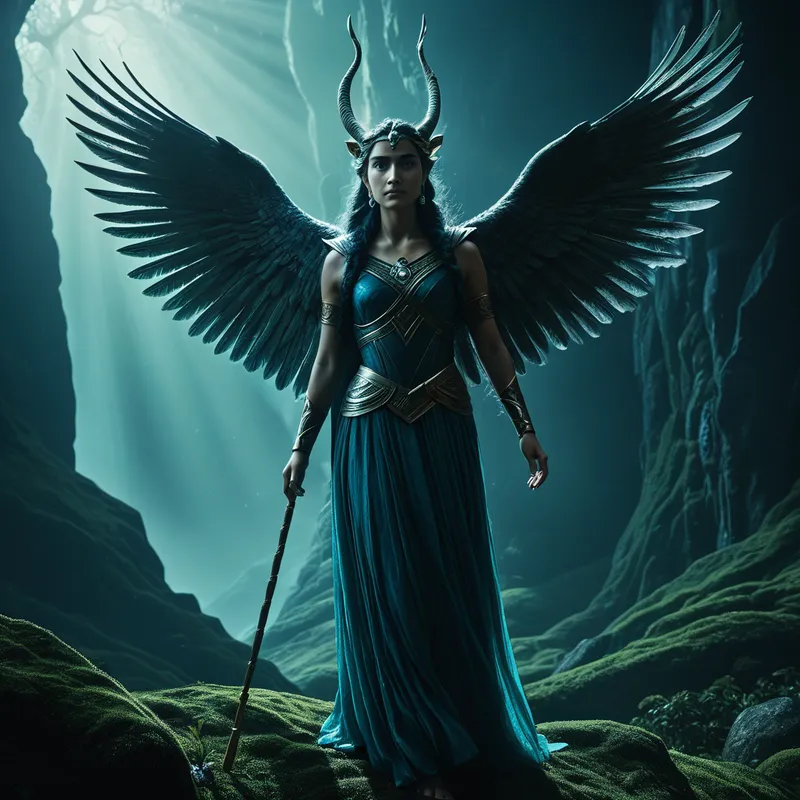
Ryujin is the powerful Dragon King who rules the seas in Shinto mythology, controlling tides, weather, and guarding mystical treasures in his underwater palace.
The Tale of Ryujin Dragon King of the Sea
Beneath the restless waves of [the sea](/myths/the-sea “Myth from Greek culture.”/), where sunlight fractures into emerald and sapphire beams, lies the realm of Ryūgū-jō. Its gates are of coral and [pearl](/myths/pearl “Myth from Chinese culture.”/), its gardens bloom with luminous seaweed, and its tides are the very breath of its sovereign: [Ryujin](/myths/ryujin “Myth from Japanese culture.”/), [the Dragon](/myths/the-dragon “Myth from Chinese culture.”/) King. He is not a beast of mindless fury, but an ancient intelligence, a deity whose serpentine form is woven from the ocean’s deepest mysteries. His scales shift from the black of the abyssal trench to the jade green of sunlit shallows, and his eyes hold the patient, knowing gaze of the depths.
One of the most enduring tales of Ryujin speaks not of conquest, but of a quest born from human devotion. The fisherman Urashima Tarō, a man of uncommon kindness, once freed a turtle from torment. In gratitude, [the turtle](/myths/the-turtle “Myth from Chinese culture.”/)—a servant of the [Dragon](/myths/dragon “Myth from Chinese culture.”/) King—carried him on its back down to the glittering palace. There, Ryujin received him as an honored guest. Time flowed differently in that aqueous realm; what seemed days of feasting and wonder in the company of Ryujin’s daughter, the princess Otohime, were years passing in [the world](/myths/the-world “Myth from Tarot culture.”/) above. When a homesick Urashima prepared to leave, Otohime gave him a tamatebako, a lacquered box, with a stern warning never to open it.
Returning to his village, Tarō found centuries had passed, his home and loved ones long turned to dust. In a moment of profound disorientation and grief, he violated the taboo and lifted the lid of the tamatebako. A wisp of white smoke—the preserved breath of his time in Ryūgū-jō—escaped and touched him. In an instant, the years the sea had withheld crashed upon him, and he aged into dust, leaving only the legend. This is the gift and the curse of Ryujin’s realm: it offers timeless wisdom but demands a sacrifice of the mortal world, guarding its secrets with the implacable logic of the deep.
Ryujin’s power is absolute within his domain. He commands the tides with the Tide Jewels, the Kanju and Manju, which can pull back the ocean or summon it in a devastating flood. These are not mere tools but extensions of his will, representing the dual nature of the sea as both nourisher and destroyer. His palace is the treasury of all that is lost to the waves and all that springs from them, a hoard not of greed but of cosmic balance.
Cultural Origins & Context
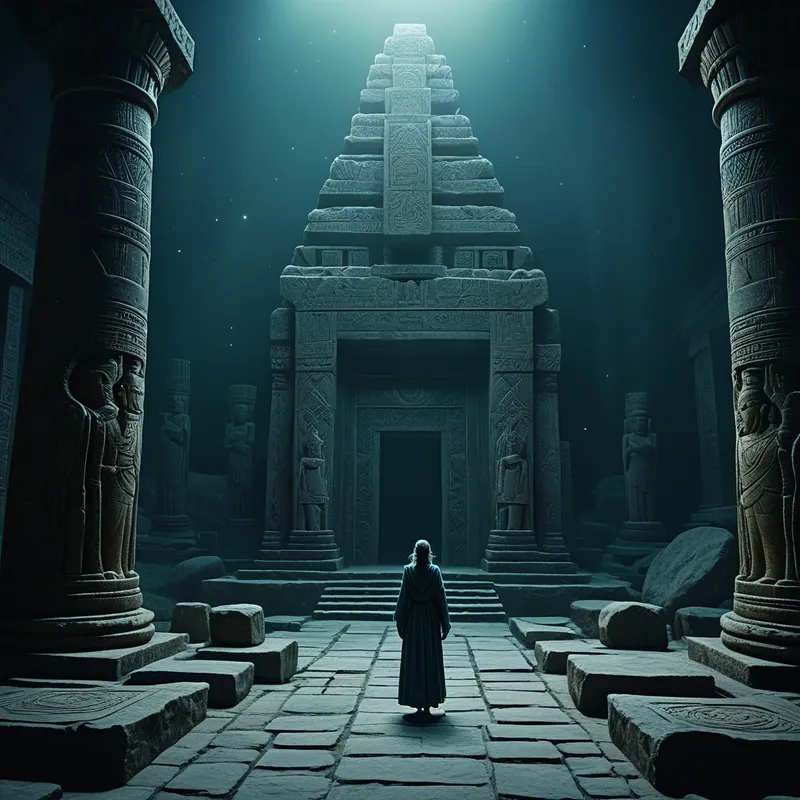
Ryujin (or Ryōjin) is a kami whose veneration is deeply rooted in the animistic heart of Shinto, where natural forces and phenomena are inherently divine. He is a synthesis of indigenous Japanese [water](/myths/water “Myth from Chinese culture.”/) deity worship and the later influence of Chinese dragon lore, which entered Japan via Buddhism and continental culture. Unlike the often-winged, fire-breathing dragons of the West, East Asian dragons like Ryujin are primarily water deities, associated with rainfall, rivers, and seas—the fundamental sources of life and fertility for an agrarian and fishing society.
He is particularly revered in coastal communities and among those who work upon the sea. Fishermen and sailors prayed to him for safe passage and bountiful catches, while farmers in inland areas saw him as the source of life-giving rain. This dual role positions him as a pivotal kami of sustenance and weather. Rituals and festivals, especially at shrines like the one at Sumiyoshi, sought to appease his tempestuous side and honor his generous one. In the foundational chronicles Kojiki and Nihon Shoki, his lineage is divine, and his influence directly impacts the terrestrial imperial line, cementing his role as a pillar of the natural and spiritual order.
Symbolic Architecture
Ryujin is the archetypal Ruler of the unconscious, the deep, chaotic, and generative [realm](/symbols/realm “Symbol: The symbol of ‘Realm’ often signifies the boundaries of one’s consciousness, experiences, or emotional states, suggesting aspects of reality that are either explored or ignored.”/) from which all [life](/symbols/life “Symbol: The symbol of ‘Life’ represents a journey of growth, interconnectedness, and existential meaning, encompassing both the joys and challenges that define human experience.”/) emerged. His underwater [palace](/symbols/palace “Symbol: A palace symbolizes grandeur, authority, and the pursuit of one’s ambitions or dreams, often embodying a desire for stability and wealth.”/), Ryūgū-jō, is not a [fortress](/symbols/fortress “Symbol: A fortress symbolizes security and protection, representing both physical and psychological safety from external threats.”/) but a [Temple](/symbols/temple “Symbol: A temple often symbolizes spirituality, sanctuary, and a deep connection to the sacred aspects of life.”/) of the deep self, a symbolic [structure](/symbols/structure “Symbol: Structure in dreams often symbolizes stability, organization, and the framework of one’s life, reflecting how one perceives their environment and personal life.”/) where the [soul](/symbols/soul “Symbol: The soul represents the essence of a person, encompassing their spirit, identity, and connection to the universe.”/)’s lost treasures and ancestral memories are stored. To [journey](/symbols/journey “Symbol: A journey in dreams typically signifies adventure, growth, or a significant life transition.”/) there is to dive into the unconscious, a perilous but transformative descent.
The Tide Jewels, Kanju and Manju, are perfect symbols of psychic regulation. They represent the ego’s necessary ability to both withdraw (ebb) and engage (flow) with the contents of the unconscious, controlling the tides of emotion and instinct lest they overwhelm the conscious mind.
The tale of Urashima Tarō and the tamatebako is a profound psychological parable. The box is the secret of the unconscious itself—it can preserve a state of blissful, timeless [integration](/symbols/integration “Symbol: The process of unifying disparate parts of the self or experience into a cohesive whole, often representing psychological wholeness or resolution of internal conflict.”/) (the time in the palace), but to forcibly “open” it, to try to consciously possess and rationalize that numinous experience, is to destroy its magic and be consumed by the very time one sought to escape. The sea, as Ryujin’s [body](/symbols/body “Symbol: The body in dreams often symbolizes the dreamer’s self-identity, personal health, and the relationship they have with their physical existence.”/), is the primordial [Mother](/symbols/mother “Symbol: The symbol of ‘Mother’ represents nurturing, protection, and the foundational aspect of one’s emotional being, often associated with comfort and unconditional love.”/) of life, but also the realm of final return—a [symbol](/symbols/symbol “Symbol: A symbol can represent an idea, concept, or belief, serving as a powerful tool for communication and understanding.”/) of the [cyclic nature](/symbols/cyclic-nature “Symbol: Cyclic Nature represents the perpetual rhythms of life, encompassing both natural cycles and the seasons of human experience.”/) of existence where [Death](/symbols/death “Symbol: Symbolizes transformation, endings, and new beginnings; often associated with fear of the unknown.”/) and [Rebirth](/symbols/rebirth “Symbol: A profound transformation where old aspects of self or life die, making way for new beginnings, growth, and renewal.”/) are constant currents.
The Dreamer’s Resonance
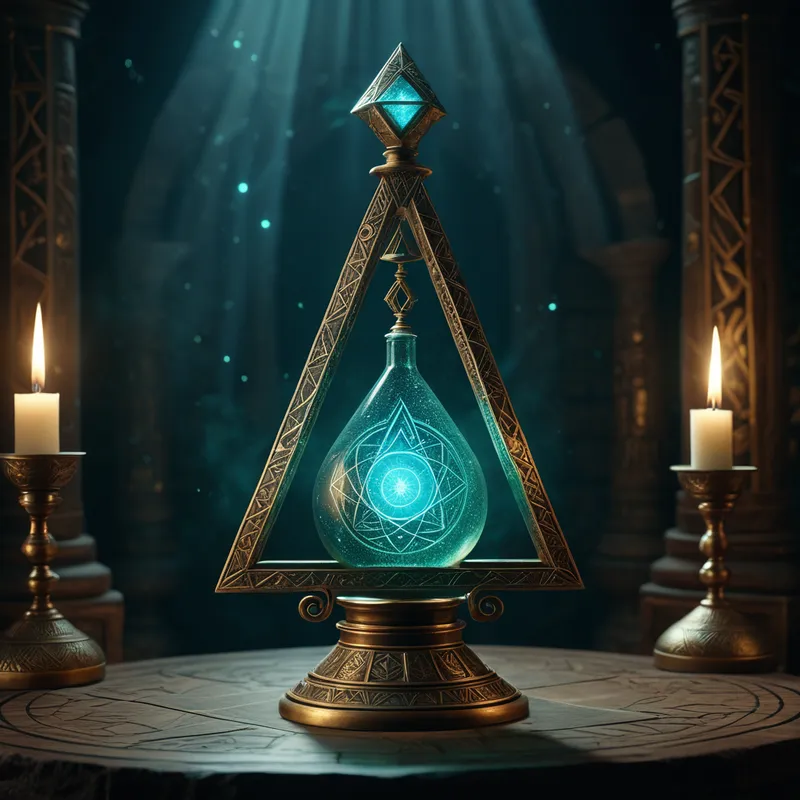
To encounter Ryujin in a dream or active imagination is to meet the sovereign of one’s own inner depths. He appears when the deep waters of the [psyche](/myths/psyche “Myth from Greek culture.”/) are stirred—during periods of emotional flood, creative drought, or when navigating profound life transitions. He is the ruler of all that is hidden, powerful, and teeming with potential beneath the surface of daily awareness.
The dreamer feeling adrift on rough seas may be experiencing Ryujin’s tempestuous aspect, a call to acknowledge unexpressed Rage or turbulent emotion. Conversely, a dream of serene, luminous underwater gardens may signal a harmonious connection with the intuitive, nourishing depths. The longing to find Ryūgū-jō reflects a soul’s yearning for its own lost wholeness, for the treasure of authentic self that lies buried under the adaptations and wounds of life. Ryujin challenges the dreamer to develop their own Tide Jewels—the capacity to master their inner tides without denying the sea itself.

Alchemical Translation
The alchemical journey to the [lapis philosophorum](/myths/lapis-philosophorum “Myth from Alchemical culture.”/), the philosopher’s stone, mirrors the descent to Ryūgū-jō. It is the [nigredo](/myths/nigredo “Myth from Alchemical culture.”/), the descent into the chaotic [prima materia](/myths/prima-materia “Myth from Alchemical culture.”/) of the unconscious (the ocean), where the old ego (Urashima’s former life) is dissolved. Ryujin’s palace is the stage for the [albedo](/myths/albedo “Myth from Alchemical culture.”/), the washing and purification in the lunar, reflective waters, often represented by the mystical Mirror that can reveal truth.
Ryujin himself is the archetype of the Senex, the old king who holds the treasure of deep time and instinctual wisdom. The alchemical “king” must be drowned in the sea (the solutio) to be renewed. Ryujin’s realm performs this operation, dissolving rigid consciousness so it may be reconstituted with greater integrity.
The forbidden tamatebako is the ultimate alchemical vessel, the [vas hermeticum](/myths/vas-hermeticum “Myth from Alchemical culture.”/). It contains the unified spirit, the integrated self that exists outside of linear time. To open it prematurely is the great error, the spoiling of the work, releasing the volatile spirit before it is fully fixed. The work with Ryujin is the long, patient work of incubation in the salty womb of the soul, holding the tension of opposites (ebb and flow, life and [death](/myths/death “Myth from Tarot culture.”/)) until a new, more durable consciousness is born from the deep.
Associated Symbols
Explore related symbols from the CaleaDream lexicon:
- Ocean — The vast, unconscious psyche, the source of all life and the realm of deep, often hidden truths and emotions.
- Dragon — Primal, instinctual power and wisdom, often guarding great treasures within [the self](/myths/the-self “Myth from Jungian culture.”/) or the world.
- Temple — A sacred inner structure of the psyche, a place of encounter with the divine and repository of profound meaning.
- Mother — The archetypal source of life, nourishment, and the primal waters from which consciousness emerges.
- Death — Not merely an end, but a necessary transformation, a dissolution into the source required for renewal.
- Rebirth — The emergence of a renewed state of being from a period of dissolution or symbolic death.
- Mirror — A symbol of reflection, truth, and self-knowledge, often revealing what is hidden on the surface.
- Rage — A powerful, often repressed, emotional force that, like a storm at sea, must be acknowledged and navigated.
- Journey — The essential process of descent and return, moving from the known world into the unknown depths of experience for transformation.
- Treasure — The latent potential, wholeness, or authentic self that lies hidden within the depths of the unconscious.
- Tide — The natural, cyclical rhythms of energy, emotion, and engagement with the inner and outer worlds.