
Rigpa and the Nature of Mind
Rigpa is the primordial awareness at the heart of Tibetan Buddhism, representing the mind's true nature beyond concepts and dualities.
The Tale of Rigpa and the Nature of Mind
In the beginning, before the first thought stirred, there was a luminous clarity, vast and serene. This was not a thing to be made, but the very ground from which all things arise. This is the tale of Rigpa, and the long, patient journey of the mind to recognize its own face.
Imagine a wanderer in a boundless, mist-shrouded valley. For lifetimes, they have walked, crafting intricate maps of the terrain—the hills of hope, the rivers of desire, the thick forests of fear. They believe themselves to be this mapmaker, this chronicler of experience, lost in a world of their own description. This is the ordinary, dualistic mind, sems, which mistakes its own flickering projections for reality. It is like a person who, upon seeing a coiled rope in dim light, immediately flees in terror of a snake. The snake is utterly real to them, its venom a palpable threat, yet it has no existence outside the projection of their own fear.
The masters say that one day, through grace or the exhaustion of seeking, the wanderer simply stops. The mist does not part by force, but in the stillness of that cessation, it begins, of itself, to thin. There is no new light brought in; rather, the innate luminosity that was always present is revealed. In that instant of uncontrived presence, the wanderer turns from the map and looks directly at the ground upon which they stand. They see the rope for what it is. This turning, this naked recognition, is Rigpa. It is not an achievement, but a homecoming. It is the mind knowing itself, not as an object of knowledge, but as the pure, knowing space in which all objects—thoughts, feelings, sensations—appear and dissolve like clouds in a boundless sky.
The tale is not of a hero slaying a beast, but of the beast being seen through, revealing itself to have been made of the same luminous substance as the hero all along. The struggle ceases not through victory, but through recognition. The snake of samsara and the rope of nirvana are seen to be of one taste in the light of Rigpa. This is the great secret the masters guard: not a secret to be hidden, but one so obvious it is perpetually overlooked, like one’s own face.
Cultural Origins & Context
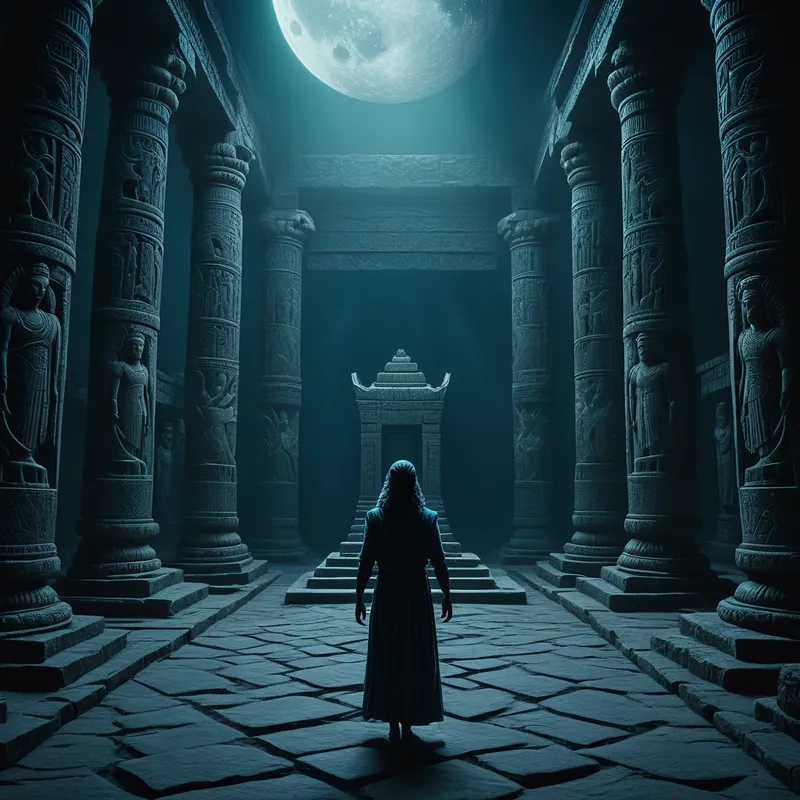
Rigpa is the heart-essence of the Dzogchen tradition, the pinnacle of the Ancient (Nyingma) school of Tibetan Buddhism. Its origins are traced to the primordial Buddha Samantabhadra, who represents this awakened state itself, and its transmission flowed into the human realm through a lineage of enlightened masters like Garab Dorje and Padmasambhava in the 8th century. These teachings were preserved as terma, or "hidden treasures," concealed to be revealed by destined masters, or tertöns, at auspicious times.
This concept exists within a sophisticated Buddhist psychological framework. It distinguishes itself from the ordinary, conditioned mind-stream (sems), which is characterized by subject-object duality, grasping, and aversion. Rigpa is the unconditioned ground of that very mind. While related to terms like Buddha-nature (tathāgatagarbha) or luminosity (prabhāsvara) found in other Buddhist traditions, Dzogchen’s presentation of Rigpa is uniquely direct and non-gradual. It is not a fruit to be cultivated over eons, but the root to be recognized in this very moment. The entire cultural edifice of Dzogchen—its empowerments, its pointing-out instructions, its profound contemplative practices—is architectured not to build Rigpa, but to create the conditions for the student to recognize what has always been present.
Symbolic Architecture
The symbolic architecture of Rigpa is a map of the mind’s own territory, designed not to describe but to evoke.
The Mirror is perhaps the central symbol. Ordinary consciousness is like a dusty mirror, reflecting distorted images and believing them to be real. Rigpa is the mirror’s own clear, reflective capacity—utterly empty in itself, yet capable of holding the entire universe of appearance without judgment or alteration. The reflections (thoughts, emotions) are not the enemy; the problem is our fixation on them, forgetting the mirror.
The Sky and the Clouds articulate the relationship between Rigpa and thought. Rigpa is the open, unchanging sky. Thoughts, emotions, and sensations are the clouds that form, drift, and dissolve within it. The practice is not to destroy the clouds, but to realize your identity as the sky, which can never be tainted or damaged by the clouds’ temporary passage.
This architecture dismantles the seeker’s habitual stance. The path is not a movement from here to there, but a deepening into the here. The goal is not a distant light, but the recognition of the lamp that has been burning within all along. It is a shift from doing to being, from fixing to seeing through.
The Dreamer's Resonance
From the perspective of depth psychology, Rigpa resonates profoundly with the concept of the transcendent function or the Self in its totality, beyond the ego-complex. The ego, like sems, is a necessary organizer of experience, a mapmaker. But it is prone to identification, inflation, and defense. It mistakes its partial narrative for the whole story, creating what Buddhism calls suffering and psychology calls neurosis.
The recognition of Rigpa is akin to the moment in therapy or active imagination when one realizes, “I am not just this anger, this fear, this story. I am the space in which this anger is arising.” It is the discovery of the witness, not as a cold observer, but as a field of compassionate, intelligent awareness that can hold all contents without being consumed by them. This is the healing ground. The wounds of the psyche—grief, shame, rage—are not violently excised; they are allowed to surface and be seen in this luminous space, where they naturally begin to untangle and transform.
The dreamer who touches this quality in themselves moves from being a passive victim of their inner weather to being the encompassing atmosphere. It fosters a profound integration, where nothing in the human experience is rejected, but everything is met with the clarity of Rigpa. This is not dissociation, but the ultimate association—a re-membering of the whole self.

Alchemical Translation
The alchemical process here is one of solve et coagula—dissolving and coagulating—applied to consciousness itself. The initial stage is the solve: the deconstruction of the solid, belief-based identity. Meditation and inquiry dissolve the apparent solidity of the ego, the "I" that seems to own thoughts and feelings. This can feel like a death, an unraveling, a confrontation with chaos or the void.
This dissolution, however, reveals the prima materia of mind: the luminous, empty-awareness of Rigpa. This is the discovery of the philosopher’s stone—not a physical object, but the fundamental nature of awareness itself, which has the capacity to transmute base mental states into wisdom. Anger, seen in Rigpa, reveals its essence as mirror-like wisdom; desire becomes the wisdom of discernment.
The coagula is not the rebuilding of a new, better ego. It is the spontaneous, effortless expression of Rigpa’s qualities—compassion, clarity, and boundless energy—within the relative world. The alchemist returns to the marketplace, not as a beggar seeking gold, but as one who knows all substance is already golden. The base metal of ordinary perception is transmuted into the gold of pure perception (dag snang), where the world is seen not as separate from awareness, but as its radiant, playful display.
Associated Symbols
Explore related symbols from the CaleaDream lexicon:
- Mirror — The pristine, reflective nature of primordial awareness, showing all things without distortion or attachment.
- Sky — The boundless, unchanging ground of being, within which the clouds of thought and emotion transiently appear.
- Light — The innate luminosity of mind that illuminates experience without being affected by what it reveals.
- Ocean — The deep, vast, and unwavering nature of Rigpa, with waves of thought rising and falling on its surface.
- Mountain — The unwavering stability and immovable presence of the true nature of mind amidst changing conditions.
- Lotus — The purity and luminous clarity of awakened awareness, which arises unstained from the mud of samsaric confusion.
- Cave — The inner sanctum of the heart-mind where the direct recognition of one’s true nature is discovered in silence.
- Key — The pointing-out instruction from a master, which unlocks the door to recognizing the innate freedom already present.
- Dream — The illusory, self-liberating display of reality as understood from the vantage point of awakened awareness.
- Circle — The perfection, completeness, and non-dual totality of Rigpa, having no beginning, end, or division.
- Sun — The self-existing radiance that dispels the darkness of ignorance, shining continuously from within.
- Uncharted Mindscape — The primordial ground of being before the maps of conceptual mind are laid upon it.