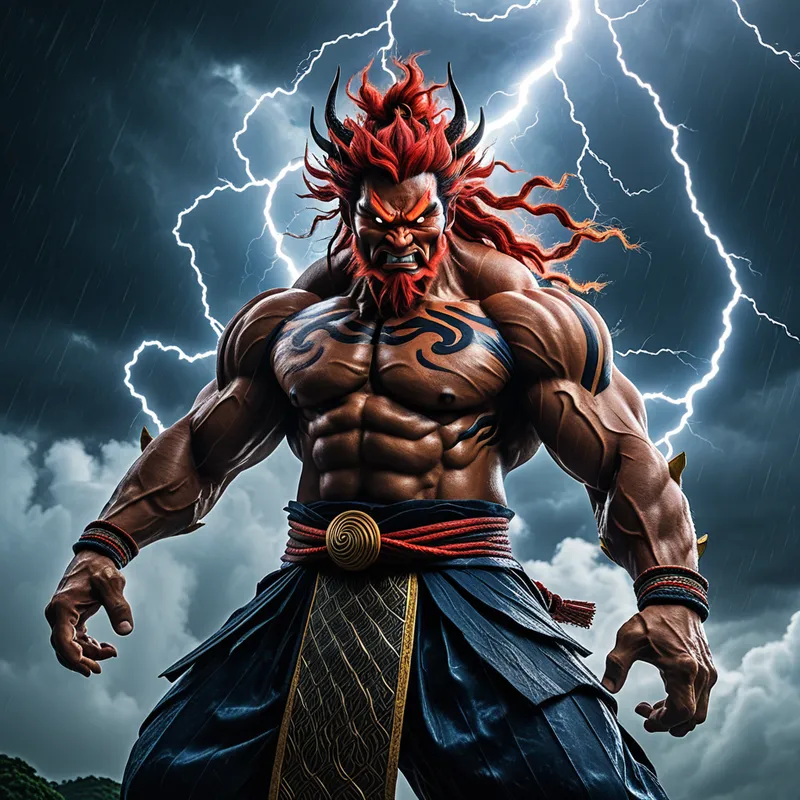
Raijin Myth Meaning & Symbolism
The myth of the thunder god Raijin, a primal force of creation and destruction, embodying the raw, untamed power of nature and the human psyche.
The Tale of Raijin
Listen. Can you hear it? Not the gentle patter, but the one that comes before—the deep, silent pressure that makes the air itself feel heavy, that makes the birds cease their song. It is the breath of the sky, holding itself in anticipation. And then… Kaminari.
In the age when the world was still writing its first stories upon the wet clay, the heavens were not a placid blue dome. They were a realm of warring spirits, of elemental wills. From this primordial chaos, born of the very death of the goddess Izanami, came a being of pure, untamed fury. His name was Raijin.
He did not walk; he descended. His form was not soft flesh but the taut muscle of the storm front. His skin, the color of a vengeful sunset, glowed against the bruised purple and black of his domain. His hair, wild and unbound, was not hair at all but tongues of dark flame, crackling with static. But his eyes—his eyes were the heart of the matter. They held not malice, but a terrifying, focused intensity, the pure will to sound, to break the silence of the ordered world.
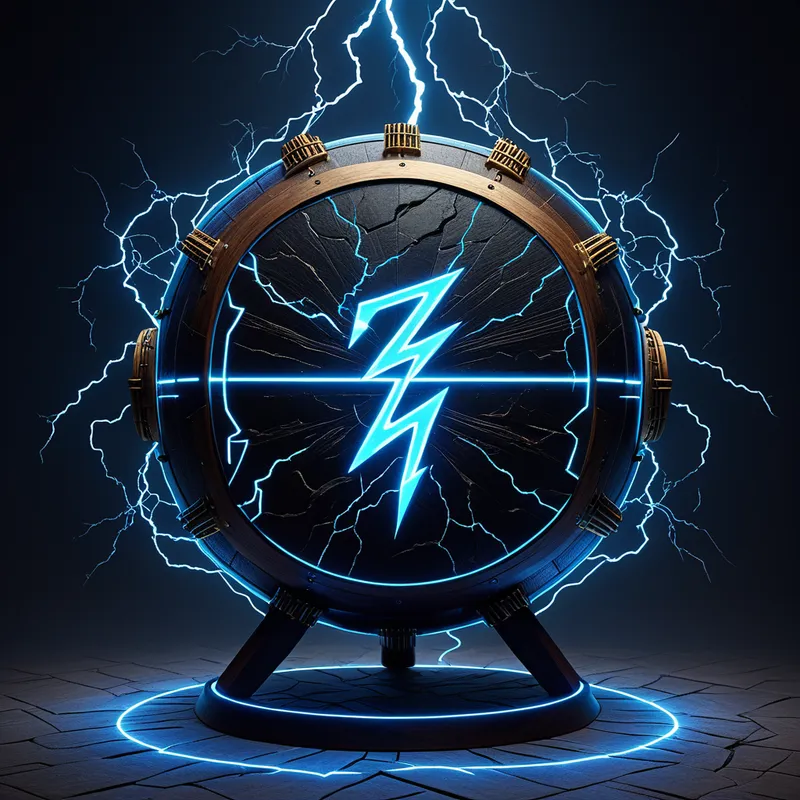
His companions were his drums, great taiko that hung in the air around him, skins stretched tight over frames of ancient wood. In his hands, he held mallets that were extensions of his own furious energy. He did not merely play the drums; he argued with the sky. Each strike was a declaration, a challenge to the calm, to the predictable sunrise, to the quiet growth of rice in the paddies below.
The people on the earth knew him by his works. First, the impossible flash that tore the world in two for a heartbeat—the searing white-blue of his lightning, his children, the raiju. Then, the sound. Not a single boom, but a rolling, cracking, world-shaking roar that began in the bones and vibrated up through the feet. It was the voice of the drum made manifest, a sound so vast it felt physical, washing over villages, shaking the very timbers of homes, rattling the doors of shrines.
He was not alone in the sky. There was Fujin, his brother, the howling wind who raced ahead of him, tearing leaves from trees and whipping the sea into frenzy, clearing the path for the thunder’s arrival. Together, they were the chaos that preceded renewal. They were the terror in the night that made the morning’s sunshine a prayer answered.
And what was his purpose? It was not to destroy, though destruction followed in his wake. It was to remind. To shake the world from its slumber. To shatter the illusion of human control with a single, deafening beat. His was the music of inevitability, the rhythm of a power that asked for no permission, that bowed to no emperor. When the rains came after his fury, filling the rivers and soaking the fields, it was understood: this was the bargain. The fear, the awe, the shattered trees—this was the price for the water of life. Raijin was the terrifying midwife to creation itself.

Cultural Origins & Context
The myth of Raijin finds its roots in the animistic heart of Shinto, where natural phenomena are not merely events but the actions of conscious, powerful spirits, or kami. He is not a god from a distant, perfected pantheon, but a direct expression of the environment that shaped the Japanese archipelago—a land of violent typhoons, sudden mountain storms, and the ever-present threat and blessing of the seasonal rains.
His imagery solidified during the Heian and Kamakura periods, often depicted as a fearsome oni-like figure. This was not to demonize him, but to visually communicate his raw, untamed, and potentially dangerous nature. He was propitiated, not only out of fear but out of a profound understanding of reciprocity. Farmers and fishermen knew their survival depended on the storms he brought; thus, rituals and small shrines sought to appease his wrath and invite his beneficial rains.
The myth was passed down not in a single, canonical text, but through a mosaic of folk tales, artistic representations in scrolls and temple sculptures, and oral tradition. Parents would tell children to hide their navels during a storm, lest the raiju, seeking shelter, dart inside. This was practical mythology, a story that explained a somatic reality (the tight, fearful feeling in the gut during a thunderstorm) and offered a ritual action to regain a sense of control. Raijin’s myth functioned as a societal pressure valve, giving a name, a face, and a narrative to the overwhelming and uncontrollable forces upon which life precariously depended.
Symbolic Architecture
Raijin is the archetypal embodiment of raw, disruptive power. He symbolizes the necessary chaos that precedes all order, the thunderclap that shatters stagnation. Psychologically, he represents the aspect of the Self that is untamed, instinctual, and refuses to be civilized—the thunder in the human soul.
The storm does not ask the field if it wishes to be watered; it simply is. So too, the psyche’s deepest transformations arrive not with polite knocking, but with world-shaking percussion.
His drums are key. They symbolize the primordial heartbeat, the rhythm of creation and destruction that underlies all apparent stability. The lightning is sudden insight, the brilliant, terrifying flash of truth that illuminates the landscape of the mind in a way daylight never can, often burning away old, rigid structures. The accompanying rain is the emotional release and the nourishment that follows psychological upheaval.
Raijin, paired with Fujin, represents the inseparable duality of expression: the wind (breath, spirit, direction) and the thunder (voice, impact, consequence). One cannot exist without the other in the act of true creation. He is the Rebel archetype in its most elemental form, not rebelling against a specific tyrant, but against the very tyranny of silence, predictability, and lifeless order.
The Dreamer’s Resonance
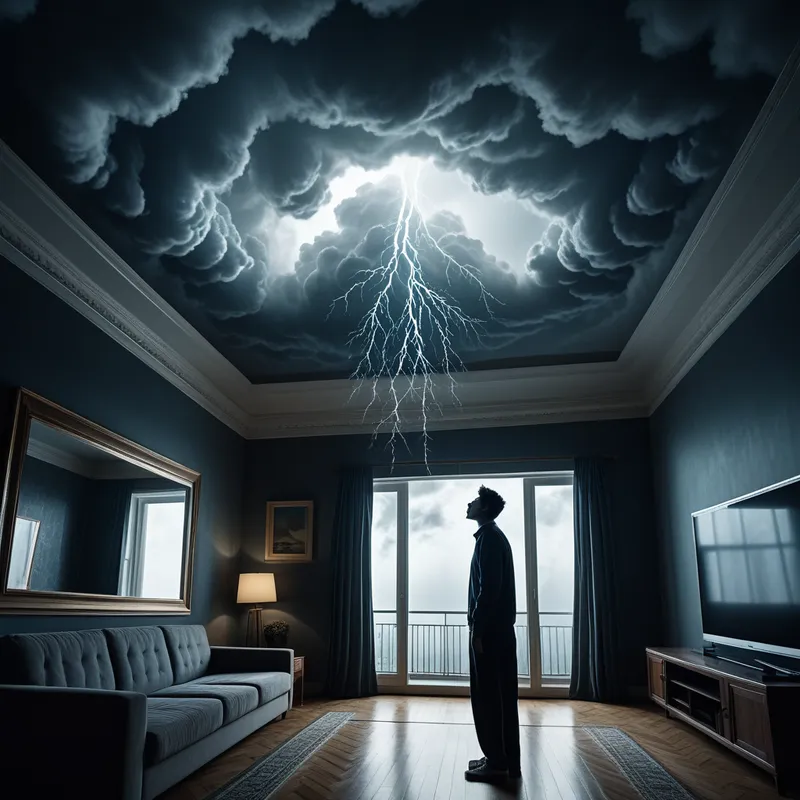
When Raijin storms into the modern dreamscape, he rarely appears in his full mythological regalia. The conscious mind translates the archetype into contemporary symbols. To dream of sudden, inexplicable, and overwhelming noise—a building shaking, a deafening crash with no source—is to dream the Raijin pattern. It is a somatic experience in sleep: the dreamer often jolts awake with a racing heart, a literal embodiment of being “thunderstruck.”
This dream signals that a force within the psyche, long suppressed or ignored, is demanding to be heard. It is the thunder of repressed anger that can no longer be silenced, the lightning flash of a painful truth breaking through denial, or the impending storm of a life change that the dreamer is resisting. The anxiety is not about the content itself, which remains hidden, but about the form of its arrival—its violence, its lack of warning, its sheer power to disrupt the fragile order of the dreamer’s inner world. The dream is a warning and an announcement: a psychic weather system of great magnitude is here, and preparation (or surrender) is necessary.
Alchemical Translation
The individuation process, the journey toward psychic wholeness, is not a gentle stroll. It requires confronting the Raijin within—the chaotic, powerful, and terrifying aspects of oneself that society, and the ego, have tried to mute. The alchemical work is not to defeat this inner thunder god, but to learn to bear his presence, to understand his rhythm, and ultimately, to translate his destructive fury into creative power.
The goal is not to silence the drums, but to learn their rhythm and discover that you are not the village being shaken, but the drummer who holds the mallet.
The first stage is confrontation with the shadow: acknowledging the rage, the wildness, the capacity for disruption that one possesses. This is the lightning flash, painful and illuminating. The second is containment: building the psychological equivalent of the drum—a vessel strong enough to hold this energy. This could be a creative practice, a physical discipline, or a therapeutic container where the “noise” can be expressed without literal destruction. The final stage is conduction: consciously directing this immense energy. The mallet strikes with purpose. The thunder becomes a voice of conviction. The lightning becomes inspired action. The chaotic storm transforms into the life-giving rain that nourishes new growth.
Raijin’s myth teaches that wholeness includes the capacity for holy terror—both to feel it and to wield it. To become fully oneself is to make peace with the storm, to recognize its necessity, and to find, within its terrifying music, the primal beat of your own authentic existence.
Associated Symbols
Explore related symbols from the CaleaDream lexicon: