Poseidon's Domain Myth Meaning & Symbolism
The myth of Poseidon's turbulent, sovereign realm beneath the waves, a story of primal power, emotional tempests, and the foundation of the world.
The Tale of Poseidon’s Domain
Hear now the tale of [the world](/myths/the-world “Myth from Tarot culture.”/) beneath the world, the realm that is not land, nor sky, but the ceaseless, sighing deep. Before the first ship dared [the horizon](/myths/the-horizon “Myth from Various culture.”/), before heroes drew breath, the brothers cast lots for their kingdoms. From the murk of conquered Titans, [three fates](/myths/three-fates “Myth from Greek culture.”/) were drawn.
Zeus took the shimmering vault of heaven, the domain of lightning and law. [Hades](/myths/hades “Myth from Greek culture.”/) received the silent, echoing lands below. But to the middle brother, the one with the storm in his brow and the earthquake in his step, fell the greatest and most terrible prize: the salt-veined, fathomless sea.
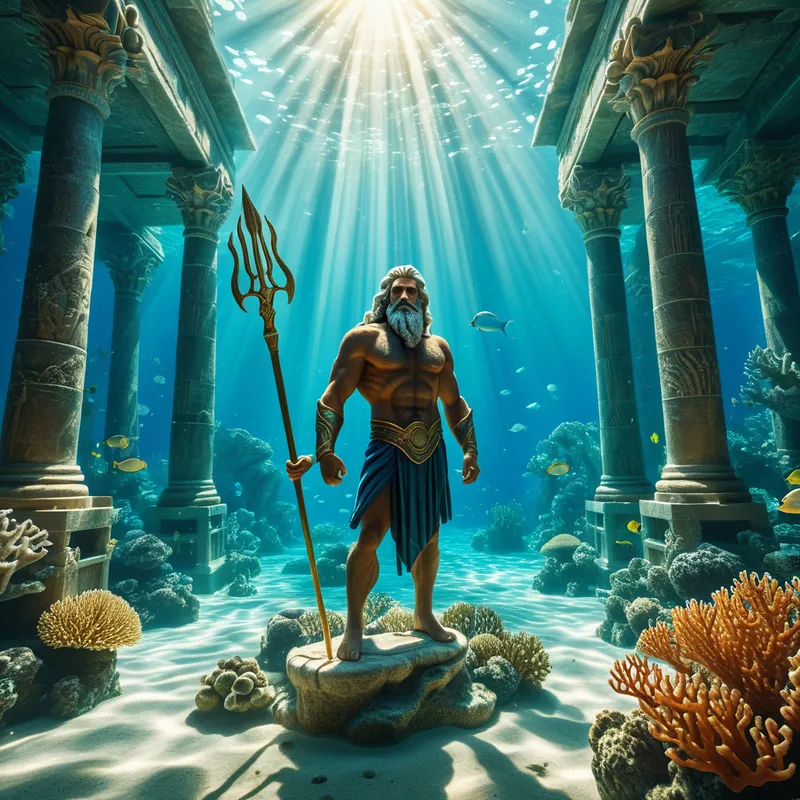
This was the domain of [Poseidon](/myths/poseidon “Myth from Greek culture.”/). Not a gentle kingdom of sunlit shallows, but the abyssal heart of the world. His palace, Aegae, lay where the light of [Helios](/myths/helios “Myth from Greek culture.”/) died, a cavern of living coral and columns of whalebone, lit by the cold fire of bioluminescent jellyfish. Here, he sat upon a throne of pitted stone from the world’s first shore, his blue-black beard tangled with seaweed, his hand ever resting on the shaft of his three-pronged spear, the trident.
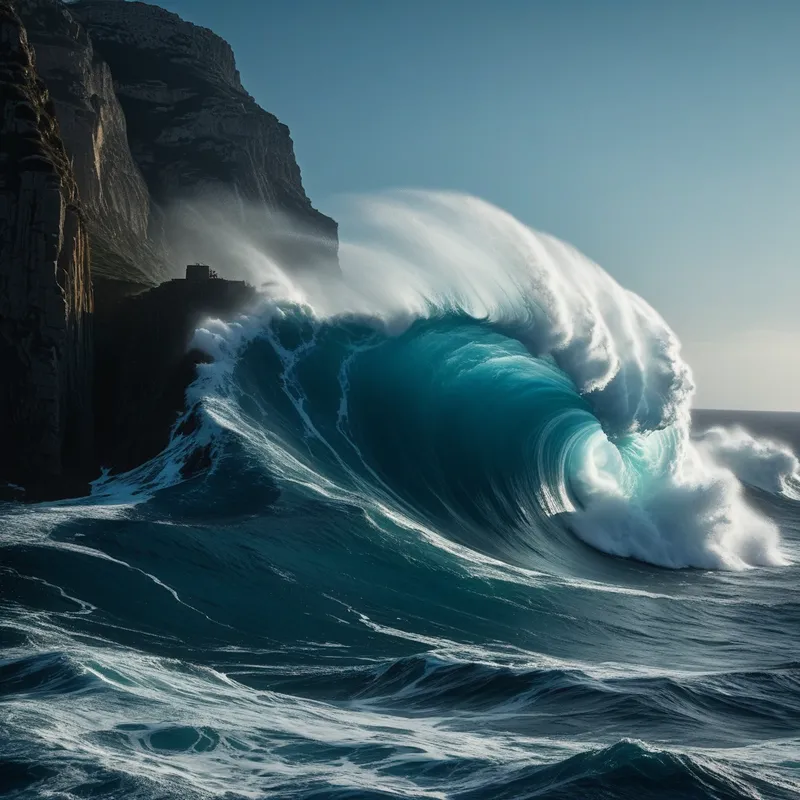
His was a sovereignty of tumult. With a strike of that trident upon [the sea](/myths/the-sea “Myth from Greek culture.”/)-floor, he would stir [the kraken](/myths/the-kraken “Myth from Greek culture.”/) from its sleep and summon waves that could swallow islands whole. Sailors prayed not for his favor, but for the absence of his wrath. His chariot, drawn by hippocampi with manes of white foam, did not roll but surged, cutting through the swell as he patrolled his liquid borders. His voice was the thunder of [water](/myths/water “Myth from Chinese culture.”/) against a cliff, his mood the difference between a placid lagoon and a maelstrom.
He loved as he ruled: with possessive fury. He pursued the [nymphs](/myths/nymphs “Myth from Greek culture.”/), the [Nereids](/myths/nereids “Myth from Greek culture.”/), and even mortal women, his desire manifesting as a sudden, inescapable wave. From these unions sprang heroes and monsters alike—[Pegasus](/myths/pegasus “Myth from Global/Universal culture.”/) the winged horse born from [Medusa](/myths/medusa “Myth from Greek culture.”/)’s blood, and the cyclops [Polyphemus](/myths/polyphemus “Myth from Greek culture.”/), whose rage echoed his father’s.
His greatest conflict was not with monsters, but with mortals and gods who dared claim a piece of his realm. He fought Athena for the patronage of Athens, striking [the Acropolis](/myths/the-acropolis “Myth from Greek culture.”/) to bring forth a salt spring, only to be outdone by her gift of the olive tree. He relentlessly harassed [Odysseus](/myths/odysseus “Myth from Greek culture.”/) for blinding his son, making the sea itself a personal prison. His domain was not just a place, but a living, breathing, tempestuous extension of his own immense and ungovernable soul—the foundational, chaotic power upon which the seemingly stable world of earth and human order was precariously built.
Cultural Origins & Context
This mythos of Poseidon did not spring from a single poet’s mind, but from the lived, terrifying reality of the Aegean world. For the ancient Greeks, the sea was not a postcard vista; it was the oinops pontos, the “wine-dark sea,” a phrase holding both its mysterious beauty and its lethal depth. It was the source of life (trade, food, travel) and the ever-present face of death (shipwreck, storm, disappearance).
The stories of Poseidon’s wrath and caprice were practical theology, told by sailors at harbor, farmers in coastal villages, and bards in great halls. In [Homer](/myths/homer “Myth from Greek culture.”/)’s epics, especially [The Odyssey](/myths/the-odyssey “Myth from Greek culture.”/), Poseidon is the prime antagonist of order and homecoming, the embodiment of the chaotic forces that oppose human destiny. His worship was fervent and propitiatory—grand temples, like the magnificent Sanctuary at Sounion, were built on perilous headlands as both offerings and navigational aids. The Isthmian Games were held in his honor. His myth served a critical societal function: it gave a name, a face, and a temperament to the uncontrollable natural force upon which their civilization depended, allowing for a relationship, however fraught, through ritual and story.
Symbolic Architecture
Poseidon’s domain is the psychological counterpart to Zeus’s ordered sky. It represents the unconscious [foundation](/symbols/foundation “Symbol: A foundation symbolizes the underlying support systems, values, and beliefs that shape one’s life, serving as the bedrock for growth and development.”/) of the [psyche](/myths/psyche “Myth from Greek culture.”/) itself—the deep, saline waters from which emotions, instincts, and primal urges surge.
The sea does not reason; it simply is. In its depths lie both the treasures of creativity and the monsters of repressed trauma.
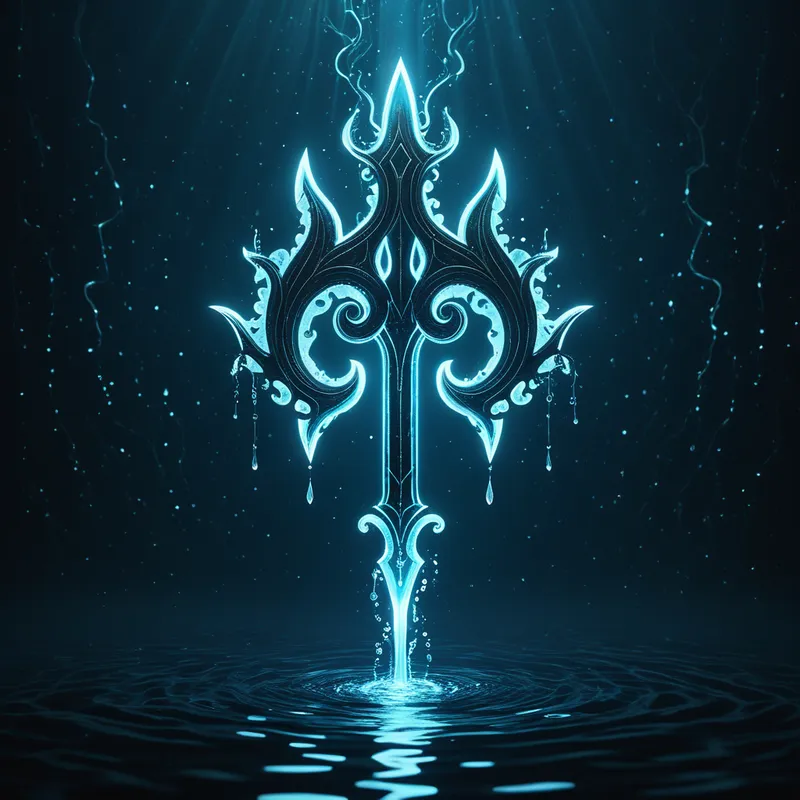
The Trident is his primary [symbol](/symbols/symbol “Symbol: A symbol can represent an idea, concept, or belief, serving as a powerful tool for communication and understanding.”/). It is not merely a [weapon](/symbols/weapon “Symbol: A weapon in dreams often symbolizes power, aggression, and the need for protection or defense.”/) but an [instrument](/symbols/instrument “Symbol: An instrument symbolizes creativity, communication, and the means by which one expresses oneself or influences the world.”/) of [division](/symbols/division “Symbol: Represents internal conflict, separation of self, or unresolved emotional splits. Often indicates a need for integration or decision-making.”/) and manifestation. Its three prongs can be seen as the triple [nature](/symbols/nature “Symbol: Nature symbolizes growth, connectivity, and the primal forces of existence.”/) of his [realm](/symbols/realm “Symbol: The symbol of ‘Realm’ often signifies the boundaries of one’s consciousness, experiences, or emotional states, suggesting aspects of reality that are either explored or ignored.”/): surface waves, the pelagic zone of [life](/symbols/life “Symbol: The symbol of ‘Life’ represents a journey of growth, interconnectedness, and existential meaning, encompassing both the joys and challenges that define human experience.”/), and the lightless [abyss](/symbols/abyss “Symbol: A profound void representing the unconscious, the unknown, or a spiritual threshold between existence and non-existence.”/). Psychologically, it represents the power to stir up, to bring what is hidden in the [depths](/symbols/depths “Symbol: Represents the subconscious, hidden emotions, or foundational aspects of the self, often linked to primal fears or profound truths.”/) to the surface, often with disruptive force. The [Earth](/symbols/earth “Symbol: The symbol of Earth often represents grounding, stability, and the physical realm, embodying a connection to nature and the innate support it provides.”/)-Shaker [aspect](/symbols/aspect “Symbol: A distinct feature, quality, or perspective of something, often representing a partial view of a larger whole.”/) links the fluid unconscious directly to the seemingly solid ground of [the ego](/myths/the-ego “Myth from Jungian culture.”/); a psychic [earthquake](/symbols/earthquake “Symbol: An earthquake in a dream often symbolizes a sudden disruption or transformation that shakes the foundation of one’s life.”/) occurs when deeply buried complexes [rupture](/symbols/rupture “Symbol: A sudden break or tear in continuity, often representing abrupt change, separation, or the shattering of established patterns.”/) into conscious [life](/symbols/life “Symbol: The symbol of ‘Life’ represents a journey of growth, interconnectedness, and existential meaning, encompassing both the joys and challenges that define human experience.”/).
His [Chariot](/symbols/chariot “Symbol: The chariot signifies control, direction, and power in one’s journey through life.”/) and Hippocampi symbolize the harnessing, but never the taming, of these primal forces. He rides the wave; he does not stop it. His [Palace](/symbols/palace “Symbol: A palace symbolizes grandeur, authority, and the pursuit of one’s ambitions or dreams, often embodying a desire for stability and wealth.”/) of Aegae is the ordered [structure](/symbols/structure “Symbol: Structure in dreams often symbolizes stability, organization, and the framework of one’s life, reflecting how one perceives their environment and personal life.”/) within the [chaos](/symbols/chaos “Symbol: In Arts & Music, chaos represents raw creative potential, uncontrolled expression, and the breakdown of order to forge new artistic forms.”/)—the potential for a stable, even majestic, core [identity](/symbols/identity “Symbol: Identity represents the sense of self, encompassing personal beliefs, cultural background, and social roles.”/) that can form within the turbulent self, but only by first accepting and dwelling in the depths.
The Dreamer’s Resonance
When Poseidon’s domain floods modern dreams, it signals a profound engagement with the emotional and instinctual substrata of the psyche. This is not a gentle baptism, but a tumultuous inundation.
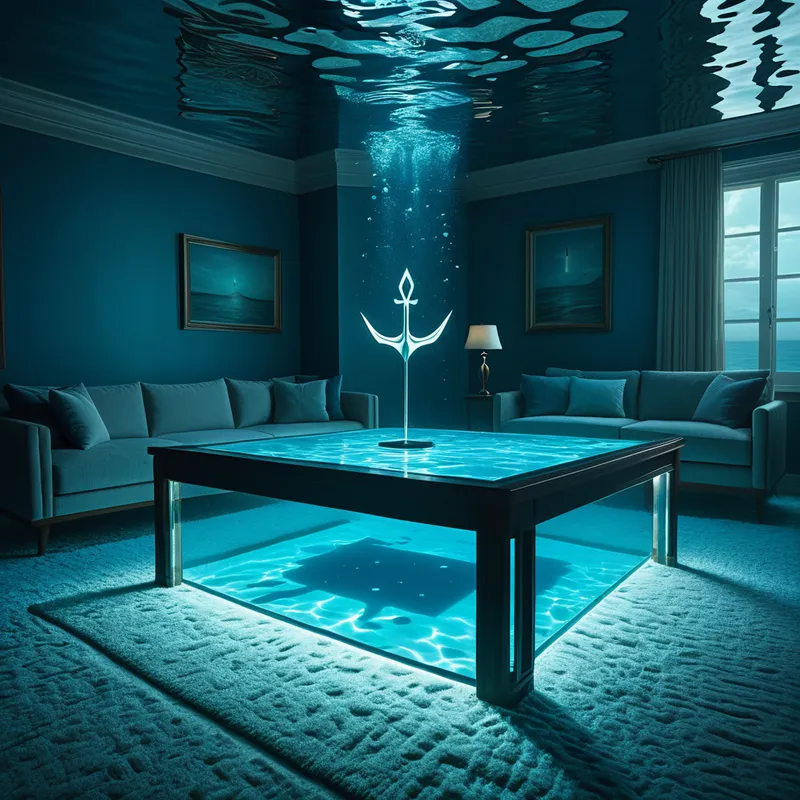
Dreaming of tsunamis or being overwhelmed by waves often correlates with feeling emotionally flooded in waking life—by grief, rage, or passion that threatens to dismantle one’s sense of control. Exploring a vast, deep ocean can represent a dive into the unconscious, a search for lost parts of [the self](/myths/the-self “Myth from Jungian culture.”/) or hidden truths. Finding a trident in a dream suggests the dreamer is coming into a potent, perhaps daunting, power to affect their own emotional landscape. Encounters with sea creatures, especially ancient or monstrous ones, point to archaic contents of the psyche rising to be met. The somatic experience is key: the pressure of the deep, the struggle for breath, the feeling of being buoyed or pulled under. These dreams mark a process where the ego is no longer safely on the shore but is learning, often through crisis, to navigate the inner sea.
Alchemical Translation
The individuation process modeled by Poseidon’s myth is the transmutation of chaos into sovereignty. It is the journey from being a victim of one’s own emotional storms to becoming the ruler of one’s inner domain.
The alchemist does not reject the prima materia because it is dark and chaotic; they enter its vessel, apply heat and patience, and work to extract the gold. So too with the soul’s seawater.
The initial state is one of identification with the storm—unconscious rage, tidal sorrow, unpredictable moods that feel external and overpowering (Poseidon’s wrath). The first step is Acknowledgment: recognizing these forces as part of one’s own inner kingdom, not as foreign invaders. This is the casting of lots, accepting the “sea” as one’s portion.
The second is Descent and Dwelling: the courageous move into the depths through introspection, therapy, or creative expression. This is building one’s Aegae—establishing a conscious point of reflection within the unconscious. It is learning the topography of one’s own abyss.
The final, ongoing work is Wielding the Trident: the conscious direction of immense psychic energy. This is not suppression, but skilled application. The energy that once caused earthquakes is channeled into steadfastness ([the earth](/myths/the-earth “Myth from Hindu culture.”/)-shaker becomes a stable foundation). The waves that drowned are directed into the fluid power of adaptation and profound feeling. One becomes not a calm pond, but a sovereign ocean—capable of great stillness and terrifying power, knowing both are inherent to one’s nature. The goal is not to placate Poseidon, but to integrate him, to sit upon the throne within one’s own turbulent, creative, and foundational depths.
Associated Symbols
Explore related symbols from the CaleaDream lexicon: