Polevoi Myth Meaning & Symbolism
The myth of Polevoi, a shape-shifting field spirit, embodies the raw, untamed psyche at the border of the known world and the wild unconscious.
The Tale of Polevoi
Listen, and let the wind through the rye carry the tale. In the time when the world was younger and the veil between things seen and unseen was thin as a spider’s thread, there lived a spirit in the liminal lands. Not in the deep, whispering Forest, nor in the comforting hearth of the village, but in the great, open expanse between them—the field.
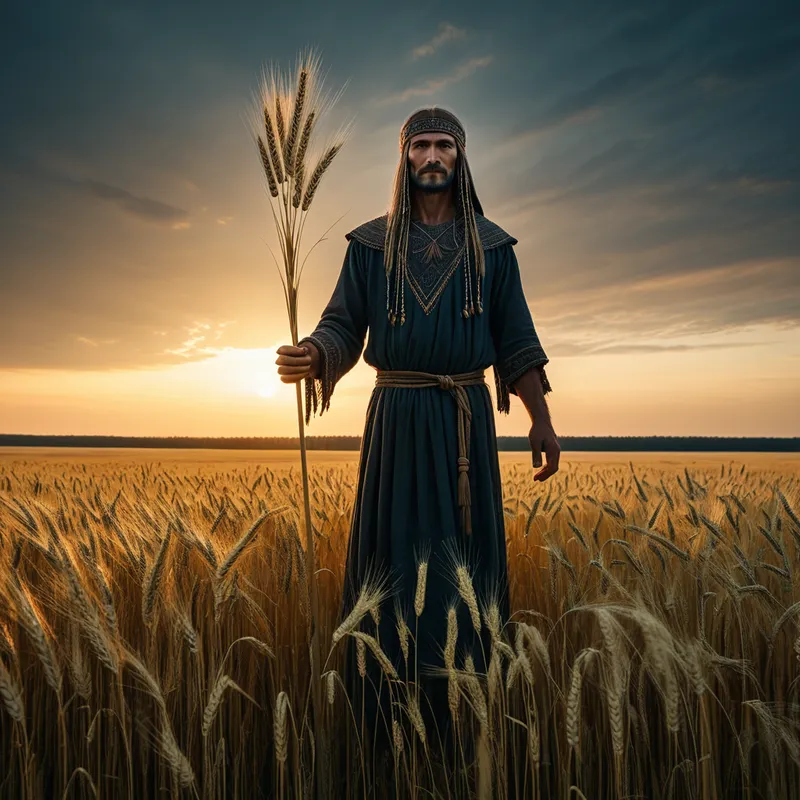
His name was Polevoi. He was the soul of the unplowed earth, the breath of the ripening grain, the whisper in the midday heat-haze. His hair was the wild grass, his skin the dark, rich soil after rain, and his eyes held the shifting colours of the storm and the sunset. He was neither god nor demon, but a power, a silence that watched.
He ruled the borderlands. To the peasant who worked the land with respect, leaving the last sheaf of grain for him at harvest, Polevoi could be a gentle ally. He would guard the crops from blight, whistle a fair wind for threshing, and make the soil fertile. But woe to the fool who crossed his domain with arrogance! To the traveler who dared to nap in his field at noon, or the worker who cursed the land as they toiled, Polevoi would reveal his other nature.
He was a master of shapes. One moment, a swirling dust devil that led a man in circles until he collapsed, parched and lost. The next, a gnarled old man with eyes of flint, demanding a share of a meal. He could appear as a beloved friend, calling a name from within the tall grain, only to lead the one who followed deep into the wilds, never to be seen again. His laughter was the rustle of dry stalks; his anger, a sudden hailstorm that flattened the hopeful crop.
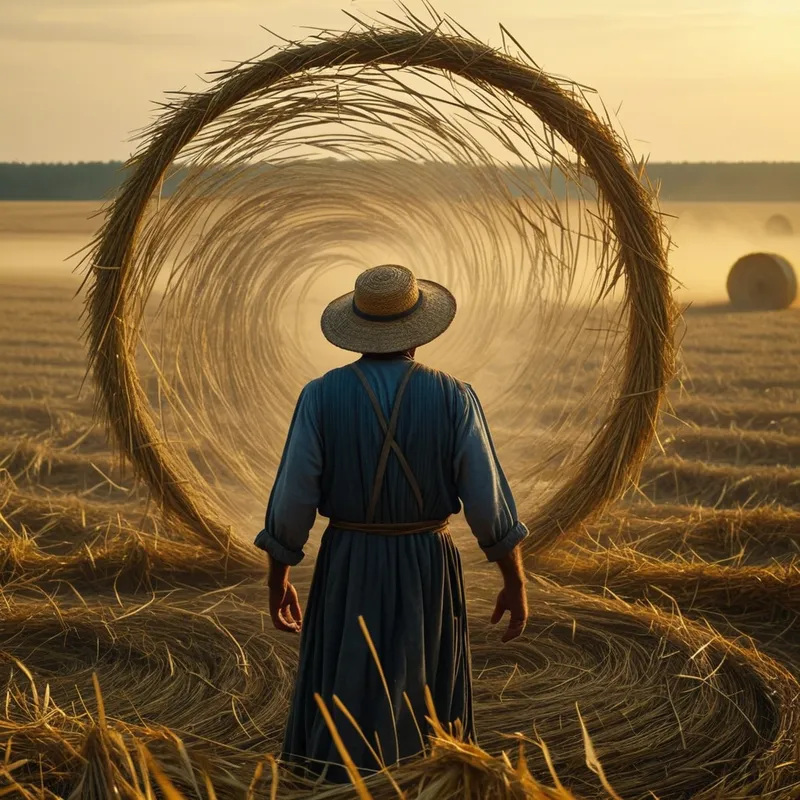
The tale is told of a proud farmer, Mikula, who boasted he owed his bounty to his own strength alone. At harvest, he took every last stalk, leaving nothing for the spirit. That night, a great wind arose, not from the sky, but from the very earth of his field. It was Polevoi, grown vast and terrible. The wind did not destroy, but it transformed. When dawn came, Mikula’s field was untouched, yet every path through it had shifted. The straight rows were now spirals; the way to the road was gone. The field was whole, but it was no longer his. It had reclaimed its wildness. Humbled, Mikula poured the first cup of his new brew onto the earth as an offering. And slowly, as the days passed, a single, straight path grew once more through the rye—a fragile thread of truce between the human order and the spirit’s wild domain.
Cultural Origins & Context
The myth of the Polevoi springs from the very soil of the Eastern European plains, a fundamental expression of the Slavic animistic worldview. Unlike the grand cosmic myths of state religions, this is a folk narrative, passed down through generations by peasants, farmers, and woodsmen—those whose lives were intimately tied to the land’s caprice and bounty. The Polevoi was not worshipped in temples but acknowledged in daily ritual: the libation of the first furrow, the offering of the last sheaf, the respectful silence kept when passing a certain stone at the field’s edge.
His primary function was pedagogical and psychological. He personified the inherent risk and reward of agriculture, the fragile pact between human cultivation and untamed nature. The field was not a passive resource but a living, sentient partner. The stories served as a cultural container for very real fears—of crop failure, of getting lost, of the land’s mysterious, non-human intelligence. By giving this power a name and a pattern of behaviour (Polevoi is mischievous, not purely evil), the myth provided a framework for interaction. It taught respect, humility, and the necessity of reciprocity, ensuring both ecological and social balance.
Symbolic Architecture
At its core, the Polevoi is the archetypal spirit of the Threshold. He does not dwell in the deep unconscious (the forest) nor in the conscious ego (the village), but in the fertile, dangerous borderland between them—the field of the personal unconscious, where wild impulses and creative potentials first stir.
The field is not a place of battle, but of negotiation. It is where the plow of consciousness meets the resistant, creative clay of the instinctual self.
His shape-shifting nature symbolizes the protean quality of psychic contents emerging from this borderland. A sudden rage, an inexplicable inspiration, a haunting memory—these can appear in many guises, friendly or frightening. The Polevoi’s actions are not random cruelty but an enforced reorientation. He “leads astray” the one who is already psychologically lost in their own arrogance or ignorance, forcing a confrontation with the unknown. The spiraling paths left in Mikula’s field are a perfect symbol of this: the linear, ego-driven plan is dissolved, replaced by a mandala of the Self, demanding a new, more humble mode of navigation.
The Dreamer’s Resonance
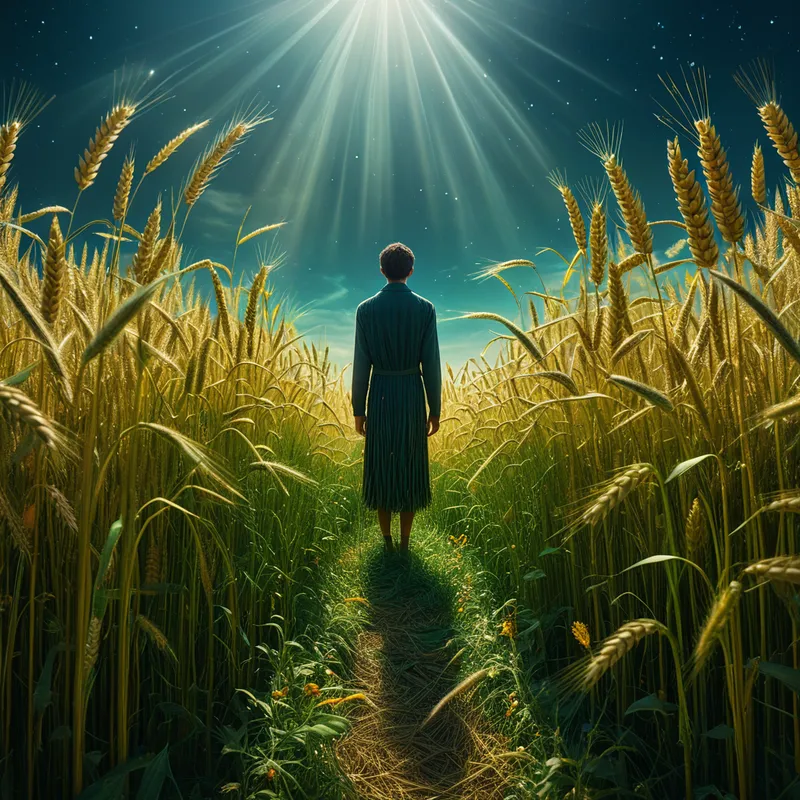
When the pattern of the Polevoi stirs in modern dreams, it often signals a crisis or opportunity at a psychological boundary. The dreamer may find themselves in a vast, open landscape—a parking lot that stretches to the horizon, an endless office floor, a blank plain. There is a profound sense of being exposed and watched by an unseen presence. This is the somatic feeling of the ego feeling the gaze of a larger, autonomous psychic content.
Common motifs include losing one’s way in a familiar place, being tricked by a guide who changes form, or encountering a figure made of natural elements (a man of straw, a woman of flowing grass). The emotional tone is key: not terror, but disorientation, prickling anxiety, and a deep, intuitive knowing that one has broken an unseen rule. This is the psyche’s way of indicating that one’s current attitude—perhaps an over-cultivation of persona, a rigid plan, or a disregard for inner needs—has violated the pact with the instinctual self. The Polevoi dream is a call to stop, make an offering (of attention, respect, time), and re-negotiate one’s relationship with the wild, creative, and untamed forces within.
Alchemical Translation
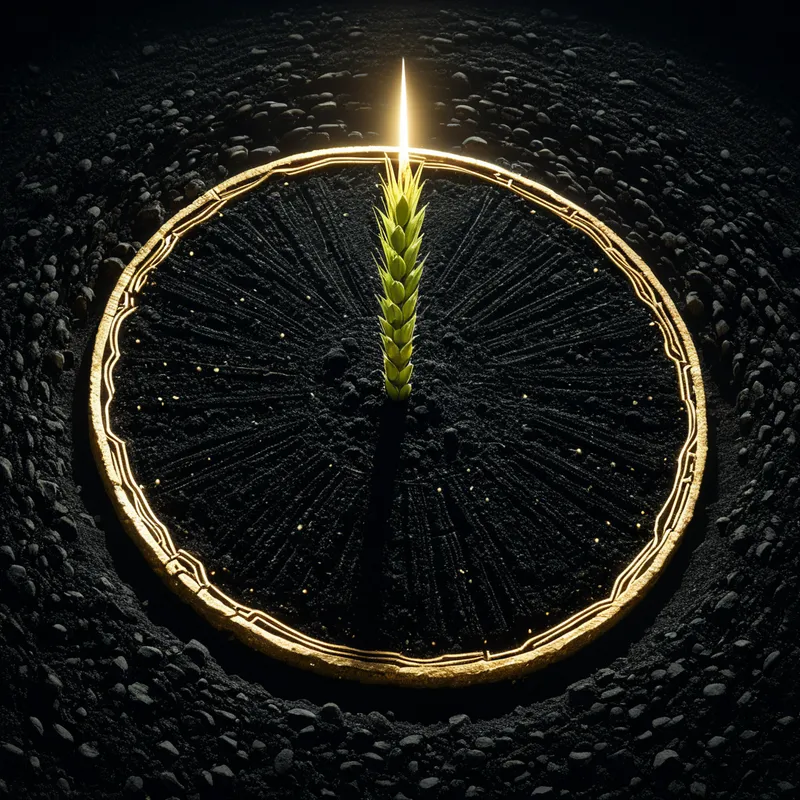
The alchemical journey mirrored in the Polevoi myth is not one of heroic conquest, but of humble integration—the coniunctio of the cultivated and the wild. The initial state is one of identification with the “village”: the ego’s ordered world. The Polevoi represents the necessary nigredo, the blackening, that occurs when this ordered world is dissolved by contact with the shadowy, autonomous spirit of the field.
The spirit does not seek to destroy the farmer, but to destroy the farmer’s illusion of separateness from the field.
The transformation happens through the ordeal of being led astray. The old, linear path of the ego is rendered useless (the solutio, or dissolution). The dreamer, like Mikula, is forced into a state of helplessness and humility. The offering—whether in myth or in psychological practice, the honest acknowledgment of the power of the unconscious—is the crucial turning point. It is the beginning of the albedo, the whitening. The new path that grows is not the old one restored, but a new synthesis. It represents an ego that can now navigate the field with awareness, respecting its wildness while still drawing sustenance from it. The integrated self learns to hold the tension of the borderland, becoming, in a sense, the mindful steward of its own inner Polevoi.
Associated Symbols
Explore related symbols from the CaleaDream lexicon:
- Field — The primary domain of Polevoi, representing the fertile, liminal space between conscious order and wild unconsciousness, where potential and risk both grow.
- Spirit — Polevoi himself is a nature spirit, embodying the autonomous, animating force of a specific place or aspect of the psyche that demands recognition.
- Threshold — Polevoi is the guardian of the boundary, symbolizing the critical point of transition where one must negotiate passage with the unseen.
- Journey — The ordeal of being led astray by Polevoi represents a necessary detour in the soul’s journey, a forced departure from the ego’s planned path.
- Earth — Polevoi is an embodiment of the raw, untamed, and fertile earth, the dark, grounding substance from which both nourishment and disorientation spring.
- Wind — His presence is often manifest as a sudden, confusing wind or dust devil, symbolizing the invisible, shaping force of the unconscious that can alter one’s direction.
- Trickster — The archetype Polevoi most closely embodies, using deception and shape-shifting not for malice, but to disrupt arrogance and enforce natural law.
- Harvest — The act which triggers his interaction, symbolizing the reaping of what has been sown, and the obligation to give back a portion to the source.
- Path — The straight path lost and the spiral path created represent the ego’s linear logic versus the non-linear, symbolic logic of the deeper Self.
- Offering — The crucial act of reciprocity that appeases Polevoi, symbolizing the sacrifice of egoic certainty needed to restore balance with the instinctual world.
- Shadow — Polevoi acts as a cultural and psychological shadow figure, representing the wild, untamed, and potentially dangerous aspects of nature and the self that civilization seeks to exclude.
- Transformation — The core process he instigates, changing both the landscape and the person who encounters him, forcing a metamorphosis of perception and identity.