
Peter Myth Meaning & Symbolism
A fisherman's journey from impulsive denial to foundational rock, embodying the human struggle between doubt and devotion, failure and redemption.
The Tale of Peter
Listen, and hear the tale of the Rock that was first a wave.
In the time when gods walked with men, there was a man of [the sea](/myths/the-sea “Myth from Greek culture.”/). Simon was his name, son of Bar-[Jonah](/myths/jonah “Myth from Christian culture.”/), a fisherman of Bethsaida. His world was the heave of the net, the slap of [water](/myths/water “Myth from Chinese culture.”/) on wood, the predawn chill of the Sea of Galilee. His hands were maps of rope-burns and scale, his faith as practical as the next catch.
Then came the Teacher from Nazareth, who walked the dusty roads and spoke of a kingdom not of fish and barley, but of spirit. He stood on Simon’s own boat, used it as a pulpit for the crowd, and when he finished, he told the weary fisherman to cast his nets once more into the deep. Simon protested—they had toiled all night for nothing—but he obeyed. The nets grew so heavy with a shimmering, thrashing multitude that they began to tear, and the boats to sink. In that moment of impossible abundance, Simon fell to his knees on the slimy deck, not in [triumph](/myths/triumph “Myth from Roman culture.”/), but in terror. “Depart from me,” he gasped to the Teacher, “for I am a sinful man.” But the Teacher only reached down. “Do not be afraid. From now on, you will catch people.”
And so Simon followed. He walked on water at the Teacher’s command, feeling the solidity of the wave beneath his feet until he looked at the storm and began to sink, saved only by a grasping hand. He was the first to proclaim, “You are the Messiah, the Son of the living God.” And in that moment of piercing clarity, the Teacher gave him a new name: Peter. “On this rock,” he said, “I will build my church.”
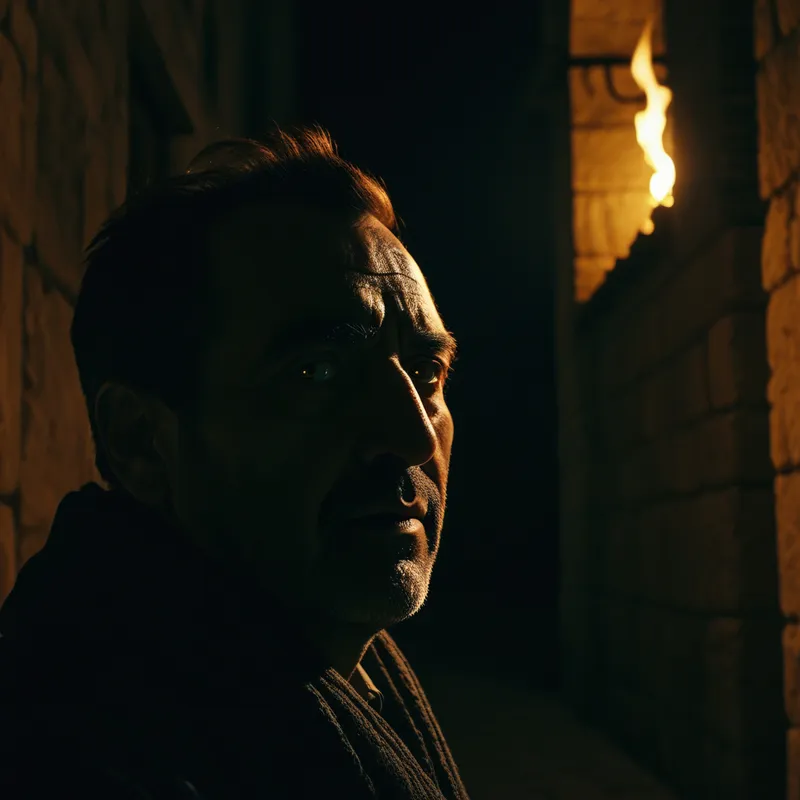
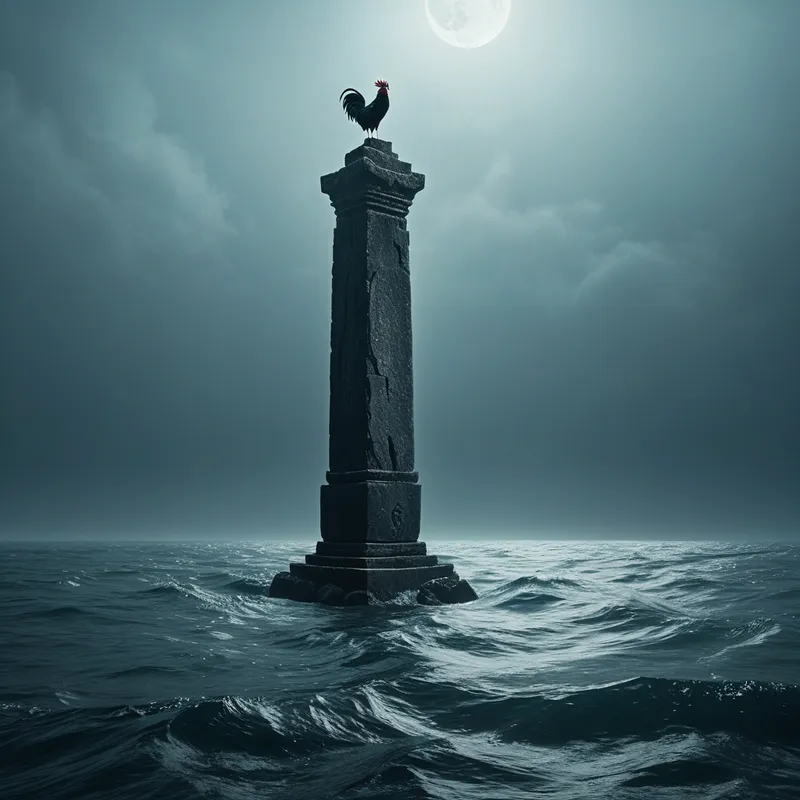
Yet the rock was still mutable. When the Teacher spoke of suffering and death in [Jerusalem](/myths/jerusalem “Myth from Biblical culture.”/), Peter rebuked him, earning the fiercest reply: “Get behind me, Satan!” Then came the final night. In a torch-lit garden, Peter drew a sword to defend his Teacher, only to be told to put it away. And later, in the smoky, tense courtyard of the high priest, as the Teacher stood trial inside, Peter stood by a charcoal fire. Three times a servant girl and bystanders pointed at him. “You were with him.” Three times, with rising panic, Peter denied it, his voice cracking with an oath: “I do not know the man!” And as the words left his lips the third time, a rooster crowed in the cold dawn. The Teacher, being led away, turned and looked at Peter. And Peter went out and wept bitterly.
But the tale does not end in ashes. After the unthinkable resurrection, the risen Teacher appeared again by the sea. At another charcoal fire, he asked Peter three times: “Do you love me?” And with each aching, affirmative reply, the command was given: “Feed my sheep.” The denial was undone, not erased, but woven into a new commission. The impulsive fisherman, the sinking disciple, the denying friend, was reconsecrated as the shepherd, the foundational rock. He who had been broken by his own fear became the one who would hold the community together. He was given the keys of the kingdom, and he stepped forward to lead, a man forever marked by failure and forged by grace.
Cultural Origins & Context
The myth of Peter emerges from the oral traditions and early written accounts of the [Jesus](/myths/jesus “Myth from Christian culture.”/) movement in the first-century Roman Levant. It is preserved primarily in the canonical Gospels and the Acts of the Apostles. These texts were not neutral biographies but theological narratives crafted by communities for whom Peter was a pivotal, living memory—a founding pillar and a complex, relatable human figure.
The stories functioned on multiple levels within the early church. Societally, they established apostolic authority, tracing leadership back to a direct, flawed companion of Jesus who was explicitly commissioned. Psychologically, they served as a master narrative for conversion and rehabilitation. In a culture valuing honor and shame, Peter’s very public failure and subsequent restoration provided a potent template for grace. The myth was told to fishermen and farmers, slaves and merchants, assuring them that denial did not mean disqualification, that human weakness could be the very substrate for divine purpose. Peter became the archetypal everyman of faith, his journey mirroring the community’s own struggle to move from a parochial Jewish context to a cosmopolitan mission, holding the “keys” to both tradition and new revelation.
Symbolic Architecture
At its core, the myth of Peter is an alchemical [drama](/symbols/drama “Symbol: Drama signifies narratives, emotional expression, and the exploration of human experiences.”/) of [identity](/symbols/identity “Symbol: Identity represents the sense of self, encompassing personal beliefs, cultural background, and social roles.”/). The symbolic [movement](/symbols/movement “Symbol: Movement symbolizes change, progress, and the dynamics of personal growth, reflecting an individual’s desire or need to transform their circumstances.”/) is from Simon (the natural man, the listener) to Peter (the conferred [identity](/symbols/identity “Symbol: Identity represents the sense of self, encompassing personal beliefs, cultural background, and social roles.”/), the [foundation](/symbols/foundation “Symbol: A foundation symbolizes the underlying support systems, values, and beliefs that shape one’s life, serving as the bedrock for growth and development.”/)). This is not a simple [promotion](/symbols/promotion “Symbol: A symbol of advancement, recognition, and increased responsibility in social or professional hierarchies.”/), but a painful transformation.
The rock is not found, but forged in the fire of one’s own betrayal.
The Sea represents the unconscious, the chaotic [depths](/symbols/depths “Symbol: Represents the subconscious, hidden emotions, or foundational aspects of the self, often linked to primal fears or profound truths.”/) of [life](/symbols/life “Symbol: The symbol of ‘Life’ represents a journey of growth, interconnectedness, and existential meaning, encompassing both the joys and challenges that define human experience.”/) from which one draws sustenance (fish) and over which one attempts, and often fails, to walk by [faith](/symbols/faith “Symbol: A profound trust or belief in something beyond empirical proof, often tied to spiritual conviction or deep-seated confidence in people, ideas, or outcomes.”/). The Net symbolizes the act of gathering [consciousness](/symbols/consciousness “Symbol: Consciousness represents the state of awareness and perception, encompassing thoughts, feelings, and experiences.”/) from the [depths](/symbols/depths “Symbol: Represents the subconscious, hidden emotions, or foundational aspects of the self, often linked to primal fears or profound truths.”/). Peter’s great [confession](/symbols/confession “Symbol: The act of revealing hidden truths, secrets, or wrongdoings, often to relieve guilt, seek forgiveness, or achieve psychological liberation.”/) is a [moment](/symbols/moment “Symbol: The symbol of a ‘moment’ embodies the significance of transient experiences that encapsulate emotional depth or pivotal transformations in life.”/) of brilliant psychic [insight](/symbols/insight “Symbol: A sudden, deep understanding of a complex situation or truth, often arriving unexpectedly and illuminating hidden connections.”/), pulling the ultimate [truth](/symbols/truth “Symbol: Truth represents authenticity, honesty, and the quest for knowledge beyond mere appearances.”/)—the Self [archetype](/symbols/archetype “Symbol: A universal, primordial pattern or prototype in the collective unconscious that shapes human experience, behavior, and creative expression.”/) in the person of Christ—into the light of conscious acknowledgment. For this, he is named the Rock, representing the nascent, potential [stability](/symbols/stability “Symbol: A state of firmness, balance, and resistance to change, often represented by solid objects, foundations, or steady tools.”/) of [the ego](/myths/the-ego “Myth from Jungian culture.”/) aligned with [the Self](/myths/the-self “Myth from Jungian culture.”/).
But the Three Denials and the Rooster embody the inevitable [shadow](/symbols/shadow “Symbol: The ‘shadow’ embodies the unconscious, repressed aspects of the self and often represents fears or hidden emotions.”/)-work. The ego, faced with the [threat](/symbols/threat “Symbol: A threat in dreams often reflects feelings of vulnerability, anxiety, or fear regarding one’s safety or well-being. It can indicate unresolved conflicts or the presence of external pressures.”/) of annihilation (the cross), retreats into self-preservation and betrays its highest knowing. This is the shattering of the [persona](/symbols/persona “Symbol: The social mask or outward identity one presents to the world, often concealing the true self.”/), the necessary humiliation that prevents the “rock” from becoming a rigid, prideful [monument](/symbols/monument “Symbol: A structure built to commemorate a person, event, or idea, often representing legacy, memory, and cultural identity.”/). The subsequent Threefold Restoration at an identical [charcoal](/symbols/charcoal “Symbol: Charcoal represents purification, transformation, and grounding. It symbolizes the residue of fire, moving from raw material to refined essence.”/) fire is the [psyche](/myths/psyche “Myth from Greek culture.”/)’s genius for healing: revisiting the scene of the [crime](/symbols/crime “Symbol: Crime in dreams often symbolizes guilt, inner conflict, or societal rules that are being challenged or broken.”/) not to punish, but to repattern. The love question replaces the [accusation](/symbols/accusation “Symbol: A formal or informal charge of wrongdoing, often implying guilt, blame, or responsibility placed upon the dreamer or another figure.”/), and the command to “feed” transforms the [energy](/symbols/energy “Symbol: Energy symbolizes vitality, motivation, and the drive that fuels actions and ambitions.”/) of self-focused survival into other-focused service.
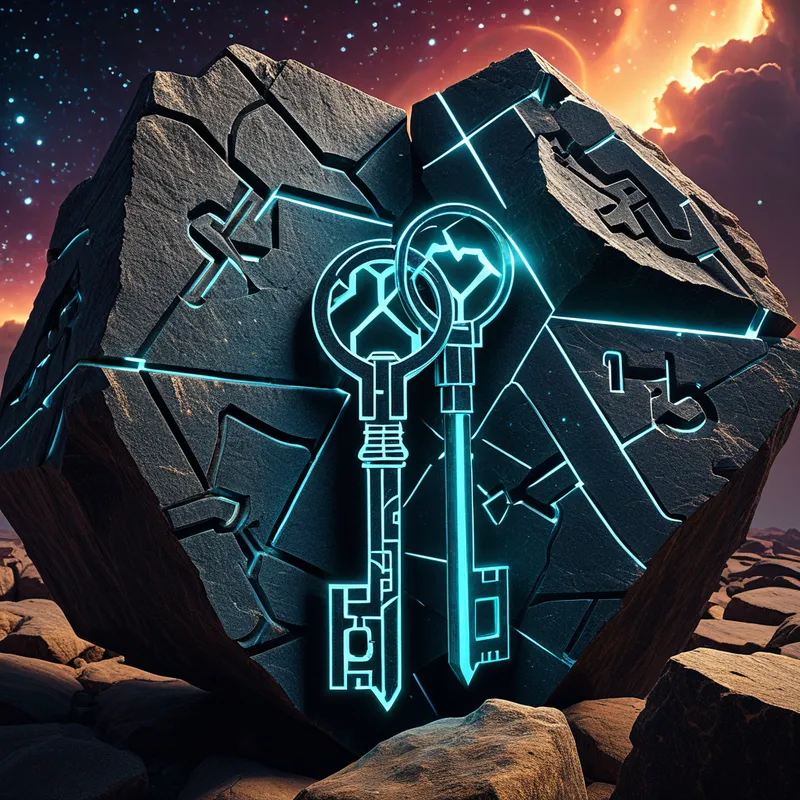
The Keys of the [Kingdom](/symbols/kingdom “Symbol: A kingdom symbolizes authority, belonging, and a sense of identity within a larger context or community.”/) are perhaps the ultimate [symbol](/symbols/symbol “Symbol: A symbol can represent an idea, concept, or belief, serving as a powerful tool for communication and understanding.”/): they represent the conscious ego’s (Peter’s) hard-won [ability](/symbols/ability “Symbol: In dreams, ‘ability’ often denotes a recognition of skills or potential that one possesses, whether acknowledged or suppressed.”/) to “bind and loose”—to make conscious discriminations, to integrate or reject psychic contents, and to mediate between the inner and outer worlds.
The Dreamer’s Resonance
When the pattern of Peter stirs in the modern dreamscape, it signals a profound crisis and opportunity in the dreamer’s relationship to their own professed identity or calling. To dream of denying someone or being denied, especially in a tense, public setting, may not be about literal betrayal, but about a part of the self that feels forced to disavow a core truth, talent, or relationship under perceived social or internal pressure.
Dreaming of a rooster crowing at a moment of shame points directly to an emerging consciousness of a self-betrayal. The psyche is sounding the alarm: “You are not living in alignment with what you know to be true.” Dreams of walking on water but then sinking mirror feelings of initial spiritual or creative empowerment giving way to overwhelming doubt and “imposter syndrome.”
Conversely, dreams of being given a key, or of a stable rock in turbulent waters, suggest the ego is being reconstituted on a more authentic foundation after a period of fracture. The somatic experience is often one of a deep, gut-wrenching shame (the weeping) followed by a sober, grounded resolution. The psyche is working through the Peter process: the grand insight, the catastrophic failure of nerve, and the slow, deliberate rebuilding of a personality that integrates, rather than ignores, its capacity for weakness.
Alchemical Translation
The Peter myth is a precise map of the individuation process. The [prima materia](/myths/prima-materia “Myth from Alchemical culture.”/) is Simon—the raw, instinctual life, skilled in navigating the material world but unconscious of its deeper purpose. The call (Jesus’s “Follow me”) is the eruption of the Self into conscious life, demanding a reorientation.
The first conjunction is the confession and naming: the ego glimpses the Self and is temporarily identified with it (“You are the Rock!”). This is a sublime but dangerous inflation. The necessary [nigredo](/myths/nigredo “Myth from Alchemical culture.”/), the blackening, is the denial in the courtyard. This is [the dark night of the soul](/myths/the-dark-night-of-the-soul “Myth from Christian Mysticism culture.”/), where the ego’s identification with the Self is utterly broken. The ego sees its own cowardice, its fragility. This is not a mistake but a crucial stage—the dissolution of the false, inflated rock.
The foundation is laid not in the moment of proclamation, but in the aftermath of despair.
The albedo, the whitening or purification, is the bitter weeping—the acceptance of [the shadow](/myths/the-shadow “Myth from Jungian culture.”/) without final condemnation. The [rubedo](/myths/rubedo “Myth from Alchemical culture.”/), the reddening or final synthesis, is the triple recommissioning by the sea. Here, the love of the Self (Christ) is not withdrawn but actively engages the humbled ego, not to shame it further, but to task it. The transformed ego is no longer a follower in the naive sense, nor a leader in an arrogant sense, but a shepherd—a caretaker of the living connection between the inner world (the flock) and the outer world.
For the modern individual, this translates to any journey where a initial, brilliant calling or insight is followed by a humiliating personal failure that seems to undo it all. The alchemy lies in understanding that the failure is part of the curriculum, not its end. The true, resilient identity—the “rock”—is built with the memory of the denial included in its mortar. It is a foundation of conscious humility, not unconscious strength. One moves from being a fisher of external validation to a shepherd of one’s own inner life and its responsible expression in [the world](/myths/the-world “Myth from Tarot culture.”/), holding the keys to one’s own psychic gates.
Associated Symbols
Explore related symbols from the CaleaDream lexicon: