
Patecatl God of Medicine
Patecatl is the Aztec deity of medicine and healing, revered for his knowledge of sacred plants and transformative powers in ancient rituals.
The Tale of Patecatl God of Medicine
In the time before the Fifth Sun, when the world was still heavy with the scent of primordial waters and the memory of fallen suns, the gods themselves knew suffering. They bled, they ached, they fell into fevers of divine discontent. It was in this age of celestial infirmity that Patecatl emerged, not with a roar of conquest, but with the quiet rustle of leaves and the patient drip of sap. He was a lord of the earth’s deep, green veins, a son of the primordial mother-goddess Coatlicue, born from the very substance of healing.
His story is woven not with battles, but with a sacred quest for knowledge in the shadow of conflict. The divine pantheon was fractured, torn by the great schism between Quetzalcoatl, who championed art and peace, and Tezcatlipoca, the capricious lord of night and strife. In their cosmic struggle, the gods themselves were wounded, and humanity, their fragile creation, suffered from maladies of both body and spirit. They knew only the blunt surgery of the obsidian blade and the desperate plea to unseen forces.
Patecatl, dwelling in the liminal space between the dark earth and the world of light, heard these cries. He turned not to weapons, but to the silent, potent life of the world. He descended into the humid embrace of the jungle, into the secret clearings where plants whispered to the moon. There, he discovered the sacred ololiuhqui (morning glory) and the potent peyōtl (peyote), plants that were not mere herbs but capsules of vision, doors to other states of being. His greatest discovery, however, was the maguey plant. Others saw only its thorns and fibrous leaves. Patecatl saw its pulque heart.
With the wisdom of the earth flowing through him, he pierced the maguey’s core and taught humanity the art of extracting its sap, the octli. But this was no ordinary brew. Through sacred ritual and his transformative touch, Patecatl guided the fermentation, alchemizing the simple sap into pulque, the divine, milky-white nectar. This was his masterwork: a medicine that was also a sacrament, a vehicle for ecstatic communion that could heal the soul by temporarily dissolving its earthly burdens. He became the “Lord of the Root of Pulque,” the divine physician whose remedy required one to journey through altered consciousness to find wholeness.
His role was cemented in the myth of the Centzon Totochtin, his children and divine companions. While they represented the myriad facets of intoxication—from joyful celebration to chaotic excess—Patecatl stood as their sober father, the regulating principle. He governed the ritual context, the measured dose, the sacred intent that separated healing vision from mere oblivion. He navigated the divine conflicts not by taking sides, but by offering a third path: the transformative journey inward, facilitated by the sacred plants he had unveiled. In doing so, he healed the rift not on the battlefield, but within the individual spirit, offering a taste of the divine unity that the warring gods had forgotten.
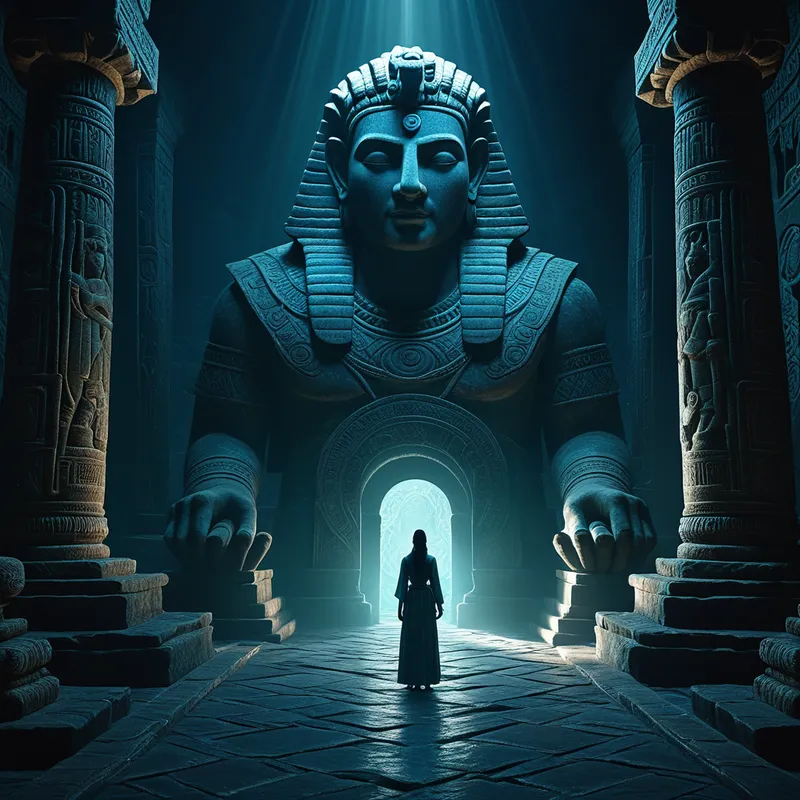
Cultural Origins & Context
Patecatl’s veneration was deeply embedded in the complex, cyclical worldview of the Aztec (Mexica) civilization, where medicine was inseparable from theology, cosmology, and social order. He was not a standalone healer but part of a vast pantheon where every function, from rain to war, had a divine patron. His identity as a god of medicine, healing, and the discovery of pulque placed him at a critical intersection of life, death, and transcendence.
He belonged to the Centzon Totochtin, often under the leadership of his consort, the goddess Mayahuel, who embodied the maguey plant itself. This connection rooted him firmly in the domain of fertility and agricultural abundance. Pulque was more than a beverage; it was a vital source of nutrients, a ceremonial drink for nobles and priests, and a crucial offering to the gods. Thus, Patecatl’s medicine was fundamentally communal and life-sustaining.
His role must be understood within the Aztec concept of illness, which rarely distinguished between physical and spiritual causes. Disease could be a manifestation of divine displeasure, a magical attack, or an imbalance in one’s tonalli (vital force). The healer, or tictl, was a ritual specialist. Patecatl, as their patron, provided the sacred pharmacopoeia—the hallucinogenic plants and fermented pulque—that were tools for diagnosis and healing. These substances were used to induce trance states, allowing the healer or supplicant to journey into the spiritual realm, identify the cause of affliction, and seek restoration. Patecatl, therefore, governed not just the remedy, but the entire ritual process of diagnosis and spiritual reconciliation.
Symbolic Architecture
Patecatl represents the archetype of the healer who works through radical transformation rather than simple restoration. He does not merely bandage a wound; he guides the afflicted through a symbolic death and rebirth via sacred intoxication. His medicine is a threshold, a deliberate dissolution of the ego’s boundaries to access deeper truths and forces.
He is the divine principle that true healing often requires a descent—a willing journey into the non-ordinary, the chaotic, or the ecstatic—to retrieve wholeness. The cure is not found in safety, but in the sacredly managed encounter with the other.
His tools are paradoxical. The obsidian blade used for bloodletting and surgery is an instrument of pain that leads to release. The psychoactive plant is a poison that, in the ritual vessel, becomes a portal. The maguey sap is inert until it undergoes the “rotting” transformation of fermentation, mirroring the necessary decay of old, sickly patterns within the soul. Patecatl’s domain is this alchemical process where the base, the wounded, or the profane is subjected to a sacred procedure to emerge transformed.
He stands as a crucial balance to the martial and solar energies that dominate Aztec mythology. In a cosmos demanding constant sacrifice and warfare, Patecatl offers an internalized, participatory sacrifice. The offering is one’s own conscious awareness, surrendered temporarily to the plant spirits to achieve clarity, purification, and re-integration with the cosmic order.
The Dreamer's Resonance
To the modern psyche, Patecatl speaks to the profound need for transformative healing that addresses the root, not just the symptom. In an age of clinical, often disenchanted medicine, he reminds us that healing is a holistic ritual. The physical ailment, the psychological wound, and the spiritual malaise are intertwined, and addressing one may require passage through the others.
He symbolizes the courage to confront the shadowy, chaotic material of our own suffering—the grief, rage, or shame we often seek to numb. Patecatl’s sacred plants are akin to the tools of depth psychology: dreams, active imagination, or therapeutic processes that temporarily disrupt our conscious defenses to bring buried contents to light. He is the patron of the therapeutic vessel itself, the safe, ritualized space where one can consciously “ingest” one’s pain and allow it to be alchemized into insight.
Furthermore, he represents the wisdom of indigenous and earth-based knowledge systems. His myth challenges the hegemony of purely materialist science, pointing to a world where consciousness is malleable and plants are teachers. For the contemporary seeker, Patecatl’s resonance is in the mindful, intentional use of altered states—whether through meditation, breathwork, or sanctioned plant medicines—for the purpose of healing and self-discovery, always emphasizing set, setting, and sacred intent over mere escape.

Alchemical Translation
The core alchemy Patecatl governs is Fermentation. It is the slow, transformative rot that creates vitality from stagnation. Psychologically, this is the process of composting our traumas, our unresolved emotions, and our rigid ego structures. We must allow them to “ferment” in the vessel of awareness, guided by the “yeast” of attention and intention, until they break down and release their transformative potential, just as grape becomes wine or sap becomes pulque.
The patient does not fight the disease but enters into a sacred relationship with it, allowing its chaotic energy to be the catalyst for a fundamental reorganization of the self. The wound becomes the womb.
A second operation is Extraction. Patecatl pierces the heart of the maguey to draw out its hidden essence. This translates to the therapeutic act of drawing out the core truth from within a complex of pain. It is the precise, sometimes painful, intervention—the insightful question, the remembered dream, the confronted feeling—that releases the healing essence trapped beneath layers of defense and narrative.
Finally, he embodies Ritualization. The raw, potentially dangerous power of the psychoactive is made sacred through ceremony, song, and community. In our lives, this translates to the need to ritualize our healing journeys. We must create conscious containers—therapy sessions, journaling practices, support groups, personal ceremonies—to hold and direct the powerful, often chaotic energies of transformation, ensuring they lead to integration rather than fragmentation.
Associated Symbols
Explore related symbols from the CaleaDream lexicon:
- Medicine — The sacred art of restoring balance, encompassing physical remedy, spiritual insight, and the transformative journey required for true healing.
- Transformation Cocoon — The sacred, liminal space—be it a ritual, a trance, or a therapeutic process—where the old self dissolves so a new, more integrated form may emerge.
- Ritual — The structured, intentional container of action and symbolism that transforms ordinary acts (like drinking, or speaking) into bridges to the sacred and the subconscious.
- Root — Symbol of foundational knowledge, connection to ancestral and earthly wisdom, and the hidden, often subterranean source of healing power.
- Cave — The dark, womb-like place of introspection and descent where one encounters the raw materials of the psyche and the spirits of the earth, akin to Patecatl’s jungle.
- Moonlit Ritual — Healing work conducted in the reflective, intuitive, and fluid light of the moon, aligning with the non-rational, visionary aspects of medicine.
- Sacrifice — The conscious offering of one’s familiar state of being, comfort, or ego-control as a necessary payment for healing, wisdom, or communion with the divine.
- Vision — The clarified sight granted through sacred ordeal or plant medicine, allowing perception of spiritual causes and connections invisible to the ordinary eye.
- Door — The threshold, often entered through ritual or sacrament, that separates ordinary illness from the transformative space of healing and revelation.
- Bridge — Patecatl himself as a conduit between the earthly realm of plants and the divine realm of healing power, and between suffering and wholeness.