Olokun Myth Meaning & Symbolism
A myth of the primordial sea deity Olokun, representing the unfathomable unconscious, boundless potential, and the dangerous gifts of the deep.
The Tale of Olokun
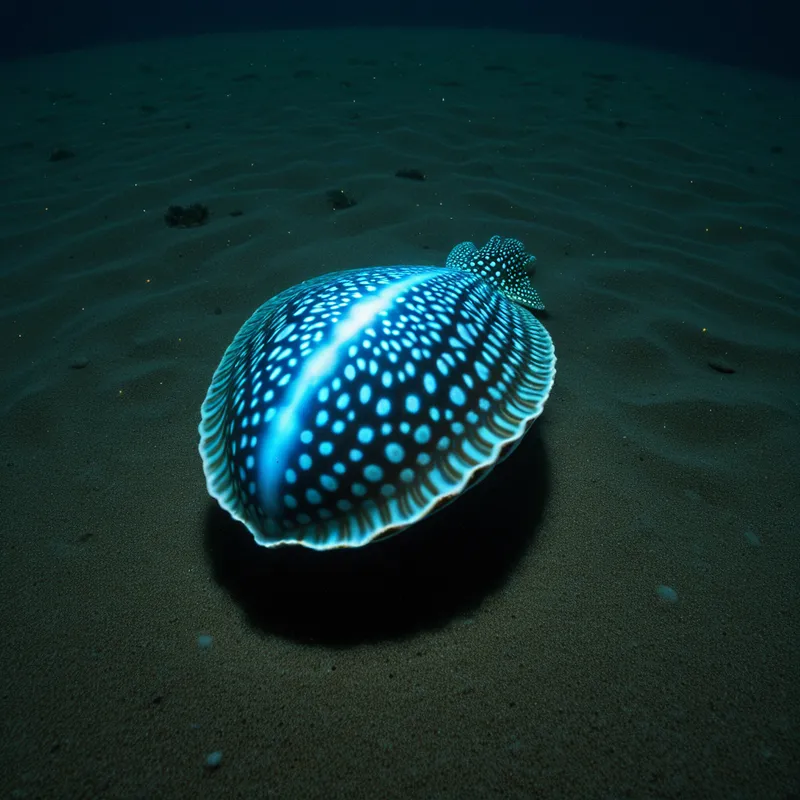
In the time before time, when the world was young and the sky was a breath away from the earth, there was not only the land you walk upon and the air you breathe. Beneath it all, deeper than the roots of the greatest Tree, lay the kingdom of Olokun. This was no mere sea, but the Primordial Deep, the womb of all waters, a realm of silent, crushing pressure and absolute darkness, lit only by the cold, ghostly light of creatures unknown to the sun.
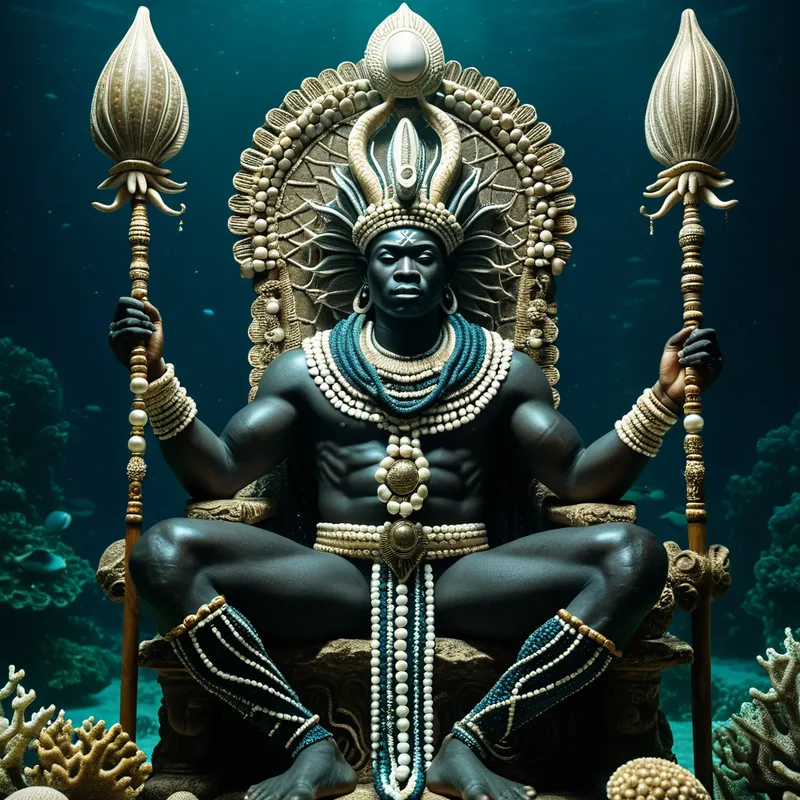
Olokun ruled this boundless, liquid realm from a throne of living coral and polished abalone. Their form was vast and fluid, neither wholly man nor woman, but a sovereign of profound and terrible beauty. Their wealth was the wealth of the abyss: mountains of pearls, forests of kelp that sang in the currents, and the infinite, gleaming treasure of cowrie shells—the very currency of destiny and fortune. Olokun’s kingdom was complete, a perfect, closed circle of silent majesty. But a stillness, heavy as the deep-sea pressure, settled upon the ruler’s heart. From the world above, faint echoes trickled down—the laughter of Eshu, the rhythmic pounding of Ogun’s forge, the vibrant, chaotic symphony of life. To Olokun, these were tantalizing, alien melodies. A deep loneliness, as vast as the ocean floor, grew within. The perfection of the deep began to feel like a prison of its own making.
The longing became an ache that stirred the very foundations of the sea. Olokun’s immense, contained power began to swell, a psychic tempest in the deep. The waters grew restless. On the surface, the world of Orishas and humans trembled. Storms arose from calm seas, waves climbed like mountains to scrape the sky, and the shores wept as the ocean claimed them. The world was drowning in Olokun’s unfelt grief and unexpressed desire.
The council of Orishas gathered in alarm. Force was impossible; one cannot fight the ocean itself. Wisdom was needed. The task fell to [Orunmila](/myths/orunmila “Myth from Yoruba culture.”/), the seer who speaks with the Ikin. And to Oshun, whose domain was all that was gentle, persuasive, and life-giving. Their mission was not conquest, but connection. A perilous embassy into the absolute unknown.
Descending through layers of increasing darkness and pressure, guided by Orunmila’s cryptic verses and Oshun’s intuitive grace, they arrived at the gates of the abyssal palace. Before the majestic, sorrowful presence of Olokun, they did not demand or plead. Orunmila cast his divination chains, speaking not of the chaos above, but of the loneliness below. He mirrored Olokun’s own isolation back to them, not as a flaw, but as a sacred condition. Oshun, with movements as fluid as the current, began to dance. She did not bring the noise of the world, but translated its essence into a language the deep could understand—the rhythm of the heart, the flow of connection, the beauty of exchange.
Witnessing this, the storm within Olokun began to still. The rigid, perfect order of the deep was touched by the possibility of relationship. The resolution was not a surrender, but a sacred pact. Olokun’s power would not be unleashed to destroy, nor locked away to fester. It would be engaged. The deep would send its gifts—its wealth, its mysteries, its creative potential—to the world above through regulated channels: the tides, the rivers that met the sea, the bounty given to fishermen. In return, the world would send its respect, its rituals, its acknowledgment of the deep’s sovereign majesty. Olokun remained ruler of the profound dark, but was no longer separate from the great web of being. The waters receded, not in defeat, but in conscious choice, leaving the world fertile, humbled, and forever aware of the power that slumbered beneath its feet.
Cultural Origins & Context
The myth of Olokun originates from the Yoruba people of West Africa, whose worldview is deeply interwoven with a vibrant pantheon of Orishas, each governing a fundamental force of nature and human experience. This myth was not mere entertainment; it was a foundational narrative, passed down through generations by Babalorishas and Ayan during rituals, festivals, and rites of passage. Its telling was an act of cultural memory and cosmological instruction.
Functionally, the myth served multiple vital roles. For a people living along the coast of the Atlantic (the Bight of Benin), it explained the terrifying and generative power of the ocean—its capacity to give fish and wealth, and its capacity to take lives without warning. It established the protocol for relating to this power: through respect, ritual sacrifice, and the mediating roles of other Orishas like Oshun and Orunmila. Societally, it reinforced the principle that unchecked power, even divine power, leads to isolation and disaster, and that wisdom and diplomacy are superior to brute force. The myth encoded an ecological and psychological truth: balance between the hidden depths and the manifest world is not automatic; it is a conscious, ongoing achievement.
Symbolic Architecture
Olokun is the ultimate [symbol](/symbols/symbol “Symbol: A symbol can represent an idea, concept, or belief, serving as a powerful tool for communication and understanding.”/) of the unconscious—not the personal unconscious of repressed memories, but the collective, primordial, and impersonal unconscious, the [source](/symbols/source “Symbol: The origin point of something, often representing beginnings, nourishment, or the fundamental cause behind phenomena.”/) of all psychic [life](/symbols/life “Symbol: The symbol of ‘Life’ represents a journey of growth, interconnectedness, and existential meaning, encompassing both the joys and challenges that define human experience.”/) and potential. It is the [realm](/symbols/realm “Symbol: The symbol of ‘Realm’ often signifies the boundaries of one’s consciousness, experiences, or emotional states, suggesting aspects of reality that are either explored or ignored.”/) of what is not yet known, teeming with latent forms, archaic memories, and boundless creative [energy](/symbols/energy “Symbol: Energy symbolizes vitality, motivation, and the drive that fuels actions and ambitions.”/).
The deep sea does not hate the sunlight; it simply precedes it. In its darkness resides not evil, but the unformed potential of all light.
The [kingdom](/symbols/kingdom “Symbol: A kingdom symbolizes authority, belonging, and a sense of identity within a larger context or community.”/)’s perfect, silent order represents the initial, undifferentiated state of the psyche—a totality that is complete but [static](/symbols/static “Symbol: Static represents interference, disruption, and the breakdown of clear communication or signal, often evoking feelings of frustration and disconnection.”/), lacking the [friction](/symbols/friction “Symbol: Friction represents resistance, conflict, or the necessary tension required for movement and transformation in dreams.”/) of [relationship](/symbols/relationship “Symbol: A representation of connections we have with others in our lives, often reflecting our emotional state.”/) that generates [consciousness](/symbols/consciousness “Symbol: Consciousness represents the state of awareness and perception, encompassing thoughts, feelings, and experiences.”/). Olokun’s [loneliness](/symbols/loneliness “Symbol: A profound emotional state of perceived isolation, often signaling a need for connection or self-reflection.”/) is the ache of this unconscious wholeness to become known, to enter into the dynamics of life. The resulting storm is the [symptom](/symbols/symptom “Symbol: A physical or emotional sign indicating an underlying imbalance, distress, or message from the unconscious mind.”/) of a content too powerful to remain contained; when the deep unconscious seeks [expression](/symbols/expression “Symbol: Expression represents the act of conveying thoughts, emotions, and individuality, emphasizing personal communication and creativity.”/), it manifests first as [chaos](/symbols/chaos “Symbol: In Arts & Music, chaos represents raw creative potential, uncontrolled expression, and the breakdown of order to forge new artistic forms.”/), flood, and overwhelming [emotion](/symbols/emotion “Symbol: Emotion symbolizes our inner feelings and responses to experiences, often guiding our actions and choices.”/) in the conscious world.
The embassy of Orunmila (wisdom, [structure](/symbols/structure “Symbol: Structure in dreams often symbolizes stability, organization, and the framework of one’s life, reflecting how one perceives their environment and personal life.”/)) and Oshun (eros, [connection](/symbols/connection “Symbol: Connection symbolizes relationships, communication, and bonds among individuals.”/), [beauty](/symbols/beauty “Symbol: This symbol embodies aesthetics, harmony, and the appreciation of life’s finer qualities.”/)) represents the necessary dual approach to integrating unconscious contents. One cannot simply dive into the [abyss](/symbols/abyss “Symbol: A profound void representing the unconscious, the unknown, or a spiritual threshold between existence and non-existence.”/); one must be guided by the divinatory principle (understanding the [pattern](/symbols/pattern “Symbol: A ‘Pattern’ in dreams often signifies the underlying structure of experiences and thoughts, representing both order and the repetitiveness of life’s situations.”/)) and the attractive principle (the [ability](/symbols/ability “Symbol: In dreams, ‘ability’ often denotes a recognition of skills or potential that one possesses, whether acknowledged or suppressed.”/) to relate, to love the unknown). Their success signifies that the unconscious is not an [enemy](/symbols/enemy “Symbol: An enemy in dreams often symbolizes an internal conflict, self-doubt, or an aspect of oneself that one struggles to accept.”/) to be conquered, but a sovereign to be engaged in respectful [dialogue](/symbols/dialogue “Symbol: Conversation or exchange between characters, representing communication, relationships, and narrative flow in games and leisure activities.”/). The resulting pact symbolizes the establishment of a conscious relationship with the deep self, where its energies are channeled creatively into life rather than erupting destructively.

The Dreamer’s Resonance
When the pattern of the Olokun myth stirs in the modern dreamer, it often signals a profound encounter with the depths of the psyche. This is not a gentle process. To dream of vast, dark oceans, abyssal pressures, or being in the presence of a majestic, terrifying underwater entity is to feel the somatic weight of the unconscious pressing for recognition.
Psychologically, the dreamer may be experiencing a period where latent potentials, long-buried grief, or immense creative forces are threatening to flood their conscious life. This can feel like depression (the crushing pressure), uncontrollable anxiety (the rising storm), or a compulsive drive that seems to come from nowhere. The dream is the psyche’s attempt to image this process. The appearance of a guiding figure (a wise elder, a comforting lover) in the dream mirrors the roles of Orunmila and Oshun, indicating that the resources for navigation are emerging from within. The process is one of containment through relationship—learning to hold the immense, formless pressure of the deep without being shattered by it, and to begin the slow, respectful work of bringing its treasures to the surface.
Alchemical Translation
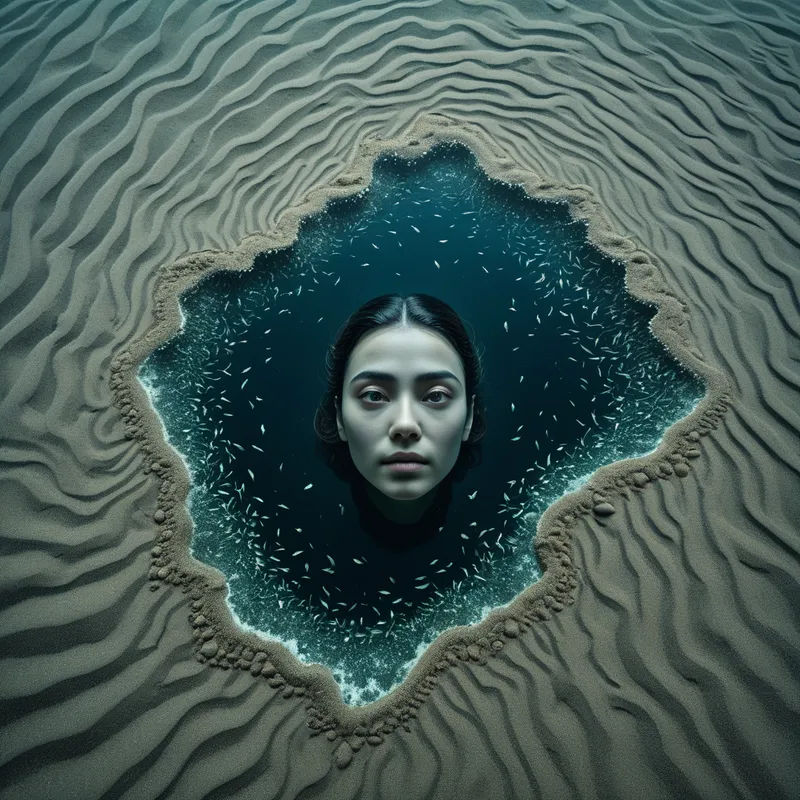
The myth of Olokun is a master blueprint for the alchemical process of individuation—the journey toward psychic wholeness. The starting condition is nigredo, the blackness: the isolated, unconscious totality of the deep sea self, rich but unmanifest.
The first work of the soul is not to create light, but to endure the fertile darkness until it consents to reveal its own.
The rising storm is the necessary confrontation with the shadow, where the repressed or unknown aspects of the self erupt with chaotic force, threatening the established order of the ego. This crisis is not a mistake, but the catalyst for all transformation.
The descent of the emissaries represents the ego’s development of new capacities: the logos of Orunmila (discernment, understanding the archetypal pattern) and the eros of Oshun (relatedness, valuing the mystery). This is the stage of albedo, the whitening, where consciousness begins to illuminate the dark material. The pact—the regulated exchange—is the ultimate goal: coniunctio oppositorum, the sacred marriage. It is the establishment of a permanent channel between the conscious ego and the unconscious Self (Olokun as ruler). The ego does not become the ocean, but it learns to sit at the shore in reverence, to interpret its tides, and to receive its gifts. The individual becomes a vessel through which the boundless creativity of the deep can flow into the world in coherent, life-giving forms. One becomes, in a sense, a living Altar where the profound depths and the manifest world are in constant, sacred dialogue.
Associated Symbols
Explore related symbols from the CaleaDream lexicon:
- Ocean — The primary symbol of the unfathomable unconscious, the source of all life and potential, holding both boundless wealth and terrifying depth.
- Order — Represents the initial, static perfection of Olokun’s realm, a closed system that must be opened to the chaos of relationship to become dynamic and creative.
- Sacrifice — The necessary offering of the ego’s control and certainty to engage with the deep unconscious, and the ritual exchange that maintains balance between worlds.
- Goddess — Embodies the feminine, receptive, and generative aspect of the deep, as Olokun is often revered as a maternal source of wealth and mystery.
- Mirror — Symbolizes the moment of self-reflection, where Olokun’s isolation is recognized, and the unconscious is made conscious through being seen and related to.
- Ritual — The structured, respectful practice (like the embassy of the Orishas) required to safely engage with and channel the immense power of the depths.
- Wealth — The psychic treasures of the deep: creativity, intuition, ancestral wisdom, and the latent potentials that lie buried within the unconscious.
- Shadow — The unintegrated, powerful, and often feared aspects of the self that Olokun represents, which must be acknowledged and engaged rather than repressed.
- Journey — The perilous descent into the depths of the self, a necessary voyage for anyone seeking wholeness and the integration of their hidden powers.
- Door — The threshold between the conscious world and the abyssal realm of Olokun, representing the point of entry into profound self-discovery and transformation.