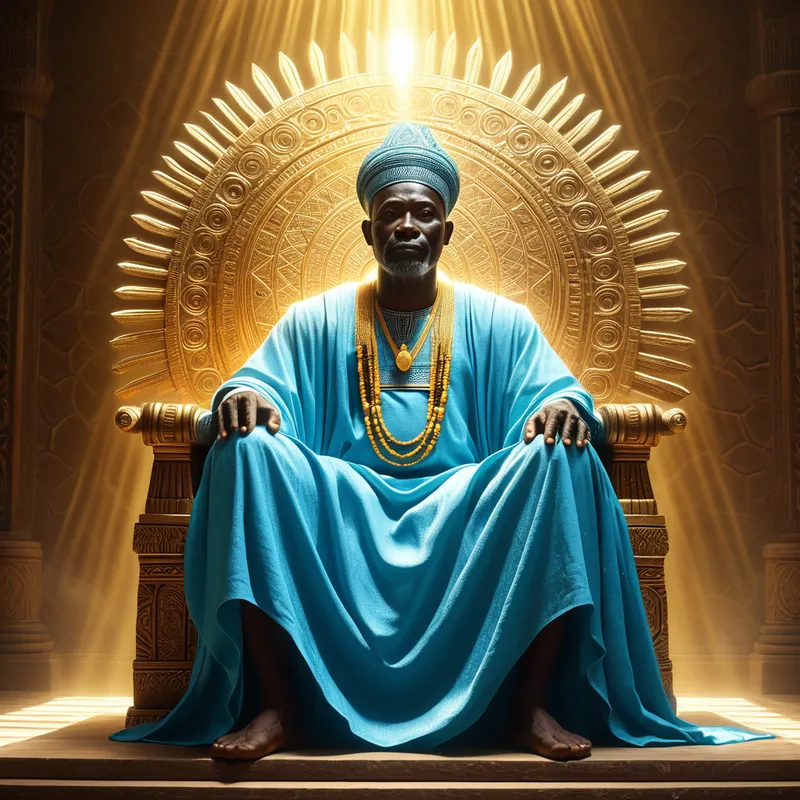
Olodumare Myth Meaning & Symbolism
The story of the Supreme Creator who withdraws to the heavens, entrusting the world to lesser deities, modeling the sacred distance necessary for creation to unfold.
The Tale of Olodumare
In the beginning, there was only the sky above and the watery marsh below. And in the sky, in the place of perfect, luminous stillness called Orun, dwelt Olodumare. Not as a form you could see, but as the very essence of existence—the breath before the word, the thought before the act. From Olodumare’s being flowed Ase, the power to make things be.
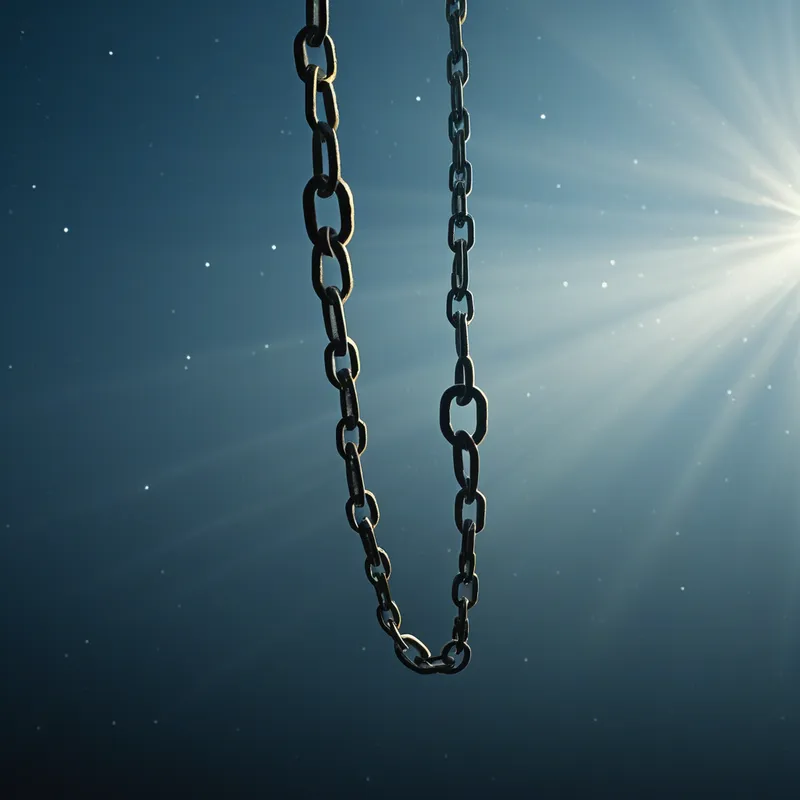
Olodumare was not lonely, for with Olodumare were the Irunmole, the primordial spirits, born of the same supreme source. Yet, the world below was formless, silent, a canvas untouched. So, Olodumare sent forth the architect, [Obatala](/myths/obatala “Myth from Yoruba culture.”/), down a great chain from the heavens. To [Obatala](/myths/obatala “Myth from Yoruba culture.”/) was given a snail shell filled with earth, a five-toed hen, and a palm nut. Obatala scattered the earth upon the waters, and the hen scratched it, spreading it wide until solid land, Aye, was formed. The palm nut was planted, and from it grew the first life.
But a great stillness remained. The land was pristine, yet empty of motion, of story. The Irunmole looked from Orun to Aye, and a longing stirred within them—a desire to tend, to shape, to bring forth the music of life. They came before Olodumare, their light flickering with this newfound want.
And Olodumare, in profound wisdom, did not refuse them. Instead, Olodumare performed the ultimate creative act: withdrawal. The Supreme Source did not abandon creation but receded, like the sun ascending to its zenith, leaving the sky bright and the world illuminated. Olodumare entrusted the world, Aye, to the Irunmole. To [Orunmila](/myths/orunmila “Myth from Yoruba culture.”/) was given knowledge of destiny. To Ogun, the mastery of technology and clearing paths. To Oshun, the arts of beauty and diplomacy. To Yemoja, the depths of the womb and the seas.
One by one, they descended the chain, each carrying a fragment of the divine Ase, each becoming a custodian of a portion of reality. Olodumare remained in Orun, the distant, watchful source, the final appeal, the ground of all being from which all authority flows. The world became alive with their struggles, their passions, their conflicts, and their harmonies. Creation was not a single act, but an ongoing delegation, a sacred distance that made room for everything that followed—the first rain, the first river, the first human molded by Obatala’s careful hands. The myth does not end, for it is the condition of our being: a world infused with divinity, managed by lesser powers, under the ultimate sovereignty of a source that is ever-present precisely because it is not here.
Cultural Origins & Context
This narrative is the foundational cosmology of the Yoruba people, whose traditional homeland spans parts of modern Nigeria, Benin, and Togo. It was not preserved in a single sacred text, but in the living, breathing corpus of Awise (orators) and Babalawo. The myth of Olodumare is the implicit backdrop of the entire Ifa literary corpus, the deepest layer of understanding that underpins thousands of poetic verses (Odu).
Its societal function was profound: it established a cosmic hierarchy and a philosophy of governance. It explained the nature of suffering and imperfection (the work of the sometimes-fallible Irunmole), while affirming an ultimate, just order. It was told not as a simple bedtime story, but invoked during rituals, legal disputes, and coronations to remind all—from king to commoner—that authority is a delegated trust from a higher source. The myth provided a template for understanding the human condition as one of mediated divinity, where we interact with the world through specific forces (orishas), but can, in ultimate moments, appeal to the supreme principle.
Symbolic Architecture
The myth’s power lies not in a [hero](/symbols/hero “Symbol: A hero embodies strength, courage, and the ability to overcome significant challenges.”/)’s [journey](/symbols/journey “Symbol: A journey in dreams typically signifies adventure, growth, or a significant life transition.”/), but in a cosmic [architecture](/symbols/architecture “Symbol: Architecture in dreams often signifies structure, stability, and the framing of personal identity or life’s journey.”/) of [relationship](/symbols/relationship “Symbol: A representation of connections we have with others in our lives, often reflecting our emotional state.”/). Olodumare represents the transcendent ground of being, the Self in its most complete, unfathomable form. The withdrawal is not [abandonment](/symbols/abandonment “Symbol: A dream symbol representing feelings of being left behind, isolated, or emotionally deserted, often tied to primal fears of separation and loss of support.”/), but the necessary [condition](/symbols/condition “Symbol: Condition reflects the state of being, often focusing on physical, emotional, or situational aspects of life.”/) for the existence of an “other.”
The ultimate creative act is not imposition, but the granting of space. The Supreme Ruler must withdraw to the throne room so the court may live, argue, love, and create.
The chain of descent symbolizes the connective [tissue](/symbols/tissue “Symbol: Represents emotional release, vulnerability, and the delicate nature of feelings or physical fragility.”/) between the transcendent and the immanent, the spiritual and the [material](/symbols/material “Symbol: Material signifies the tangible aspects of life, often representing physical resources, desires, and the physical world’s influence on our existence.”/). The Irunmole represent the archetypal forces of the psyche—the personified instincts, talents, and complexes that govern our daily lives: our [capacity](/symbols/capacity “Symbol: A measure of one’s potential, limits, or ability to contain, process, or achieve something, often reflecting self-assessment or external demands.”/) for love (Oshun), our will to overcome obstacles (Ogun), our search for meaning (Orunmila). Olodumare is the central [authority](/symbols/authority “Symbol: A symbol representing power structures, rules, and control, often reflecting one’s relationship with societal or personal governance.”/) that unifies this pantheon of inner drives, the core Self from which they all emanate and to which they ultimately report.
The myth models a psyche that is not monolithic, but a governed [federation](/symbols/federation “Symbol: A political entity formed by uniting smaller states or groups under a central authority while retaining some local autonomy.”/). Psychological wholeness (individuation) is not about becoming a solitary, perfect being, but about properly relating the various “deities” within us to the central, ordering principle of the Self.
The Dreamer’s Resonance
When this myth pattern stirs in the modern unconscious, it often manifests in dreams of profound verticality and sacred distance. One might dream of a brilliant, authoritative light in the upper part of a vast chamber, feeling a mix of awe, longing, and a sense of rightful separation. There may be dreams of receiving a crucial task or tool from a distant, faceless authority figure who then vanishes, leaving the dreamer with both the burden and the freedom of responsibility.
Somatically, this can correlate with feelings in the crown of the head—a sense of connection to something vast “above,” coupled with a grounding “below” where the real work happens. Psychologically, the dreamer is often at a crossroads between dependency and autonomy. The myth surfaces when one is ready to acknowledge that the ultimate source of authority (for one’s life, one’s values, one’s creation) must be internalized and held at a sacred distance. It is the process of moving from seeking external salvation to understanding that the gods—the driving forces of one’s life—are within, operating under a sovereignty one must come to know and respect.

Alchemical Translation
The alchemical process mirrored here is one of distillatio—the ascent and purification—followed by a deliberate separatio to allow for coagulatio, the formation of the many from the one. For the individual, the “withdrawal of Olodumare” is the critical stage in individuation where one must differentiate from the unconscious, parental, or societal “supreme authority” that has hitherto defined one’s reality.
The psyche’s ruler must recede to its rightful, transcendent place so that the inner council of archetypes can engage in the messy, beautiful work of living your life.
First, one must acknowledge the “Olodumare” within—the core, organizing Self that is the source of your unique Ase, your life force and authority. Then, one must consciously “withdraw” this Self from direct, micro-managing control. This is not dissociation, but a sacred delegation. You allow your inner Orunmila (wisdom) to consult the Ifa of your experience. You let your inner Ogun clear paths with its will. You honor your inner Oshun’s need for beauty and relationship.
The struggle is to hold the tension: to know the central, unifying authority exists, while not demanding it solve every petty conflict. The triumph is the creation of a governed, vibrant inner world—a personal Aye—that is dynamic, creative, and imperfect, yet ultimately aligned with the profound, silent order of the Self. You become both the ruled and the ruler, the creation and the space in which creation happens.
Associated Symbols
Explore related symbols from the CaleaDream lexicon:
- Sky — Represents Orun, the transcendent realm of Olodumare, the source of ultimate authority and pure potential from which all things descend.
- Earth — Symbolizes Aye, the formed world of manifestation and experience, entrusted to the deities and humanity after the divine withdrawal.
- Chain — The connective link between heaven and earth, representing the medium of divine influence, delegation, and the enduring connection between the Supreme and creation.
- Order — The fundamental theme of the myth; the cosmic hierarchy and divine governance established by Olodumare’s sovereign act of structured withdrawal and delegation.
- God — The symbol of Olodumare as the supreme, transcendent source of being, the ultimate authority that empowers yet distances itself to enable autonomous existence.
- Authority — The core dynamic of the myth, embodied in the concept of delegated Ase; power and creative mandate flowing from a distant, ultimate source.
- Temple — Represents the structured cosmos itself, and the human psyche, as a sacred space where delegated divine forces operate under a supreme, architectural principle.
- Crown — Symbolizes the Ade, the embodiment of bestowed authority and the visible connection to the divine source worn by rulers and deities.
- Light — The primary emanation of Olodumare, representing pure consciousness, creation, and the illuminating presence that recedes but never fully vanishes.
- Journey — The descent of the deities and the subsequent human experience, framed as a journey of managing a world where the ultimate source is a distant home to be returned to.
- Destiny — Entrusted to Orunmila, it represents the individualized path and potential woven into creation, knowable through wisdom but anchored in the supreme will.
- Root — The myth as the foundational, unseen source of a vast cultural and psychological system; Olodumare as the ultimate root of all archetypal expressions.