
Odin's Staff Myth Meaning & Symbolism
The spear Gungnir, forged by dwarves and hurled to begin all wars, embodies the Allfather's quest for order through chaos and knowledge through self-sacrifice.
The Tale of Odin’s Staff
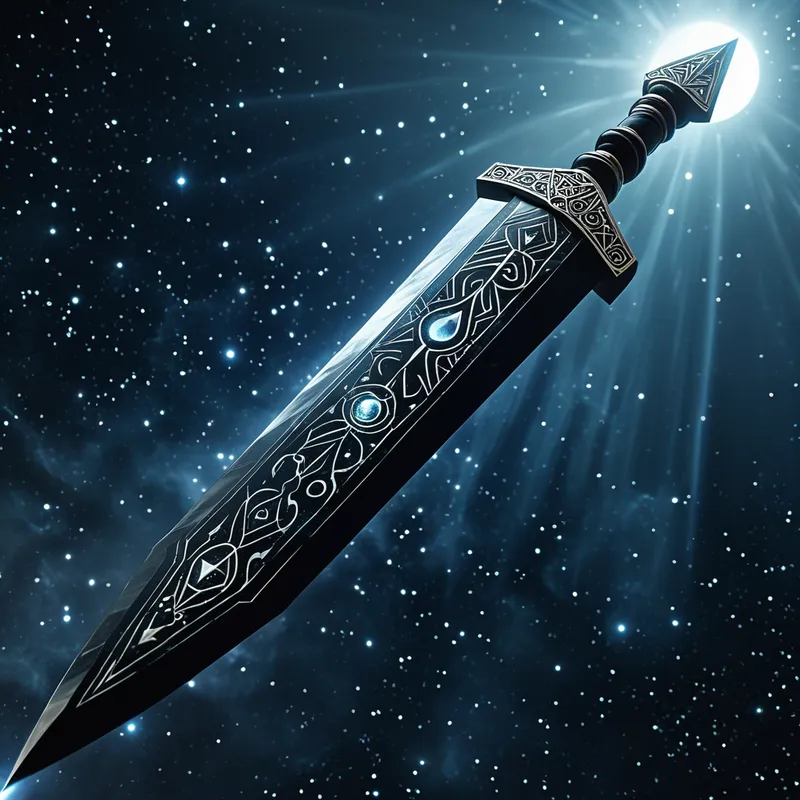
Hear now of the spear that begins and ends all things. In the time before time, when the frost of [Niflheim](/myths/niflheim “Myth from Norse culture.”/) gnawed at the fires of [Muspelheim](/myths/muspelheim “Myth from Norse culture.”/), [the dwarves](/myths/the-dwarves “Myth from Norse culture.”/), those sons of stone and shadow, labored in the deep places of [the earth](/myths/the-earth “Myth from Hindu culture.”/). They were the Svartálfar, and their craft was a song of hammer and anvil that even the gods envied. For the Allfather, Odin, they forged a weapon unlike any other: a spear of ash wood and unbreakable metal, its point so keen it could slice the thread of fate itself. They named it [Gungnir](/myths/gungnir “Myth from Norse culture.”/), and they sang into its making a terrible promise: it would never miss its mark.
Odin took the spear in his hand, and its balance was the balance of [the world](/myths/the-world “Myth from Tarot culture.”/). He felt the hum of its intent. It was not merely a weapon; it was a decree. When the first war among the gods, the Æsir-Vanir War, threatened to unmake the cosmos with its chaos, Odin did not raise Gungnir to strike a foe. Instead, standing before the assembled hosts, he drew back his arm and hurled the spear high over their ranks. A silence fell, colder than [the void](/myths/the-void “Myth from Buddhist culture.”/) of [Ginnungagap](/myths/ginnungagap “Myth from Norse culture.”/). The spear flew, a line of silver light against [the sky](/myths/the-sky “Myth from Persian culture.”/), and as it flew, Odin’s voice, thunder and whisper combined, boomed forth: “I dedicate all of you to Odin!”
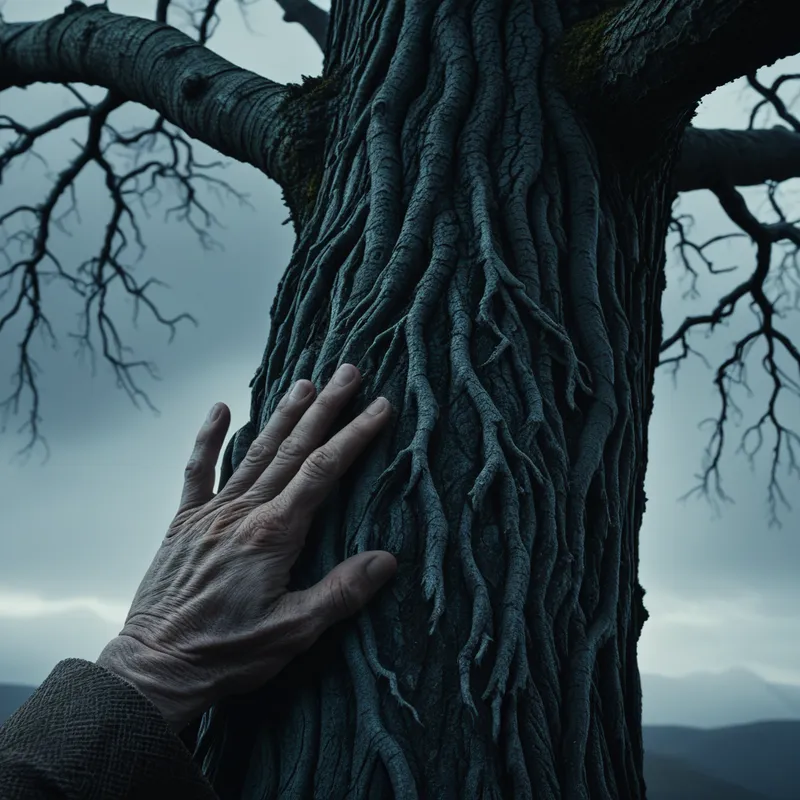
The spear’s arc was the drawing of a border. Its descent was the falling of a verdict. Where it landed, [the law](/myths/the-law “Myth from Biblical culture.”/) of strife was invoked. All conflict, all struggle, all contest of will was now under the dominion of the one who cast it. Gungnir was the first move in every battle, the sacred ritual that transformed random violence into a field of fate where glory and death could be weighed. It was the staff of command, the axis around which the chaos of war would turn, giving it a terrible, sacred order. And the Allfather knew that to wield such order, one must first know the price of disorder. So, with Gungnir as his witness and his guide, he turned his single eye toward the [Yggdrasil](/myths/yggdrasil “Myth from Global/Universal culture.”/), and began his longest, most silent war—a war upon himself.
Cultural Origins & Context
This myth of Gungnir is woven from threads found primarily in the Poetic Edda and the later Prose Edda of Snorri Sturluson. It was not a tale told for mere entertainment around [the hearth](/myths/the-hearth “Myth from Norse culture.”/), but a sacred narrative recited by skalds and elders, a foundational piece of the Norse cosmological worldview. In a culture where fate (ørlög) was woven by the [Norns](/myths/norns “Myth from Nordic culture.”/) and inescapable, the concept of invoking and sanctifying conflict was paramount.
The ritual casting of a spear over an enemy host is historically attested and was known as dynja fyrir her (“to roar before the army”). By dedicating the enemy to Odin, the warriors placed the impending battle within a divine framework. The outcome was in the hands of the gods, specifically the Allfather who decided who would fall and join him in [Valhalla](/myths/valhalla “Myth from Germanic culture.”/). Thus, Gungnir’s myth served a critical societal function: it framed the brutal reality of Viking Age warfare as a sacred, necessary, and orderly process within a chaotic universe. It transformed the warrior’s terror and fury into a form of pious service, and death in battle into a chosen destiny.
Symbolic Architecture
Gungnir is far more than a magical [weapon](/symbols/weapon “Symbol: A weapon in dreams often symbolizes power, aggression, and the need for protection or defense.”/). It is the symbolic [axis](/symbols/axis “Symbol: A central line or principle around which things revolve, representing stability, orientation, and the fundamental structure of reality or consciousness.”/) of Odin’s being and his cosmic function. Its unerring [flight](/symbols/flight “Symbol: Flight symbolizes freedom, escape, and the pursuit of one’s aspirations, reflecting a desire to transcend limitations.”/) represents the unwavering trajectory of will and [intention](/symbols/intention “Symbol: Intention represents the clarity of purpose and direction in one’s life and can symbolize motivation and commitment within a dream context.”/), the focused [application](/symbols/application “Symbol: An application symbolizes engagement, integration of knowledge, or the pursuit of goals, often representing self-improvement and personal development.”/) of [consciousness](/symbols/consciousness “Symbol: Consciousness represents the state of awareness and perception, encompassing thoughts, feelings, and experiences.”/) (symbolized by Odin’s single, all-seeing eye) upon the [chaos](/symbols/chaos “Symbol: In Arts & Music, chaos represents raw creative potential, uncontrolled expression, and the breakdown of order to forge new artistic forms.”/) of the unconscious and the external world.
The staff is the line drawn through chaos, the declaration that from this point forward, events have meaning and consequence.
The [spear](/symbols/spear “Symbol: The spear often symbolizes power, aggression, and the drive to protect or conquer.”/) is a bridge and a [boundary](/symbols/boundary “Symbol: A conceptual or physical limit defining separation, protection, or identity between entities, spaces, or states of being.”/)-maker. Its [shaft](/symbols/shaft “Symbol: A vertical passage or structural element, often representing transition, connection, or hidden depths in dreams.”/), of ash [wood](/symbols/wood “Symbol: Wood symbolizes strength, growth, and the connection to nature and the environment.”/) from the Yggdrasil, connects the realms—the [human](/symbols/human “Symbol: The symbol of a human represents individuality, complexity of emotions, and social relationships.”/), the divine, the chthonic. Its point, forged in the [underworld](/symbols/underworld “Symbol: A symbolic journey into the unconscious, representing exploration of hidden aspects of self, transformation, or confronting repressed material.”/) by dwarves, represents the piercing [insight](/symbols/insight “Symbol: A sudden, deep understanding of a complex situation or truth, often arriving unexpectedly and illuminating hidden connections.”/) that comes from engaging with the [shadow](/symbols/shadow “Symbol: The ‘shadow’ embodies the unconscious, repressed aspects of the self and often represents fears or hidden emotions.”/), with the deep, instinctual craftsmen of the [psyche](/myths/psyche “Myth from Greek culture.”/). Odin’s self-sacrifice on Yggdrasil, which the myth of Gungnir foreshadows, is the ultimate act of “aiming” the [spear](/symbols/spear “Symbol: The spear often symbolizes power, aggression, and the drive to protect or conquer.”/) of consciousness [inward](/symbols/inward “Symbol: A journey toward self-awareness, introspection, and the exploration of one’s inner world, thoughts, and unconscious mind.”/). He pierces his own being to obtain [the runes](/myths/the-runes “Myth from Norse culture.”/), the fundamental structures of [reality](/symbols/reality “Symbol: Reality signifies the state of existence and perception, often reflecting one’s understanding of truth and life experiences.”/) and [language](/symbols/language “Symbol: Language symbolizes communication, understanding, and the complexities of expressing thoughts and emotions.”/). Thus, Gungnir symbolizes the terrifying [truth](/symbols/truth “Symbol: Truth represents authenticity, honesty, and the quest for knowledge beyond mere appearances.”/) that true order and [knowledge](/symbols/knowledge “Symbol: Knowledge symbolizes learning, understanding, and wisdom, embodying the acquisition of information and enlightenment.”/) are born not from avoiding conflict, but from consciously invoking, directing, and sacrificing oneself to it.
The Dreamer’s Resonance
When the image of a staff or spear of immense power appears in a modern dream, it rarely arrives as a simple weapon. It manifests as a profound psychological event. The dreamer may find themselves holding a rod of light, a wooden staff that roots into the earth, or a spear they feel compelled to throw into a fog. This is the psyche invoking the archetype of Gungnir.
Somatically, one might feel a surge of vertical energy along the spine—a [Kundalini](/myths/kundalini “Myth from Hindu culture.”/)-like awakening of will and purpose. Psychologically, this dream signals a critical point of decision or declaration. The unconscious is presenting the dreamer with the “spear of intent.” A situation of internal chaos (indecision, conflicting desires, unresolved conflict) or external disorder (a messy life circumstance, a toxic relationship, a career crossroads) has reached its zenith. The dream of the staff is the psyche’s preparation to “cast the spear”—to make a definitive choice, draw a boundary, or initiate a necessary conflict that will, however painfully, impose a new order. The dreamer is being called to become the sovereign of their own inner battle, to dedicate their struggle to a higher purpose of self-knowledge.

Alchemical Translation
The myth of Gungnir models the alchemical opus of individuation—the process of forging the fragmented self into a coherent, conscious whole. The [prima materia](/myths/prima-materia “Myth from Alchemical culture.”/), the chaotic base matter, is the unexamined life: a swirl of impulses, societal expectations, and unconscious patterns (the unruly host of the Vanir and [Jötnar](/myths/jtnar “Myth from Norse culture.”/) within us).
The first, crucial step is the Ritual of Intention (the casting of the spear). This is the conscious ego’s brave, terrifying decision to no longer be a passive participant in its own chaos. It is the act of therapy, of journaling, of meditation, of finally saying “no” or “yes” with full commitment. It declares to the psyche: “This conflict is now sacred. I will engage with it fully to transmute it.”
The alchemical fire is lit not by avoiding the shadow, but by hurling the spear of consciousness directly into its heart.
The subsequent stages—the suffering, the hanging on the tree, the acquisition of runic wisdom—all flow from this initial, directed act of will. Gungnir’s unerring strike ensures that this engagement is not wasted; it will always hit the mark of the core complex or wound. For the modern individual, the “staff” becomes any disciplined practice or focused insight that serves as the central axis of their transformation. It is the unwavering commitment to truth, the therapeutic technique, the artistic medium, or the spiritual path that becomes the tool through which chaos is given form, and through which [the Self](/myths/the-self “Myth from Jungian culture.”/) is ultimately forged. We do not find order by waiting for the storm to pass. We find it by grasping the spear and drawing a line in the storm itself.
Associated Symbols
Explore related symbols from the CaleaDream lexicon: