Nuno sa Punso Myth Meaning & Symbolism
An ancestral spirit dwells within an anthill, guarding the boundary between the human world and the wild, ancient earth.
The Tale of Nuno sa Punso
Listen, child, to the whisper of the land. Before the concrete and the clamor, the earth was not silent. It breathed, and in its breath lived the old ones, the keepers of the kalooban—the inner essence of place.
In the liminal hours, when the sun bleeds into the horizon and long shadows stretch like grasping fingers, the fields grow quiet. Not a silence of emptiness, but one of profound attention. It is then you might see it: a mound of earth, a perfect, weathered cone rising from the soil at the edge of a rice paddy or the foot of a great tree. This is the Punso. Do not mistake it for a simple home of ants. It is a threshold. A door.
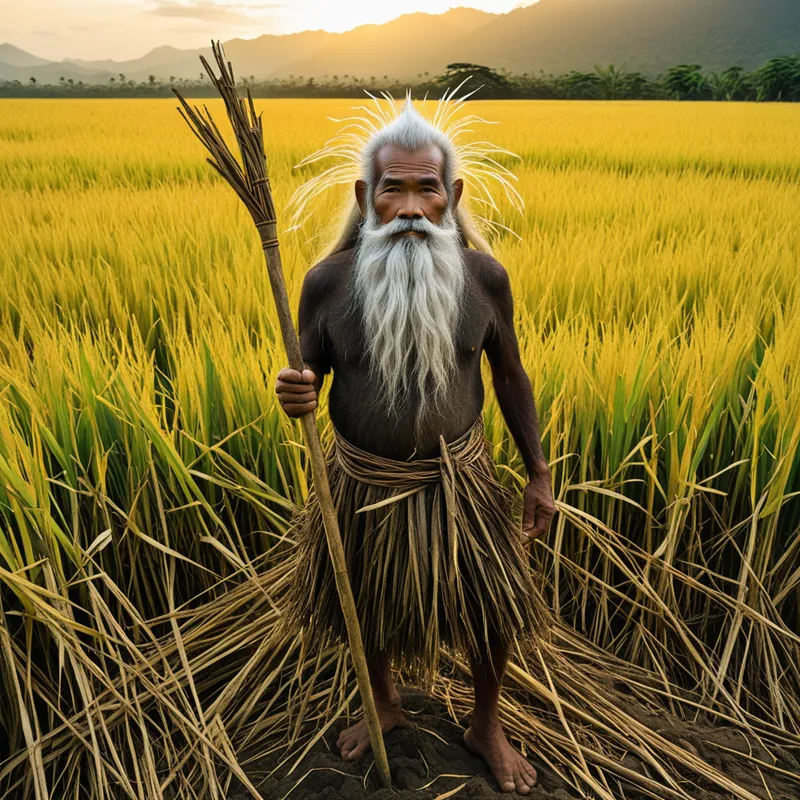
Within dwells the Nuno. He is as old as the first seed that fell. His beard is the color of dried palay, his skin the texture of sun-baked clay, and his eyes hold the deep, patient darkness of the soil. He does not seek the world of men, but he watches it. He is the guardian of that thin, vital line where the cultivated field meets the untamed wild, where human order brushes against the ancient, chthonic order of the earth.
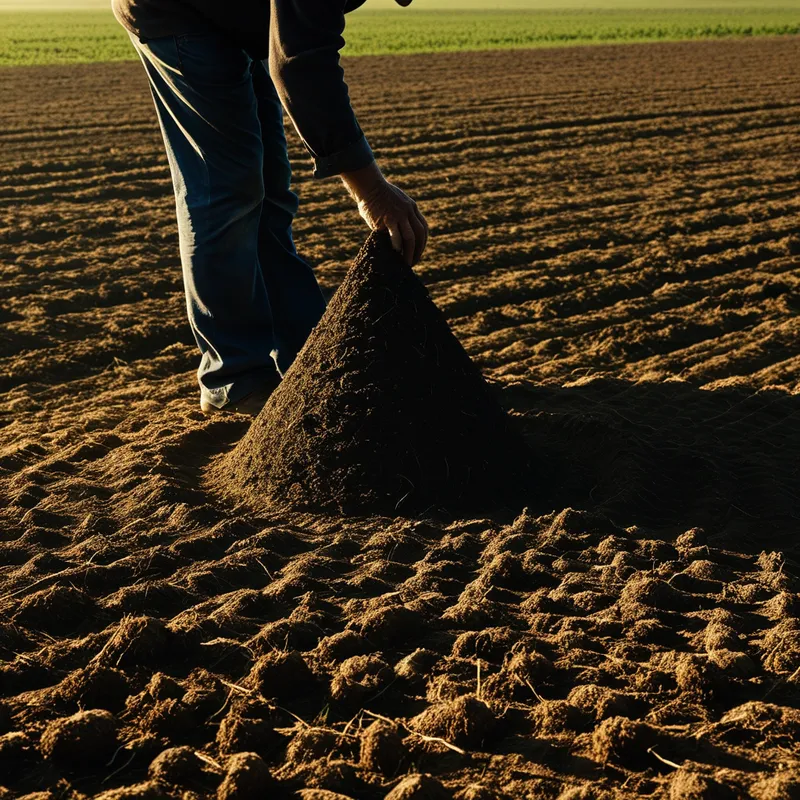
Now, imagine a farmer, weary from a long day, his mind on his supper and his rest. He clears a new plot, his bolo slicing through grass and root. He does not see the small, earthen dome nestled in the grass. Or perhaps he sees it, but in his haste, his need, he dismisses it. With a grunt of effort, he brings his foot down upon the mound, crushing its delicate architecture. Or worse, he relieves himself upon it, an act of ultimate carelessness and disrespect.
The air grows cold. A profound stillness falls, heavier than the tropical heat. From the disturbed earth, a presence coalesces—not with a roar, but with a silence that swallows sound. The Nuno has been awakened, and his peace has been broken. His wrath is not fire, but a deep, invasive chill. The farmer feels a sudden, gripping pain in his stomach, a dizziness that steals the strength from his legs. His skin may break out in inexplicable rashes, or a deep, unshakable malaise may settle into his bones. The land itself, through its guardian, has struck back. The offense was not against a person, but against a covenant—the unspoken pact of respect for the spirit of place.
The resolution is not found in battle, but in humility. An elder must be summoned, one who remembers the old ways. With offerings of tobacco, betel nut, and a sincere, whispered apology—Tabi-tabi po—they approach the violated mound. They speak not to the air, but to the earth, acknowledging the Nuno’s sovereignty. They ask for forgiveness for the blindness of haste. Only then, when respect is restored, does the sickness recede, absorbed back into the soil from whence it came. The lesson is etched not in stone, but in the body and the memory: the world is alive, and we are not its masters, but its guests.
Cultural Origins & Context
The myth of the Nuno sa Punso is a foundational strand in the pre-colonial animist tapestry of the Philippine archipelago. It belongs not to the grand cosmic pantheons, but to the intimate, daily spirituality of the barangay and the rice field. This was knowledge passed not through written texts, but through the hushed warnings of a lola (grandmother) to her playing grandchildren, through the respectful gestures of farmers and fishermen.
Its primary societal function was ecological and social governance. By instilling a sense of sacred caution around specific, mundane landforms—anthills, old trees, large rocks—the myth enforced sustainable practices. It prevented the wanton destruction of ecosystems (for an anthill is a vital part of the soil’s health) and taught spatial awareness. It codified the concept of loob, the inner self and inner space, extending it to the environment: every place has its own kalooban, its interiority and dignity that must be honored. The Nuno was the personification of that dignity, the elder spirit of the land itself, ensuring that human expansion was always tempered with ritual respect.
Symbolic Architecture
At its core, the Nuno is an archetype of the Earth itself—ancient, patient, and foundational. The Punso is not merely a home; it is a symbol of the axis mundi, the world center, on a microcosmic scale. It is a Bridge between the surface world of human activity and the deep, unconscious Shadow realm of the underworld, the ancestral past, and the raw, untamed forces of nature.
The offense against the Nuno is never an offense against a law, but against a relationship. It is the crime of forgetting that we are in conversation with the world, and that the world talks back.
The sickness inflicted is a profound symbolic feedback. It represents the consequence of violating a psychic and ecological boundary. When we trample the sacred—whether in the land or within our own deep selves—the repressed energy returns not as philosophy, but as symptom: as anxiety, somatic illness, or a pervasive sense of dis-ease. The Nuno’s curse is the land’s—and the psyche’s—way of forcing a recalibration, a return to awareness. The required Ritual of apology is the act of conscious realignment, of restoring the integrity of the boundary by acknowledging its power.
The Dreamer's Resonance
When this myth pattern stirs in the modern Dream, it often manifests as dreams of intrusion and retribution. You may dream of accidentally damaging a strange, ancient object in your home and being overcome with guilt and dread. You may dream of a small, overlooked space in your house—a crawlspace, a forgotten closet—that hums with a powerful, unsettling presence. Or you may simply dream of a perfect, geometric mound of earth that fills you with both awe and terror.
Somnatically, this signals a process where the dreamer’s conscious attitude has "trampled" a psychic boundary. This could be ignoring a deep intuition, violating one’s own values for convenience, or encroaching on another’s emotional space without permission. The resulting "sickness" in the dream is the psyche’s somatic alarm bell. It is the feeling of being haunted by your own disregard. The dream is presenting the Punso—the sacred, vulnerable threshold you have ignored. The figure of the Nuno is the personified conscience of the land of your own soul, the ancient, wise, and fierce guardian of your deepest integrities.
Alchemical Translation
The individuation process modeled here is one of respectful integration, not heroic conquest. The goal is not to slay the Nuno or claim his mound, but to learn to live beside it in conscious relationship.
The first alchemical stage is Nigredo—the blackening. This is the moment of offense: the crushing of the mound. In psychological terms, it is the eruption of the symptom, the neurosis, the depression. It is the conscious ego, driven by its "agricultural" agenda of expansion and control, blindly violating an inner sanctum. The resulting sickness is the necessary dark night, the confrontation with the consequence of one’s one-sidedness.
The healing is not in the eradication of the shadow, but in the ritual recognition of its sovereignty. You do not become master of your depths; you become a respectful neighbor.
The second stage is Albedo—the whitening, the purification. This is the Ritual of apology. It requires the intervention of the inner Elder (the remembered wisdom, the therapist, the reflective self). This is the conscious work of making amends to the offended part of the psyche. It involves stopping, turning inward, and sincerely acknowledging what was damaged: "I see now that I ignored my intuition. I dishonored my need for rest. I trespassed on my own boundaries." The offerings of tobacco and betel nut are symbolic sacrifices—the giving of time, attention, and valued energy back to the neglected self.
The final stage is not a triumphant Rubedo (reddening) in a classic sense, but a state of Grounded Coexistence. The sickness recedes because balance is restored. The Nuno returns to his mound, not as a defeated foe, but as a respected presence. The ego learns to say "Tabi-tabi po" ("Excuse me, please") before charging forward. The individual gains the wisdom to perceive and honor the invisible Punsos in their inner and outer world—those delicate, powerful thresholds where the cultivated self meets the wild, ancient soul. In this integration, one does not possess the land; one belongs to it, in a relationship of sacred mutual respect.
Associated Symbols
Explore related symbols from the CaleaDream lexicon:
- Earth — The foundational substance and ultimate abode of the Nuno, representing the deep, unconscious, instinctual layer of the psyche and reality that grounds all being.
- Bridge — The anthill itself as a liminal structure, connecting the human world of order with the ancient, wild spirit world of the earth and the ancestors.
- Shadow — The Nuno embodies the respected but feared aspects of the natural world and the self—the old, the untamed, the retaliatory power of what is ignored or dishonored.
- Ritual — The prescribed act of apology and offering, representing the necessary conscious, formalized process of repairing a broken relationship with a deeper part of the self or the world.
- Door — The entrance to the Punso, symbolizing a threshold to a different state of awareness, a portal to the underworld of the psyche that must be approached with caution.
- Elder — The Nuno as an ancient, ancestral figure of wisdom, and the human elder who performs the healing ritual, representing accrued knowledge, tradition, and the voice of conscience.
- Fear — The initial, instinctual response to the Nuno's presence and power, a necessary emotion that enforces respect and prevents careless violation of sacred boundaries.
- Root — The deep, hidden connections of the Nuno to the land, symbolizing ancestry, tradition, and the foundational, often unseen supports of identity and place.
- Stone — The enduring, patient, and unmoving quality of the earth spirit's presence and law, representing timeless principles and the solidity of natural order.
- Spirit — The essential nature of the Nuno as an invisible, animating force within a specific place, representing the unique genius loci or the soul of a particular aspect of the self.