Nótt Myth Meaning & Symbolism
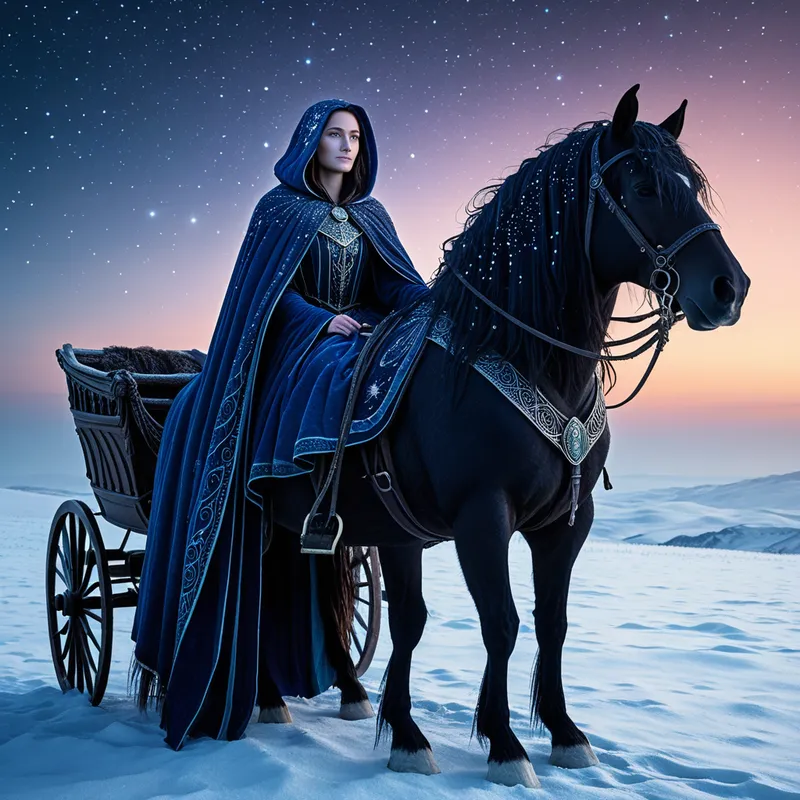
The myth of Nótt, the personified Night, whose chariot ride across the cosmos defines the rhythm of time and the soul's descent into darkness.
The Tale of Nótt
Listen, and let the fire’s crackle fade. Let the world outside your hall dissolve into the deep. Before the sun’s memory, before the ordered tread of days, there was her. Nótt.
She was born of giants, her lineage rooted in the frost and stone of Ginnungagap itself. Her hair was the space between stars, her cloak the breath of shadows. She walked the unformed worlds, a sovereign of the formless, until the gods of Asgard looked upon the chaos of light and dark and knew it must be tamed, not conquered, but given a rhythm, a heartbeat.
The All-Father, Odin, did not chain her. He did not banish her. He bestowed upon her a solemn duty, a sacred office. To her, he gave a chariot, and to that chariot, a steed: Hrímfaxi, whose mane was hoar-frost and whose breath was the coming chill. "You are not an ending," he declared, his one eye holding the depth of her darkness. "You are the mother of rest, the womb of dreams, the canvas for dawn. You shall ride first, and your son shall follow."
For Nótt had a son, Dagr, bright and bold, whose horse was Skinfaxi. And so the great procession was ordained. As the last ember of her son's journey faded in the west, Nótt would take the reins. She would mount her chariot, and Hrímfaxi would begin his celestial trek from the east, pulling the cloak of night across the weary world.
This was no silent glide. It was a profound descent. As Hrímfaxi trod the sky-road, foam flew from his bit—not white, but a shimmering, silver mist that settled upon the grass, the leaves, the brows of sleepers as dew. This was the gift of her passage: the weeping of the night itself, a baptism of cool silence. Beneath her mantle, fires guttered to embers, voices hushed to whispers, and eyes closed to see inward. She cradled the world in a darkness that was not empty, but full—pregnant with stars, with the howl of distant wolves, with the rustle of unseen things.
Her journey was a long, deep inhalation for the cosmos. She passed over mountains that became hunched giants in repose, over seas that turned to black glass reflecting her celestial court. She held the space until, in the east, a faint lightening, a gentle pressure, signaled the end of her watch. As she guided Hrímfaxi down below the horizon, her son Dagr would take his place, and the foam from his horse’s bit would be the brilliant, scattering light of dawn. Night did not flee from day; she yielded to him, completing the eternal, graceful turn of the Yggdrasil.

Cultural Origins & Context
The myth of Nótt is preserved primarily in two 13th-century Icelandic texts: the Prose Edda of Snorri Sturluson and the earlier poetic fragments that informed it. Snorri, a Christian scholar writing in a post-pagan age, systematized the old lore, and in his telling, Nótt’s tale is one of cosmic order being established from primal elements. She is not a monster to be defeated, but a fundamental force to be integrated.
This myth was not likely a "story" told around the fire in a single sitting, but a piece of the implicit understanding of the world—a poetic explanation woven into skaldic verse and kenning. To say "Nótt’s dew" was to speak of the morning damp. Her lineage, connecting her to the giants (Jötnar), roots her in the ancient, amoral, and potent forces that predate the gods themselves. Her societal function was profound: she personified the inevitable, restorative, and potentially fearsome half of the diurnal cycle. In a culture living in extreme latitudes where winter nights were long and deep, acknowledging and honoring the Night as a divine, necessary entity was a matter of psychological and practical survival. She represented the time for rest, reflection, and the hidden workings of fate (örlög).
Symbolic Architecture
Nótt is the archetype of the Containing Darkness. She is not the darkness of evil or oblivion, but the darkness of the fertile soil, the deep ocean, and the closed eyelid. Her symbolism is threefold: the vessel, the transition, and the gift.
She is the primordial vessel. Born of giants, she represents the undifferentiated, potential-filled state that exists before form (day) is articulated. She is the cosmic womb that must exist for any new birth—of ideas, of consciousness, of the day itself—to occur.
Night is not the absence of light, but the presence of a different kind of seeing. It is the condition necessary for inner illumination.
Her chariot ride is the symbol of graceful, ordained transition. She does not clash with Day; they are part of a divine procession. This models the acceptance of necessary cycles—of activity and rest, of expression and introspection, of life and death. The conflict is not between night and day, but between chaos and this harmonious order established by the gods.
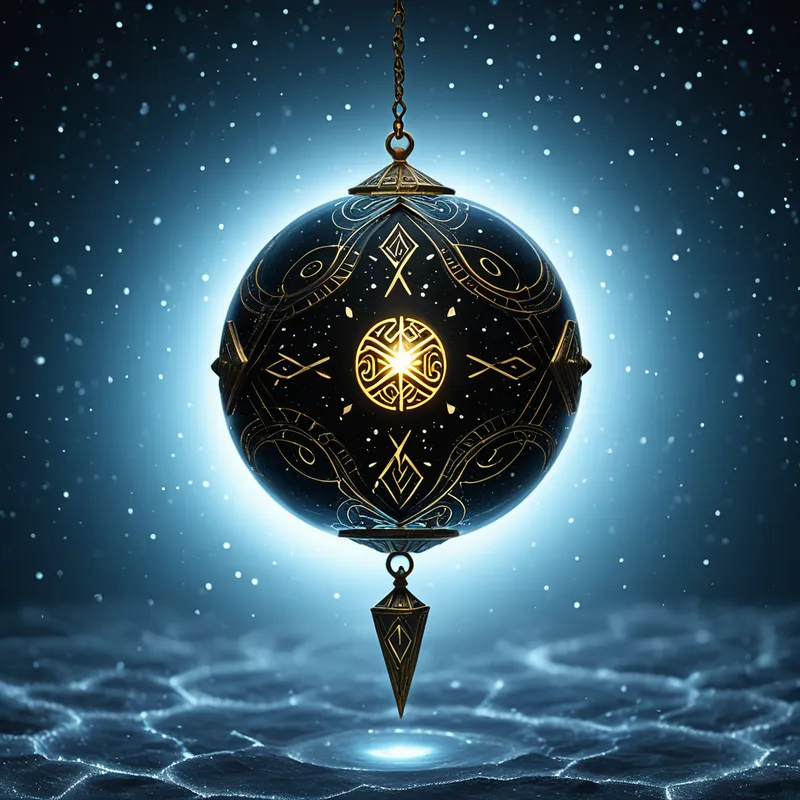
Finally, her gift is the dew from Hrímfaxi’s bit. This is the somatic symbol of her passage: a tangible, cooling residue of the night’s journey. It represents the nourishing residue of a period of rest or introspection—the creative insights, the emotional clarity, the calm that "condenses" upon the soul after a time spent in the interior darkness.
The Dreamer's Resonance
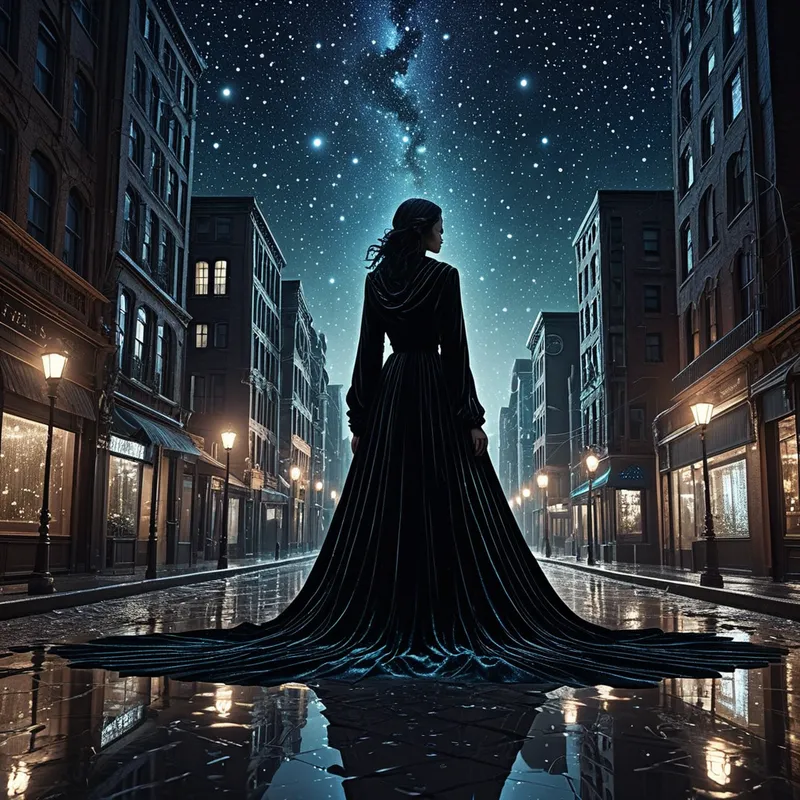
When the pattern of Nótt manifests in modern dreams, it often appears not as a literal goddess, but as an atmosphere, a journey, or a task. To dream of driving a chariot or vehicle through a vast, starry sky suggests the dreamer is navigating a necessary period of introspection or holding a container for others (a caregiver role). Dreaming of being draped in a cloak of deep blue or black velvet can indicate a need for, or an initiation into, a time of restorative withdrawal from the world’s demands.
Dreams of gentle, silver rain or dew forming on unexpected surfaces point directly to the "gift of Nótt." This is the psyche signaling that a period of quiet incubation is yielding its subtle, nourishing results—perhaps a new feeling, a forgotten memory surfacing with clarity, or a sense of peace after turmoil. Conversely, dreams of an endless, oppressive night where dawn never comes may reflect a psyche stuck in the Nótt phase, unable to transition back into the "day" of action and external engagement. The somatic process is one of cooling, settling, and receiving. The body in such dreams often feels heavy, calm, or immersed in quiet, reflecting the physiological state of rest and parasympathetic nervous system engagement.
Alchemical Translation
The alchemical process mirrored in Nótt’s myth is the nigredo—the blackening. In psychological terms, this is the initial stage of individuation where one confronts the shadow, enters a state of melancholy, or willingly descends into the unknown contents of the unconscious. It is often experienced as a depression, a creative block, or a life crisis that forces inward turning.
Nótt models how to undertake this nigredo not as a catastrophe, but as a sacred duty. Her chariot is the conscious ego structure that agrees to make the journey through the darkness, trusting in the ordained cycle. The modern individual resists this descent, fearing it as mere emptiness or failure. Nótt teaches that it is a sovereign journey, a necessary governance of one’s inner cosmos.
The work of the soul is not only to create light, but to courageously and faithfully hold the space for the fertile dark.
The alchemical goal is not to escape the night, but to learn its rhythms and receive its gifts. The "dew" is the prima materia that condenses from this process—the raw, shimmering insight or emotional truth that becomes the basis for the next stage of conscious development (albedo, the whitening). By honoring the Nótt within—the capacity for rest, containment, and non-action—we allow our personal "Hrímfaxi" to traverse the inner sky. We accept that frothing bit, the sometimes painful or melancholic drip of realizations, as the precious substance that waters the roots of our being, preparing us for a more integrated and authentic dawn.
Associated Symbols
Explore related symbols from the CaleaDream lexicon: