Nemean Lion Skin Myth Meaning & Symbolism
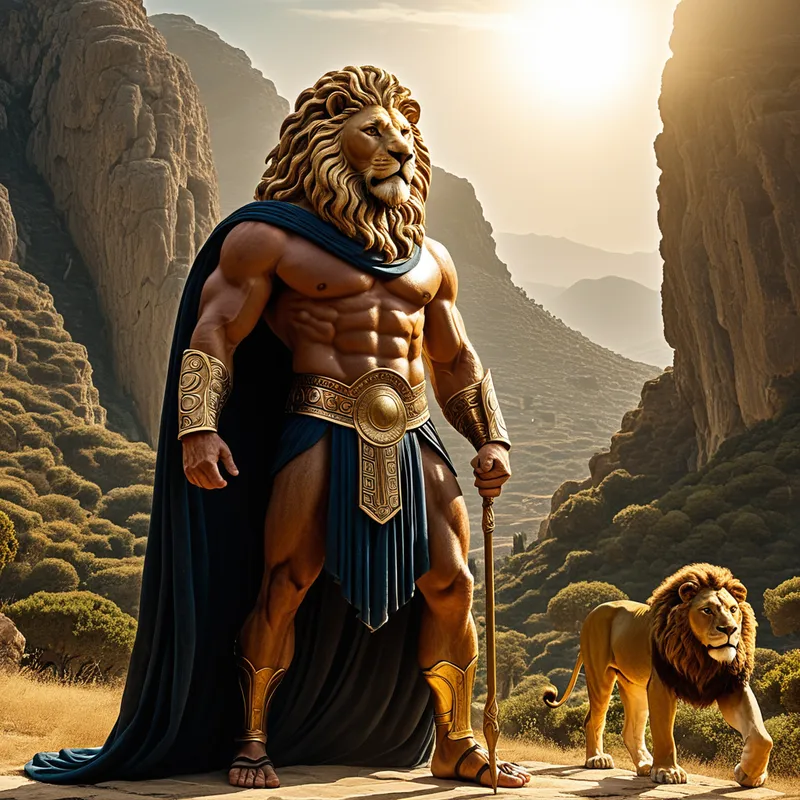
Hercules defeats an invulnerable lion sent by Hera, strangling it with his bare hands. He wears its impenetrable skin, transforming a curse into his defining armor.
The Tale of Nemean Lion Skin
Hear now a tale from a time when the earth was younger, and the breath of gods still stirred the dust of the roads. It begins in the sun-scorched valley of Nemea, a land grown silent. The birds did not sing. The shepherds had fled. For a terror walked there, a child of monstrous parents, sent by the will of a queen.
Hera, whose jealousy was a cold, sharp thing, looked upon the son of her husband, Zeus, and a mortal woman. His name was Heracles, though men would later call him Hercules. To break him, to see the pride of Zeus humbled in the dirt, she cast a madness upon him. When the fog cleared from his eyes, he found his hands stained with a terrible deed. To purify himself, the oracle said, he must serve a lesser king for twelve years, and perform ten labors. But Hera and her servant whispered, and the labors became twelve, each a sentence of death.
The first was this: go to Nemea. Slay the beast that dwells there.
They said it was no ordinary lion. Its pelt was like beaten gold, harder than any bronze, proof against the bite of spear or sword. Its claws could shear through stone. Its roar shook the very roots of the mountains. It was a creature of Gaia and the moon, a piece of the wild, ancient world that would not be tamed.
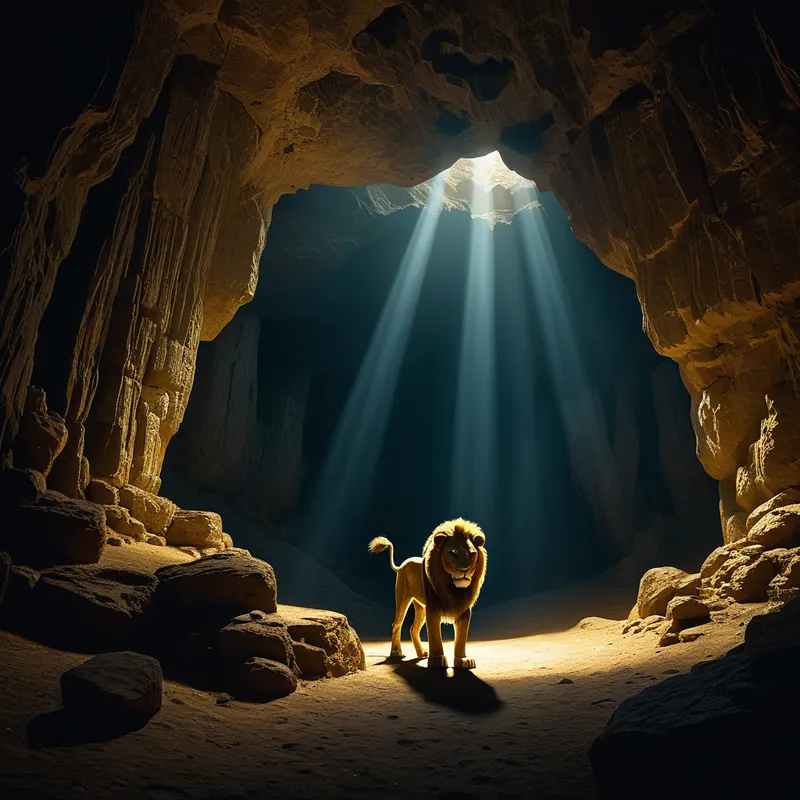
Heracles walked into the silent valley, his club of wild olive heavy in his hand. He found the lion’s cave, a dark maw in the hillside, stinking of blood and old bones. He waited. When the beast emerged, a mountain of muscle and tawny hide, the sun glinting off its impervious coat, Heracles let fly his arrows. They struck, and they fell away, useless as reeds. His sword bent against its side. The lion turned, its eyes like molten amber, and charged.
There was no craft left, no tool. Only the strength in his own limbs, a gift and a curse from his father. He met the charge, seized the great neck, and locked his arms around it. The struggle was titanic, a contest of raw life against raw life. Dust filled the air. The beast’s hot breath, its terrible strength, the crushing weight—Heracles held on. He held until the roaring ceased, and the mighty heart beat its last against his chest.
But the labor was not complete. He must have the pelt as proof. Yet how to skin what no blade could pierce? In a moment of divine inspiration, he saw the answer in the beast’s own nature. Using the lion’s own razor claws, he flayed the magnificent hide. From that day forth, he wore it. The golden head became his helmet, the paws knotted upon his chest. The invulnerable skin of his greatest foe became his armor. The curse of Hera was met, and from it, the hero’s identity was born.
Cultural Origins & Context
This story forms the foundational trial in the cycle of the Twelve Labors of Heracles, a core narrative in Greek mythography. It was not merely an adventure tale but a foundational charter myth, recited by bards and depicted on temple metopes and pottery from the Archaic period onward. The labors served a societal function: they modeled the concept of miasma and its cleansing through incredible, civilizing effort. Heracles, straddling the line between mortal and divine, chaos and order, was the ultimate culture hero. By conquering the Nemean terror—a force that halted agriculture and travel—he re-established the safety of the community, a primal duty of the hero-king. The myth was passed down through oral epic poetry, later codified by writers like Hesiod and the anonymous compilers of the Bibliotheca, serving as both entertainment and a deep lesson in resilience and ingenuity.
Symbolic Architecture
The Nemean Lion is not just a monster; it is the archetypal Shadow made flesh. It represents that which is invulnerable to our usual defenses—our rationalizations, our avoidances, our superficial efforts. It is the primal, unintegrated rage, fear, or instinct that resides in the "cave" of the unconscious, terrorizing the landscape of the psyche.
To face the Shadow is to discover that the tools of the ego—the sharp word, the logical argument, the strategic retreat—are useless. One must descend to a more fundamental level of being.
Heracles’s initial failure with weapons signifies the ego’s futile attempts to control the unconscious with conscious will. His ultimate victory through bare-handed grappling symbolizes direct encounter. There is no mediation. It is a somatic, whole-being engagement with the totality of one’s own nature. The strangulation is not mere violence; it is the act of containing, of mastering through intimate confrontation.
The skin, then, is the prize of integration. One does not destroy the Shadow and remain unchanged. One incorporates its power. The lion’s invulnerability becomes the hero’s protection. The very thing that was sent to destroy him (by Hera, the archetypal Great Mother in her negative, devouring aspect) becomes the source of his legendary identity. The pelt is a second skin, a testament to a transformative ordeal. It signifies that what we have truly overcome becomes our strength, our unique character armor in the world.
The Dreamer's Resonance
When this myth stirs in the modern unconscious, it may manifest in dreams of confronting an invincible animal—a bear, a wolf, or most tellingly, a lion. The dreamer may feel powerless, their weapons breaking. The somatic experience is key: the crushing weight, the hot breath, the sheer physicality of the struggle. This mirrors a psychological process where an individual is facing a problem or a part of themselves that feels utterly unconquerable—a deep-seated anxiety, a pattern of self-sabotage, a grief that will not yield.
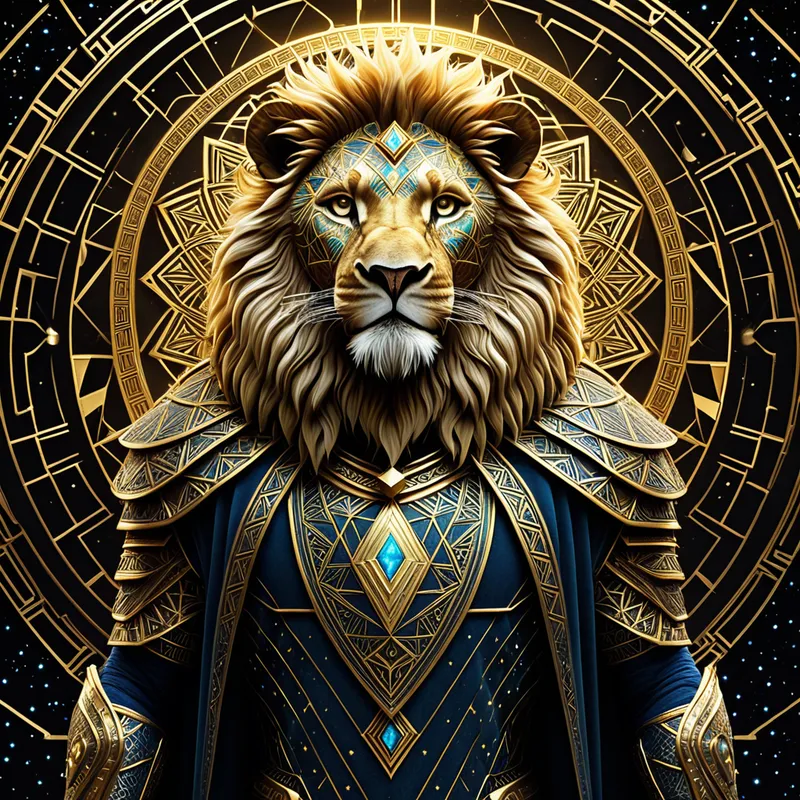
The dream may shift to the act of wearing the animal’s skin. This signals a profound shift from resistance to assimilation. The psyche is working to transmute a raw, terrifying energy into a resilient aspect of the self. It is the dream-language of building resilience. If the dream ends with the confrontation unresolved, it indicates the ego is not yet ready to engage at the necessary depth; the labor is ongoing. The Nemean pattern in dreams is ultimately about moving from being victimized by one’s inner nature to being defined by the mastery of it.
Alchemical Translation
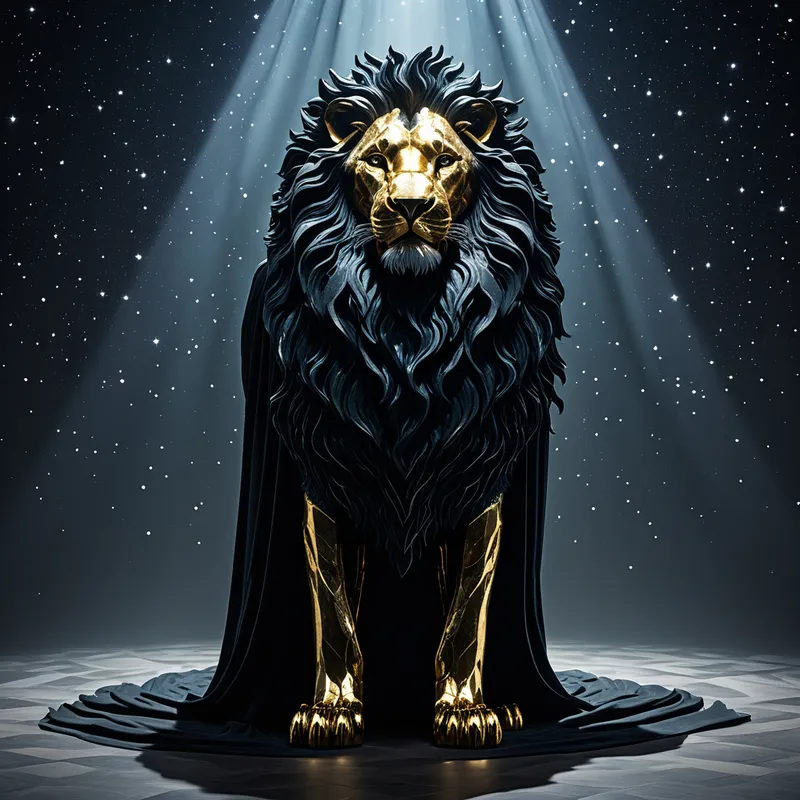
The alchemical process mirrored here is the Nigredo, the blackening, the confrontation with the primal, undifferentiated massa confusa of the soul. The lion is the prima materia—dense, formidable, and seemingly worthless. Heracles’s labor is the beginning of the individuation journey.
The alchemist does not discard the base lead; they work with it, through fire and patience, until it reveals the gold within. So too, the psyche does not discard its shadow; it engages it until its latent value is revealed.
For the modern individual, the "Nemean labor" is that first, non-negotiable encounter with a core complex. It is entering the therapy room, starting the journal, or finally sitting with the silence and the pain one has spent a lifetime avoiding. The "strangulation" is the sustained, uncomfortable attention—the holding of the tension until something shifts. The failure of "weapons" is the realization that old coping mechanisms no longer serve.
The "wearing of the skin" is the final, alchemical stage of this specific operation. It is when the integrated quality becomes part of the personality. The person who mastered their chaotic anger now possesses unshakeable boundaries. The one who faced their bottomless grief now carries a profound capacity for empathy. The skin is the Lapis Philosophorum in personal form—the proof that the base material of one’s suffering has been transmuted into an indestructible core of strength and identity. The curse, as in the myth, becomes the vocation.
Associated Symbols
Explore related symbols from the CaleaDream lexicon: