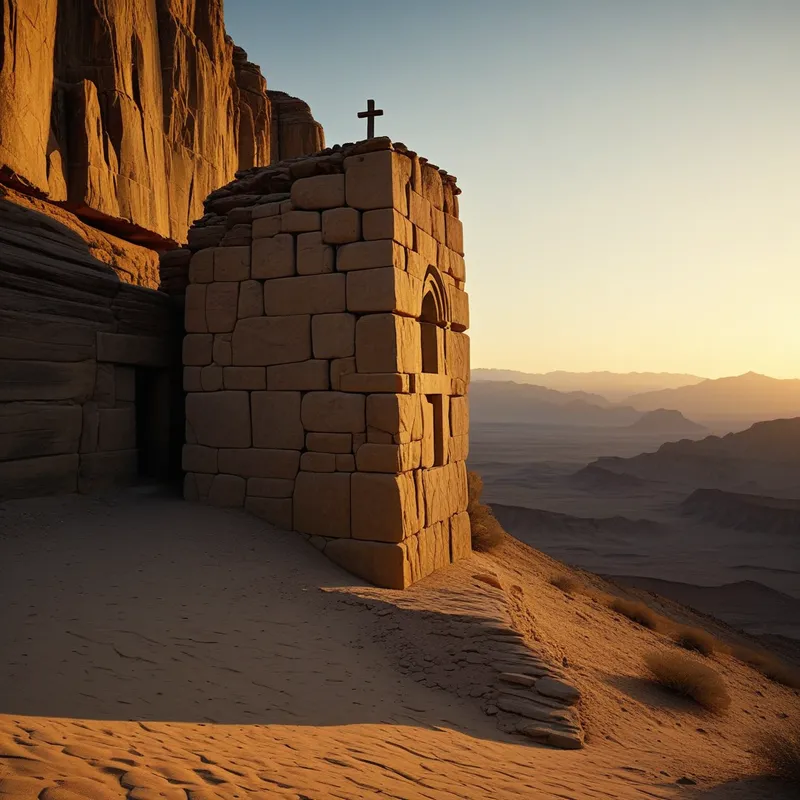
Monastic cell Myth Meaning & Symbolism
The myth of the solitary cell where a seeker confronts their inner demons and angels, forging a soul through silence and divine encounter.
The Tale of Monastic cell
Listen. Before the world’s noise, there is a silence so deep it has a texture, a weight, a taste of cold stone and dry air. This is the silence of the cell.
It is not a room. It is a vessel. A womb of stone, a tomb for the old self, a crucible for the new. The door, a slab of rough-hewn oak, closes with a finality that echoes in the bones. The world—its markets, its gossip, its ceaseless becoming—is shut out. What remains is the four walls, a narrow cot, a stool, a cross upon the wall, and the vast, terrifying expanse of the self.
Here, in this voluntary prison, the seeker sits. The first enemy is not demon nor beast, but time itself. It stretches, an empty desert. Hours are not marked by bells or sun, but by the pounding of the heart, the itch of the flesh, the relentless parade of memory and desire that marches across the mind’s eye. Ghosts of past grievances arise. Fantasies of future glory taunt. The cell, once a refuge, becomes an arena. The seeker wrestles with the noonday demon of acedia—the soul’s crushing weariness, the feeling that all is vanity, that the silence is merely emptiness.
But if one does not flee, if one endures the terrible aloneness, a shift occurs. The silence outside begins to seep within. The cacophony of the self begins to still. In that stillness, a different presence is sensed. It is in the slant of light through the high, small window at the third hour. It is in the quiet breath that becomes a prayer without words. The demons, faced and named, lose their substance. They were never monsters from a pit, but the unacknowledged fragments of one’s own soul.
Then comes the visitation. Not with thunder, but with a profound, gentle clarity. The Divine Presence does not break down the door; it was always there, waiting beneath the noise. The cell, the very symbol of limitation, becomes suddenly infinite. The seeker understands: the walls were not to keep them in, but to keep everything else out, so that this one, essential conversation could finally be heard. The struggle was the birth pangs. The resolution is not an answer, but a union. The cell has done its work. The seeker emerges, not to conquer the world, but to bear its newfound peace into the world’s enduring chaos.
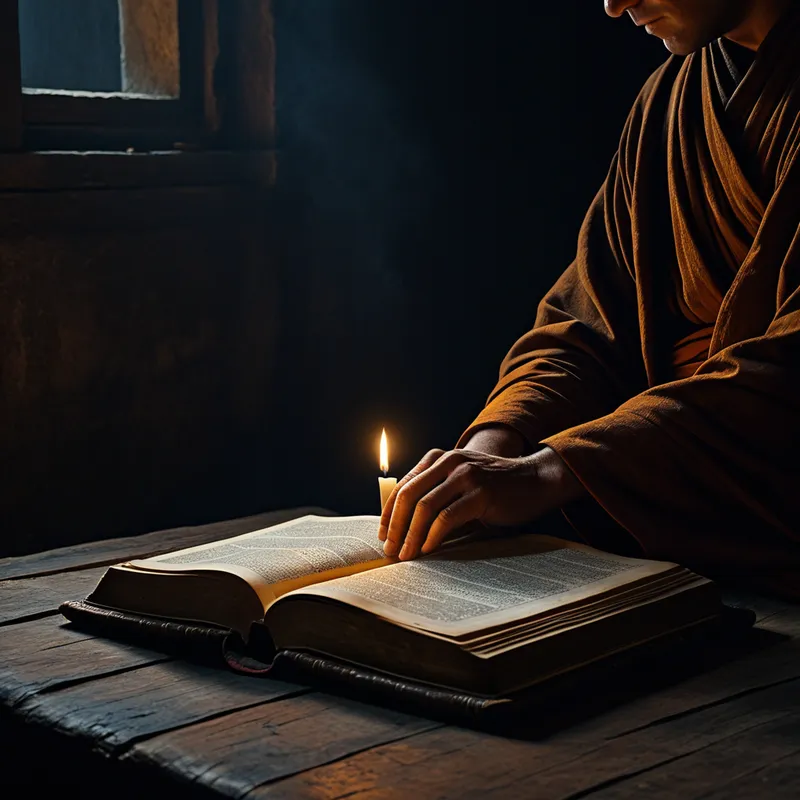
Cultural Origins & Context
The myth of the cell is not a single story with a named hero, but a foundational pattern woven into the very fabric of Christian monasticism, particularly in its early Egyptian and Syrian expressions from the 4th century onward. Its primary authors were the Desert Fathers and Mothers, whose sayings and lives were collected in texts like the Apophthegmata Patrum. These were not fanciful tales but reported experiences—the “combat manuals” of the spiritual life.
The story was passed down orally in monasteries, a living tradition told to novices to prepare them for the ordeal and the glory of solitude. Its societal function was paradoxical. In an era of increasing imperial Christianity, the monk fleeing to the cell was performing a critical, radical act. He or she was rejecting the collective values of status, wealth, and power to confront the ultimate authority: the soul before God. The cell was the physical locus of this rebellion. It served as a powerful cultural critique and a living symbol that the kingdom of God was “within,” accessed not through external ritual alone, but through terrifying, transformative interior work.
Symbolic Architecture
The monastic cell is a master symbol of the psyche itself. Its four walls represent the limits of the individual personality—the body, history, circumstances—the vas or container necessary for any alchemical work.
The cell is the bounded space where the unbounded soul discovers its true dimensions.
The locked door symbolizes the willed act of introversion, the turning away from the persona to face the interior wilderness. The demons that assail the occupant are not external evils but projections of the unintegrated shadow—repressed anger, narcissism, fear, and desire. The struggle with acedia represents the ego’s resistance to the death of its old, familiar identities.
The small window, often facing east, is the symbol of consciousness—a narrow but vital opening to the transcendent (the Orient). It allows in just enough light (awareness) to see the interior struggle, but not so much as to dispel the necessary shadows where transformation occurs. The eventual “visitation” of peace symbolizes the emergence of the Self, the central, ordering archetype of the psyche that integrates consciousness and the unconscious.

The Dreamer's Resonance
When this mythic pattern surfaces in modern dreams, it rarely appears as a medieval monastery. It manifests as dreaming of a small, spare, often familiar room—a childhood bedroom, a studio apartment, a hospital room—from which one cannot or will not leave. The dreamer feels a potent mix of claustrophobia and a strange, compelling necessity.
This is the somatic signal of a psyche initiating a phase of necessary introversion. The ego is being called to “sit in the cell” of a developing complex or a neglected emotional truth. The feeling of being trapped is the resistance; the feeling of purpose is the soul’s insistence. One might dream of the room being invaded by chaotic figures (shadow elements) or of finding a hidden, beautiful object in a corner (a nascent aspect of the Self). Such dreams indicate a psychological process of consolidation, where the conscious mind is being tasked to stop “seeking out there” and to face what has been gathered within. It is the psyche’s own monastic vow.
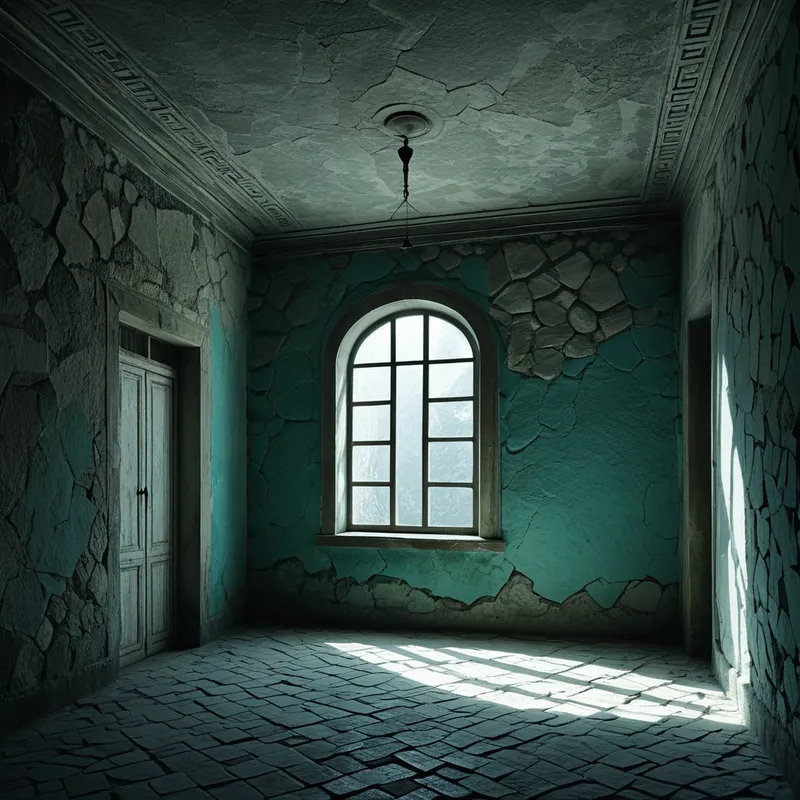
Alchemical Translation
The myth of the cell is a precise map of the individuation process. The first step, voluntary confinement (Nigredo), is the conscious decision to engage with one’s inner life, often precipitated by crisis or disillusionment with the outer world. This plunges one into the darkness of the shadow confrontation.
The long, painful middle—the wrestling with memories, emotions, and despair—is the putrefactio and separatio. The old psychic structures and identifications are broken down. The ego learns it is not the master of the house.
The triumph of the cell is not the annihilation of the demons, but the realization that they are part of the household, to be managed, not exiled.
The eventual dawn of peace and presence signifies the Albedo, the washing clean. The integrated self begins to cohere. The final stage is not escape, but changed relationship. One learns to dwell in the cell—that is, to live from the centered, authentic Self—even when the physical door is open. The once-limiting walls become the defining shape of a authentic personality, strong enough to engage the world without being dissolved by it. The modern individual completes this alchemy not in a desert, but in the interior solitude of therapy, meditation, artistic creation, or any disciplined practice that turns the light of awareness inward, transforming the prison of the ego into the sanctuary of the soul.
Associated Symbols
Explore related symbols from the CaleaDream lexicon: